Showing posts with label Human Rights Watch. Show all posts

Wednesday, November 2, 2016

A documentary raises questions about ‘slavery’ in South Africa’s vineyards - The Washington Post

"Danish journalist Tom Heinemann, director of the film “Bitter Grapes,” visited wine farms in South Africa’s bucolic Western Cape, where he found that some workers were allegedly being paid less than the minimum wage, exposed to pesticides, consuming dangerous amounts of alcohol and discouraged from joining unions, among other problems."

Read MORE

A documentary raises questions about ‘slavery’ in South Africa’s vineyards - The Washington Post:


Saturday, May 2, 2015

Global concern grows as Rohingya bodies surface in Thailand | Mizzima


According to Human Rights Watch, a joint Thai military-police taskforce found the bodies at an abandoned human trafficking camp. 

See more at: http://www.mizzima.com/news-international/global-concern-grows-rohingya-bodies-surface-thailand#sthash.NPK3mQLZ.dpuf


Saturday, October 11, 2014

Nobel Peace Prize Boosts Battle to End Child Labor | Human Rights Watch


(New York) – The awarding of the 2014 Nobel Peace Prize to Indian child rights activist Kailash Satyarthi recognizes the hard fight against child labor and should serve as a call to address this challenge around the globe, Human Rights Watch said today. Satyarthi, 60, launched a campaign against employing children in the worst forms of labor both in India and elsewhere, and has built a movement to encourage businesses to employ ethical practices without child labor.

Continue here:
Nobel Peace Prize Boosts Battle to End Child Labor | Human Rights Watch:

Friday, September 26, 2014

Debate: Prevention and Victim Compensation | Human Rights Watch

Author(s): 
 Nisha Varia
Afroza, a Bangladeshi woman who worked for sixteen years without getting paid and was not allowed to go home to visit her family. Keni, an Indonesian woman whose employers injured her with a hot iron, leaving disfiguring third-degree burns all over her body. Kartika, an older Sri Lankan woman whose employers made her work around the clock without pay, shaved her head to humiliate her and gouged pieces of flesh out of her arm with knives. 
Read more:

Tuesday, September 2, 2014

British Researcher Andy Hall Faces Thai Jail For Reporting Alleged Migrant Worker Abuse

Source: Huffington Post UK

A British human rights campaigner is facing seven years in prison and a $10 million fine for uncovering appalling "modern slavery" conditions in a Thai pineapple factory.

Andy Hall goes on trial Tuesday despite over 100 organisations and over 300,000 people signing petitions calling for his charges to be dropped. Human Rights Watch and Britain's Trade Union Congress are among the groups demanding that the "bogus" charges be dropped.

Continue:
http://www.huffingtonpost.co.uk/2014/09/01/andy-hall-thailand-trial-pineapple-natural-fruit-finnwatch_n_5746954.html?1409588782

Friday, June 27, 2014

'Siddharth' Examines Trafficking of Children

Source: VOA


A new film by Indian-Canadian writer-director Richie Mehta tells the simple, wrenching story of a poor New Delhi man's search for his missing son.  In Siddharth, which was screened recently at New York's Human Rights Watch Film Festival, Mahendra sends his 12-year-old son to work in a factory in a distant city.

Continue:

http://www.voanews.com/content/siddarth-examines-trafficking-of-children/1945516.html

Thursday, May 29, 2014

Witness: The “Innocent” Human Trafficker | Human Rights Watch

Source: Human Rights Watch

Amy Braunschweiger

Each year, thousands of people flee the extreme poverty and repression in the Horn of Africa to Yemen, hoping to go on to Saudi Arabia for work. In Haradh, many migrants sleep in the town square, a large expanse of parched earth littered with rotten mattresses. Many migrants fall into the hands of human traffickers who torture them to extort money from their families back home.

Read the story:

http://www.hrw.org/news/2014/05/25/witness-innocent-human-trafficker-0

Abuse of Migrants by Human Traffickers in a Climate of Impunity
MAY 25, 2014

Enhanced by Zemanta

Monday, May 26, 2014

Q&A: The Plight of the UK’s Migrant Domestic Workers | Human Rights Watch

Source: Human Rights Watch: "

By: Izza Leghtas

Wealthy families who come to the UK may bring with them domestic workers who work for them in their home country – often women who raise their children, clean their homes and cook their meals. In a move to cut down on immigration, two years ago the UK tied domestic workers’ visas to their employer. But in forbidding these women to change employers, even in abusive circumstances, this policy has the unintended consequence of forcing some women either to endure terrible situations or to go underground. The UK has pledged to combat “modern day slavery,” and this week, as part of this effort, a special parliamentary committee is calling on the government to change this visa policy. For her report on abuses against migrant domestic workers in the UK, “Hidden Away,”Human Rights Watch researcher Izza Leghtas took on the difficult task of finding these elusive women and reporting their stories."

Continue here:

http://www.hrw.org/news/2014/04/08/qa-plight-uk-s-migrant-domestic-workers
Enhanced by Zemanta

Monday, May 12, 2014

Joint letter to Hon. John F. Kerry Re: Human Trafficking in Thailand | Human Rights Watch

Source: Human Rights Watch:

The Honorable John F. Kerry
Secretary of State
2201 C Street NW
Washington, DC 20520

Dear Secretary Kerry:
In your recent remarks to the Annual Meeting of the President’s Interagency Task Force to Monitor and Combat Trafficking in Persons, you noted that Cambodian men are trafficked to sea to become slaves aboard fishing vessels. As a group of human rights and labor organizations concerned with this issue, we were pleased to see you address it in your remarks. We write today to ask that you ensure the U.S. Department of State takes the next step to putting an end to this practice and downgrade Thailand, whose labor and immigration policies allow trafficking to flourish in the seafood industry and others, to Tier III in the 2014 Trafficking in Persons (TIP) Report.
The Government of Thailand does not meet the minimum standards of the Trafficking Victims Protection Act, nor is it taking real steps to meet those standards. Thailand was placed on the Tier II watch list in the 2013 Trafficking in Persons Report, which documented the Thai Government’s failure to “adequately regulate brokers, reduce the high costs associated with registration, or allow registered migrants to change employers.” The 2013 TIP Report review of Thailand also cited “pervasive trafficking-related corruption and weak interagency coordination” that “continued to impede progress in combating trafficking” in its assessment of the Government’s efforts to combat human trafficking. Nothing about this system has changed significantly in the course of the last year, and the government continues to be at best complacent, at worst complicit, in the trafficking of migrant workers from neighboring countries to provide inexpensive labor for export industries.
Read here:
Enhanced by Zemanta

Monday, November 19, 2012

Lonely Servitude | Human Rights Watch

http://www.hrw.org/news/2012/11/15/morocco-abuse-child-domestic-workers

Source: Human Rights Watch

Beatings, Little Pay or Rest, Weak Enforcement of Child Labor Laws
NOVEMBER 15, 2012
Girls are being exploited, abused, and forced to work long hours for extremely low wages. Morocco has taken important steps to reduce child labor, but it needs to take targeted actions to protect these child domestic workers and enforce the law.
Jo Becker, children’s rights advocacy director
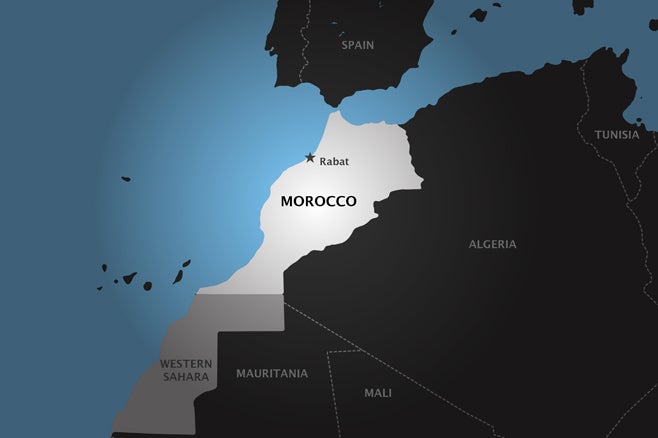
(Rabat) – Girls as young as 8 endure physical abuse and work long hours for little pay as domestic workers in Morocco.
The 73-page report, “Lonely Servitude: Child Domestic Labor in Morocco,” found that some child domestic workers – who are overwhelmingly girls – toil for 12 hours a day, 7 days a week, for as little as US$11 a month. Some girls told Human Rights Watch that their employers frequently beat and verbally abused them, denied them education, and sometimes refused them adequate food.
The Moroccan government has reduced child labor rates and increased school enrollment over the last decade. But it should strictly enforce laws prohibiting child domestic labor below age 15 by applying penalties to employers and recruiters, creating effective mechanisms to identify and remove underage children from employers’ households, and monitoring working conditions for domestic workers ages 15 to 17, said Human Rights Watch.
“Girls are being exploited, abused, and forced to work long hours for extremely low wages,” said Jo Becker, children’s rights advocacy director at Human Rights Watch. “Morocco has taken important steps to reduce child labor, but it needs to take targeted actions to protect these child domestic workers and enforce the law.”
Human Rights Watch first investigated the use of child domestic labor in Morocco in 2005.  Interviews for the follow-up study indicated that the number of children working as domestic workers has dropped in recent years, and that public education campaigns and increased media attention have raised public awareness of the hazards of child domestic labor.
The report draws on field research conducted in April, May, and July 2012, in Casablanca, Rabat, Marrakech, and the Imintanoute region of Chichaoua province. Human Rights Watch interviewed 20 former child domestic workers, as well as government officials, lawyers, teachers, and representatives of nongovernmental and international organizations. Fifteen of the former child domestic workers had begun working before age 12; all but four were still under 18 at the time of the interviews.
The majority of the 20 girls interviewed said they were both physically and verbally abused by their employers. Some girls said their employers beat them with their hands, belts, wooden sticks, shoes, or plastic pipes. Three described sexual harassment or sexual assault by male members of the employer’s household.
“Working in private homes, many of these girls endure terrible conditions but have no idea where to turn for help,” Becker said. “Morocco should address the particular isolation and vulnerability of child domestic workers with an effective system to remove girls who are below the minimum age of 15 from these households, and monitor the working conditions for girls between 15 and 17.”
Most of the girls interviewed came from poor, rural areas. In approximately half of the cases, intermediaries recruited the girls to work in larger cities, often making deceptive promises about their working conditions.
An intermediary told Latifa L, whose name has been changed for her protection, that her employers “would be very kind” and would pay her well. She told Human Rights Watch that instead, she worked without a break from 6 in the morning until midnight, with no days off. She said her employer often beat her.
“I don’t mind working,” she said, “but to be beaten and not to have enough food, this is the hardest part of it.”
In nearly all of the cases Human Rights Watch investigated, the salaries for former child domestic workers were negotiated between the girl’s parents or guardians and the intermediary or employer. Most of the girls said they did not directly receive any wages, which were paid to their parents. The average salary of the girls interviewed was 545 dirhams per month (US$61), less than one-quarter of the 2,333 dirham (US$261) minimum monthly wage for Morocco’s industrial sector.
Morocco’s Labor Code sets a limit of 44 hours of work a week for most workers, but the code does not cover domestic workers. Some girls told Human Rights Watch that they worked over 100 hours a week, and only 8 of the 20 interviewed received a weekly day of rest.
None of the girls interviewed attended school while employed as domestic workers. Only two said they had completed the third grade before beginning work.
According to government statistics, Morocco has in recent years greatly reduced overall rates of child labor and increased the number of children who attend school. Government surveys indicate that children under age 15 engaged in all forms of labor dropped from 517,000 in 1999 to 123,000 in 2011.
Based on Human Rights Watch interviews with nongovernmental organizations and United Nations agencies, the rate of child domestic labor has also declined, although there is no recent data. Studies conducted in 2001 estimated that 66,000 to 86,000 children under 15 worked as domestic workers nationwide, including approximately 13,500 in the greater Casablanca area alone. The government says that it is preparing a new survey to determine current rate of child domestic labor, but that it is not yet completed.
Local groups and UN agencies also credit public education campaigns and media coverage with raising awareness of child domestic labor and of the legal prohibition on the employment of children under 15.
Despite progress in reducing child labor, laws prohibiting the employment of children under age 15 are not adequately enforced, Human Rights Watch said. Labor inspectors lack the authority to gain entry to private households to identify child domestic workers. Criminal prosecutions against employers responsible for physically abusing child domestic workers are rare, and fines are almost never imposed on employers who hire under-age children for domestic work. Child domestic workers are often unaware of existing mechanisms to assist vulnerable children or how to access them.
Human Rights Watch urged the government of Morocco to expand its efforts to address child labor by:
  • Strictly enforcing age 15 as the minimum age for all employment, imposing penalties on employers and recruiters who employ or recruit children under age 15;
  • Expanding public awareness campaigns regarding child domestic labor, including information about existing laws and how girls who need help can reach hotlines;
  • Creating an effective system to identify and remove child domestic workers who are under the minimum age of employment and those ages 15 to 17 who are subject to abuse.
  • Prosecuting under the Criminal Code people who are responsible for violence against child domestic workers.
Human Rights Watch also urged the government of Morocco to adopt a draft law on domestic workers that has been under discussion for several years, and to amend it to ensure compliance with the International Labour Organization’s Convention on Decent Work for Domestic Workers. The Convention, adopted in 2011, establishes global standards for domestic workers.
The Convention specifies that working hours for domestic workers should be equivalent to those for other sectors and that domestic workers should be covered by minimum wage requirements.  The draft law does not set working hour limits for domestic workers, however, and would allow employers to pay domestic workers only 50 percent of the minimum wage for the industrial sector.
Morocco voted to adopt the Domestic Workers Convention at the International Labour Conference in 2011, but has not yet ratified it. The convention was adopted with overwhelming support from governments and will enter into force in 2013.
“Morocco’s draft domestic workers law includes important provisions, such as an employment contract and a weekly day of rest, but in other respects, such as working hours and minimum wage, it falls short of new international standards,” Becker said. “Amending and adopting the law will show Morocco’s commitment to this issue and improve the working conditions for Morocco’s domestic workers.”

Enhanced by Zemanta

Saturday, October 27, 2012

Human trafficking, prostitution thrive in Afghanistan

http://www.muslimnews.co.uk/news/news.php?article=23742

Source: The Muslim News


25-10-2012
DW.DE:

Thousands of Afghan girls and boys are trafficked into neighboring countries and sold into slavery each year. Though it is taboo, prostitution is alive and thriving - at the cost of those forced to work in it.


It is the oldest trade in the world and exists in probably every country in the world. Yet prostitution is not a dream job. Most female sex workers are forced to make a living through prostitution.

In conservative Afghanistan, prostitution is illegal. But that doesn't mean that it doesn't exist. Human trafficking is booming - young women are being sold and sent over to neighboring countries, mostly to Pakistan.

Heather Barr says the government has a number of other issues to tackle as well

Many people are unaware of just how many women are forced to work as prostitutes, according to Heather Barr of Human Rights Watch's Asia Division.

"HRW did a report that was released in March this year about women in prison for moral crimes. And one of the things that I found really surprising by doing those interviews, was how many women I met, had been forced in prostitution often by their husbands and in-laws."

Women sold as commodities

The reason, she explained, that women were forced into the sex trade by their families was due to poverty and drug addiction - usually of a husband or brother or both. The families often saw women as a source of money and take advantage of it.

Women from Pakistan are also been bought and sold to Afghanistan. Poor or practically non-existing security at the border means criminals smuggling and trafficking goods and people can easily get away with it. When the trafficked people arrive on the other side of the border, they are fully at the mercy of their pimps.

One woman from Pakistan who wished not to be named is now in Jalalabad - far away from her home in Karachi.

"We are poor and helpless. What are we supposed to do? We don't have anything to eat. That's why the "big man" brought us here from Karachi. No one likes doing this work, but I don't have any other choice," she told DW.

The young woman speaks neither of Afghanistan's official languages - Dari and Pashtu. She said she didn't know who to turn to and was afraid of the consequences she would face should she run away and the authority of her pimp, the "big man," as she called him. But he himself also cited poverty as a reason to force women into prostitution.

Sahar Gul, 15 years old, was tortured for months by her in-laws for refusing to prostitute herself

"I do this because I am poor and I want to be able to feed my children. I am aware that there are dangerous consequences, harsh punishments for this kind of work - for instance death or being ostracized and other things."

But he insisted he did not force anyone to work - that the women who work for him prostituted themselves because they wanted to.

Prostitution, whether out of one's own will or not, is illegal according to Islamic law. The cleric Nek Mohammad works for the court in the eastern Afghan province of Nangarhar and offers consultations on Islamic law. All forms of position are illegal, he told DW.

"At least four people have to bear witness to the crime. And should the prostitute or the person who buys her be married, his or her spouse will have to be stoned. If there are no married people involved, then they receive lashings."

Disease

But punishment is not the only thing to worry about. Most of the prostitutes are unaware of sexually transmitted diseases (STDs) such as HIV and do not use condoms. The number of cases of STDs had sharply risen in the past few months, according to Dr. Baz Mohammad Sherzad, head of Nangarhar province's health ministry.

Prostitutes pose as beggars on the streets of Afghanistan

"Our doctors confirm that many young men who have come to us recently have had urinary tract infections and sexually transmitted diseases. If prostitution is allowed then it is no wonder there is an increase in such problems in Nangarhar."

Nonetheless, doctors should promote educational campaigns, said Sherzad. The government should tackle the problem. Yet the government had a whole set of other problems: "Think about child marriage, forced marriage, domestic violence, the sale of women for marriage and other purposes, forced prostitution, self immolation - honestly the government hasn't been dealing very effectively with any of those issues," said Heather Barr.

She said it was unfortunate that there was a lack of political will to solve these issues. Progress was only made very slow.

As of recently, it is now illegal to lock up women for running away from home, which is just a further symptom of the violence and forced prostitution women continue to face in Afghanistan.

Enhanced by Zemanta

Thursday, September 20, 2012

Philippines seeks to reduce numbers of overseas domestic workers - latimes.com

http://latimesblogs.latimes.com/world_now/2012/09/in-the-face-of-ongoing-complaints-of-abuse-and-fraud-abroad-government-officials-are-seeking-to-stem-the-wave-of-more-than.html

SOURCE:latimes.com

September 15, 2012 

Philippine workers return home
In the face of complaints of abuse and fraud abroad, Philippine government officials are seeking to stem the wave of more than a million Filipinas who have headed overseas to work as maids.
The outpouring of workers to other countries has paid off for the Philippines financially, sending more than $20 billion into the country last year. But horror stories of Filipinas beaten, molested and left unpaid elsewhere in Asia and the Middle East have dogged the "maid trade."
Their plight so alarmed Philippine lawmakers that a government mission traveled to Saudi Arabia last year to interview hundreds of housekeepers. One legislator likened the worst cases abroad to "modern-day slavery." Reeling, the Philippines has pushed for stricter rules, demanding a minimum wage and a weekly day off. It ratified an international treaty promising to protect the workers' rights.
But the tales of abuse have continued, pushing the government to go further. Philippine media have aired a litany of grim stories over the last year: a 22-year-old worker leaping from a third-floor window to escape her employer in Jordan, another burned with a hot iron and stabbed with a kitchen knife in Syria, yet another whose body allegedly came back from Saudi Arabia without eyes or a tongue.
"Our overriding concern is the protection of domestic workers," Hans Leo Cacdac, head of the Philippine Overseas Employment Administration, said in an interview late last month. "That’s why we are undertaking this plan to reduce the numbers."
How exactly the Philippines will reduce the flow of overseas domestic workers is unclear, with plans still being shaped by government officials. Cacdac says the goal is not to bar Filipinas from going abroad, but to nudge them toward better jobs by assessing their skills and education.
Some Filipinas take jobs doing housework despite having other skills. Marilou Pundar Monge studied engineering and technology in the Philippines but struggled to find a job at home that could provide for her two children. She headed to Malaysia to do domestic work, toiling almost 15 hours a day in a Kuala Lumpur home.
"I couldn’t earn much in the Philippines even though I had finished college," said Pundar Monge, now 51.
Talk of cutting back on foreign workers has been closely watched in the United Arab Emirates, Saudi Arabia and other countries that bring in tens of thousands of Filipinas annually to cook and clean. In the past, the Philippines has blacklisted entire countries; it assured an Emirati newspaper it wouldn't do so this time, focusing on abusive employers and recruiters instead.
Migrant activists say focusing on better jobs is a better tactic than simply cutting women off from working overseas, as media reports about the plan first suggested. Banning workers from jobs abroad can backfire and end up worsening abuse, said Human Rights Watch senior researcher Nisha Varia.
"Women still want these jobs. Employers still want these workers. If the formal channels are closed, people will go around them –- and they’ll go around them without protection," Varia warned.
The desire to seek a better living abroad is so strong, said Ellene Sana, executive director of the Center for Migrant Advocacy in Manila, that thousands of Philippine domestic workers are still in war-ravaged Syria. Though hundreds returned to Manila this week, Sana says new workers have been illegally recruited even as the fighting escalated, and thousands have stayed in the country despite the government insisting it will cover the costs of their repatriation.
Turning its gaze inward, to address what drives people away from the Philippines, makes sense, Sana said. "We have been prodding the government to do precisely that, rather than looking beyond the borders where we have very little influence," she said.
The burgeoning Philippine economy may change the dynamic, a Singaporean financial group argued in a recent research note. On the flip side, wilting economies abroad could make staying home more attractive.
Pundar Monge said she decided to return to her country years ago for her dignity and her family. Leaving home cost her too much, she said. While she was working abroad, her oldest daughter died. Fellow workers told her about beatings and starvation at the hands of their employers.
"I would persuade young women to stay and find greener pastures here," Pundar Monge said.

Enhanced by Zemanta