Showing posts with label Baby trafficking. Show all posts

Monday, February 27, 2012

Theresa Erickson To Be Sentenced For Baby Trafficking Ring


Source: Huffington Post

02/24/2012
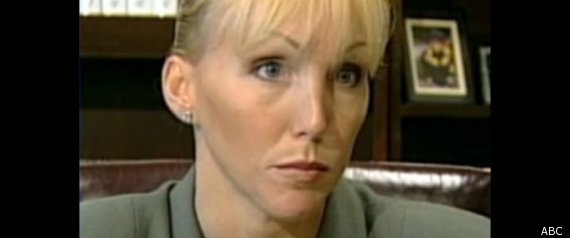
Theresa Erickson

By: JULIE WATSON (The Associated Press)
SAN DIEGO — Theresa Erickson's reputation as a leading reproductive law specialist eased the concerns of surrogate mothers and intended parents.
But prosecutors say being a trusted source also allowed her to lure them into unwittingly helping her build a baby manufacturing business spanning two continents that netted millions.
The 44-year-old attorney is expected to be sentenced Friday at a hearing in federal court in San Diego. She faces up to five years in prison.
Erickson, who authored books and spoke on TV about fertility issues, used California's thriving surrogacy business to find clients that she could convince to pay up to $150,000 for each baby, federal prosecutors say. The parents believed they were adopting legally by entering into an arrangement with a surrogate mother before the pregnancy.
In fact, Erickson working with a surrogate, Carla Chambers, and another respected Maryland attorney, Hilary Neiman, lined up parents for babies they had already created by sending U.S. surrogates to Ukraine to be implanted with sperm and embryos from anonymous donors, prosecutors say.
"These were criminals that were creating human life for sale," said surrogacy attorney Andrew Vorzimer, who represented the surrogates that helped blow the whistle on the scam. "Many people consider this to be a surrogacy arrangement gone awry. But this was not surrogacy in any shape or form."

Vorzimer said no one knows how many babies in total were created, and important genetic information for the infants may have been lost forever. The surrogates were also unaware of the scam, federal prosecutors say.
"They attempted to create the most marketable baby available, which was blond hair, blue-eyed baby, while simultaneously pulling on the heart strings of intended parents," Vorzimer said. "It defies description the immorality that was involved in this ongoing operation that went on for years."
Erickson has pleaded guilty to fraud and admitted to filing false applications for the surrogates to California's state insurance program to subsidize the medical costs of the deliveries of the babies. Chambers pleaded guilty to conspiracy to engage in monetary transactions derived from unlawful activity and also will be sentenced Friday. She faces up to five years as well. Neither woman nor their attorneys could be reached for comment.
Neiman was sentenced in December to one year in custody that included five months in prison and the rest under home confinement.
The case has prompted greater scrutiny by judges in California, the industry's hub because of its progressive laws regulating the industry. Other states ban surrogacy outright.
Heather Albaugh, a surrogate from the Dallas area, said she was among those who were duped by the trio.
Albaugh said she was contacted by Chambers after posting an ad on a surrogacy website. She said she was new to the business and nervous about agreeing to be sent to Ukraine for an embryo transfer but then Chambers told her the agency was represented by Erickson and Neiman.
"These two attorneys were huge, they were on the up-and-up and considered to be household names in the surrogacy industry, so once she said that I let down my guard," Albaugh said.
Albaugh returned from Ukraine and was in her 18th week of pregnancy when she started calling other attorneys, alarmed that there still were no parents set up to adopt the child she was carrying. Chambers had told her twice that the clients they lined up had backed out at the last minute.
Albaugh discovered from one of the outside attorneys she called that Erickson and the others were under investigation by the FBI.
"My jaw hit the ground," she said. "But I immediately kicked into what do I needed to do. I immediately got angry."
Albaugh called the FBI agent and helped with the investigation. She will be asking the judge Friday to require Erickson and Chambers pay her compensation.
She was promised $38,000 for carrying the child but received nothing, and feels she can never work again as a surrogate because her name has been tied to the scandal, although she was one of the victims, Albaugh said.
She gave birth in 2010 and a couple she had befriended has since legally adopted her.
Albaugh remains close to the family, visiting them regularly. She said that is the bright spot in all this, but she fears the day the girl asks questions about her birth.
"If she ever asks me any questions, I'll answer," Albaugh said. "But I'm sure there will be a time when she'll feel angry."
CLICK TO LISTEN TO REPORT:

Enhanced by Zemanta

Tuesday, November 1, 2011

BBC News - Spain's stolen babies and the families who lived a lie

Source: http://www.bbc.co.uk/news/magazine-15335899

Manoli Pagador recalls her first-born child being taken away


Spanish society has been shaken by allegations of the theft and trafficking of thousands of babies by nuns, priests and doctors, which started under Franco and continued up to the 1990s.
I first met Manoli Pagador in Getafe, in a working-class suburb of Madrid. She was attending a meeting for people affected by the scandal Spaniards call "ninos robados" - stolen children.
She has three daughters and lots of grandchildren, but she has never got over the loss of her first-born - a son - nearly 40 years ago.

She had come to think she was crazy for believing he was alive, instead of dead and buried as hospital doctors had told her.

"Now," she said, gripping my hand tightly. "Look around the room at the other women here. All like me. The same background. The same experience. I'm not mad and my family finally believes me."

Spain's stolen babies


  • How many? More than 900 cases are being investigated, but new cases are still coming to light - lawyers say the total could reach 300,000
  • How long? Over a period of 40-50 years, beginning under Franco, up to the 1990s
  • Who benefited? Initially the Fascists by bringing up the children of their enemies - later children were taken from parents judged to be morally or economically deficient and placed with approved Catholic, often childless, families
  • Why did it take so long to expose? The Church and medical profession are highly respected, and Spanish law does not require the biological mother's name on the birth certificate
In 1971 Manoli, who was 23 at the time and not long married, gave birth to what she was told was a healthy baby boy, but he was immediately taken away for what were called routine tests.

Nine interminable hours passed. "Then, a nun, who was also a nurse, coldly informed me that my baby had died," she says.

They would not let her have her son's body, nor would they tell her when the funeral would be.

Did she not think to question the hospital staff?

"Doctors, nuns?" she says, almost in horror. "I couldn't accuse them of lying. This was Franco's Spain. A dictatorship. Even now we Spaniards tend not to question authority."

The scale of the baby trafficking was unknown until this year, when two men - Antonio Barroso and Juan Luis Moreno, childhood friends from a seaside town near Barcelona - discovered that they had been bought from a nun. Their parents weren't their real parents, and their life had been built on a lie.
Juan Luis Moreno discovered the truth when the man he had been brought to call "father" was on his deathbed.
Antonio Barroso and Juan Luis Moreno Antonio Barroso and Juan Luis Moreno took their story to the papers - and opened the floodgates
"He said, 'I bought you from a priest in Zaragoza'. He said that Antonio had been bought as well."

The pair were hurt and angry. They say they felt like two dogs that had been bought at a pet shop. An adoption lawyer they turned to for advice said he came across cases like theirs all the time.

The pair went to the press and suddenly the story was everywhere. Mothers began to come forward across Spain with disturbingly similar stories.

'Approved families'

After months of requests from the BBC, the Spanish government finally put forward Angel Nunez from the justice ministry to talk to me about Spain's stolen children.

Asked if babies were stolen, Mr Nunez replied: "Without a doubt".

"How many?" I asked.

"I don't dare to come up with figures," he answered carefully. "But from the volume of official investigations I dare to say there were many."

Lawyers believe that up to 300,000 babies were taken.

The practice of removing children from parents deemed "undesirable" and placing them with "approved" families, began in the 1930s under the dictator General Francisco Franco.

At that time, the motivation may have been ideological. But years later, it seemed to change - babies began to be taken from parents considered morally - or economically - deficient. It became a money-spinner, too.

The scandal is closely linked to the Catholic Church, which under Franco assumed a prominent role in Spain's social services including hospitals, schools and children's homes.

Nuns and priests compiled waiting lists of would-be adoptive parents, while doctors were said to have lied to mothers about the fate of their children.

The name of one doctor, Dr Eduardo Vela, has come up in a number of victim investigations.
Dr Vela is confronted with the allegations

In 1981, Civil Registry sources indicate that 70% of births at Dr Vela's San Ramon clinic in Madrid were registered as "mother unknown".

This was legal under Spanish law, and was meant to protect the anonymity of unmarried mothers. It is alleged that this was also widely used to cover up baby theft and trafficking.

Dr Vela stands accused of telling women their babies had died when they had not and handing over those newborn children to other couples for cash.

A Spanish magazine published photographs of a dead baby kept in a freezer at the San Ramon clinic, supposedly to show mothers that their child had died.

He refused to give the BBC an interview. But, by coincidence, I had recently given birth at a clinic he founded, so I was able to book an appointment with him.

We met at his private practice in his home in Madrid. The man painted as a monster in the Spanish media was old and smiley, but his smile soon disappeared when I confessed to being a journalist.

Dr Vela grabbed a metal crucifix which had been standing on his desk. He moved towards me brandishing it in my face. "Do you know what this is, Katya?" he said. "I have always acted in his name. Always for the good of the children and to protect the mothers. Enough."

Dr Vela insists he always acted within the law.

Empty graves

After Franco's death in 1975, the major political parties agreed an amnesty to help smooth the transition to democracy.

Find out more

Juan Luis Moreno as a baby with his adoptive parents
  • This World: Spain's Stolen Babies, BBC Two, 9pm, Tuesday 18 October
  • Assignment, BBC World Service Radio, 3rd November
But this amnesty law has never been repealed, so attempts to investigate Spain's baby trafficking as a national crime against humanity have been rejected by the country's judiciary and resisted by its politicians.

"Thirty-five years have passed since the death of the dictator… Evidently, we still have problems from the past. Social problems and personal or even cultural problems and the policy of this government has been trying to solve them," says the justice ministry's Angel Nunez.


The Spanish government's refusal to set up a national inquiry into the scandal has frustrated affected families, who in many cases are carrying out their own investigations, as best they can.

Babies' graves have been dug up across the country for DNA-testing. Some have revealed nothing but a pile of stones, while others have contained adult remains.
Spaniards have flocked to clinics to take DNA tests in the hope of reuniting their families.

The first few matches have now been made between so-called stolen children and their biological mothers. But there could potentially have already been so many more. Data protection laws prohibit DNA banks from sharing or cross-referencing data and the Spanish government has yet to fulfil its promise to set up a national DNA database.

Manoli Pagador is still tortured by the events of 40 years ago. She told me she has been taking medication ever since.

"You can't just say to yourself, I have to forget it and that's it.

"It's not something you forget, it's with you for the rest of your life."

Katya Adler investigates in This World: Spain's Stolen Babies on BBC Two at 2100BST on Tuesday 18 October and on Assignment on BBC World Service Radio on 3rd November. Watch (UK only) or listen online afterwards at the above links.

TRAFFICKING MONITOR: Click on URL to listen to the audio report
http://www.bbc.co.uk/news/magazine-15335899

Enhanced by Zemanta

Thursday, June 2, 2011

Nigerian 'baby farm' raided – 32 pregnant girls rescued | Law | The Guardian

Teenage mothers were allegedly forced to give up newborns to human traffickers in southern city of Aba
Nigeria
In Nigeria, the most populous country in Africa, human trafficking is ranked the third most common crime. Photograph: Will Curtis/Getty Images

Nigerian police have raided an alleged "baby farm" where teenage mothers were forced to give up their newborns for sale to human traffickers.

Thirty-two pregnant girls were rescued from a maternity home run by a trafficking ring in the southern city of Aba, police said.

The girls, mostly of school age, were allegedly locked up at the Cross Foundation clinic so they could produce babies to be sold for illegal adoption or for use in ritual witchcraft.

Bala Hassan, the Abia state police commissioner, said: "We stormed the premises of the Cross Foundation in Aba three days ago following a report that pregnant girls aged between 15 and 17 are being made to make babies for the proprietor.

"We rescued 32 pregnant girls and arrested the proprietor, who is undergoing interrogation over allegations that he normally sells the babies to people who may use them for rituals or other purposes."

Hassan added that four babies, already sold in an alleged deal but not yet collected, were also recovered in the raid.

Estimates of the girls' ages varied. Geoffrey Ogbonna, another police spokesman, was quoted by CNN: "There are about 30 pregnant young ladies; the eldest was 20 years old. Some belong in secondary, even in primary school."

A doctor arrested at the clinic said the babies had been handed over to social welfare for adoption.

Some of the rescued girls told police that the hospital owner gave them $192 (£118) for newborn boys and $161 for newborn girls after they were sold.

Dr Hyacinth Orikara, proprietor of the Cross Foundation, is likely to face charges of child abuse and human trafficking, police said. Buying or selling babies can carry a 14-year jail sentence.

Orikara, reportedly a university graduate and employee of the Abia state health management board, denied the allegations, claiming the home was a foundation to help teenagers with unwanted pregnancies.

Human trafficking is ranked the third most common crime in Nigeria after financial fraud and drug trafficking. At least 10 children are sold every day across the country, according to the UN. Traffickers are seldom caught.

Babies are sold for up to $6,400 each, depending on the sex, the National Agency for the Prohibition of Trafficking in Persons says. Teenagers with unplanned pregnancies are sometimes lured to clinics and then forced to hand over their babies.

The children are often put up for illegal adoption or, in some parts of the country, killed as part of witchcraft rituals because they are thought to make charms more powerful.

The police carried out similar raids on such clinics in neighbouring Enugu state in 2008.

A Nigerian woman was jailed in Britain three years ago for trying to smuggle a baby into the country in order to get on the list for a council flat.

Nigerian 'baby farm' raided – 32 pregnant girls rescued | Law | The Guardian
Enhanced by Zemanta
Source: guardian.co.uk

Thursday, October 7, 2010

BBC News - China sentences two child traffickers to death

File picture of a Chinese baby boy (August 2010)  
Baby boys are traditionally valued in China 
 
28 September 2010 Last updated at 06:59 ET

A court in China has sentenced two men to death for abducting and trafficking more than 40 baby boys.

The men were members of a gang that stole dozens of infants from their parents in the country's south-west, and sold them for thousands of dollars to villagers in the eastern province of Fujian, state media say.

Eleven others were given lesser sentences for their involvement.

Thousands of children are snatched from their families each year and sold.

The men relied upon word of mouth to make the sales, state media say.

They received up to $6,000 (£3,850) for each baby.

The men were found guilty of selling a total of 46 infants - although two babies were reported to have died after falling ill.

Local police say they have rescued the remaining infants - who had come from poor inland provinces - across southern China.

But the authorities have yet to find any of the babies' families.

A traditional preference for boys, especially in rural areas, as well as tight birth control policies that limit families to one or two children, have led to a rise in trafficking in recent years, says the BBC's Martin Patience in Beijing.

BBC News - China sentences two child traffickers to death

Source: BBC News


Enhanced by Zemanta

Thursday, February 25, 2010

Texan, girlfriend get 9 years for baby trafficking  | ajc.com

A picture of a young childImage via Wikipedia

By MARK WALSH

The Associated Press

MONTERREY, Mexico — A Texas man and his girlfriend were sentenced to nine years in prison for recruiting Mexican women to give birth in the U.S. and sell their babies to couples there, a judge said Wednesday.

Amado Torres, of Harlingen, Texas, and Maria Isabel Hernandez, of Mexico, paid women up to $3,000 for their newborns, Tamaulipas state Judge Jose Luis Bazan told The Associated Press. He handed down their sentences for child trafficking on Jan. 29.

Bazan said the pregnant women were smuggled into the United States to give birth so their babies would be U.S. citizens, making them more easily adoptable.

Torres, 65, denies the charges and will appeal, said Eduardo Cabanas, his defense lawyer.

Three women who testified that they sold their babies to the pair out of economic desperation were sentenced to six years in prison. They said Hernandez, 26, helped look after them during their pregnancies in the United States.

One of the women, Claudia Pantoja, said she was five months pregnant when she agreed to sell her baby in November 2007, according to court secretary Mario Alberto Cervantes. Pantoja said she and Hernandez met Torres a month later at a house in Harlingen where two other pregnant women were waiting to give birth.

Torres and Hernandez received up to $13,000 from U.S. couples for the babies, Cervantes said.

Bazan said the formal accusation against Torres mentions at least six babies but the pair likely sold more. Investigators believe they had been operating their trafficking ring since 2005.

None of the babies involved have been found, Bazan said.

Torres and Hernandez were arrested in May 2008 in Rio Bravo, a border town in Tamaulipas. Police said they found the couple at a house with an infant and a notebook with a list of babies.

Torres, originally from Puerto Rico, initially claimed he was a missionary helping pregnant mothers unable to pay for their medical expenses and the costs of raising a child.

In a 2008 interview with The Monitor newspaper, Torres said he was engaged in legitimate efforts to help the women and any money that may have changed hands came from adoptive parents looking to ensure prenatal care.

Cabanas said Wednesday that Torres' initial statements to prosecutors were made under duress and authorities failed to provide him access to U.S. consular representation. He said his client now denies having anything to do with the babies.

Cabanas also said investigators lack evidence of any money Torres and Hernandez allegedly earned from the trafficking ring.

"There are a flood of irregularities," Cabanas said. "I think this sentence is very illogical."
___
Associated Press writer Alexandra Olson in Mexico City contributed to this report.
___

February 10, 2010 01:35 PM EST

Texan, girlfriend get 9 years for baby trafficking  | ajc.com

Reblog this post [with Zemanta]