


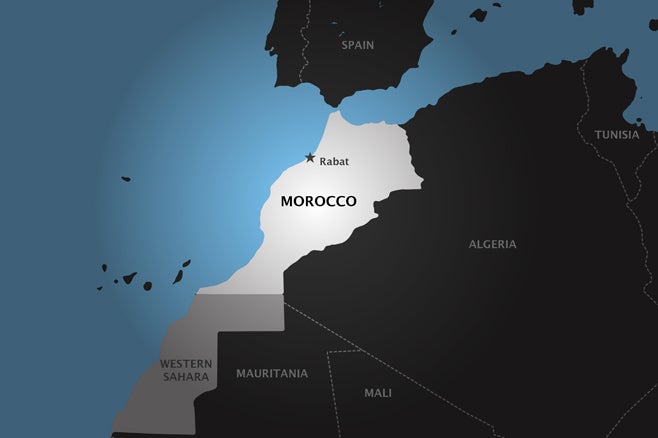
Girls are being exploited, abused, and forced to work long hours for extremely low wages. Morocco has taken important steps to reduce child labor, but it needs to take targeted actions to protect these child domestic workers and enforce the law.
Showing posts with label Children's rights. Show all posts
Showing posts with label Children's rights. Show all posts
Saturday, October 11, 2014
Nobel Peace Prize Boosts Battle to End Child Labor | Human Rights Watch
(New York) – The awarding of the 2014 Nobel Peace Prize to Indian child rights activist Kailash Satyarthi recognizes the hard fight against child labor and should serve as a call to address this challenge around the globe, Human Rights Watch said today. Satyarthi, 60, launched a campaign against employing children in the worst forms of labor both in India and elsewhere, and has built a movement to encourage businesses to employ ethical practices without child labor.
Continue here:
Nobel Peace Prize Boosts Battle to End Child Labor | Human Rights Watch:
Monday, November 19, 2012
Lonely Servitude | Human Rights Watch
http://www.hrw.org/news/2012/11/15/morocco-abuse-child-domestic-workers
Source: Human Rights Watch
Beatings, Little Pay or Rest, Weak Enforcement of Child Labor Laws

Source: Human Rights Watch
Beatings, Little Pay or Rest, Weak Enforcement of Child Labor Laws
 © 2012 Human Rights Watch
(Rabat) – Girls as young as 8 endure physical abuse and work long hours for little pay as domestic workers in Morocco.
The 73-page report, “Lonely Servitude: Child Domestic Labor in Morocco,” found that some child domestic workers – who are overwhelmingly girls – toil for 12 hours a day, 7 days a week, for as little as US$11 a month. Some girls told Human Rights Watch that their employers frequently beat and verbally abused them, denied them education, and sometimes refused them adequate food.
The Moroccan government has reduced child labor rates and increased school enrollment over the last decade. But it should strictly enforce laws prohibiting child domestic labor below age 15 by applying penalties to employers and recruiters, creating effective mechanisms to identify and remove underage children from employers’ households, and monitoring working conditions for domestic workers ages 15 to 17, said Human Rights Watch.
“Girls are being exploited, abused, and forced to work long hours for extremely low wages,” said Jo Becker, children’s rights advocacy director at Human Rights Watch. “Morocco has taken important steps to reduce child labor, but it needs to take targeted actions to protect these child domestic workers and enforce the law.”
Human Rights Watch first investigated the use of child domestic labor in Morocco in 2005. Interviews for the follow-up study indicated that the number of children working as domestic workers has dropped in recent years, and that public education campaigns and increased media attention have raised public awareness of the hazards of child domestic labor.
The report draws on field research conducted in April, May, and July 2012, in Casablanca, Rabat, Marrakech, and the Imintanoute region of Chichaoua province. Human Rights Watch interviewed 20 former child domestic workers, as well as government officials, lawyers, teachers, and representatives of nongovernmental and international organizations. Fifteen of the former child domestic workers had begun working before age 12; all but four were still under 18 at the time of the interviews.
The majority of the 20 girls interviewed said they were both physically and verbally abused by their employers. Some girls said their employers beat them with their hands, belts, wooden sticks, shoes, or plastic pipes. Three described sexual harassment or sexual assault by male members of the employer’s household.
“Working in private homes, many of these girls endure terrible conditions but have no idea where to turn for help,” Becker said. “Morocco should address the particular isolation and vulnerability of child domestic workers with an effective system to remove girls who are below the minimum age of 15 from these households, and monitor the working conditions for girls between 15 and 17.”
Most of the girls interviewed came from poor, rural areas. In approximately half of the cases, intermediaries recruited the girls to work in larger cities, often making deceptive promises about their working conditions.
An intermediary told Latifa L, whose name has been changed for her protection, that her employers “would be very kind” and would pay her well. She told Human Rights Watch that instead, she worked without a break from 6 in the morning until midnight, with no days off. She said her employer often beat her.
“I don’t mind working,” she said, “but to be beaten and not to have enough food, this is the hardest part of it.”
In nearly all of the cases Human Rights Watch investigated, the salaries for former child domestic workers were negotiated between the girl’s parents or guardians and the intermediary or employer. Most of the girls said they did not directly receive any wages, which were paid to their parents. The average salary of the girls interviewed was 545 dirhams per month (US$61), less than one-quarter of the 2,333 dirham (US$261) minimum monthly wage for Morocco’s industrial sector.
Morocco’s Labor Code sets a limit of 44 hours of work a week for most workers, but the code does not cover domestic workers. Some girls told Human Rights Watch that they worked over 100 hours a week, and only 8 of the 20 interviewed received a weekly day of rest.
None of the girls interviewed attended school while employed as domestic workers. Only two said they had completed the third grade before beginning work.
According to government statistics, Morocco has in recent years greatly reduced overall rates of child labor and increased the number of children who attend school. Government surveys indicate that children under age 15 engaged in all forms of labor dropped from 517,000 in 1999 to 123,000 in 2011.
Based on Human Rights Watch interviews with nongovernmental organizations and United Nations agencies, the rate of child domestic labor has also declined, although there is no recent data. Studies conducted in 2001 estimated that 66,000 to 86,000 children under 15 worked as domestic workers nationwide, including approximately 13,500 in the greater Casablanca area alone. The government says that it is preparing a new survey to determine current rate of child domestic labor, but that it is not yet completed.
Local groups and UN agencies also credit public education campaigns and media coverage with raising awareness of child domestic labor and of the legal prohibition on the employment of children under 15.
Despite progress in reducing child labor, laws prohibiting the employment of children under age 15 are not adequately enforced, Human Rights Watch said. Labor inspectors lack the authority to gain entry to private households to identify child domestic workers. Criminal prosecutions against employers responsible for physically abusing child domestic workers are rare, and fines are almost never imposed on employers who hire under-age children for domestic work. Child domestic workers are often unaware of existing mechanisms to assist vulnerable children or how to access them.
Human Rights Watch urged the government of Morocco to expand its efforts to address child labor by:
- Strictly enforcing age 15 as the minimum age for all employment, imposing penalties on employers and recruiters who employ or recruit children under age 15;
- Expanding public awareness campaigns regarding child domestic labor, including information about existing laws and how girls who need help can reach hotlines;
- Creating an effective system to identify and remove child domestic workers who are under the minimum age of employment and those ages 15 to 17 who are subject to abuse.
- Prosecuting under the Criminal Code people who are responsible for violence against child domestic workers.
Human Rights Watch also urged the government of Morocco to adopt a draft law on domestic workers that has been under discussion for several years, and to amend it to ensure compliance with the International Labour Organization’s Convention on Decent Work for Domestic Workers. The Convention, adopted in 2011, establishes global standards for domestic workers.
The Convention specifies that working hours for domestic workers should be equivalent to those for other sectors and that domestic workers should be covered by minimum wage requirements. The draft law does not set working hour limits for domestic workers, however, and would allow employers to pay domestic workers only 50 percent of the minimum wage for the industrial sector.
Morocco voted to adopt the Domestic Workers Convention at the International Labour Conference in 2011, but has not yet ratified it. The convention was adopted with overwhelming support from governments and will enter into force in 2013.
“Morocco’s draft domestic workers law includes important provisions, such as an employment contract and a weekly day of rest, but in other respects, such as working hours and minimum wage, it falls short of new international standards,” Becker said. “Amending and adopting the law will show Morocco’s commitment to this issue and improve the working conditions for Morocco’s domestic workers.”
Tuesday, October 30, 2012
Congresswoman Moves To Crack Down On Children In Fields | NBC Bay Area
CLICK TO LISTEN TO REPORT:
http://www.nbcbayarea.com/investigations/series/children-in-the-field/Congress-Focuses-on-Child-Labor-Law--175675301.html
SOURCE: NBC Bay Area
By By Stephen Stock and David Paredes
| Friday, Oct 26, 2012 | Updated 7:22 AM PDT
An NBC Bay Area investigation into child labor has prompted a renewed push to change the law governing children working in American fields.
Congresswoman Lucille Roybal-Allard (D-East Los Angeles) is calling for new protections for kids who work in agriculture, specifically large corporate farms across the United States. She is re-introducing a bill called the "Care Act," to ensure that labor laws are the same for children in all industries, including agriculture.
In a political season where the presidential campaign is gathering nearly all the media attention, there is a quiet movement starting on Capitol Hill to change a labor law that currently allows young children to work in the fields.
But even supporters of that proposed law say that nothing is likely to happen quickly. They admit that any changes to current U.S. labor law face a tough political battle from the opposition.
As the political battle is gearing up in D.C., nearly 3,000 miles away in California’s Central Valley, the harvest season is quickly winding down: There are only a few grapes and raisins are left to pick.
As the political battle is gearing up in D.C., nearly 3,000 miles away in California’s Central Valley, the harvest season is quickly winding down: There are only a few grapes and raisins are left to pick.
Most of the migrant farm workers and their families are packing up and moving on following the crops North. For the next few months they’ll be picking cherries in Oregon and apples in Washington state before returning South and starting the migrant labor cycle all over again.
Among those workers are as many as a half million children working the fields, according to Norma Flores Lopez of the Children in the Fields Campaign at the Association of Farmworker Opportunity Programs in Washington, D.C.
That startling statistic has now caught the attention of lawmakers on Capitol Hill.
After watching NBC Bay Area’s investigation in August documenting child labor in California and North Carolina, Roybal-Allard was moved. She said things must change.
“I was shocked. I really do believe that this is this country’s dirty little secrets,” Roybal-Allard said. “There are today, in this country, children that are working in deplorable conditions and are not equally protected under our child labor laws. And these are the children who work in agriculture. I want to change that.”
To affect that change, she introduced, once again, the “Care Act.” It is legislation Roybal-Allard first pushed in Congress twelve years ago but has had little support so far.
“What the Care Act does is simply provide the same protections under our current child labor laws that exist for children in every industry to have them apply to children in agriculture,” Roybal-Allard said.
The idea of making child labor rules the same for agriculture as for every other industry has, so far, gone nowhere on Capitol Hill. But Roybal-Allard now believes change may be possible.
“My hope is that the American people are educated about the abuses of children in agriculture,” Roybal-Allard said. “That that same kind of outrage about what happens to children in other countries will be felt here in this country and that Congress will then take action and pass the Care Act.”
But there are others in Congress who aren’t so eager to pass new legislation to protect children working in agriculture.
Among them are two of California's Republican congressmen, Jeff Denham and Devin Nunes.
Denham and Nunes are both co-sponsors of the “Preserving America’s Family Farms Act.” This bill does the opposite of the “Care Act”: It would prevent the United States Labor Department from unilaterally changing or updating labor rules governing children working in agriculture. Those rules date back to 1938.
The bill is sponsored by U.S. Rep. Tom Latham (R-Iowa) and has already passed the U.S. House of Representatives.
Sen. Charles Grassley (R-Iowa) is a co-sponsor of a companion bill in the Senate. He said Roybal-Allard’s proposal would hurt family farms.
“It wouldn’t be unusual for members of a farm family in Iowa in the months of April, May and June and September and October to be putting in 14- or 18-hour days,” Grassley said. “There’s probably no difference between Dad putting it in and a 12-year-old boy putting it in.”
When asked why agriculture, as an industry, is exempt from labor rules involving children that apply to every other industry in America, Grassley stressed the importance of the family farm.
When asked why agriculture, as an industry, is exempt from labor rules involving children that apply to every other industry in America, Grassley stressed the importance of the family farm.
“Well, I think because of the family being involved in it and working side by side with Mom and Dad,” Grassley said.
Others involved in the “Preserve the Family Farm Act” were less eager to talk on the record about their support of the bill.
Denham and Nunes first agreed to sit down for on-camera interviews with NBC Bay Area in their Capitol Hill. But both congressmen canceled at the last minute.
And the press secretary for Latham - the bill’s main sponsor - said the congressman was too busy attending to the needs of his constituents to talk to reporters from San Francisco.
In addition, NBC Bay Area reached out to a dozen different major corporations who process, package and sell the produce these children are picking. None of them would comment about this issue. The California Farm Bureau Federation also wouldn't it down on camera and talk in depth about children working in fields, when originally asked in September. The bureau did sent in a statement, though. To read it in full, click here.
Even as the debate splits Washington, back in California’s Central Valley there is little debate among these families working on large farms.
For them it may be complicated politics yet it’s very simple economics.
While the parents may not want their children to have to work the fields, most families have to have them there in order to make ends meet.
As a property manager for migrant housing with Fresno County’s Housing Authority, Connie Saavedra knows the political debate inside and out.
She also knows the economic side of this issue, too.
As a young child, Saavedra worked the very same fields in the Central Valley where her clients now work.
“They do what they gotta do,” Saavedra said. “Even two hours three hours out in the field is enough for the parents to help (pay the bills.)”
Saavedra said that even recently she has seen children as young as 6 years old out in the fields helping their parents harvest raisins.
“They get the little ones to give (the raisin packets) to the older ones and they dump in the raisins (in the wagon) and they pull in the paper,” Saavedra said ,describing the final collection of dried raisins from the fields.
Roybal-Allard acknowledged the quandary her bill puts migrant workers in financially. If her bill were to become law the children would no longer be able to legally work on large corporate farms to help out. But Roybal-Allard says protecting children from the dangers of working in agriculture is paramount.
“The majority of children that the Care Act will protect are actually employees of large corporate farms not family farms,” Roybal-Allard said. “It’s unconscionable.”
“The majority of children that the Care Act will protect are actually employees of large corporate farms not family farms,” Roybal-Allard said. “It’s unconscionable.”
When put in that context, even Grassley seemed to back away from the current rules when asked what he thought of 12-year-olds working on large corporate farms alongside their parents to make ends meet.
“I think as long as I’ve not been in those fields I’d better not answer,” Grassley said.


Monday, March 14, 2011
COMMUNITY OUTREACH PROGRAMME ON CHILD RIGHTS « NEWS ON SHAKTI VAHINI

STREET PLAY ON CHILD LABOUR
Venue: Trilokpuri, East Delhi/ 05 MARCH 2011
Shakti Vahini, the nodal NGO in East and New Delhi district for the Awareness Programme on Juvenile Justice System for Police Officers recommended by Special Police Unit for Women and Children, Nanakpura in collaboration with Special Juvenile Police Unit, East Delhi has organized a community outreach Programme in Trilokpuri, Block 32 on March 5, 2011. The programme was started at 2pm and continued till 4:30pm.
The Programme was attended by Insp. Smt. Kusum Maindola, SJPU East and her colleagues, Shakti Vahini team, SJPU Social Worker, local leaders and the community people. The programme was started with the welcome speech by Mr. Subir Roy, Director (Programmes and Projects), Shakti Vahini. In his speech he dwelt at length the issues related to child labour/child trafficking. He said “Today’s children are the Tomorrows Future.” We should protect each and every child in distress. He told the community people that they should not keep any child for domestic help.
In the last three years altogether 17,305 children went missing from Delhi only. Out of these 2,366 children are yet to be traced. Mr. Roy asked the gathering about their opinion regarding the children who are yet to be traced, where these children go. He talked about the illegal business run by the unregistered placement agencies illegally running in the city. These placement agencies are involved in the organized crime of child trafficking. They bring children from the poor states and employ them in the city as domestic help. As per the work done by Shakti Vahini it was revealed that most of these children are harassed, tortured and are not being paid for their service. Mr. Roy requested all the present gathering to help the children who are in distress with the help of the NGO and Police.
Insp. Smt. Kusum Maindola, SJPU east spoke on the role of SJPU and how it can help the community children. She told that the community people could ask for help to the police at any time by dialing 100 or 1098 of CHILDLINE. She explained that SJPU is a wing of Delhi Police and it works on Juveniles.
Then a Street Play on child labour/child trafficking was performed by volunteers of Ahwahan Foundation.
STREET PLAY:
The street Play was organized for creating the awareness to combat Child Labour and Child Trafficking among the people. Street Play is the best suited to explain to the community people the kind of life a child labour is forced to lead and the hardships they face. The street plays were performed to create awareness about need for education, emphasizing on the need for improving access to education and quality of education, to eradicate child labour from the society.
The performers used simple local language to make the villagers understand the issues more easily and effectively. This plays an important role in informing the parents about various tactics used by the traffickers for persuading them (parents) to send their children along. Through these plays mainly the community people were targeted as they are victims of many child abuses. Through this street play initiative approximately 1500 people are sensitized in the Trilokpuri area. The gathering present there promised to share the message for anti child labour and ani child trafficking among their neighbors.
The play:
The street play was started by a song on Child Trafficking for Labour supported by the instrument ‘Dafli.’ The mesmerizing sound of the instrument and the song sung by the performers attracted the gathering. The performers who are professionals in the field of acting showed in their play about the trafficking of a child and how he gets involved in the child labour and abused by his/her owner. The play also showed the conditions of the child labours in the city as well as the rural areas. The children are harassed by their employer for minor mistakes; they are being tortured, not being paid. Some of them are not even allowed to meet their parents. The play also pass the message that as the children are low paid, don’t take the decision of their exploitation they are always in demand for child labour. One representative from a local NGO also spoke in the programme. The SJPU Social Worker gave the vote of thanks to all the present gathering.
Source: shaktivahini.wordpress.com
Friday, July 9, 2010
Slavery in Haiti, Again (Or: What's the Worth of a Haitian Child? Part II) | Other Worlds
Submitted by Other Worlds on Thu, 07/01/2010 - 09:53
A former child slave herself, Helia Lajeunesse sent four of her five children, including the two
older ones shown here, into slavery because she feared they would die of hunger in her home.
She later reclaimed the children. Photo: Tory Field.
By Beverly Bell and Tory Field
“I’m struggling to end slavery because I know how I suffered,” said Helia Lajeunesse, a former restavèk, child slave, who is now a children’s rights advocate.
Today there are an estimated 27 million slaves in the world, according to the research of Kevin Bales of Free the Slaves.[1] This is more than at any time in history, even including during the trans-Atlantic slave trade.
In Haiti, the only nation ever to host a successful slave revolution, 225,000 to 300,000 children[2] live in forced and usually violent servitude in a system known as restavèk, literally “to stay with.” The numbers are at risk of rising dramatically because of the hundreds of thousands of children who lost their parents or were abandoned after the earthquake. In addition to likely trauma, hunger, and health problems, unaccompanied minors are at threat from adults who may take advantage of a source of free labor. Unprotected girls are also at risk of what amounts to sex slavery, as rape of restavèk girls by the men and youth in the household is common.
The system usually works this way: A parent who cannot afford to feed or educate a child may give him or her to a better-off relative, neighbor, or stranger who promises to provide care and schooling. The families giving up children are usually from the countryside, where poverty is unrelenting. The children are as young as three, with girls between six and 14 years old comprising sixty-five percent of the population.[3]
Restavèk children toil long hours and rarely go to school. They are regularly abused. They usually eat table scraps or have to scavenge in the streets for their own food, sleep on the floor, and wear cast-off rags.
They are not chained or locked up. One reason the children usually stay is the threat of severe punishment – often including beatings - if they are caught trying to escape and are returned to the family. Another reason is that they have no other source of food and shelter. Survival and safety options for street children in Haiti are not good, though some restavèk do escape to live on the streets.
Alina “Tibebe” Cajuste described her childhood as a restavèk this way: “This is a sad, sad story to the world. A woman who used to come sell in the market told my mother to give me to her. My mother had no support, so she had to.
“What did this woman make me do? I had to get up before 3:00 or 4:00 in the morning to make the food, sweep the floor, and wash the car, so that when the family woke up everything would be ready. Then I had to wash dishes, fetch water, and go sell merchandise for her in the countryside. When I came back from the marketplace, I would carry two drums of water on my head, so heavy, to wash up for her. Then I’d go buy things to make dinner. And I couldn’t even eat the same food as her. If she ate rice, I only got cornmeal. I didn’t even wear the same sandals or dresses as her child. My dresses were made out of the scraps of cloth that were left over from what she sold in the marketplace. I couldn’t even sleep in a bed.”
Among the trials she recounted of her life as a restavèk, Helia Lajeunesse recounted this: “One day I was coming back from delivering food to the child of the house, which I had to carry on my head to her at school every day. There was a man holding a school under a coconut tree. He called to me, ‘Come be part of this school.’ I said, ‘No, I can’t, because when I go home my aunt will beat me.’ He said, ‘You should come.’ I went. Now when I went home, I said, ‘There was a man holding a school, so I attended today.’ The woman said, ‘What? You went to school?’ I said, ‘Yes, and could you please give me a little pencil and a notebook?’ She asked me what I thought I was doing, and started beating me.
“Poverty and misery made me not know how to read and write, or count in my head, until I was a grown-up.
“I escaped three times and went to different homes, four in all. But each time I suffered as badly or worse than before. I was abused so much. Misery was killing me.
Still, many years later when Helia’s husband was murdered and she could no longer feed her five children, she said, “I was obliged to give four away, even though the youngest was only three years old. I only kept one who wasn’t even a year old then.”
Later, however, she went to a child rights training by the grassroots groups Commission of Women Victim to Victim (KOFAVIV). “That gave me consciousness and I went and got my children back. I said to myself, no matter what, I am going to keep my children. Now I’m with my four children [one of her five died in the earthquake]. I’m their mother, I’m their father.”
The system has long been widely socially accepted, and its neutral-sounding name has rarely been replaced by the more appropriate term of slavery. But efforts are underway to change this.
Today Tibebe and Helia are part of a group of restavèk survivors who are raising visibility of and opposition to the system. Their group, KOFAVIV, is among a small but growing child protection network. The two women have traveled as far as Washington, D.C. to speak out. They conduct trainings in children’s rights and have helped organize two marches where thousands of women wore T-shirts saying “I oppose the restavèk system. And you, what are you waiting for?” They are also part of a diverse global movement of people working to supplant commercialization and degradation of human life with dignity and rights.
For more on the work to end child servitude in Haiti, and how you can help, see the upcoming blog post “A Second Slave Rebellion in Haiti,” on July 15th.
1 Kevin Bales, Ending Slavery: How we Free Today’s Slaves, University of California
Press, 2007. www.freetheslaves.net
2 Estimates on the number of child restavèk vary. The recent UNICEF report Haiti 2010-
2011: Mid-Year Review of 2010 Humanitarian Action Report estimates 225,000. Child
right advocates typically put the number at 300,000.
3 U.S. Department of State, Trafficking in Persons Report 2009, http://www.state.gov/g/
tip/rls/tiprpt/2009/123140.htm
Slavery in Haiti, Again (Or: What's the Worth of a Haitian Child? Part II) | Other Worlds

A former child slave herself, Helia Lajeunesse sent four of her five children, including the two
older ones shown here, into slavery because she feared they would die of hunger in her home.
She later reclaimed the children. Photo: Tory Field.
By Beverly Bell and Tory Field
“I’m struggling to end slavery because I know how I suffered,” said Helia Lajeunesse, a former restavèk, child slave, who is now a children’s rights advocate.
Today there are an estimated 27 million slaves in the world, according to the research of Kevin Bales of Free the Slaves.[1] This is more than at any time in history, even including during the trans-Atlantic slave trade.
In Haiti, the only nation ever to host a successful slave revolution, 225,000 to 300,000 children[2] live in forced and usually violent servitude in a system known as restavèk, literally “to stay with.” The numbers are at risk of rising dramatically because of the hundreds of thousands of children who lost their parents or were abandoned after the earthquake. In addition to likely trauma, hunger, and health problems, unaccompanied minors are at threat from adults who may take advantage of a source of free labor. Unprotected girls are also at risk of what amounts to sex slavery, as rape of restavèk girls by the men and youth in the household is common.
The system usually works this way: A parent who cannot afford to feed or educate a child may give him or her to a better-off relative, neighbor, or stranger who promises to provide care and schooling. The families giving up children are usually from the countryside, where poverty is unrelenting. The children are as young as three, with girls between six and 14 years old comprising sixty-five percent of the population.[3]
Restavèk children toil long hours and rarely go to school. They are regularly abused. They usually eat table scraps or have to scavenge in the streets for their own food, sleep on the floor, and wear cast-off rags.
They are not chained or locked up. One reason the children usually stay is the threat of severe punishment – often including beatings - if they are caught trying to escape and are returned to the family. Another reason is that they have no other source of food and shelter. Survival and safety options for street children in Haiti are not good, though some restavèk do escape to live on the streets.
Alina “Tibebe” Cajuste described her childhood as a restavèk this way: “This is a sad, sad story to the world. A woman who used to come sell in the market told my mother to give me to her. My mother had no support, so she had to.
“What did this woman make me do? I had to get up before 3:00 or 4:00 in the morning to make the food, sweep the floor, and wash the car, so that when the family woke up everything would be ready. Then I had to wash dishes, fetch water, and go sell merchandise for her in the countryside. When I came back from the marketplace, I would carry two drums of water on my head, so heavy, to wash up for her. Then I’d go buy things to make dinner. And I couldn’t even eat the same food as her. If she ate rice, I only got cornmeal. I didn’t even wear the same sandals or dresses as her child. My dresses were made out of the scraps of cloth that were left over from what she sold in the marketplace. I couldn’t even sleep in a bed.”
Among the trials she recounted of her life as a restavèk, Helia Lajeunesse recounted this: “One day I was coming back from delivering food to the child of the house, which I had to carry on my head to her at school every day. There was a man holding a school under a coconut tree. He called to me, ‘Come be part of this school.’ I said, ‘No, I can’t, because when I go home my aunt will beat me.’ He said, ‘You should come.’ I went. Now when I went home, I said, ‘There was a man holding a school, so I attended today.’ The woman said, ‘What? You went to school?’ I said, ‘Yes, and could you please give me a little pencil and a notebook?’ She asked me what I thought I was doing, and started beating me.
“Poverty and misery made me not know how to read and write, or count in my head, until I was a grown-up.
“I escaped three times and went to different homes, four in all. But each time I suffered as badly or worse than before. I was abused so much. Misery was killing me.
Still, many years later when Helia’s husband was murdered and she could no longer feed her five children, she said, “I was obliged to give four away, even though the youngest was only three years old. I only kept one who wasn’t even a year old then.”
Later, however, she went to a child rights training by the grassroots groups Commission of Women Victim to Victim (KOFAVIV). “That gave me consciousness and I went and got my children back. I said to myself, no matter what, I am going to keep my children. Now I’m with my four children [one of her five died in the earthquake]. I’m their mother, I’m their father.”
The system has long been widely socially accepted, and its neutral-sounding name has rarely been replaced by the more appropriate term of slavery. But efforts are underway to change this.
Today Tibebe and Helia are part of a group of restavèk survivors who are raising visibility of and opposition to the system. Their group, KOFAVIV, is among a small but growing child protection network. The two women have traveled as far as Washington, D.C. to speak out. They conduct trainings in children’s rights and have helped organize two marches where thousands of women wore T-shirts saying “I oppose the restavèk system. And you, what are you waiting for?” They are also part of a diverse global movement of people working to supplant commercialization and degradation of human life with dignity and rights.
For more on the work to end child servitude in Haiti, and how you can help, see the upcoming blog post “A Second Slave Rebellion in Haiti,” on July 15th.
1 Kevin Bales, Ending Slavery: How we Free Today’s Slaves, University of California
Press, 2007. www.freetheslaves.net
2 Estimates on the number of child restavèk vary. The recent UNICEF report Haiti 2010-
2011: Mid-Year Review of 2010 Humanitarian Action Report estimates 225,000. Child
right advocates typically put the number at 300,000.
3 U.S. Department of State, Trafficking in Persons Report 2009, http://www.state.gov/g/
tip/rls/tiprpt/2009/123140.htm
Slavery in Haiti, Again (Or: What's the Worth of a Haitian Child? Part II) | Other Worlds
Monday, May 31, 2010
Who Are They? A Look Behind The World Of Child Trafficking And Slavery
 Image by hipponotized via Flickr
Submitted 2010-05-28 05:01:27
More people are becoming aware of the problem of child trafficking and slavery that is devastating the lives of victims around the world. There are numerous organizations that want to bring an end to this terrible tragedy. However, accomplishing a goal of this magnitude takes more than a desire. Activists need to understand what drives the growth of this illegal industry and then find ways to stop this modern-day slavery from happening.
Every day, children are being abducted, and men and women are lured into traps of enslavement. This constant process creates an endless supply of humans victimized by this tragic pandemic. The most vulnerable groups for modern day slavery are those with limited rights or protections.
Who are the people behind child trafficking? Often, human slavery is managed by organized criminal networks, large and small, both within the United States and abroad, which have taken control and advantage of this economic 'supply and demand' situation. This control allows them to traffic and exploit victims in order to generate enormous profits.
Forced Labor, Primarily In The Sex Industry
The Department of Health and Human Services reported in an overview of the modern day slavery issue that many are victimized through prostitution and sex by the entertainment industry. However, they note there are various other types of labor exploitation, including sweatshops, migrant agricultural work, domestic servitude, and more.
Human enslavement, which typically occurs by deception or force, brings in profits of over 12 billion dollars a year according to UNICEF. Much of this is generated through child trafficking with about 2.5 million children being exploited. Many organizations attempt to rescue these children, women, and men from slavery; yet, they are barely making a dent in what seems to be an unending supply of enslaved humans.
She Thought She Would Be A Model
Within the United States, it could be as simple as someone offering what seems to be a great opportunity for a modeling career. As reported by Primetime, Miya was working in a mall when she was approached by a man who offered her a lucrative opportunity that turned into a nightmare.
Miya shared with Primetime that the predator told her he was a modeling agent looking for potential new models in the area. Although modeling was not a career she wanted to pursue, the offer interested her as a way to pay off bills and save for upcoming college expenses.
She took what she thought was a great opportunity to become a model. After getting made over for a photo session with a disposable camera, Miya was alarmed and soon became aware of what was really going on, but it was too late. After enduring a brutal ordeal, she was forced to work as a prostitute until one early morning in San Francisco when she made her escape. The police were able to capture the man responsible for Miya's first-hand encounter with modern day slavery.
The cases of child trafficking take on various forms and faces. In some foreign countries, and places where women and children's rights are compromised, the cases appear to be more predominantly heinous. Women and children are preyed upon by traffickers, ripped away from their homes, and sold into modern day slavery.
Addressing The Demand
Every year, the United States Department of State publishes a report on the child trafficking issue. The report states that sex enslavement is a large part of the overall issue and comprises the majority of transnational modern day slavery. The report continues by stating that the issue would not exist if the demand for commercial sex was not as prevalent throughout the world.
The industry sustainability is generated through the growing demand from predators that take advantage of these helpless victims. The perpetrators of countless crimes against numerous victims go unprosecuted in many cases by local governmental authorities, giving these predators a sense of invincibility for their crimes against children. This feeling of invincibility only works to drive the demand of modern day slavery.
The State Department's report maintains that if anyone expects to have success in combating the issue of sex enslavement, they must confront both the demand for commercial sex that is driving the victimization of individuals, and the supply of trafficked humans.
Legal deterrents developed through the cooperation of state, national, and international governments are an effective tool, if acted upon, at deterring people from taking part in this heinous crime. While at this time many states link child trafficking cases to kidnapping and prostitution, some states, such as Oklahoma, are working on laws that would make human and child trafficking a felony with a minimum 10-year prison sentence.
Regardless of where it occurs, child trafficking and enslavement needs to stop. Many organizations exist with the aim of attempting to rescue those victimized by child trafficking. Other organizations are trying to stop the demand for victims through targeting these predators. Through awareness and support, there can be an end to child trafficking.
Who Are They? A Look Behind The World Of Child Trafficking And Slavery
![Reblog this post [with Zemanta]](http://img.zemanta.com/reblog_e.png?x-id=2e8a14f9-1e03-4332-9e31-609b32c53b8b)
Subscribe to:
Posts (Atom)

