Showing posts with label Domestic worker. Show all posts

Monday, March 2, 2015

Acting on a tip-off, TWC2 rescues a maid trapped over two years without a day off


Late November 2014, an email came from the blogsite Tremeritus about an Indonesian domestic worker who was not allowed to leave her employer’s house for two years. The email sender said “hope you guys can take a look at this case seriously. The poor maid is said to be always hungry and begging for food from neighbour.”
Helpfully, the email gave us at Transient Workers Count Too the address – a house in a quiet district in the Thomson area.

READ MORE


Acting on a tip-off, TWC2 rescues a maid trapped over two years without a day off:


Tuesday, May 27, 2014

Profits and Poverty: The Economics of Forced Labour

Source: ILO


  1. Download
    Profits and Poverty: The Economics of Forced Labour

    The study investigates the underlying factors that drive forced labour, of which a major one is illegal profits. Figures include a breakdown of profits by area of forced labour and by region.


Continue here to see some graphs on annual profits from forced labor


http://www.ilo.org/global/topics/forced-labour/publications/profits-of-forced-labour-2014/lang--en/index.htm

Related articles
Enhanced by Zemanta

Tuesday, March 18, 2014

Silent slaves: Stories of human trafficking in India | Women Under Siege Project

Source:  Women Under Siege Project, Women's Media Center

A report by By 

Selling humans

In the western part of India’s capital city, New Delhi, more than 5,000 domestic worker placement agencies operate out of a nondescript neighborhood called Shakurpur Basti. For years, the agencies have flourished by indulging in the business of trafficking minor girls and selling them as domestic slaves in the cities. To expose this racket of trafficking and to uncover their modus operandi, we waited for days with a hidden camera, posing as a family interested in employing a girl.

Learn more here:

http://www.womenundersiegeproject.org/blog/entry/silent-slaves-stories-of-human-trafficking-in-india
Enhanced by Zemanta

Sunday, January 12, 2014

Dignitary’s Maid Reveals Indignities of Domestic Work - Working In These Times

Source: Working In These Times

A certain romance colors our image of the house servant of yore. In fare from Downton Abbey to Hollywood's The Butler, they're depicted as spectacles of starched traditionalism, deference and obsessive manners, even as they navigate unspoken class and racial faultlines. Though household labor has evolved from its rigid historical forms, a new chapter of the period drama for the era of globalization has emerged in New York's rarefied diplomatic scene, with curious case of Sangeeta Richard, the domestic worker of Indian diplomat Devyani Khobragade.

Continue here:

 http://inthesetimes.com/working/entry/16062/dignitarys_maid_reveals_indignities_of_domestic_work/

Enhanced by Zemanta

Tuesday, December 17, 2013

Polaris Webinar: Human Trafficking in Domestic Servitude

Source: Polaris Project

Check out this Webinar from the Polaris Project

( Polaris Project) - Every month, we provide the human trafficking field with vital resources, including trainings, indicators cards, and statistics. Recently, we released a training for service providers seeking to help survivors of labor trafficking through domestic work. Check out the training and pass it on: http://ow.ly/rP5Qs
Enhanced by Zemanta

Wednesday, November 6, 2013

Labor Rights for All: The Fight Against Modern-Day Slavery | Human Rights Watch

Source:  Human Rights Watch

Women from 40 countries—nannies, housecleaners, community organizers, and trade unionists—gathered in Uruguay at the end of October to establish the first global federation of domestic workers. There were few television cameras, no celebrities to give a keynote speech, no large commitments of donor aid. In fact there were none of the trappings of the numerous international conferences to fight the enormous social ills of forced labor, trafficking, and labor exploitation.

Continue here:

http://www.hrw.org/news/2013/11/06/labor-rights-all-fight-against-modern-day-slavery
Enhanced by Zemanta

Wednesday, July 17, 2013

Get Tough on Human Trafficking - Room for Debate - NYTimes.com

Source: NYTimes.com

Steven Watt
Steven Watt is a senior staff attorney with the American Civil Liberties Union’s Human Rights Program.
JULY 17, 2013
"Diplomatic immunity is necessary, but its purpose gets muddled when it shields diplomats involved in human trafficking and forced labor. Under U.S. law, foreign diplomats stationed here can apply for special visas to bring domestic workers with them. However, in a disturbing number of cases, some diplomats have abused this privilege. They lure workers to this country with promises of good jobs, but then, on arrival, trap them in their homes by confiscating their passports. These workers are then forced to toil for long hours for little or no pay. Some women have reported been physically or sexually abused."
Continue reading Steven Watt's article here:

Enhanced by Zemanta

Friday, February 22, 2013

Forced Labour: ILO: Tougher measures needed to curb forced labour

http://www.ilo.org/global/about-the-ilo/newsroom/news/WCMS_204399/lang--en/index.htm

Source: ILO

According to an ILO report, the need to deter would-be perpetrators is widely recognized, but 
more effort is needed to identify cases of forced labour and to prevent the crime.

News | 08 February 2013


GENEVA (ILO News) – A new ILO report highlights the need for tougher measures

 to combat forced labour, which claims 21 million victims worldwide – men, women 
and children coerced into jobs they can’t leave, trapped in debt bondage, 
trafficked for sexual exploitation and even born into slavery.


Efforts to prevent, identify and prosecute cases of forced labour often fall
 short of what is needed, despite good practices in some countries, the
International Labour Organization said, in a report prepared ahead
 of meeting of experts on forced labour representing governments, 
workers and employers (February 11-15, 2013).

Many forced labour victims work hidden from public view, on fishing 
vessels and construction sites, in commercial agriculture and in factories.

“Forced labour encompasses brick kiln workers trapped in a vicious
cycle of debt, children trafficked for forced begging and domestic 
workers deceived about their conditions of work,” the report said.

Debt bondage, under which labourers and their families are forced to
 work for an employer to pay off the debts they have incurred or
 inherited, remains widespread in some countries.

According to the report authors, “vestiges of slavery” still survive in
some countries, where “conditions of slavery continue to be transmitted
 by birth to individuals who are compelled to work for their master without
payment.”

Domestic workers, the majority of whom are women and girls, are 
often victims of abusive practices by employers, such as non-payment 
of wages, deprivation of liberty, and physical and sexual abuse. These 
practices can amount to forced labour.

Migrant workers are at risk too. The report warns that trafficking of people, 
including children, for sexual and labour exploitation, could increase in the
 future as a result of growing labour mobility.

On the other hand, the systematic imposition of forced labour by the state 
has declined worldwide, and has practically disappeared in the great
 majority of countries. State-imposed forced labour accounts for 10 per 
cent of the nearly 21 million victims of forced labour worldwide, 
according to 2012 ILO figures contained in the report.


Punishment is not strong enough

Over recent years, there has been growing recognition of the importance 
of measures to deter would-be perpetrators, strengthen law enforcement 
responses, address demand and reduce the vulnerability of potential victims 
of forced labour.

But, while most countries have adopted legislation criminalizing forced labour,
 punishment is not always strong enough to act as a deterrent, in some cases 
amounting to fines or very short prison sentences.

Most countries lack comprehensive measures targeting demand for forced
 labour goods and services, though some countries have taken legal and
 other measures to discourage individuals and businesses from exploiting
 workers in slavery-like conditions.

Identifying victims also remains a major challenge. Some countries fail 
to sufficiently support labour inspections, which can play a key role in
 finding the victims, as well as preventing situations of abuse from 
degenerating into forced labour.

In many cases, measures have been taken to reduce the vulnerability 
of specific groups, such as awareness-raising programmes aimed at 
workers heading overseas.

The February 11-15 meeting at ILO headquarters will assess the 
need for further standard-setting to complement the ILO’s Forced 
Labour Convention, 1930 (No. 29) and Abolition of Forced Labour
 Convention, 1957 (No. 105), by focusing in particular on prevention, 
victim protection, including compensation and trafficking for labour exploitation.


* Almost 21 million people are victims of forced labour – 11.4 million women and
girls and 9.5 million men and boys.

* Children under the age of 18 years represent 26 per cent (5.5 million) of 

all forced labour victims.

* Almost 19 million victims are exploited by private individuals or enterprises

 and over 2 million by the state or rebel groups.

*Of those exploited by individuals or enterprises, 4.5 million are 

victims of forced sexual exploitation.

* Those who exact or promote forced labour generate vast 

illegal profits.

* Domestic work, agriculture, construction, manufacturing and

 entertainment are among the sectors most concerned.

*Migrant workers and indigenous people are particularly vulnerable

 to forced labour.

Enhanced by Zemanta

Monday, November 19, 2012

Lonely Servitude | Human Rights Watch

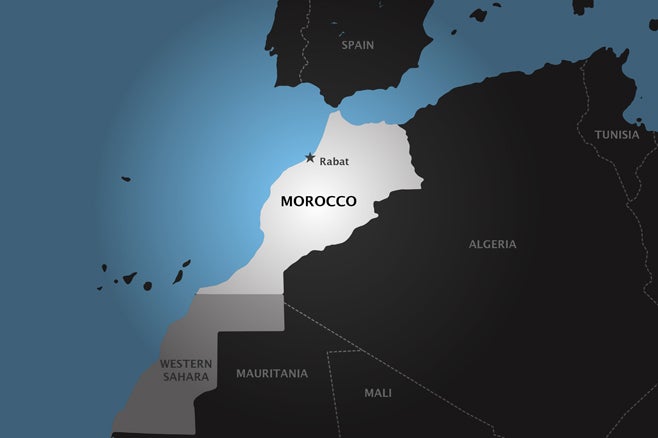
http://www.hrw.org/news/2012/11/15/morocco-abuse-child-domestic-workers

Source: Human Rights Watch

Beatings, Little Pay or Rest, Weak Enforcement of Child Labor Laws
NOVEMBER 15, 2012
Girls are being exploited, abused, and forced to work long hours for extremely low wages. Morocco has taken important steps to reduce child labor, but it needs to take targeted actions to protect these child domestic workers and enforce the law.
Jo Becker, children’s rights advocacy director
(Rabat) – Girls as young as 8 endure physical abuse and work long hours for little pay as domestic workers in Morocco.
The 73-page report, “Lonely Servitude: Child Domestic Labor in Morocco,” found that some child domestic workers – who are overwhelmingly girls – toil for 12 hours a day, 7 days a week, for as little as US$11 a month. Some girls told Human Rights Watch that their employers frequently beat and verbally abused them, denied them education, and sometimes refused them adequate food.
The Moroccan government has reduced child labor rates and increased school enrollment over the last decade. But it should strictly enforce laws prohibiting child domestic labor below age 15 by applying penalties to employers and recruiters, creating effective mechanisms to identify and remove underage children from employers’ households, and monitoring working conditions for domestic workers ages 15 to 17, said Human Rights Watch.
“Girls are being exploited, abused, and forced to work long hours for extremely low wages,” said Jo Becker, children’s rights advocacy director at Human Rights Watch. “Morocco has taken important steps to reduce child labor, but it needs to take targeted actions to protect these child domestic workers and enforce the law.”
Human Rights Watch first investigated the use of child domestic labor in Morocco in 2005.  Interviews for the follow-up study indicated that the number of children working as domestic workers has dropped in recent years, and that public education campaigns and increased media attention have raised public awareness of the hazards of child domestic labor.
The report draws on field research conducted in April, May, and July 2012, in Casablanca, Rabat, Marrakech, and the Imintanoute region of Chichaoua province. Human Rights Watch interviewed 20 former child domestic workers, as well as government officials, lawyers, teachers, and representatives of nongovernmental and international organizations. Fifteen of the former child domestic workers had begun working before age 12; all but four were still under 18 at the time of the interviews.
The majority of the 20 girls interviewed said they were both physically and verbally abused by their employers. Some girls said their employers beat them with their hands, belts, wooden sticks, shoes, or plastic pipes. Three described sexual harassment or sexual assault by male members of the employer’s household.
“Working in private homes, many of these girls endure terrible conditions but have no idea where to turn for help,” Becker said. “Morocco should address the particular isolation and vulnerability of child domestic workers with an effective system to remove girls who are below the minimum age of 15 from these households, and monitor the working conditions for girls between 15 and 17.”
Most of the girls interviewed came from poor, rural areas. In approximately half of the cases, intermediaries recruited the girls to work in larger cities, often making deceptive promises about their working conditions.
An intermediary told Latifa L, whose name has been changed for her protection, that her employers “would be very kind” and would pay her well. She told Human Rights Watch that instead, she worked without a break from 6 in the morning until midnight, with no days off. She said her employer often beat her.
“I don’t mind working,” she said, “but to be beaten and not to have enough food, this is the hardest part of it.”
In nearly all of the cases Human Rights Watch investigated, the salaries for former child domestic workers were negotiated between the girl’s parents or guardians and the intermediary or employer. Most of the girls said they did not directly receive any wages, which were paid to their parents. The average salary of the girls interviewed was 545 dirhams per month (US$61), less than one-quarter of the 2,333 dirham (US$261) minimum monthly wage for Morocco’s industrial sector.
Morocco’s Labor Code sets a limit of 44 hours of work a week for most workers, but the code does not cover domestic workers. Some girls told Human Rights Watch that they worked over 100 hours a week, and only 8 of the 20 interviewed received a weekly day of rest.
None of the girls interviewed attended school while employed as domestic workers. Only two said they had completed the third grade before beginning work.
According to government statistics, Morocco has in recent years greatly reduced overall rates of child labor and increased the number of children who attend school. Government surveys indicate that children under age 15 engaged in all forms of labor dropped from 517,000 in 1999 to 123,000 in 2011.
Based on Human Rights Watch interviews with nongovernmental organizations and United Nations agencies, the rate of child domestic labor has also declined, although there is no recent data. Studies conducted in 2001 estimated that 66,000 to 86,000 children under 15 worked as domestic workers nationwide, including approximately 13,500 in the greater Casablanca area alone. The government says that it is preparing a new survey to determine current rate of child domestic labor, but that it is not yet completed.
Local groups and UN agencies also credit public education campaigns and media coverage with raising awareness of child domestic labor and of the legal prohibition on the employment of children under 15.
Despite progress in reducing child labor, laws prohibiting the employment of children under age 15 are not adequately enforced, Human Rights Watch said. Labor inspectors lack the authority to gain entry to private households to identify child domestic workers. Criminal prosecutions against employers responsible for physically abusing child domestic workers are rare, and fines are almost never imposed on employers who hire under-age children for domestic work. Child domestic workers are often unaware of existing mechanisms to assist vulnerable children or how to access them.
Human Rights Watch urged the government of Morocco to expand its efforts to address child labor by:
  • Strictly enforcing age 15 as the minimum age for all employment, imposing penalties on employers and recruiters who employ or recruit children under age 15;
  • Expanding public awareness campaigns regarding child domestic labor, including information about existing laws and how girls who need help can reach hotlines;
  • Creating an effective system to identify and remove child domestic workers who are under the minimum age of employment and those ages 15 to 17 who are subject to abuse.
  • Prosecuting under the Criminal Code people who are responsible for violence against child domestic workers.
Human Rights Watch also urged the government of Morocco to adopt a draft law on domestic workers that has been under discussion for several years, and to amend it to ensure compliance with the International Labour Organization’s Convention on Decent Work for Domestic Workers. The Convention, adopted in 2011, establishes global standards for domestic workers.
The Convention specifies that working hours for domestic workers should be equivalent to those for other sectors and that domestic workers should be covered by minimum wage requirements.  The draft law does not set working hour limits for domestic workers, however, and would allow employers to pay domestic workers only 50 percent of the minimum wage for the industrial sector.
Morocco voted to adopt the Domestic Workers Convention at the International Labour Conference in 2011, but has not yet ratified it. The convention was adopted with overwhelming support from governments and will enter into force in 2013.
“Morocco’s draft domestic workers law includes important provisions, such as an employment contract and a weekly day of rest, but in other respects, such as working hours and minimum wage, it falls short of new international standards,” Becker said. “Amending and adopting the law will show Morocco’s commitment to this issue and improve the working conditions for Morocco’s domestic workers.”

Enhanced by Zemanta

Monday, October 15, 2012

Richard Trumka: Domestic Workers Inspire the Global Movement for Rights

http://www.huffingtonpost.com/richard-trumka/domestic-workers-inspire-_b_1954425.html

Source: Huffington Post

10/10/2012 5:46 pm

Richard Trumka
Ai-jen Poo


By Richard Trumka and Ai-jen Poo, Director of the National Domestic Workers Alliance
Domestic workers around the world have been organizing for years to secure decent wages, benefits and recognition.
This past summer, domestic workers and their allies celebrated a major global victory after the Philippines joined Uruguay in becoming the second country to ratify International Labor Organization (ILO) Convention 189, Decent Work for Domestic Workers.
The convention addresses issues such as working conditions, wages, benefits and child labor and goes into effect one year after two countries approve it.

AFL-CIO President Richard L Trumka lobbies for the Domestic Workers' Bill of Rights in Sacramento, California (Photo/David Bacon)

This milestone was reached through key partnerships between domestic workers and trade unions striving to raise the status of domestic workers on an international scale.
The AFL-CIO, which represents U.S. labor in the tripartite International Labor Organization system, included a domestic worker, Juana Flores, in its delegation so that domestic workers could have a voice and an official vote during the convening.
This effort was an important reminder of the strategic value of partnerships and how working people can stand together to advocate for and win better working conditions for all.
In the U.S., the AFL-CIO has formally partnered with the National Domestic Workers Alliance to support mutual collaborations and strengthen labor standards for domestic workers and unions.
For example, in New York State, domestic workers alongside unions worked together for six years to secure and implement a statewide Domestic Workers' Bill of Rights.
In 2011, the National Domestic Workers Alliance launched an effort in California to pass a bill of rights that would have required basic labor protections.
California was poised to be the second state in the country to pass this kind of legislation.
Domestic workers like Juana Flores, who worked as a nanny in California, often worked long hours with no right to overtime, a rest break or lunch. She's now the co-director of Mujeres Unidas y Activas, which spearheaded the campaign for the new law.
The law would have extended the rights that nearly all other workers have to domestic workers, who are primarily foreign-born and women of colour.
The campaign -- with strong support from the AFL-CIO, as well as faith communities, civil rights groups and celebrities -- was successful.
It got the bill of rights through the state legislature. Unfortunately, California's governor failed to sign it.
By continuing the legacy of excluding legal protections for California's 200,000 nannies, housekeepers, home health aides and other domestic workers, the governor chose to side with the Chamber of Commerce, which was actively opposing the legislation.
It is a deeply disappointing choice, but his veto demonstrates why working people must stand together to amplify our voice and power.
It is clear now more than ever that the labor movement and the domestic workers' movement need to continue to work together to protect the rights of all workers.
Working men and women across the globe remain inspired by the advocacy and leadership of domestic workers. Today, domestic workers, working families, faith communities, unions and other allies continue to stand strong. Our movement for all working people is not defined by one law. It is defined by the work that connects us all, our commitment to equal rights and the opportunity for all communities to achieve a better life.
In the U.S., the labor movement continues to forge new partnerships with day laborers, taxi workers, domestic workers and other worker centres built around the dignity of all work.
Communities around the country are joining together in our fight to reestablish opportunity and fairness.
The governor can veto a law, but he can't veto a movement.
The movement of working families behind California's Domestic Workers' Bill of Rights and other important working family initiatives has brought national and international attention to the plight of domestic workers and the need to fight for dignity, decent pay, good benefits and a secure retirement for all working people.
America's working families remain committed to continuing the struggle for economic and social justice for all of us.
(This item also appears in Equal Times, the ITUC blog.)

Enhanced by Zemanta

Thursday, September 20, 2012

Philippines seeks to reduce numbers of overseas domestic workers - latimes.com

http://latimesblogs.latimes.com/world_now/2012/09/in-the-face-of-ongoing-complaints-of-abuse-and-fraud-abroad-government-officials-are-seeking-to-stem-the-wave-of-more-than.html

SOURCE:latimes.com

September 15, 2012 

Philippine workers return home
In the face of complaints of abuse and fraud abroad, Philippine government officials are seeking to stem the wave of more than a million Filipinas who have headed overseas to work as maids.
The outpouring of workers to other countries has paid off for the Philippines financially, sending more than $20 billion into the country last year. But horror stories of Filipinas beaten, molested and left unpaid elsewhere in Asia and the Middle East have dogged the "maid trade."
Their plight so alarmed Philippine lawmakers that a government mission traveled to Saudi Arabia last year to interview hundreds of housekeepers. One legislator likened the worst cases abroad to "modern-day slavery." Reeling, the Philippines has pushed for stricter rules, demanding a minimum wage and a weekly day off. It ratified an international treaty promising to protect the workers' rights.
But the tales of abuse have continued, pushing the government to go further. Philippine media have aired a litany of grim stories over the last year: a 22-year-old worker leaping from a third-floor window to escape her employer in Jordan, another burned with a hot iron and stabbed with a kitchen knife in Syria, yet another whose body allegedly came back from Saudi Arabia without eyes or a tongue.
"Our overriding concern is the protection of domestic workers," Hans Leo Cacdac, head of the Philippine Overseas Employment Administration, said in an interview late last month. "That’s why we are undertaking this plan to reduce the numbers."
How exactly the Philippines will reduce the flow of overseas domestic workers is unclear, with plans still being shaped by government officials. Cacdac says the goal is not to bar Filipinas from going abroad, but to nudge them toward better jobs by assessing their skills and education.
Some Filipinas take jobs doing housework despite having other skills. Marilou Pundar Monge studied engineering and technology in the Philippines but struggled to find a job at home that could provide for her two children. She headed to Malaysia to do domestic work, toiling almost 15 hours a day in a Kuala Lumpur home.
"I couldn’t earn much in the Philippines even though I had finished college," said Pundar Monge, now 51.
Talk of cutting back on foreign workers has been closely watched in the United Arab Emirates, Saudi Arabia and other countries that bring in tens of thousands of Filipinas annually to cook and clean. In the past, the Philippines has blacklisted entire countries; it assured an Emirati newspaper it wouldn't do so this time, focusing on abusive employers and recruiters instead.
Migrant activists say focusing on better jobs is a better tactic than simply cutting women off from working overseas, as media reports about the plan first suggested. Banning workers from jobs abroad can backfire and end up worsening abuse, said Human Rights Watch senior researcher Nisha Varia.
"Women still want these jobs. Employers still want these workers. If the formal channels are closed, people will go around them –- and they’ll go around them without protection," Varia warned.
The desire to seek a better living abroad is so strong, said Ellene Sana, executive director of the Center for Migrant Advocacy in Manila, that thousands of Philippine domestic workers are still in war-ravaged Syria. Though hundreds returned to Manila this week, Sana says new workers have been illegally recruited even as the fighting escalated, and thousands have stayed in the country despite the government insisting it will cover the costs of their repatriation.
Turning its gaze inward, to address what drives people away from the Philippines, makes sense, Sana said. "We have been prodding the government to do precisely that, rather than looking beyond the borders where we have very little influence," she said.
The burgeoning Philippine economy may change the dynamic, a Singaporean financial group argued in a recent research note. On the flip side, wilting economies abroad could make staying home more attractive.
Pundar Monge said she decided to return to her country years ago for her dignity and her family. Leaving home cost her too much, she said. While she was working abroad, her oldest daughter died. Fellow workers told her about beatings and starvation at the hands of their employers.
"I would persuade young women to stay and find greener pastures here," Pundar Monge said.

Enhanced by Zemanta