Friday, March 29, 2013
Modern-day slaves | JPost | Israel News
"TAG International works to combat human trafficking and forced labor in Asia, and looks to Israeli
organizations for guidance."
To read, go to:
Modern-day slaves | JPost | Israel News
Friday, February 22, 2013
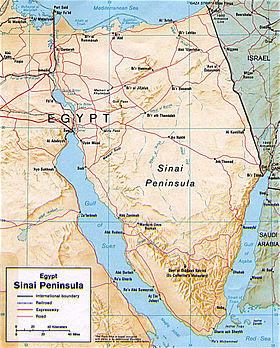
Germans take up Sinai trafficking – The CNN Freedom Project: Ending Modern-Day Slavery - CNN.com Blogs
Source: CNN.com Blogs:
February 21st, 2013
| Post by:CNN producer, Fred Pleitgen |
Related articles
Monday, November 19, 2012
HUMAN TRAFFICKING IN ISRAEL TAKES CENTER STAGE AT EFFIE AWARDS WITH HUGE WIN
By drastically reducing administrative and general overhead costs, ATZUM ensures that every dollar donated significantly benefits their social action initiatives in Israel.
Saturday, September 29, 2012
Human Trafficking Devastating The Sinai - Analysis Eurasia Review
Source: Analysis Eurasia Review
September 29, 2012
By Mirjam van Reisen
A new report titled ‘Human Trafficking in the Sinai. Refugees between Life and Death’ sheds new light on the devastation caused by the trafficking in the Sinai. Hostages are killed unless they collect exorbitant ransoms from relatives, which can go up to USD 35,000 or even more. These ransoms are collected from family members in home countries and from relatives in the diaspora.
Deported Back
- Egypt: End Sinai Nightmare for Migrants (hrw.org)
- Bedouin successes fighting people traffickers (thecnnfreedomproject.blogs.cnn.com)
Saturday, July 14, 2012
Israel Improves Human Trafficking Record – Forward.com
Crackdown on Prostitution and Forced Labor Bears Fruit

district, as depicted in the documentary, ‘Holy Ghetto.’ Israel has
improved its record of dealing with issues related to human trafficking.
By Nathan Guttman
- U.S. Upgrades Israel on Human Trafficking List
- Human Trafficking Report Slaps Israel
- Bill Targets Israeli 'Johns'
Thursday, May 17, 2012
Strides in Combating Human Trafficking in Israel - Jewish World - News - Israel National News
Source: Israel National News
By Rachel Hirshfeld
5/17/2012, 4:40 PM

The organization’s Task Force on Human Trafficking (TFHT) has been highlighting the prevalence of illegal advertisements for sexual services in Israel and the lack of police initiative to prosecute the perpetrators.
As a result of TFHT's lobbying in the Knesset, legislation on the issue, originally passed two years ago, has been strengthened and its intent clarified.
Over the last few months, in order to demonstrate to the Supreme Court the ease with which such ads can still be published in Israel, the TFHT placed false advertisements for sexual services in popular newspapers.
The advertisements included phone numbers that prospective clients could call to schedule an appointment with a sex worker.
Hopeful customers who called the number were greeted by a recording of an actress telling the story of how she had come to work in prostitution. The TFHT monitored how many calls these numbers received, and used them to prove the widespread demand for prostitution in Israel.
While the Supreme Court ruled that police and newspapers required more time to understand and comply with the law, soon thereafter Israel’s police arrested the owner of Banana, a monthly newspaper that exclusively advertises sexual services and is the country’s largest carrier of such advertisements.
Established in 2002, ATZUM’s programs, in addition to those combating human trafficking, include eradicating modern slavery, providing assistance to families of victims of terror, caring for “Righteous Gentiles” who saved Jewish lives during the Holocaust and empowering Ethiopian high school students.
Related articles
- AIUK : Northern Ireland: Political parties unite to combat Human Trafficking (trafficking-monitor.blogspot.com)
- Human Trafficking: The dark underside of Globalisation | Tony Blair Faith Foundation (trafficking-monitor.blogspot.com)
- Islands Business - Politics: Pacific vulnerable to human trafficking (trafficking-monitor.blogspot.com)
- Male victims overlooked because of sexist assumptions acknowledges Minister " The Men's Network (trafficking-monitor.blogspot.com)
- Vatican Radio - Vatican hosts conference on combatting human trafficking (trafficking-monitor.blogspot.com)
Saturday, February 25, 2012
Ending the scourge of prostitution - JPost - Opinion - Op-Eds
Source: JPost - Opinion - Op-Eds
Many of us are unaware that Israel is classified as a destination and source country for human trafficking in general and of women in particular.
Since the 1990s Israel has made considerable headway in its handling of human trafficking and the trade in women. 2006 saw the passage of a law forbidding trafficking in human beings for slavery or prostitution and the prohibition on the organ trade – an offense carrying a 16-year jail sentence.
After a decade of the state taking responsibility for the issue and dealing with it, we can see a decrease in the patterns of women trafficking compared with those of a decade ago.
However, the scourge continues, affecting women trafficked from Eastern Europe, migrant workers and African asylum seekers, the latter of whom undergo a saga of torture and sexual assault en route to Israel through the Sinai.
Another issue is the internal trade or, more simply put, Israeli prostitution – Israeli women pressed into prostitution. The attitude toward prostitution in Israel is for the most part forgiving and understanding, relying on tired clichés such as “prostitution is the world’s oldest profession” or “if we don’t give men a safety valve for letting off steam legally with a prostitute, the number of rape cases will increase.” These are lame, hackneyed excuses completely divorced from reality.
Another myth revolves around the question of choice – something I’ve been hearing a lot of lately – “they choose this way of life,” “they want it,” “they make a lot of money that way.”
To get a first-hand impression, to see and hear from the women themselves, we set out, together with the members of the committee, on tours of south Tel Aviv, Eilat and Saharonim (an illegal migrant detention center).
The reality we witnessed is far removed from the idyllic images of prostitution by choice.
The women we met were young and old, they came from central Israel and from the periphery, each with a life story that led them into prostitution – each story more harrowing than the next. Failures in the education system and the welfare system, which did not protect them from sexual abuse, led them into prostitution. Not a single one of them ever dreamed of becoming a prostitute or call girl.
The main thing characterizing them all was their complete loss of faith in the system, frustration and helplessness when facing the state and the very authorities that are supposed to be there for them.
A bill I initiated, that seeks to punish those who use prostitutes and provide for community counseling, will be presented to the Knesset plenum today for a preliminary reading.
The bill is intended to reduce the scale of prostitution and correct the moral and humanitarian injustice victimizing thousands of women, men and children.
Opponents of the bill cite a variety of reasons for their opposition, but the one undeniable fact is that prostitution is not a voluntary act. Most women get sucked into the world of prostitution while still minors (age 12-14 on average), and most of them (over 90 percent) have suffered sexual or other abuse as children. Research shows that 90% of all women engaging in prostitution are frequently physically assaulted, with 55% of the assaults being perpetrated by the clients.
Most women get robbed and are sexually or otherwise assaulted.
Women engaging in prostitution are 200 times more likely to be violently raped than ordinary women. Most rape is perpetrated by clients.
The clients are the economic fuel keeping the wheels of this scourge turning, enabling its existence. The sex industry in Israel turns over billions of shekels per year, all of which ends up in the coffers of those criminals who exploit women and men, girls and boys.
The worldwide model shows that the suggested legislation will dramatically reduce the scale of the problem.
Its enforcement will put us on a par with other advanced Western countries.
This kind of legislation, which prohibits the commoditization of the bodies of people whose lives have led them into the weakest niche in society, will certainly save many girls and boys from a brutal fate rife with exploitation and violence.
The eyes of many – social organizations, citizens and tens of thousands of women who have been, or are, subjected to sexual, physical and psychological abuse on a daily basis – are looking to the occupants of the Knesset to take this important moral stand. It is a stand consistent with the values of the State of Israel, as well as the values of all future victims – those we have the power to prevent.
This law is the linchpin of a whole chain of actions intended to bring about social change in all matters concerning prostitution and the trafficking of women in Israel. Government support for such a law is a moral and value statement of the highest kind.
The writer, a member of the Knesset, is the chairman of the sub-committee on the trafficking in women and the author of a bill that assigns criminal responsibility to clients of prostitutes.
Tuesday, December 13, 2011
PM Netanyahu: The struggle against human trafficking 12-Dec-2011
| 12 Dec 2011 | |
| The right to life and freedom are the two most fundamental rights. However, at the beginning of the 21st century in broad sectors of the world, there is no freedom, no equality, no life and no liberty. | |
| |
| |
| | PM Benjamin Netanyahu (Reuters archive photo) |
PM Netanyahu spoke at the ceremony honoring those who participated in the struggle against human trafficking.
[Translated from Hebrew]
I wish to congratulate this year's honorees, who truly deserve the praise - congratulations to you and your families who help you in your work. You are truly a shining example of devotion to this supreme humane, moral, legal and social mission. I know how much you invest, how productive you are and how hard you try and your work will be recognized, including through the awards given today. They are to show our esteem and to encourage you and others to continue this fight.
Nineteen years ago, the Knesset passed the Basic Law: Human Dignity and Liberty. This law was not only directed at men, it was also directed at women. In other words, it was directed at all people, irrespective of religion, race and sex - to realize all rights, first and foremost the right to life and freedom.
These are the two most fundamental rights. However, to our great regret as the President rightly said, in the 21st century, even though there was a tremendous breakthrough in ideas of liberty, freedom and equality in the 17th century and they gathered speed in the 18th century and broke through in the 19th century and should have theoretically been fully realized in the 20th century, here we are at the beginning of the 21st century, and in broad sectors of the world, there is no freedom, no equality, no life and no liberty. These are things that are not obvious.
Perhaps the cruelest phenomenon, the one that shows just how far people are from realizing these ideals, is human trafficking. It is brutal in that it involves taking boys, girls and women from small villages and trafficking in them. Often they are killed along the way, and if they are not killed, they are forced into slavery and prostitution.
I am sorry to say that this is dependent on movement: it is easier to catch them when they are in movement. They are like predators that lie in wait for migrants, and use the migration to pounce on a wandering deer or cub. Movement provides the traffickers with an opportunity, and such movement also takes place in the State of Israel, which serves as a magnet for Africa, among other places. However, first and foremost it draws people from Africa - those same illegal infiltrators that we are dealing with now. One of the side effects of illegal infiltration is an entire industry of trafficking in men, and as I said, in women, that is growing larger. These people have no rights. The victims of human trafficking have no dreams, they have no ambitions, they are at the mercy of heartless and immoral people.
Therefore, we are working to close off the trafficking channel. Yesterday the Government passed an important resolution to complete the fence - this is one method - from Kerem Shalom to Eilat. There are other methods. I want to be clear that erecting the fence, or completing it, will also help block these channels being used for human trafficking, although that is no guarantee of freedom. A fence cannot guarantee freedom, especially not when there is still a long journey on the other side of the fence. However, it is not a guarantee on our side of the fence either because we need to change our attitude not towards human trafficking, but towards women.
In the State of Israel, there are still women who suffer mental and physical violence just because they are women. Many people suffer mental and physical violence, but there is a certain section of the population that harasses women because they are women, and we must fight this vigorously. Anyone who infringes on the rights of women or their freedom, or who works to discriminate against women, works against the principles and ideals of the State of Israel.
The path to realizing the principles of equality and freedom begins at home and certainly continues at school. School can influence the home as well. It continues through legislation and enforcement, and ends in punishing violators, headed by human traffickers. We are acting on all these channels, in all these sectors, but there is still much work to be done, both by voluntary organizations and by citizens who care.
I would like to take this opportunity to raise another subject - not trafficking in women and it is not directly connected to the subject of our discussion. However, the President rightly brought it up because it has recently been the subject of public discourse. I refer to the phenomenon of the exclusion of women in the public sphere. First let me clarify - this is a trend that is limited in scope and does not reflect on the entire population and not even the entire ultra-orthodox population. However, it does exist. I would like to state unequivocally: I strenuously object to the exclusion of women.
It is true that there is a question of public space and private space. By the way, even in the private space, people have basic human rights, but that is a separate question. In the State of Israel, there is no room to exclude anyone, certainly not half the population, men or women. The place of women in the public space must be guaranteed and equal. I think the phenomenon of excluding women not only contradicts the democratic principles we recognize and hold so dear, but it also contradicts Jewish tradition. Jewish tradition always held: "Its ways are ways of pleasantness", and that has been the way of Judaism for generations. It is true that we have a complex society and it demands agreement and sensitivity, but it also demands following the law and ensuring the dignity of women and of people.
I believe our society is strong enough and I believe our democracy is strong. I hear talk of the danger of democracy. That is part of our public discourse, but also of the strength of our democracy. Laws are introduced, laws fall; there is dialogue, there is evolution, there are disagreements and in the end, there is agreement. One agreement must be: our democracy is for every person, Jews and non-Jews, new immigrants and veterans, every citizen - every citizen - every man and every woman. These are our principles and we will maintain them.
Thank you.
Related articles
- Malaysia Busts Human Trafficking Ring, Frees 21 Ugandan Women (trafficking-monitor.blogspot.com)
- BBC News - Human trafficking in NI is 'a hidden crime' (trafficking-monitor.blogspot.com)
- Chinese Human Trafficking Ring Busted, Women Saved From Forced Prostitution In Angola (trafficking-monitor.blogspot.com)
- Widening Our Lens: Incorporating Essential Perspectives in the Fight Against Human Trafficking (trafficking-monitor.blogspot.com)
Tuesday, November 8, 2011
The Hub Q & A: Rahel Gershuni
Source: http://www.ungift.org/knowledgehub/blog/hubQA/the-hub-q-and-a_-rahel-gershuni.html
Sophia Papadimos, UN.GIFT Secretariat, spoke to Ms. Rahel Gershuni in Vienna during the recent UNODC Working Group on the Protocol to Prevent, Suppress and Punish Trafficking in Persons.
Rahel Gershuni is Israel's National Anti-Human Trafficking Coordinator. She has served as an advocate in the Israeli Ministry of Justice for over 15 years in various capacities and as National Coordinator, officially since 2006, and in hoc capacity since 2002. In July of 2006 she was recognized as one of nine heroes acting to end modern day slavery by the U.S. State Department Report on Trafficking in Persons. She has a B.A. in Ancient Studies from Columbia University, an L.L.B. from the Hebrew University of Jerusalem, and an M.A. in Public Administration from Harvard University.
How do you define human trafficking in your area of work? How do you define it vs. slavery?
We see trafficking as a constellation of offences which objectify the human being. In Israeli law there are a few core crimes which reflect this common value. First, is the trafficking offence which requires a transaction in a human being for a purpose of exploitation; it doesn't require movement and it doesn't require foul means, such as deception.
Then we have a slavery offence, which requires that the suspect act towards a person as if he or she is property which can be done by means of limiting his or her freedom, or dominating him or her.
Another part of the constellation is forced labour.
Then we have abducting for the purpose of trafficking. That is the crime that is exactly analogous to the crime in the UN Protocol, it requires movement of a person, it requires foul means, it requires purposes of exploitation.
We see all of these as trafficking offences because they reflect common protected values.
In Israel, how do different organizations cooperate amongst each other?
In combating trafficking for prostitution representatives of government and NGOs have cooperated wonderfully. As far as combating slavery and forced labour, this cooperation is a work in progress. This is a function of the general reality by which government and NGOs are uneasy bed fellows, but in addition, changes in the structure of various government offices may create confusion which can hamper good cooperation. Since good relations between NGOs and Government, are crucial, we are constantly working to improve them and are planning a one day seminar on this subject in the near future [1].
According to the Ministry of Justice's Trafficking in Persons Report for the State of Israel, between 2009 and 2010 not one victim of trafficking for the purpose of sexual exploitation entered Israel, whereas in the past, police estimated there were 3000 victims per year. Do you think this is because of the 2006 legislation [2] ? Why has Israel seen a decrease?
There are several reasons for this radical decrease in victims. The most important message is that comprehensive anti trafficking measures work. In Israel the most important of these were the following:
First and foremost, the crime was heavily prioritized by the government in the realms of prosecution, protection and prevention. An expression of this may be found in yearly decorations awarded by the government to a government agency, an NGO and an individual who contributed substantially to the fight against trafficking. The ceremony takes place in the President' s House in the presence of the Prime Minister, the Minister of Justice and the Vice Minister for the Advancement of Women. This sends a message that the highest echelons of government view this subject with utmost importance.
Beyond this formal expression of prioritization - the government took active steps.
In the realm of prosecution, the police created a special unit of Russian speaking policemen who were able to infiltrate the criminal organizations and also work very well with other police in the countries of origin. The State and District Attorney's Offices developed broad interpretation of the crimes and pushed for convictions and heavy sentences; courts meted out severe sentences of incarceration, thus creating a disincentive to commit such crimes.
The comprehensive legislation was also important, as it gave a clear message that trafficking and slavery are severe crimes with a maximal sentence of 16 years of imprisonment. It also placed these crimes in the chapter which deals with crimes violating human freedom, which made a clear break with the view that these are "mere" crimes of prostitution, which may be dealt with lightly, as a vice crime. Once you give law enforcement a new context of trafficking as a human rights offence which violates basic human freedoms, whether it is committed for the purpose of prostitution, slavery, forced labor or organ removal - it allows them to think differently and to view the crime in a far more severe way.
Protection measures were also of the essence. In Israel there is a trinity of rights for victims: shelter (with psycho social and medical services), free legal aid, and work visas. None of these rights is contingent upon the victims' cooperation with law enforcement. Not only do they provide support, assistance and safety, but they also give the women the opportunity to recover some dignity and consider if they are ready to cooperate with police. Thus, these rights assist the women and the cause of enforcement, alike.
Prevention measures were also important, and for example, the Ministry of Interior tightened controls over the borders, a coordination mechanism was established which served as a conduit to pass information, to identify problems before they grew, to press for common policies among government agencies, and to build bridges between government and NGOs. The Ministry of Foreign Affairs distributed leafelets in countries of origin, warning young women of the dangers of being trafficked to Israel.
In addition, the U.S. State Department's Trafficking in Persons Report played a role. When the report was initially released in 2006 Israel was in the lowest tier and this was a real force for change.
And of course, there are always the people behind the changes. We had an Attorney General and a Director General of the Ministry of Justice who sincerely cared about this subject. Their doors were open any time of the day or night, they were ready to help in every way. They made it a matter of priority, including by means of initiating and pushing through government resolutions. The message was given clearly -we are determined to put a stop to modern slavery and will work hard to achieve this. We had an active and zealous chairman of a special Parliamentary Committee on Trafficking in Women who called public attention to the scourge and served as a watchdog on government. We had courageous NGO representatives who pioneered in identifying the phenomenon and refused to surrender to the luxury of despair. All these were people of passion who brought about social change.
The following are presentations Ms. Gershuni has presented at various events regarding human trafficking.
OSCE Alliance against Trafficking in Persons Conference on National Rapporteurs and Equivalent Mechanisms
"From Equality of Rights to Empowerment"- Dialogue U.S. and Israel
The Response to the Israeli Government to Trafficking in Persons: A Study in Shifting Institutional Attitudes
UN.GIFT does not guarantee the truthfulness, accuracy, or validity of any comments posted to its social media outlets (blogs, social networks, message boards/forums, etc.). Users must not post any content that is obscene, defamatory, profane, libelous, threatening, harassing, abusive, hateful or embarrassing to any person or entity. UN.GIFT reserves the right to delete or edit any comments that it considers inappropriate or unacceptable.