Showing posts with label Linda Smith. Show all posts
Showing posts with label Linda Smith. Show all posts
Sunday, November 27, 2016


Monday, July 27, 2015
The Fight to End Sex Trafficking - Shared Hope International
Exposing Trafficking
Shared Hope International Founder Linda Smith recently had the privilege of exposing sex trafficking for the strategic and evil trap that it is at TEDx Portland:
View HEREThe Fight to End Sex Trafficking - Shared Hope International:
Friday, June 14, 2013
Common Sex Trafficking Language
From sharedhope INTERNATIONAL comes A Glossary of Trafficking Terms. The "list of key terms used in sex trafficking is published in Renting Lacy: A Story of America’s Prostituted Children by Linda Smith." Educational.
Check out the glossary at:
http://sharedhope.org/learn/traffickingterms/

Check out the glossary at:
http://sharedhope.org/learn/traffickingterms/


Monday, January 3, 2011
Sex trafficking: Portland must step up efforts to prevent exploitation | OregonLive.com
 Image via Wikipedia
Published: Saturday, January 01, 2011, 7:04 AM

 View full sizeElizabeth Hovde
Portland: Home to great coffee, a vibrant creative class, recreation near every doorstep ... and a massive human trafficking problem.
All sorts of groups are fighting the sex-trafficking problem Portland is saddled with. And when area churches recently asked the city how they could give a gift as part of their annual Season of Service campaign, Portland and Multnomah County commissioners wrote back saying that in Portland alone, police have identified more than 100 likely juvenile victims of commercial sexual exploitation. Safe transitional housing for those who escape the life, they said, was an immediate need.
According to the Portland Police Bureau, children as young as 12 are forced into prostitution and officers report an average of five cases of human trafficking each week, of which at least two victims are juveniles. Pimps are making good money on the backs of girls and boys who haven't even made it to high school, often luring them into the trade with expensive gifts, affection and promises of companionship. Instead of algebra, these kids learn to strip and turn tricks.
In November, Portland dedicated $285,000 to Janus Youth Programs and the Sexual Assault Resource Center to help provide four to eight shelter beds and treatment for juvenile victims of human trafficking.
With four beds scheduled to come on line in February -- the first formal shelter options for victims of commercial sexual exploitation in the state -- lawmakers and social workers have accomplished a lot. But paying for ongoing services survivors need, as well as securing more safe housing, will be a challenge.
So far, at least nine churches from Portland, Hillsboro and West Linn have joined forces to raise money for this year's Season of Service request. Of course you don't have to be a churchgoer to help out: Visit portlandchristmasgift.org to learn how to contribute. In short, donations can be made at any U.S. Bank branch to the account named "Advent Conspiracy Gift: Portland trafficking shelter."
People who work with and on behalf of trafficking victims are excited to see more police stings and more resources. But they also acknowledge that rescuing and then helping victims rebuild isn't the ideal. It'd be far better to prevent the exploitation to begin with.
Prevention is happening. There's a lot more public awareness, and states everywhere are considering or passing harsher penalties for pimps and customers of commercial sex. But more is needed. Portland, especially, needs to rethink its acceptance of sex shops on every corner and its lax oversight of ads for commercial sex.
The Portland metro region is a hotbed for trafficking minors because of its proximity to Interstate 5, a well-known sex-trafficking route. Being known as a place with a large number of runaways also hurts us. Homeless youths are vulnerable and prime targets for pimps. But these factors are exacerbated by the region's liberal attitudes toward the sex industry.
As Wynne Wakkila, executive director of Oregonians Against Trafficking Humans, told me, "I remember being astounded when I moved to California and saw liquor stores on every corner. I imagine people coming to Portland have much the same reaction when they see the frequency of adult stores. Adults have freedom of choice, but I worry about imposing this on children, who legally are considered not mature enough to make these choices."
Linda Smith, a former congresswoman and founder of Shared Hope, an organization that fights trafficking around the world, says that communities with more permissive attitudes toward commercial sex end up with a lot of juvenile victims. That's because, over time, nothing is off limits, sexual appetites evolve, and customers accept more risk and feel fewer boundaries.
Multnomah County Commissioner Diane McKeel has made fighting sex trafficking a top priority. Her policy analyst, Andrew Olsen, told me last week, "We agree that the amount of clubs and stores is definitely a contributing factor." He added that the Oregon Supreme Court has upheld some of the strongest freedom of speech laws in the nation, making it difficult to combat the human trafficking problem here.
One idea making the rounds is to require some kind of permit that dancers and strippers would be required to have showing their age. Because dancers are typically considered "contractors," rather than employees of a business, a permit of sorts would help cops more easily identify underage victims. That's a start. More protective zoning laws also would make a difference, but policy aides warn they would meet some tough constitutional challenges.
As Salem readies for a new legislative session, we need lawmakers to brainstorm legal ways to make Oregon a safer place for kids, and adults, who are easily trapped in the sex industry. Without some changes, Oregon will soon need as many shelters as there are strip joints.
Elizabeth Hovde writes a Sunday column for The Oregonian and posts regularly on The Stump. Reach her at ehovde@earthlink.net
Source: oregonlive.com
Sex trafficking: Portland must step up efforts to prevent exploitation | OregonLive.com
Related articles

Friday, September 17, 2010
Craigslist Tells Congress Its Adult Services Section Is Gone For Good
Source: Huffington Post
JIM ABRAMS | 09/15/10 05:18 PM |
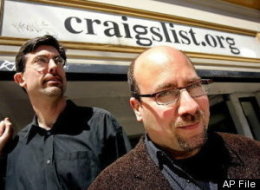
But William Clinton Powell also told a House Judiciary Committee panel that people seeking to advertise adult – or sexual – services will now simply migrate to other Internet sites.
He said the decision by Craigslist earlier this month to shut down the adult services section "may be a step backward in terms of addressing the core causes of the issue."
Craigslist was responding to demands from state attorneys general and anti-child trafficking organizations to end adult services because it had become a favorite conduit for illegal ads.
"I have not had a girl who was not marketed online and most of them were marketed on Craigslist," said Linda Smith, a former member of Congress who heads Shared Hope International, a group that rescues women and children trapped by sex traffickers.
Rep. Christopher Smith, R-N.J., agreed that "the Internet has opened a whole new front in the war on trafficking, allowing demand to run free without practical obstacles."
Powell, director of law enforcement relations for the nation's largest classified advertising service, said Craigslist has been aggressive in working to stop child exploitation. He said the company encourages users to report suspected trafficking, features law enforcement and reporting hotlines, participates in the National Center for Missing and Exploited Children tipline and manually reviewed every adult service ad prior to posting.
"Craigslist has been virtually alone among the many advertising venues carrying adult ads in vigorously combating exploitation and trafficking," he said.
Ernie Allen, head of the National Center for Missing and Exploited Children, agreed that the focus must now be broadened beyond Craigslist. "The goal is to destroy the business model for those who sell children for sex over the Internet."
Lawmakers and witnesses said at least 100,000 minors are exploited by the commercial sex industry in the United States every year. Rep. Bobby Scott, D-Va., chairman of the crime subcommittee, cited estimates that 450,000 minors run away from home every year, and about one-third of those end up being forced into prostitution.
Despite that, it appears that the United States spends more to combat sex trafficking overseas than it does in the United States, said Rep. Carolyn Maloney, D-N.Y., who is sponsoring an anti-minor sex trafficking bill with Smith.
The Maloney-Smith bill would authorize up to $50 million over four years for grants to provide shelter and care for young victims and ensure adequate resources for law enforcement and prosecutors.
Many young people are treated as criminals instead of victims, and there are nationwide only 50 beds in shelters to address the needs of 100,000 victims, Maloney said.
Craigslist Tells Congress Its Adult Services Section Is Gone For Good

JIM ABRAMS | 09/15/10 05:18 PM |
r request is being processed...
WASHINGTON — A Craigslist official told lawmakers Wednesday that the classified ad website has no plans to resume its adult services section and defended the company's efforts to stop the sexual exploitation of minors.
But William Clinton Powell also told a House Judiciary Committee panel that people seeking to advertise adult – or sexual – services will now simply migrate to other Internet sites.
He said the decision by Craigslist earlier this month to shut down the adult services section "may be a step backward in terms of addressing the core causes of the issue."
Craigslist was responding to demands from state attorneys general and anti-child trafficking organizations to end adult services because it had become a favorite conduit for illegal ads.
"I have not had a girl who was not marketed online and most of them were marketed on Craigslist," said Linda Smith, a former member of Congress who heads Shared Hope International, a group that rescues women and children trapped by sex traffickers.
Rep. Christopher Smith, R-N.J., agreed that "the Internet has opened a whole new front in the war on trafficking, allowing demand to run free without practical obstacles."
Powell, director of law enforcement relations for the nation's largest classified advertising service, said Craigslist has been aggressive in working to stop child exploitation. He said the company encourages users to report suspected trafficking, features law enforcement and reporting hotlines, participates in the National Center for Missing and Exploited Children tipline and manually reviewed every adult service ad prior to posting.
"Craigslist has been virtually alone among the many advertising venues carrying adult ads in vigorously combating exploitation and trafficking," he said.
Ernie Allen, head of the National Center for Missing and Exploited Children, agreed that the focus must now be broadened beyond Craigslist. "The goal is to destroy the business model for those who sell children for sex over the Internet."
Lawmakers and witnesses said at least 100,000 minors are exploited by the commercial sex industry in the United States every year. Rep. Bobby Scott, D-Va., chairman of the crime subcommittee, cited estimates that 450,000 minors run away from home every year, and about one-third of those end up being forced into prostitution.
Despite that, it appears that the United States spends more to combat sex trafficking overseas than it does in the United States, said Rep. Carolyn Maloney, D-N.Y., who is sponsoring an anti-minor sex trafficking bill with Smith.
The Maloney-Smith bill would authorize up to $50 million over four years for grants to provide shelter and care for young victims and ensure adequate resources for law enforcement and prosecutors.
Many young people are treated as criminals instead of victims, and there are nationwide only 50 beds in shelters to address the needs of 100,000 victims, Maloney said.
Craigslist Tells Congress Its Adult Services Section Is Gone For Good
Wednesday, August 4, 2010
Think Out Loud Human Trafficking · Oregon Public Broadcasting
AIR DATE: Wednesday, August 4th 2010


Earlier this year former CBS newsman Dan Rather produced a documentary focused on Portland. Many states, including Oregon and Washington, have been taking on the problem to various degrees. Senator Ron Wyden and other politicians recently announced partial funding for a new shelter for survivors of sex trafficking.
Are you a survivor of sex trafficking? What led you into — and out of — the industry? What would help others get out of the forced sex trade, particularly minors? Do you work with survivors? What have you seen that's been effective?
GUESTS:
- Elisia Lopez: Advocate for the Sexual Assault Resource Center, former child prostitute
- Linda Smith: President of Shared Hope International in Vancouver, Washington
- Gwynne Skinner: Assistant professor of law at Willamette University, directed recent report [summary pdf] on human trafficking in Oregon
- Doug Justus: Portland Police Bureau Sergeant in charge of the Vice Detail
Think Out Loud Human Trafficking · Oregon Public Broadcasting

Saturday, February 20, 2010
California Ballot Initiative Strengthens Human Trafficking Laws
(I-Newswire) February 19, 2010 - California Against Slavery is now gathering signatures for a state ballot initiative to strengthen human trafficking laws. The initiative would deter traffickers with stiffer criminal penalties, aid district attorneys in prosecuting human trafficking offenses, increase protection for human trafficking victims, and mandate human trafficking training for law enforcement officers.
Human trafficking is a modern-day form of slavery and its victims are subjected to force, fraud, or coercion, for the purpose of sexual exploitation or forced labor. It happens in the United States and worldwide.
"We support and desperately need to see revision in our state law with regard to human trafficking," said Jenny Williamson, founder and president of Courage to Be You, a Sacramento-area organization that rescues and restores victims of child sex trafficking. "Severe fines and extended jail time for the perpetrators of this evil must be enacted if ever this crime is to be deterred. Our courageous law enforcement officers must be equipped and encouraged with mandatory, specific training so that rescuing these vulnerable victims and putting their perpetrators away becomes a priority within our state."
The California Against Slavery initiative is endorsed by many organizations combating human trafficking, including Breaking Chains, Captive Daughters, Courage to be You, International Justice Mission (IJM), Lotus Outreach, MISSSEY, Oasis USA, Polaris Project, Shared Hope, and Stop Child Trafficking Now.
"California is a major hub for human trafficking," said Linda Smith, founder and president of Shared Hope International. "We fully endorse the California Against Slavery initiative because we see the strategic importance of having stronger state laws in place in the fight against human trafficking."
Current California law does not reflect the severity of the crime. The proposed changes to state law under the initiative stem from several months of research with experts in the field of human trafficking, including district attorneys, policy-making organizations, and groups that provide direct services to trafficking victims.
A human trafficking offense is currently punishable by a state prison sentence of three to five years for trafficking of an adult or four to eight years for trafficking of a minor. The initiative would increase sentences to six to 16 years for trafficking of an adult and up to 15 years to life for trafficking of a minor. The initiative would further protect minors by allowing district attorneys to prove a charge of sex trafficking of a minor without a showing of force. All human trafficking punishments would also include a fine of up to $500,000.
The initiative would require law enforcement officers to undergo two hours of training on the issue of human trafficking to increase awareness of the issue and to train officers to better recognize its victims.
Trafficking victims would receive more protection in the criminal justice system under the initiative. Evidence of sexual activity stemming from the trafficking offense would not be admissible for use against the victims to prove their criminal liability for that conduct or to attack their credibility or character. Victims also would have more time to file civil lawsuits against traffickers.
"Human trafficking is an egregious crime against the most basic human rights and it is an important issue for our state," said Daphne Phung, executive director of California Against Slavery. "We are bringing this issue to the voters to give Californians an opportunity to speak up against human trafficking. We hope that every voter in California will sign the petition and ask ten friends and family members to do the same."
California Against Slavery aims to collect 600,000 signatures by March 31, 2010, to place the initiative on the November 2010 ballot.
Please visit http://www.CaliforniaAgainstSlavery.org to print and sign the petition, read the full-text of the initiative, or learn more about California Against Slavery.
The California Attorney General's official title for the initiative is: "Expands Types of Criminal Conduct That Constitute Human Trafficking and Increases Criminal Penalties. Initiative Statute."
About California Against Slavery:
California Against Slavery is a non-profit group organized by Californians appalled by the injustice of modern day slavery in our state and around the world.
Our mission is to strengthen California state laws to better reflect the personal and societal impact of human trafficking. Our goal is to pass an initiative on the November 2010 California General Election ballot to strengthen current human trafficking laws and increase victims' rights.
About Human Trafficking:
Human trafficking is a modern-day form of slavery and its victims are subjected to force, fraud, or coercion, for the purpose of sexual exploitation or forced labor. It happens in the United States and worldwide.
It is difficult to quantify the scope of human trafficking due to the covert nature of the crime, but experts suggest the problem is large and growing.
An unknown number of U.S. citizens and legal residents are trafficked within the United States, primarily for sexual servitude, according to the U.S. Department of State [1]. Many victims are minors. An estimated 286,506 minors in the United States are at risk of becoming victims of commercial sexual exploitation, according to a report from the University of Pennsylvania [2]. Labor trafficking also happens in the United States in domestic service, factories, farms, restaurants, and other work sites.
Worldwide, human trafficking is the fastest growing criminal industry and it is tied with the illegal arms industry as the second largest criminal industry [3]. An estimated 17,500 people are trafficked into the United States each year, according to the U.S. Department of State [4].
California is a prime target for human traffickers because of its international borders, port cities, large economy, and metropolitan regions [5].
[1] U.S. Department of State
Trafficking in Persons Report 2009
http://www.state.gov/g/tip/rls/tiprpt/2009/123133.htm
[2a] University of Pennsylvania, Richard J. Estes and Neil Alan Weiner
The Commercial Sexual Exploitation of Children in the U.S., Canada, and Mexico, September 19, 2001
http://www.sp2.upenn.edu/~restes/CSEC_Files/Exec_Sum_020220.pdf
This report was cited on page 2 of the "Domestic Human Trafficking" report from the Human Smuggling and Trafficking Center.
[2b] Human Smuggling and Trafficking Center, U.S. Department of State
Domestic Human Trafficking: An Internal Issue, December 2008
http://www.state.gov/documents/organization/113612.pdf
[3] U.S. Department of Health and Human Services
Human Trafficking Fact Sheet
http://www.acf.hhs.gov/trafficking/about/fact_human.html
http://www.acf.hhs.gov/trafficking/about/fact_human.pdf
[4] U.S. Department of State
Trafficking in Persons Report 2004
http://www.state.gov/g/tip/rls/tiprpt/2004/34021.htm
[5] California Alliance to Combat Trafficking and Slavery Task Force
Human Trafficking in California Report, October 2007
http://www.ohs.ca.gov/pdf/Human_Trafficking_in_CA-Final_Report-2007.pdf
California Ballot Initiative Strengthens Human Trafficking Laws
![Reblog this post [with Zemanta]](http://img.zemanta.com/reblog_e.png?x-id=c264d960-c928-427b-b93d-4f62c03fd324)
Human trafficking is a modern-day form of slavery and its victims are subjected to force, fraud, or coercion, for the purpose of sexual exploitation or forced labor. It happens in the United States and worldwide.
"We support and desperately need to see revision in our state law with regard to human trafficking," said Jenny Williamson, founder and president of Courage to Be You, a Sacramento-area organization that rescues and restores victims of child sex trafficking. "Severe fines and extended jail time for the perpetrators of this evil must be enacted if ever this crime is to be deterred. Our courageous law enforcement officers must be equipped and encouraged with mandatory, specific training so that rescuing these vulnerable victims and putting their perpetrators away becomes a priority within our state."
The California Against Slavery initiative is endorsed by many organizations combating human trafficking, including Breaking Chains, Captive Daughters, Courage to be You, International Justice Mission (IJM), Lotus Outreach, MISSSEY, Oasis USA, Polaris Project, Shared Hope, and Stop Child Trafficking Now.
"California is a major hub for human trafficking," said Linda Smith, founder and president of Shared Hope International. "We fully endorse the California Against Slavery initiative because we see the strategic importance of having stronger state laws in place in the fight against human trafficking."
Current California law does not reflect the severity of the crime. The proposed changes to state law under the initiative stem from several months of research with experts in the field of human trafficking, including district attorneys, policy-making organizations, and groups that provide direct services to trafficking victims.
A human trafficking offense is currently punishable by a state prison sentence of three to five years for trafficking of an adult or four to eight years for trafficking of a minor. The initiative would increase sentences to six to 16 years for trafficking of an adult and up to 15 years to life for trafficking of a minor. The initiative would further protect minors by allowing district attorneys to prove a charge of sex trafficking of a minor without a showing of force. All human trafficking punishments would also include a fine of up to $500,000.
The initiative would require law enforcement officers to undergo two hours of training on the issue of human trafficking to increase awareness of the issue and to train officers to better recognize its victims.
Trafficking victims would receive more protection in the criminal justice system under the initiative. Evidence of sexual activity stemming from the trafficking offense would not be admissible for use against the victims to prove their criminal liability for that conduct or to attack their credibility or character. Victims also would have more time to file civil lawsuits against traffickers.
"Human trafficking is an egregious crime against the most basic human rights and it is an important issue for our state," said Daphne Phung, executive director of California Against Slavery. "We are bringing this issue to the voters to give Californians an opportunity to speak up against human trafficking. We hope that every voter in California will sign the petition and ask ten friends and family members to do the same."
California Against Slavery aims to collect 600,000 signatures by March 31, 2010, to place the initiative on the November 2010 ballot.
Please visit http://www.CaliforniaAgainstSlavery.org to print and sign the petition, read the full-text of the initiative, or learn more about California Against Slavery.
The California Attorney General's official title for the initiative is: "Expands Types of Criminal Conduct That Constitute Human Trafficking and Increases Criminal Penalties. Initiative Statute."
About California Against Slavery:
California Against Slavery is a non-profit group organized by Californians appalled by the injustice of modern day slavery in our state and around the world.
Our mission is to strengthen California state laws to better reflect the personal and societal impact of human trafficking. Our goal is to pass an initiative on the November 2010 California General Election ballot to strengthen current human trafficking laws and increase victims' rights.
About Human Trafficking:
Human trafficking is a modern-day form of slavery and its victims are subjected to force, fraud, or coercion, for the purpose of sexual exploitation or forced labor. It happens in the United States and worldwide.
It is difficult to quantify the scope of human trafficking due to the covert nature of the crime, but experts suggest the problem is large and growing.
An unknown number of U.S. citizens and legal residents are trafficked within the United States, primarily for sexual servitude, according to the U.S. Department of State [1]. Many victims are minors. An estimated 286,506 minors in the United States are at risk of becoming victims of commercial sexual exploitation, according to a report from the University of Pennsylvania [2]. Labor trafficking also happens in the United States in domestic service, factories, farms, restaurants, and other work sites.
Worldwide, human trafficking is the fastest growing criminal industry and it is tied with the illegal arms industry as the second largest criminal industry [3]. An estimated 17,500 people are trafficked into the United States each year, according to the U.S. Department of State [4].
California is a prime target for human traffickers because of its international borders, port cities, large economy, and metropolitan regions [5].
[1] U.S. Department of State
Trafficking in Persons Report 2009
http://www.state.gov/g/tip/rls/tiprpt/2009/123133.htm
[2a] University of Pennsylvania, Richard J. Estes and Neil Alan Weiner
The Commercial Sexual Exploitation of Children in the U.S., Canada, and Mexico, September 19, 2001
http://www.sp2.upenn.edu/~restes/CSEC_Files/Exec_Sum_020220.pdf
This report was cited on page 2 of the "Domestic Human Trafficking" report from the Human Smuggling and Trafficking Center.
[2b] Human Smuggling and Trafficking Center, U.S. Department of State
Domestic Human Trafficking: An Internal Issue, December 2008
http://www.state.gov/documents/organization/113612.pdf
[3] U.S. Department of Health and Human Services
Human Trafficking Fact Sheet
http://www.acf.hhs.gov/trafficking/about/fact_human.html
http://www.acf.hhs.gov/trafficking/about/fact_human.pdf
[4] U.S. Department of State
Trafficking in Persons Report 2004
http://www.state.gov/g/tip/rls/tiprpt/2004/34021.htm
[5] California Alliance to Combat Trafficking and Slavery Task Force
Human Trafficking in California Report, October 2007
http://www.ohs.ca.gov/pdf/Human_Trafficking_in_CA-Final_Report-2007.pdf
California Ballot Initiative Strengthens Human Trafficking Laws
Wednesday, January 27, 2010
Child trafficking victim: 'They conned me'
Sunday, January 24, 2010
Last updated 10:12 p.m. PT
Child trafficking victim: 'They conned me'
KOMO-TV STAFF
A young victim of human trafficking is breaking her silence to warn other potential victims as a bill works its way through the state Legislature that would crack down harder on traffickers.
Although there are already crimes against selling kids as prostitutes, proponents of new legislation say the penalties aren't tough enough. They want to change that.
It's a hidden crime ... hidden by the darkness of night ... hidden by the silence of the traffickers and their victims.
But one young victim, Brianna -- whose life was saved from prostitution -- can remain silent no longer.
"If I can save a life with my story it's worth coming out," she said. "Let's look past the shame and the guilt."
Brianna is a straight-A student, from a good family. But the traffickers were able to lure her in, like they've done to thousands of girls -- and young boys.
"They prey on them. They manipulated me, they conned me into thinking I was safe and that they were going to take care of me," she said.
She all of a sudden found herself working in a Seattle strip club.
"They tried to get me into prostitution," she said. "They tried to get me to consider it at least, and they approached me at the strip club, and he offered me $1,000 for an hour."
But a friend found her and got her away from the traffickers just hours before they were sending her to Phoenix, Ariz.
Linda Smith of Project Hope said, "They move them by the event, and there's a lot of money in Phoenix and they typically move a lot of girls into Phoenix and into critical places where young girls can be sold."
Smith, a former congresswoman, works with these kids -- and so does a Sheila, who herself was a victim. They're all fighting for new legislation.
"If we do something that will deter that behavior I think it won't continue to be the way it is right now," Sheila said.
She says more than 300 girls were trafficked in the Seattle area last year.
"It can happen to anybody," added Brianna.
The bill, SB 6476, now pending in the state Legislature, would raise the penalty for trafficking from $500 up to $5,000.
If a car is used, it could be impounded with a $500 impound fee.
Plus lawmakers are hoping that the publicity of stories like Brianna's will help get these victims to break away.
Child trafficking victim: 'They conned me'
![Reblog this post [with Zemanta]](http://img.zemanta.com/reblog_e.png?x-id=a55e4e6e-313b-46bb-87bc-51ec6ac6187f)
Last updated 10:12 p.m. PT
Child trafficking victim: 'They conned me'
KOMO-TV STAFF
A young victim of human trafficking is breaking her silence to warn other potential victims as a bill works its way through the state Legislature that would crack down harder on traffickers.
Although there are already crimes against selling kids as prostitutes, proponents of new legislation say the penalties aren't tough enough. They want to change that.
It's a hidden crime ... hidden by the darkness of night ... hidden by the silence of the traffickers and their victims.
But one young victim, Brianna -- whose life was saved from prostitution -- can remain silent no longer.
"If I can save a life with my story it's worth coming out," she said. "Let's look past the shame and the guilt."
Brianna is a straight-A student, from a good family. But the traffickers were able to lure her in, like they've done to thousands of girls -- and young boys.
"They prey on them. They manipulated me, they conned me into thinking I was safe and that they were going to take care of me," she said.
She all of a sudden found herself working in a Seattle strip club.
"They tried to get me into prostitution," she said. "They tried to get me to consider it at least, and they approached me at the strip club, and he offered me $1,000 for an hour."
But a friend found her and got her away from the traffickers just hours before they were sending her to Phoenix, Ariz.
Linda Smith of Project Hope said, "They move them by the event, and there's a lot of money in Phoenix and they typically move a lot of girls into Phoenix and into critical places where young girls can be sold."
Smith, a former congresswoman, works with these kids -- and so does a Sheila, who herself was a victim. They're all fighting for new legislation.
"If we do something that will deter that behavior I think it won't continue to be the way it is right now," Sheila said.
She says more than 300 girls were trafficked in the Seattle area last year.
"It can happen to anybody," added Brianna.
The bill, SB 6476, now pending in the state Legislature, would raise the penalty for trafficking from $500 up to $5,000.
If a car is used, it could be impounded with a $500 impound fee.
Plus lawmakers are hoping that the publicity of stories like Brianna's will help get these victims to break away.
Child trafficking victim: 'They conned me'
Sunday, January 24, 2010
Ex-stripper testifies at statehouse on bill
Sunday, January 24, 2010
Last updated 10:04 a.m. PT
KOMO-TV STAFF
A young victim of human trafficking is breaking her silence to warn other potential victims as a bill works its way through the state Legislature that would crack down harder on traffickers.
Although there are already crimes against selling kids as prostitutes, proponents of new legislation say the penalties aren't tough enough. They want to change that.
It's a hidden crime ... hidden by the darkness of night ... hidden by the silence of the traffickers and their victims.
But one young victim, Brianna -- whose life was saved from prostitution -- can remain silent no longer.
"If I can save a life with my story it's worth coming out," she said. "Let's look past the shame and the guilt."
Brianna is a straight-A student, from a good family. But the traffickers were able to lure her in, like they've done to thousands of girls -- and young boys.
"They prey on them. They manipulated me, they conned me into thinking I was safe and that they were going to take care of me," she said.
She all of a sudden found herself working in a Seattle strip club.
"They tried to get me into prostitution," she said. "They tried to get me to consider it at least, and they approached me at the strip club, and he offered me $1,000 for an hour."
But a friend found her and got her away from the traffickers just hours before they were sending her to Phoenix, Ariz.
Linda Smith of Project Hope said, "They move them by the event, and there's a lot of money in Phoenix and they typically move a lot of girls into Phoenix and into critical places where young girls can be sold."
Smith, a former congresswoman, works with these kids -- eand so does a Sheila, who herself was a victim. They're all fighting for new legislation.
"If we do something that will deter that behavior I think it won't continue to be the way it is right now," Sheila said.
She says more than 300 girls were trafficked in the Seattle area last year.
"It can happen to anybody," added Brianna.
The bill, SB 6476, now pending in the state Legislature, would raise the penalty for trafficking from $500 up to $5,000.
If a car is used, it could be impounded with a $500 impound fee.
Plus lawmakers are hoping that the publicity of stories like Brianna's will help get these victims to break away.
Ex-stripper testifies at statehouse on bill
![Reblog this post [with Zemanta]](http://img.zemanta.com/reblog_e.png?x-id=85eba07c-a962-4ebd-bac9-9372c69394e8)
Last updated 10:04 a.m. PT
KOMO-TV STAFF
A young victim of human trafficking is breaking her silence to warn other potential victims as a bill works its way through the state Legislature that would crack down harder on traffickers.
Although there are already crimes against selling kids as prostitutes, proponents of new legislation say the penalties aren't tough enough. They want to change that.
It's a hidden crime ... hidden by the darkness of night ... hidden by the silence of the traffickers and their victims.
But one young victim, Brianna -- whose life was saved from prostitution -- can remain silent no longer.
"If I can save a life with my story it's worth coming out," she said. "Let's look past the shame and the guilt."
Brianna is a straight-A student, from a good family. But the traffickers were able to lure her in, like they've done to thousands of girls -- and young boys.
"They prey on them. They manipulated me, they conned me into thinking I was safe and that they were going to take care of me," she said.
She all of a sudden found herself working in a Seattle strip club.
"They tried to get me into prostitution," she said. "They tried to get me to consider it at least, and they approached me at the strip club, and he offered me $1,000 for an hour."
But a friend found her and got her away from the traffickers just hours before they were sending her to Phoenix, Ariz.
Linda Smith of Project Hope said, "They move them by the event, and there's a lot of money in Phoenix and they typically move a lot of girls into Phoenix and into critical places where young girls can be sold."
Smith, a former congresswoman, works with these kids -- eand so does a Sheila, who herself was a victim. They're all fighting for new legislation.
"If we do something that will deter that behavior I think it won't continue to be the way it is right now," Sheila said.
She says more than 300 girls were trafficked in the Seattle area last year.
"It can happen to anybody," added Brianna.
The bill, SB 6476, now pending in the state Legislature, would raise the penalty for trafficking from $500 up to $5,000.
If a car is used, it could be impounded with a $500 impound fee.
Plus lawmakers are hoping that the publicity of stories like Brianna's will help get these victims to break away.
Ex-stripper testifies at statehouse on bill
Subscribe to:
Posts (Atom)
