Lawmakers call on FBI to help find string of missing black girls in Washington | Fox News:
Showing posts with label FBI. Show all posts
Showing posts with label FBI. Show all posts
Sunday, March 26, 2017


Saturday, March 4, 2017
Sunday, September 27, 2015
FBI: Aurora child sex trafficking case is "extremely unusual" - The Denver Post
"The FBI says the case of a 48-year-old man accused of sex trafficking boys through a rented Aurora home is extremely rare as new information surfaced Tuesday showing the suspect is linked to an elusive California business."
Read MORE
FBI: Aurora child sex trafficking case is "extremely unusual" - The Denver Post:
Read MORE
FBI: Aurora child sex trafficking case is "extremely unusual" - The Denver Post:
Wednesday, March 26, 2014
Reduce sex trafficking by addressing demand | SF Bay Guardian
Source: SF Bay Guardian
Opinion By Ellyn Bell and Minouche Kandel
Opinion By Ellyn Bell and Minouche Kandel
Many people know that the Bay Area is one of the most popular tourist destinations in the US. What most people do not know is that the FBI ranks the Bay Area as one of the worst 13 areas in the country for child sex trafficking.
Continue here:
Wednesday, November 13, 2013
Native American Youths: Combating Human Trafficking: Federal, State, and Local Perspectives
SOURCE:
Minnesota Indian Women’s
Resource Center
2300 15th Avenue South (612) 728-2000
Minneapolis, Minnesota 55404 FAX (612) 728-2039
Contact: Suzanne Koepplinger, Executive Director
skoepplinger@miwrc.org or 612-728-2008
Testimony before the U.S. Senate Committee on Homeland Security and Governmental Affairs at hearing titled “Combating Human Trafficking: Federal, State, and Local Perspectives”.
September 23, 2013
Dear Chairman Carper, Ranking Member Coburn, and Committee Members:
On behalf of the women and children we serve at the Minnesota Indian Women’s Resource Center in Minneapolis, I thank you for this opportunity to bring to your attention a grave and egregious human rights violation being perpetrated against vulnerable Native Americans in our country. Sex trafficking and the commercial sexual exploitation of children is of growing concern in our community. In 2009, the Minnesota Indian Women’s Resource Center published the first research on the scope of sex trafficking of any demographic group. Our Shattered Hearts: the commercial sexual exploitation of American Indian women and children in Minnesota report found highly disturbing indicators that American Indian females were being targeted by sex traffickers for commercial sexual exploitation (CSE). For example, of women and girls screening into three direct service programs during the study, 40 % of incoming clients reported involvement in some type of commercial sexual exploitation and 27 % reported activities defined as sex trafficking under the Trafficking Victims Protection Act (TVPA). Our current direct service program for trafficked and high risk Native girls is screening all youth entering the program for sexual exploitation risk factors and involvement. Using standardized assessment tools we found that 71 % of girls entering the program had experienced long term homelessness, had a family member diagnosed with mental illness, and had experienced harassment and/or physical or sexual violence. Eighty six percent had a history of child protection systems involvement, and the same percentage (86%) of these girls reported some exposure to the sex trade. At a six month follow up screening, 71% of the girls were safely housed and 100% had begun receiving mental health care. All girls in this program also reported that they now knew where to get help and how to avoid high risk situations and people who were a bad influence on them. Three girls from the current cohort graduated from high school this year, the first in any of their extended families to do so. This program is the only one of its kind to provide these culturally strength based services to this population, has a wait list, and is receiving more referrals from law enforcement agencies every week.
We continue to receive reports from girls in our programs, from Greater Minnesota tribal sexual assault advocates, and local law enforcement that Native girls are being targeted for recruitment by traffickers to the oil fields of North Dakota and being sold in the “man camps”. One alleged incident involved a 14 year old Native girl who was reportedly sold to 40 men in one night. A 15 year old girl in our program reported that her brother’s best friend had been making frequent attempts to take her to North Dakota where, he said, she could “make lots of money” for them.
The Minnesota Indian Women’s Sexual Assault Coalition’s 2011 report Garden of Truth: the Prostitution and Trafficking of Native Women in Minnesota interviewed 105 Native women with prostitution arrest records. They found that a majority of the women had been sexually abused as children, had been raped, and were currently or previously homeless. Anchorage Police and FBI statistics show that Alaska Native women represent 33 % of all prostituted and trafficked women in the city, yet Alaska Natives make up less than 8% of the total population. Most Native females are sold in urban areas, but it is unknown how many of these women initially came from reservation communities or are city residents. We have no data on the scope of exploitation of boys or GLBTQ or “Two Spirit” youth, but recognize them as also vulnerable. National statistics tell us that over 70 % of American Indian people in this country reside in urban areas, not on their home reservations. Solutions must include tribal and urban populations for maximum benefit.
We believe the data we have on hand to reflect only a small portion of the true picture of those who have been trafficked into prostitution, for a number of reasons. The widespread normalization of sexual violence in American Indian communities has numbed many youth to the point where they minimize and rationalize what is happening to them just as domestic violence victims do. Many are engaged in survival sex simply to have a place to sleep at night. Others are gang raped in by Native Mob or other local street gangs and are living in fear of the consequences if they do not comply. Native Mob is only one of the gangs we have seen involved in the trafficking of Native girls due to their unique vulnerability. Methods of recruitment can involve what we call “guerrilla pimping”, which is simply gang rape with brutal beatings, or “finesse pimping” , which is often much more difficult to detect and interrupt. This is a grooming process, and has a manipulative pattern similar to domestic violence perpetration, where the initial relationship is loving but becomes increasingly more controlling, with the end result being girls caught in a web of violence and abuse with little hope to escape. Drugs are often used to ensure compliance. Most of these girls have multiple risk factors such as homelessness, early sexual abuse, and/or addiction or mental illness of parents/caregivers. Willingness to report or cooperate with law enforcement is rare due to the lack of secure housing and deep, complex trauma these children suffer from. As they are reluctant to report to law enforcement, they are not counted in the national data sets as trafficking victims. The current requirement to have a law enforcement certification of victimization in order to be counted as a trafficking victim has limited our understanding of the scope of the problem nationally. We believe that 80 – 90% of trafficked youth are under the radar and not being reported for this reason.
The damage to the victims is severe in human and economic terms. Our 2012 research report Early Intervention to Avoid Sex Trading and Trafficking of Minnesota’s Female Youth: A Benefit-Cost Analysis, found the quantifiable damage to a juvenile female recruited into sexual slavery includes high rates of physical damage including traumatic brain injury, damage to reproductive systems, and injuries from violent assaults. Mental health issues such as PTSD, dis-associative disorders, complex anxiety disorders are common. We cannot quantify the damage to a child’s spirit, or self-esteem, or to her family. Yet this analysis shows a definitive return on investment to the taxpayer of $34 for every $1 spent on early intervention and prevention services. We know what works, and have the evidence that it not only saves lives, but saves taxpayer dollars. It is now a matter of prioritization.
Since the publication of our Shattered Hearts report, the Minnesota Indian Women’s Resource Center has engaged our local community and tribal partners in solutions. The Fond du Lac Band of Lake Superior Ojibwe is working to collect more data and create systemic responses to sex trafficking. I have conducted training in indigenous communities across the country, including the Choctaw Nation of Oklahoma and the Ft. Berthold Reservation in North Dakota. In each instance, there is a need for more awareness of the tactics being used by perpetrators, and requests for technical assistance in identifying and responding to this crime. There is a gap in the need for coordinated responses and the resources available. In North Dakota, for example, tribal sexual assault advocates report numerous young women who had reportedly been victimized by sex traffickers but were too frightened by threats of consequences to their loved ones to report these crimes to law enforcement. The Bakken Oil Fields are indeed a boon to the economy of the region, and have also created an explosive market for sex traffickers who find vulnerable victims among Native American and other marginalized groups. This presents the opportunity for the businesses that are profiting from the oil industry to step into their leadership role. There is a great need for more law enforcement, more awareness and education, and more victim services in this region. I hope that the industry will seize this opportunity to invest in the wellness of the entire community in which they now work and live.
The Minnesota Human Trafficking Task Force has created a strong multi-disciplinary response to human trafficking. In 2011 the State passed the Safe Harbor for Youth Act, which aligns state statute with the Federal Trafficking Victims Protection Act in recognizing any juvenile sold into prostitution as a victim of a crime. In 2012 we presented a state-wide housing and services response called No Wrong Door for Services to the legislature. This is a comprehensive approach – developed by teams of prosecutors, police officers, county child protection workers, social workers, faith community, public health professionals, educators, and front line advocates – to create an effective system of housing and services that would work in partnership with law enforcement and county child welfare teams to effectively identify victims of CSE and route them into appropriate healing services rather than the juvenile justice system. We were successful in securing initial funding to begin implementing the No Wrong Door Model, but are seeking additional resources to fully fund the comprehensive approach that includes more accurate data collection systems to help us better understand the scope of the problem. We are collectively designing more effective approaches to reduce the demand for sexually exploited persons, for without the demand there would be no supply.
I want to again thank the Committee Members for their leadership in recognizing the importance of a comprehensive approach to ending the sexual slavery of vulnerable people. No person should be viewed as a commodity. One study tells us that a pimp can earn between $150,000 - $200,000 for each single child sold repeatedly for sex. Sex trafficking is a highly lucrative criminal enterprise that is robbing our communities of the youth, who are our future. It is reliant upon a market demand that must be stopped. We need more resources across sectors, but particularly within law enforcement, victim services, and child protection departments – to begin to interrupt this human rights violation and ensure that all children can grow up without being sentenced to a lifetime of trauma and violence.
Thank you.


Wednesday, July 31, 2013
BBC News - FBI 'saves 105 trafficked children in 76 US cities'
Source: BBC News
http://www.bbc.co.uk/news/world-us-canada-23495026
The FBI says it has rescued 105 children and arrested 150 pimps in 76 US cities over the weekend, in an operation against child prostitution.


http://www.bbc.co.uk/news/world-us-canada-23495026
The FBI says it has rescued 105 children and arrested 150 pimps in 76 US cities over the weekend, in an operation against child prostitution.
"The FBI remains committed to stopping this cycle of victimisation," Ron Hosko said
The largest numbers of children rescued were in San Francisco, Detroit, Milwaukee, Denver and New Orleans.
FBI assistant director Ronald Hosko said the Operation Cross Country VII raids had been the agency's largest action against child exploitation.
The FBI said 2,700 children have been rescued in such US raids since 2003.
The victims in the most recent raids were almost all girls and range in age from 13 to 17.
They had been prostituted in a variety of locations, including truck stops, casinos, motels as well as on social media and online advertisements.
Mr Hosko said the accused had preyed on vulnerable teenagers, exploiting them over a period of time.
"Girls are enticed with compliments or offers, [asked] do they want to make some money," he said.
"Then they are trapped into this cycle that involves drugs, that involves physical abuse. It may involve torture."
Since 2003, some 1,350 people have been convicted in such cases, including life prison sentences for 10 pimps, the FBI said.
Assets of more than $3.1m (£2m) have been seized.
The US justice department has estimated as many as 450,000 children run away from home each year.
It says a third of teens living on the street will be lured toward prostitution within 48 hours of leaving home.
Some lawmakers have said further legal protections are needed.
Oregon Senator Ron Wyden has introduced a bill to require local police, as well as foster care and child welfare programmes to identify children lured into sex trafficking as victims of abuse and neglect, making them eligible for protection and services.
"In much of the country today if a girl is found in the custody of a so-called pimp she is not considered to be a victim of abuse, and that's just wrong and defies common sense," Sen Wyden said during a hearing last month.
Tuesday, June 19, 2012
'Great strides' made combating human trafficking
'Great strides' made combating human trafficking
June 15, 2012

June 15, 2012
The Justice Department set a record last year for the number of people charged in human-trafficking cases
By Jerry Seper
The Washington Times
The Washington Times
WASHINGTON — Human trafficking is modern-day slavery whose victims include young women coming to the U.S. in search of a new life, children who grew up here but fall into a life of desperation and migrant workers robbed of the means to ensure their independence, a top Justice Department official said Wednesday.
"Although human trafficking may take many forms, it often has one thing in common - it is hidden in plain sight," Deputy Attorney General James M. Cole told the U.S. Conference of Mayors' Women Mayors meeting in Orlando, Fla. "While we have made great strides in attacking the problem, there is still so much yet to be done.
"These victims depend on us for their rescue," he said. "It is incumbent on us not to let them down."
Mr. Cole said the Justice Department is "fully engaged in combating human trafficking," with an array of law enforcement agencies involved in the effort, including the FBI, U.S. attorneys' offices across the country and a number of offices within the department.
Mr. Cole said the department set a record last year for the number of people charged in human-trafficking cases, and in the past three years, there has been a 30 percent increase in the number of people charged in forced-labor and human-trafficking cases.
But what makes human trafficking even worse, he said, is the difference between a thing, such as an illegal drug, and a person being treated as a thing. "One of the greatest horrors of this crime is that traffickers view their victims as nothing more than a commodity, something that can be bought and sold, or simply taken," he said.
"Because the victims are mostly poor, uneducated and without resources, and often have no local language skills, many of the perpetrators think engaging in sex trafficking is a relatively low-risk crime that promises a steady stream of ill-gotten cash," Mr. Cole said.
Mr. Cole said the victims of human trafficking often are traumatized and reluctant to cooperate with authorities. And while at first blush it may seem illogical that trafficking victims would hesitate to work with those trying to help them, he said, hesitation is understandable.
"Trafficking victims have a healthy fear of their captors, who may have made quite clear the consequences of disobeying them," he said. "And, the victims may not initially trust law enforcement either. If you're being forced to participate in criminal activity, you might not trust a cop. Moreover, some trafficking victims may have come from parts of the world where it is natural to be wary of the police."
Mr. Cole said the Project Safe Childhood program, which began in 2006 to combat the proliferation of technology-facilitated crimes involving the sexual exploitation of children, now will encompass all federal crimes involving the sexual exploitation of a minor, including domestic sex trafficking.
Project Safe Childhood's expansion builds on the "Innocence Lost Initiative," begun in 2003 by the FBI in conjunction with the Justice Department's Child Exploitation and Obscenity Section and the National Center for Missing & Exploited Children. In the nine years since its inception, it has developed 47 dedicated task forces and working groups throughout the U.S. involving federal, state and local law enforcement agencies.
As of May, the FBI said, the task forces have recovered more than 2,100 children and convicted more than 1,000 pimps, madams and their associates who exploit children through prostitution.


Wednesday, February 8, 2012
House approves sex trafficking study | ajc.com
http://www.ajc.com/news/georgia-government/house-approves-sex-trafficking-1336880.html

The Atlanta Journal-Constitution
Trafficking in sex workers and laborers -- modern slavery -- has attracted the attention of the Georgia Legislature, which is moving ahead with a study commission.
The Georgia House passed a resolution Tuesday urging the creation of a 13-member commission to study human trafficking and the treatment of victims.
Sen. Renee Unterman, R-Buford, will pick up the issue and push it in the state Senate, which also must approve it. The state passed legislation in 2011 cracking down on pimping and offering help to those exploited.
"We have developed a system of care and services for up to one year for victims," Unterman said. "Now we need to know statistics as to how well we are doing, and that is what we need to look at."
Rep. Buzz Brockway, R-Lawrenceville, who sponsored House Resolution 1151, said he hopes the commission will look at what other states are doing and copy practices that seem to be working.
He praised nonprofits and church groups, who have pushed the Legislature for better laws and founded services to help the victims get out of the trade and re-establish their lives.
Shared Hope International, a nonprofit dealing with sex trafficking, gives Georgia a grade of C on having good laws, but that is up from where it was. Georgia is among 10 states that got a B or C; none got an A, and more than half of the states failed.
The FBI says Atlanta and its suburbs are a top U.S. destination for trafficking. Estimates say 400 girls are prostituted each month in Georgia, with the average age of beginning exploitation 12 to 14 years old.
Related articles
Tuesday, December 13, 2011
Aid worker speaks in Cape Girardeau on human trafficking (12/13/11)
http://www.semissourian.com/story/1793964.html
Tuesday, December 13, 2011
The founder of an organization that fights hunger and poverty worldwide urged Cape Girardeau residents Monday night to help eradicate human trafficking in St. Louis and other areas of the United States.Related articles 
Tuesday, December 13, 2011
The founder of an organization that fights hunger and poverty worldwide urged Cape Girardeau residents Monday night to help eradicate human trafficking in St. Louis and other areas of the United States.
Pat Bradley, founder of St. Louis-based International Crisis Aid, spoke to roughly 50 people at La Croix Church about his organization's latest endeavor -- domestic human trafficking. While there are federal laws against human trafficking, they have not helped curb the practice in the United States, namely St. Louis, which was recently ranked as one of the nation's biggest hubs for human trafficking, Bradley said.
"The laws are good, and the laws are tough," Bradley said. "But they're not being enforced."
In 2009, a University of Pennsylvania study found that 300,000 American children are at risk of being exploited for commercial sex. Even if the government wanted to aid even a fraction of those children, it would not be able to do so because of a lack of federal funding, Bradley said.
That's why the FBI approached Bradley, who helped organize houses in Ethiopia for victims of human trafficking, about setting up shelters in urban locations in the United States to accommodate victims.
"We have to put these girls somewhere besides juvenile detention centers," he said, noting that, according to the FBI, there are only 49 beds nationwide for human trafficking victims.
The first shelter ICA is trying to establish is in St. Louis County, and the organization is $100,000 shy of opening its doors to 10 victims, Bradley said. The licensing and other clerical measures have been taken care of, and the organization has $150,000 saved for the shelter. The $100,000 needed would cover operating costs for up to nine months, he said.
Housing up to 12 girls for a year would cost $500,000, he said, noting that he is unsure when the shelter's doors will open.
"We're about two years overdue," Bradley said.
Bradley said that he would like to open shelters in Atlanta, Miami and Orange County, Calif. The St. Louis shelter would accommodate victims from all over Missouri, he said. In Missouri, a person is considered a victim of a human trafficking if they are under 17 and have solicited sex, Bradley said.
"It's not just in St. Louis," Bradley said. "It's your neighbor, your nieces, it can be anyone."
Bradley said human trafficking is a problem in Missouri because it is a hub thanks to its location near the center of the country. Bradley said he was unsure how much human trafficking goes on in Cape Girardeau. There has been one reported case of soliciting prostitution in Cape Girardeau in the past year, according to police documents.
Bradley's experience both in the U.S. and abroad prompted Linda McKinnis to start a Southeast Missouri chapter of ICA to raise awareness of human trafficking in the region and help raise money for the St. Louis shelter. A golf scramble is in the works, and a run may happen soon, McKinnis said.
"This is just something that is near to my heart," she said. Human trafficking is "something that's everywhere and needs our attention."
388-3635
Pertinent address:
3102 Lexington Avenue, Cape Girardeau, MO
Tuesday, July 26, 2011
New federal initiative targets human trafficking in western Missouri, Kansas - KansasCity.com
Mon, Jul. 25, 2011 11:01 PM
By MARK MORRISWestern Missouri and Kansas will be the focus of one of six new federal law enforcement teams targeting human trafficking, the U.S. Justice Department announced Monday.
Housed in Kansas City, the Anti-Trafficking Coordination Team is designed to “streamline” criminal investigations and prosecution of violators of federal slavery laws, authorities said.
In a written statement, U.S. Attorney Beth Phillips of western Missouri said the initiative means that more prosecutors and additional agents from the FBI and the Department of Homeland Security will develop human trafficking cases. The district already has a human trafficking task force that has prosecuted several high-profile cases, she noted.
“We are committed to build on that success and to take aggressive steps now to advance the work of the task force,” Phillips said.
In his own written statement, U.S. Attorney Barry Grissom of Kansas said the additional resources will be welcome.
“The anti-trafficking team will give us the tools we need to fight this cruel, despicable practice wherever we find it.”
Other such teams will operate in Atlanta; Los Angeles; Miami; El Paso, Texas; and Memphis, Tenn. The team will include federal prosecutors and agents, and will identify and target human trafficking threats.
In February, the Justice Department announced a competition among its districts around the country to qualify for one of the teams.
Though human trafficking once was thought to be a coastal phenomenon, Missouri has emerged as a prosecution hot spot. In addition to some child prostitution cases brought under federal anti-trafficking laws, authorities here pursued in 2009 what was then the largest labor trafficking ring ever brought to court under federal racketeering laws.
To reach Mark Morris, call 816-234-4310 or send email to mmorris@kcstar.com.
Read The Star's award-winning series "A New Slavery: Human Trafficking in America"

Friday, July 22, 2011
4 arrests in forced labor case at Flagstaff wedding boutique
| Posted: Friday, July 22, 2011 5:10 am
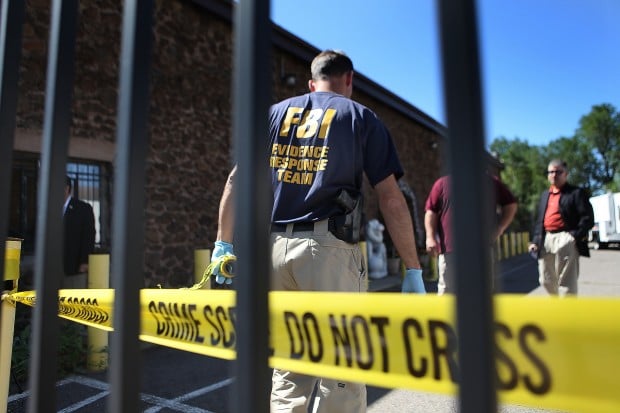
A member of the FBI evidence response team secures the crime scene perimeter around I Do! I Do! Wedding Boutique on Thursday morning. The owners have been federally charged with exploiting the labor of illegal workers. (Jake Bacon/Arizona Daily Sun)
Four members of a Flagstaff family who own the I Do! I Do! wedding boutique business were arrested Thursday morning on charges that they exploited workers brought illegally from Vietnam.
Huong Thi "Kelly" McReynolds, 58; James Hartful McReynolds, 60; Joseph Minh McReynolds, 36; and Vincent Minh McReynolds, 32, are all scheduled to have initial appearances in U.S. District Court in Phoenix on Friday to be formally read the charges against them.
The investigation into the McReynolds' business has been ongoing for the last two years, said Special Agent in Charge Matthew Allen of the Immigration and Customs Enforcement Homeland Security Division.
The indictment alleges that the four "... operated a scheme in which they caused Vietnamese women, men and children to work against their will at the 'I Do, I Do/Sweet Nothings' wedding boutique ... largely unpaid."
The victims would work seven days a week for up to 11 hours a day at the store, then work more hours at the defendants' residences.
The indictment also alleges the victims were lured to the country on the promise of marriage to one of the McReynolds family members, education and a better life.
Once here, the victims were stripped of their passports and identification and put to work.
According to the indictment, the family members "... intended to cause the workers to believe if they did not perform the labor and services, the workers and other persons would suffer serious harm, and by means of the abuse and threatened abuse of law and legal process."
"The thrust of this case is that it's a human trafficking investigation as opposed to a human smuggling investigation," Allen said.
Smuggling deals with transportation of illegal immigrants. Trafficking deals with exploiting the labor of illegal immigrants.
"In this case, they've been exploited for labor purposes," Allen said. "We refer to it as 'modern-day slavery.'"
He later added, "It goes on in our communities. It does happen."
SEARCH WARRANTS SERVED
Agents served three search warrants and three arrests warrants in Flagstaff Thursday morning. An additional search and arrest warrant was served on a McReynolds home in the Valley. Allen said investigators were in search of "documentary evidence."
According to a federal indictment unsealed Thursday:
-- Kelly is charged with five counts -- forced labor conspiracy, forced labor, unlawful conduct with respect to documents in furtherance of forced labor, violation of fair labor standards act, and marriage fraud conspiracy.
-- Joseph is charged with three counts -- forced labor conspiracy, forced labor and marriage fraud conspiracy.
-- Vincent is charged with two counts -- forced labor conspiracy and forced labor.
-- James is charged with one count of marriage fraud conspiracy.
The U.S. Marshals Service has also begun forfeiture and restitution proceedings against the four, according to the indictment.
Allen said the family assets are in the process of being seized by the government.
VICTIMS RETICENT
Allen said the lengthy investigation proved a challenge because victims, when identified, were reticent to come forward, and then their stories had to be corroborated with evidence.
Dennis K. Burke, U.S. Attorney for Arizona, stated in a press release, "Huong Thi McReynolds and her family lured these victims to the United States on the promise of the America Dream; what the victims got instead was indentured servitude."
Burke continued: "The defendants created a climate of fear inside their home and business by carrying firearms, berating the victims and threatening to physically harm them and shame their families in Vietnam. They weren't just exploited for their labor, they were robbed of their basic human dignity."
Six victims were identified by initials in the indictment, and the crimes were alleged to have happened between September 2001 and September 2008.
The following charges carry the following maximum penalty upon conviction:
-- Conspiring to engage in forced labor: 5 years in prison and a $250,000 fine.
-- Forced labor: 20 years in prison and a $250,000 fine.
-- Unlawful conduct with respect to documents in furtherance of forced labor: 5 years in prison and a $250,000 fine.
-- Conspiring to engage in marriage fraud: 5 years in prison, $250,000 fine.
-- Fair Labor Standards Act violation: 6 months in prison, $10,000 fine.
The telephone number for the wedding shop will remain operational. Customers with immediate questions can contact the shop at 774-8996. U.S. Marshals also will be attempting to contact existing customers.
Allen said the Federal Bureau of Investigation, the U.S. Department of Labor and the U.S. Marshals Service also were instrumental in the investigation.
Larry Hendricks can be reached at 556-2262 or lhendricks@azdailysun.com.

Wednesday, July 13, 2011
Enforcement Is Next Challenge After Virginia Human Trafficking Bill Becomes Law - News - WAMU 88.5 FM - American University Radio
July 12, 2011 - This spring Virginia Governor Bob McDonnell signed into law several measures to provide new protections against human trafficking and more severe punishment for those who engage in it. Before the introduction of the legislation, many people didn't realize how prevalent the crime is, especially in Northern Virginia.
Download
The challenge now that the bill has become law is recognizing human trafficking and taking action when it occurs.
The challenge now that the bill has become law is recognizing human trafficking and taking action when it occurs.
The nation's human trafficking watchdog is the Polaris Project in Washington, D.C. CEO Bradley Miles says Americans find it hard to believe that such crimes exist here.
He says Congress even defined "human trafficking."
"You got the child sex trafficking, the adult sex trafficking, and the labor trafficking," he says.
Sex trafficking involves online escort services, brothels disguised as massage parlors, and strip clubs. Many adult victims who were abused as children, witnessed violence or ran away from home, are easily recruited by traffickers.
Some are able to escape, and Polaris Project's Public Outreach Program Manager Andrea Austin says a lot of their clients are women, seeking refuge, wanting to start anew.
One victim, whose name is not released to protect her identity, was asked how she was caught up in sex trafficking
"I was looking for a job and a woman that live close to my house gave me a card with a phone number and asked me to call, because they were looking for housekeeping ladies," she says. "I called, and they gave me an address for an interview, and when I showed up in the house, a woman and man locked me up in the house, and they told me I was going to have sex with men, and I was going to have to make a lot of money for them."
And while she says she's lucky to be alive, her story depicts a victim with no life of her own for a long time:
"They locked me in a room, and I was forced to have sex with almost 25 men a day," she says. I couldn't live in that room at all, I had to eat and sleep there in that same bed where I had to be with those dirty men. I couldn't even change the sheets for weeks, I could only go to the bathroom in the morning and the evening. It was a dirty bathroom, the same one used by all those men. there were always people doing surveillance and I wasn't ever alone."
Sometimes victims can share information about their captors and help investigators shut down an operation. But Miles says traffickers operate underground, and a lead is often stale before it can be investigated.
When it comes to labor trafficking, Miles says even the child seen peddling magazines on the streets may be a victim of a form called "begging rings."
These children are often abducted, held captive, and forced to work for lengthy periods. He says all forms of this modern day slavery are very prevalent in the greater D.C. region, in part because Maryland, Virginia, and the District of Columbia converge in an area with varying law enforcement policies. He also says it's where criminals prey on unsuspecting foreign nationals:
"Folks that might work for diplomats that live in the D.C. area, different forms of labor trafficking, summer visas, people who come in for summer or seasonal work, on the J-1 visa, we're seeing some concerns there," says Miles. Outside of Northern Virginia, the problem exists in other parts of Virginia with higher immigrant populations and where it's easier to smuggle people into the state.
Polaris Project and others are working to get this added to FBI and police training and they’re asking for state and federal laws that crack down on all trafficking forms. They also want residents to be aware and look for signs. The Polaris hotline answers calls 24-hours a-day in 170-different languages. Those who want to become involved or report a possible human trafficking case can contact the Polaris Project.
Updated: Jul. 12, 2011 at 4:52 pm
Source: WAMU 88.5 FM - American University Radio

Tuesday, April 5, 2011
Trade as One - Blog - Interview with Lieutenant John Vanek, Human Trafficking Task Force of the San Jose Police Department
March 12, 2011 @ 03:46 PM
Nathan George Interview with John Vanek
Today I interview Lieutenant John Vanek on the Human Trafficking Task Force of the San Jose Police Department. I first met John at the Freedom Summit. What I appreciated most about him was that here was clearly someone on the front lines of the fight against trafficking, measured in his use of language, able to partner with all sorts of different organizations to get the job done, and in it for the long haul.
NG: John, tell us what your role is and how it fits into a national law enforcement effort against human trafficking
JV: Since 2005 the San Jose Police Department has been funded through a grant from the United States Department of Justice to create and manage a multi-agency, multi-disciplinary anti-trafficking task force. We were one of the original agencies to receive this grant. The program now includes about 40 such task forces across the country. I’ve managed the program since 2006.
The program is designed so local law enforcement agencies organize task force representatives from a variety of local and federal agencies. Our task force includes representatives from our department, the FBI, ICE, the United States Attorney’s Office, U.S. Department of Labor, our District Attorney’s office, and other local law enforcement agencies.
We work in collaboration with the South Bay Coalition to End Human Trafficking, a collection of victim-services providers. The Coalition is also funded by the Department of Justice, and we have formal agreements to work together to identify and rescue victims of trafficking. We also work on training local law enforcement officers in recognizing trafficking victims or situations, and we also put a lot of effort into raising the public’s awareness of trafficking.
I’ve been very fortunate. My role with the task force has given me the opportunity to engage a large number of governmental and non-governmental agencies across the country. We work closely with the Polaris Project, who maintains the National Human Trafficking Resource Center and the 24-hour National Human Trafficking Reporting Hotline (888-3737-888).
All of the task forces are working toward a better understanding of how we can all share expertise and information to best assist victims and investigate cases.
NG: What is the most shocking thing you have become aware of in the course of your work?
JV: I often hear comments about how shocking, or terrible, trafficking is. While that is true, in 24-years of police work I’ve seen too many terrible things. Being a victim of violent crime is a terrible thing, whether the victim has suffered sexual assault, domestic violence or other trauma. I really try to avoid comparing tragedies.
That said, the scope of slavery, worldwide, is amazing, with estimates that as many as 27 million people are enslaved today. As I began my involvement in the anti-trafficking movement, another element that surprised me was the socio-economic scope over which trafficking occurs. Trafficking occurs everywhere. One of my favorite sayings is, “If you think you don’t have trafficking in your community, your not looking for trafficking.” In the trainings we give, we try to get people to understand that they have to closely examine the cultural and socio-economic make-up of their communities. Doing so may give them a better idea of how trafficking may be discovered. Trafficking looks different in different communities.
NG: You must see some egregious crimes against people in the course of your work. What gives you the most cause for hope in tackling trafficking?
JV: What gives me the most hope, and makes my current work so rewarding, is the level of commitment of so many people within the anti-trafficking community. It is important to understand that our nation’s response to trafficking is really just ten years old, starting when Congress passed the Trafficking Victims Protection Act in 2000. And much of the support for victim-services and law enforcement task forces began around 2005.
So both from a governmental and non-governmental standpoint, most of us have been learning about trafficking as we’ve developed programs, investigated cases, and discovered how victims are exploited. Human Trafficking is the most complicated subject in law enforcement I’ve encountered, and outside of law enforcement it is just as complicated. Victims of trafficking have unique needs, and agencies that don’t have a history of working together need to learn how to do so, because no one single agency can assist a victim or investigate a case. We all have to work together to raise awareness and understanding of trafficking.
So many of the people within the anti-trafficking community are really dedicated and energetic, and just working to end slavery. This work brings together people and organizations with really divergent views on other subjects, but we are all abolitionists.
I can tell you that in all of my varied experiences in law enforcement, I’ve never partnered with social entrepreneurs like Trade As One, collaborated on a training project with Stanford Medical Center like we are now, worked with so many different federal agencies and victim services providers, or such a wide variety of faith-based organizations. Fighting slavery brings me and my partner, Officer Jenn Dotzler, into contact with all of these. The people we meet are truly inspiring to me. They give me faith in the future. And after 24 years of policing, I can use all of the positive energy I can find.
NG: What can we do to help your efforts and those of your colleagues in similar positions in police forces around the country?
JV: Talk about trafficking within your communities. Not just your neighborhood communities, but your work and faith communities, too. Raising awareness can help law enforcement agencies understand the importance of this issue, and make anti-trafficking work a higher priority. Task forces like ours’ offer training to law enforcement. Ask your local police or sheriff what they are doing to assist victims or investigate potential cases.
There are several great sources of information on trafficking, including the Polaris Project website. (http://www.polarisproject.org)
I also believe we all need to continue our personal study of trafficking; how and why it occurs, how is it linked to supply and demand both in labor and sex trafficking, and how we as individuals can be unwitting beneficiaries of slave labor, and how we impact slavery in the course of our lives. We all need to work together if we want to abolish slavery.
You can read more of Lieutenant John Vanek’s thoughts on his blog.
Trade as One - Blog - Interview with Lieutenant John Vanek, Human Trafficking Task Force of the San Jose Police DepartmentSource: tradeasone.com

Tuesday, March 22, 2011

Monday, March 7, 2011
Fighting Facebook and Human Trafficking - National Human Trafficking | Examiner.com
 Image via CrunchBase
- March 6th, 2011 1:01 pm ET

There are so many dangerous myths surrounding human trafficking in the United States. To protect our young people I believe it is essential to tell the truth about this issue. And to do that, we have to drop all our agendas and preconceived notions. We must cast aside what we want to believe; what is easy to believe. Myths must be replaced by the truth. To understand and accept the humanity of the victims this crime leaves behind, I felt it was time explore the entire, often ugly, story of trafficking. And that story takes place in every community in America.
But be warned, the closer we look at human trafficking, the uglier it gets. You simply cannot get close to this topic without getting your hands dirty. For any thinking person, it is impossible to face the truth of it without having it change you. People want to believe it is something that can be solved easily and quickly. It can’t. The truth demonstrates that these specific crimes have existed in this country for two hundred years. Trafficking is an increasingly accepted part of our culture and it will take generations of healing and understanding to stop it.
The book I mentioned previously, The Berlin Turnpike: A True Story of Human Trafficking in America, tells the story of a landmark federal trial which took place in Hartford, Connecticut over the course of eight days in 2007. The trial of United States vs. Dennis Paris provides a rare and detailed account of how human trafficking is thriving because it has left the street corners and entered our homes. This one case contains every element of a crime so reliant on secrecy; shrouded behind a scintillating veil of growing legitimacy. Yet it is buried just below the surface of our culture’s mainstream perception.
By following this trial, we are taken to the core of how and where these events take place from the perspective of all those involved: the victims, the police, and the perpetrators. When we look at the Berlin Turnpike, a twelve mile stretch of concrete in the nation’s wealthiest state: Connecticut, we finally uncover what has been lurking in every American community for so long.
And a growing segment of this crime has infiltrated Facebook. Then, last October, FoxNews.com reported, “Facebook is failing to prevent child predators from posting suggestive and potentially illegal photographs of children on its website.” The reality is that right now, criminals are using Facebook as their dark playground. The young girl in the Facebook profile I witnessed was perhaps six or seven years old. She was not smiling. With her head was turned slightly to the right and she looked coyly at the lens. It was intentionally provocative. Her hair was done in a highly stylized arrangement with green and yellow ribbons. Along with other makeup, she was wearing lipstick, eyeliner and shadow. She was standing outside, a blue sky and unidentified foothills behind her. She was holding an inflatable Daffy Duck. And she was completely naked.
I quickly realized this was not at all the only photograph of its kind on Facebook. It is part of an enormous collection that is growing by the hour on the social networking site. Knowing these images are a violation of Federal Law, we reported the images and videos to the FBI. We explained to them that other explicit images and videos of children on Facebook are far, far worse.
I am not shocked that criminals use the internet to trade these photos with each other. But, these are not hidden away on some obscure, offshore website. This is on Facebook today.
In another recent case, a man contacted a false profile of a woman on Facebook to trade photos of children. His profile had approximately 200 explicit images of children of various ages. The FBI was able to track this man and arrested him last month. He is a husband, the father of three children and the pastor of a church in Kentucky.
Most of the reported 600 million users of Facebook probably think it is well patrolled and generally safe from such content. With some privacy concerns, the vast majority of Facebook users, from private citizens, to churches and ministries, to major corporations, NGO's, politicians, and even the President of the United States, have no idea that it is home to a massive collection of unreported child and adult pornography.
So today, we ask this question: If Facebook has the human and technological resources to topple governments and shift human history, shouldn’t it be able to prevent sexually explicit images of child children - some only newborns - from being placed on their system?
Our goal is to motivate Facebook to focus its vast intellectual and financial resources and bring an end to these crimes taking place on their website. No matter what Facebook might be doing now to prevent this violence against children, it is clearly not enough. I have been trying to expose these crimes and Facebook’s apparent lack of effort in preventing them through this series of Examiner.com articles and on Facebook itself through a “Cause” called “Force Facebook To Block All Child Pornography” which now has over 2200 members. Except for a small, anonymous and devoted group of international “netizens” who patrol Facebook and report these crimes, very few people are taking action against these deadly attacks on our children; attacks glorified by pedophiles and now infiltrating every home in America.
Now there is hope through the initiation of a singular nationwide campaign which will expose these crimes occurring on Facebook - the online community that many American families visit every day – while at the same time place the responsibility for their prevention squarely on the website’s executives. The Stop Child Porn on Facebook campaign is a web-based initiative that gives all American families the ability to flood the offices of Facebook with traditional US Postal Service delivered mail, calling for an end to the invasion of their website by pedophiles.
We call on all who care about children to visit StopChildPornOnFacebook.com. There, thanks to Cause Action, the organization that built the website, you and your friends can automatically send your mail to the CEO of Facebook, Time Magazine’s Person of the Year, Mark Zuckerberg, and other in Facebook leadership. The more people who participate, the more powerful our message will be. This campaign is meant to spark a white hot fire of public action and, more importantly, to convince Facebook that they must make the prevention of these crimes their number one priority.
To be clear, we will settle for nothing less than a real solution that keeps these abusive images and videos off Facebook in the first place. To do that, we must join forces to bring this story out in the open.
For more information, please refer to the following websites:
- Stop Child Porn On Facebook
- Force Facebook To Block All Child Pornography
- The Berlin Turnpike
- FoxNews.com Story

Friday, February 11, 2011
Arrest Raises Level of Urgency for Human Trafficking Task Force - Pleasantville-Briarcliff Manor, NY Patch
Officials meet again to advance case for awareness and recognition training.
The Pound Ridge police department is a co-founder of the county-wide Human Trafficking Task Force. Credit Lisa Buchman
Photos (1)

The arrest last week in Yonkers of a Florida man accused of crimes involving the illegal transportation of women for the purpose of forced prostitution added a sense of urgency to a county-based task force charged with identifying and implementing measures required to stem a tide of human trafficking crimes believed to be rampant throughout the region.
Officials from an array of federal, state and municipal law enforcement and public safety agencies; labor, customs and immigration departments and legal, social welfare and civic groups gathered yesterday in White Plains to continue formulating a strategy for what one member called a "long-term effort to eliminate the human trafficking crimes taking place everyday in Westchester County."
Prevalance of Human Trafficking
News of last Friday's arrest of Miami resident Nicholas Alvarez on sex trafficking charges was further proof to Pound Ridge Police Chief David Ryan, one of the three founders of the task force, "that the crime of human trafficking might be as prevalent in Westchester as anywhere else in the country."
That the arrest took place during a routine traffic stop was, according to Ryan, "an example of excellent police work by an officer who was perceptive enough to recognize the situation was not what it appeared to be at first, and proceeded to go about his business in a thorough and professional manner. The way he performed is how every law enforcement officer needs to perform—as soon as possible."
According to the county police report, Alvarez was stopped when Officer Donald Palmer noticed the van he was driving on the Saw Mill River Parkway in Yonkers was missing its rear license plate.
Forged proofs of identification, and a vehicle registration check indicating the van had been stolen was enough evidence to take Alvarez and his three female passengers into custody.
"But it was the passenger interviews that led investigators to recognize the seriousness of the situation," Ryan said. "Initially the women refused to cooperate with police authorities. But the officers could tell they were acting out of fear."
"Turns out they had been intimidated, threatened with violence and in some instances beaten by the guy for refusing to cooperate with demands that they prostitute themselves."
Investigations underway by the FBI and Westchester County's public safety office implicate Alvarez in several instances of transporting women across state lines from New York to Virginia. If convicted of the human trafficking crimes he's been accused of, Alvarez faces up to 30 years in federal prison.
In May 2009, Pound Ridge police filed charges against town resident Joseph Yannai, a noted author who wrote the The International Who's Who of Chefs: 2004-2005. Yannai, 66, was later arrested by federal officials after a federal grand jury indicted him on charges related to forced labor, violations of immigration laws, and violations of the Mann Act, a federal law which prohibits human trafficking and white slavery. Yannai remains in custody at the Metropolitan Detention Center in Brooklyn.
"These incidents are a clear sign that the size and scope of the problem we have in Westchester is significant," said Ryan. "Anyone who believes that because this is Westchester, we're immune to the problems in the world is either uninformed or naive."
Task Force strategy: Raise awareness of trafficking
Combined efforts by the Pound Ridge Police Department, and two highly-acclaimed social welfare organizations, the International Organization for Adolescents, and My Sisters Place, a shelter for battered women in White Plains, led to the official formation of the Westchester County Anti-Human Trafficking Task Force last month.
Today, its roster of participating organizations includes the Federal Bureau of Investigation; U.S. Department of Homeland Security’s Immigration and Customs Enforcement; the U.S. Attorney’s Office, Southern District, and the New York State Office of Temporary and Disability Assistance/Bureau of Refugee and Immigrant Assistance.
The New York State Department of Labor is also represented, as is the Westchester County District Attorney’s Office; the Westchester County Office for Women, the Westchester County Family Justice Center; the Westchester County Association of Police Chiefs; the Westchester County Division of Child Welfare; and representatives from the New Rochelle, Mt. Kisco, Mt. Vernon, Peekskill, Port Chester, Pound Ridge, White Plains, Yonkers and Yorktown.
While the task force is expected to grow and evolve over time, Ryan explained that an immediate objective was "to begin raising the level of awareness and understanding of what human trafficking is, not just on the part of law enforcement professionals, but private citizens as well."
"We're talking about people being taken prisoner, forced under threat of personal injury to themselves and their families, to commit crimes," continued Ryan. "It's there and lot more prevalent than most realize. It's just not always out in plain sight."
Ryan said the task force had organized an initial series of training classes that will enable police officers to recognize human trafficking cases, collect evidence and access support resources once a case has been identified.
He added that classes scheduled to commence in late March were completely booked before the meeting had ended.
A more comprehensive educational program, one that eventually provides training "to every cop in the county," will likely begin with proceeds from a $1 million grant the task force is planning to apply for through from the U.S. Department of Justice over the next few months, Ryan said.
Guiding the group through the RFP and grant process is Pound Ridge resident and task force co-founder Alison Boak. Boak has helped in a similar capacity for eight task forces in New York City, Latvia, and the Dominican Republic.
Boak explained that the Justice Department has standards of best practices based on efforts by national and international multi-disciplinary anti-trafficking task forces, "which our group will follow."
"This was our second meeting, so a lot of what's taking place is now relationship-building among our various partners," Boak explained. "We need the participation of all the players, and everyone needs to understand the role each of us plays. It's very much a team effort, and we have to be able to demonstrate the team has the capacity to perform as a functioning unit."
According to Boak, the county task force is one of 42 in the country and "one of the few, if not the only one, that serves a mostly suburban community.
"Our effort here speak to the insidious nature of this crime," Boak said. "It's just as important for Westchester County citizens to recognize human trafficking as it is for citizens of a large urban community. The reason is because it exists, regardless of demographics."
"Slavery, which is what this is, has historically involved one group exploiting another, using fear, intimidation and violence, for profit."
Arrest Raises Level of Urgency for Human Trafficking Task Force - Pleasantville-Briarcliff Manor, NY Patch

Subscribe to:
Comments (Atom)
