Showing posts with label National Underground Railroad Freedom Center. Show all posts

Monday, November 12, 2012

Film links 19th century slavery to contemporary bondage

http://www.usatoday.com/story/news/2012/11/09/slavery-film-freedom-center/1696137/

Source: USA Today

GAN FILM 110912

STORY HIGHLIGHTS
  • "Journey to Freedom" has been shown at 10 U.S. embassies around the world
  • The documentary features an American slave in the 1800s and a modern day Cambodian man
  • Some 27 million people are trapped in forced labor, sex trafficking and domestic servitude

10:06PM EST November 9. 2012 - CINCINNATI -- The 150th anniversary of the Emancipation Proclamation will be Jan. 1, and Secretary of State Hillary Rodham Clinton wanted to tie President Abraham Lincoln's executive order freeing slaves to the State Department's efforts worldwide to raise awareness of contemporary slavery.
Today, an estimated 27 million people are ensnared in forced labor, sex trafficking and involuntary domestic servitude. The Department of State's first move in linking that to historic American slavery was to contact Cincinnati's National Underground Railroad Freedom Center.
"The Freedom Center is the definitive place in the United States to think about slavery, and it's the one authoritative voice of slavery old and new," said Luis C. de Baca, Clinton's senior adviser and director of the State Department's Office to Monitor and Combat Trafficking in Persons.
The result is "Journey to Freedom," a 35-minute documentary film that tells parallel stories of the capture and enslavement of a 19th century American black man and a 21st century Cambodian. It leans on the Freedom Center's expertise and, in the process, elevates the center's standing as an authority on historic and contemporary abolitionism.
The film was supposed to premiere Oct. 30 in Washington, a screening postponed until Nov. 27 because of Hurricane Sandy. A Freedom Center showing, originally scheduled for early November, is delayed indefinitely.
The film already has been seen at 10 U.S. embassies around the world.
"The United States has been through this and, in some respects, we're still going through it," Jo Ellen Powell, U.S. ambassador to Mauritania, where the film was shown, told The Enquirer.
"We want to help Mauritania become a free country, and what we can share to help them get through it is our own history. It's not a pretty part of our history, but it's a history the Freedom Center presents so powerfully."
An estimated 600,000 Mauritanians have been abducted into slavery, giving it the world's largest proportion of its population -- 20 percent -- being forced to work against its will.
A Mauritanian woman, Fatimata M'Baye, co-author of her country's anti-trafficking law, was one of 10 Trafficking in Persons Heroes honored by Clinton in June in Washington.
Another was Vannak Anan Prum, the Cambodian man abducted and forced to work for four years on a Thai fishing boat until his escape.
A week after the ceremony, M'Baye and Prum were at the Freedom Center for a tour and interview. Each of the 10 people is briefly profiled in the film, which was paid for by the State Department and Google Inc.
Prum and Solomon Northup, a black man born free and lured from his home in Upstate New York and into slavery for 12 years in Louisiana, are the film's main characters. Their similar narratives form its spine.
Producers researched potential historical characters at the Freedom Center to bring to life in "Journey to Freedom." An actor portrays Northup, sold into slavery in 1841 at age 33 after he had accepted a job as a violinist in New York City. Traders drugged and chained Northup. He woke in a slave pen in Washington, D.C., beginning what he would later describe in his memoir, "Twelve Years A Slave," as "dismal phases of a long, protracted dream."
Northup's story of escape and later activism as aide to fugitive slaves on the Underground Railroad in Vermont is being made into a 2013 theatrical release co-starring Brad Pitt.
"This guy's story is so similar to modern ones," said Luke Blocher, Freedom Center director of strategic initiatives and "Journey to Freedom's" executive producer, who traveled with the crew to Cambodia.
Prum, living in 2006 in poverty with his pregnant wife, met a job agent who promised him work with as many as 100,000 Cambodians in Thailand. Instead, the agent sold him into forced labor on a fishing boat. Even after swimming to supposed safety, Malaysian police sold him to a palm oil plantation, where he worked for another year before landing in jail after a fight with other workers.
After his return to his family, Prum, like Northup, recorded his experiences. Prum created a set of drawings, and he presented copies as a gift to Clinton in June. She donated them to the Freedom Center.
The documentary advances the Freedom Center's goal to link chattel and contemporary slavery, begun in full in October 2010 when it opened "Invisible: Slavery Today," the first permanent, museum-quality exhibit dedicated to the topic.

Enhanced by Zemanta

Sunday, October 10, 2010

Exhibit examines modern-day slavery | cincinnati.com | Cincinnati.Com

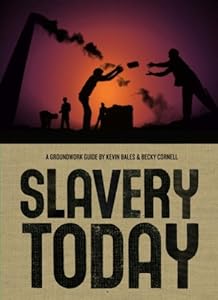
Cover of "Slavery Today (Groundwork Guide...Cover of Slavery Today (Groundwork Guides)By Mark Curnutte • mcurnutte@enquirer.com • October 7, 2010 

A story as complex and enormous as contemporary slavery might best be told through individuals.

That approach is the one the National Underground Railroad Freedom Center takes with its newest permanent exhibit, "Invisible: Slavery Today," which opens Saturday.

As many as 12 to 17 million people worldwide are forced to work against their will.

The set for the exhibit is a makeshift warehouse - designed as a dark place stumbled into by an unsuspecting public.

• Photos: Slavery exhibit

"What we hope to do, at very least, is raise awareness that this exists," said Paul Bernish, the Freedom Center executive in charge of its contemporary slavery exhibit and programs, believed to be the first such position in the American museum field. "Secondly, we want to offer people things they can do to become engaging to ending these forms of slavery."

The education comes first.

The realms of labor, child labor, sex trafficking, domestic servitude and bonded labor - work demanded as repayment of a loan - are humanized by real-life stories that greet visitors to the exhibit warehouse and represented by crude statues.

The soundtrack is staccato, looping sharply punctuated street sounds, factory machines and whistles and grinding chains.

The victims include:

Tatyana, who hoped to escape poverty in Moldova by answering a newspaper ad for work in a Milan nightclub. Instead, she is repeatedly raped, drugged and tortured. She is one of the estimated 2.5 million people caught in the international sex trade. Her likeness in the exhibit is that of dismantled mannequin limbs trapped in the folded metal frame of a single rollaway bed.

Mariano, 33, is a Guatemalan who left crippling poverty for the promise of work picking tomatoes in Florida, which he does 14 hours a day while living in squalor and fears being exposed as an illegal immigrant. His image is built from a series of tomato cans commonly found in groceries.

Helia, a five-year-old Haitian girl, was sold or simply given away by her parents for the promise of an education. In reality, she is denied the chance to go to school in favor of ceaseless domestic servitude, the limbs of her likeness represented by mops and brooms and draped in a work smock.

Freedom Center copywriters and editors and outside designers limited the amount of text in the exhibit and increased the visuals by incorporating documentary video footage and startling depictions of bare mattresses, crude tools and tattered clothing.

The Freedom Center, buoyed by positive early response by Haitian and Indian visitors who'd seen the incomplete exhibit, plans to create a traveling contemporary slavery show.

"We hope to ignite a spark in people that will move them to become activists and act upon what they believe freedom to be," museum curator Dina Bailey said.

The second gallery of "Invisible" offers information and details efforts already underway by anti-slavery groups that it worked with to create the exhibit, such as International Justice Mission, Free the Slaves, Polaris Project and GoodWeave. National media, including the New York Times and ABC News, have already visited Cincinnati to report stories on the exhibit.

The Freedom Center has continued to sharpen its focus and find an increasingly strong voice with exhibits examining lynching and domestic terrorism.

The creative staff thinks it has come upon a defining statement with "Invisible."

"We feel really good about it," Bernish said.

Expectations have been almost unrealistically high for the six-year-old museum.

Degraded by some as an "African-American" institution, bogged down by exaggerated attendance projections that billed it as Cincinnati's economic savior, and clearly appreciated more nationally and internationally than in its hometown, the Freedom Center wants to answer criticism that it is irrelevant in content and time.

Slavery remains a scourge. Many would rather pretend it didn't exist. " Invisible" is designed to keep slavery visible and connect its contemporary applications to its root in America.

Soft music with an introspective flute line drifts from the ceiling in the second "Invisible" gallery, dedicated to change and challenging action. On a wall is printed this passage:

"We are living in the midst of a tragic paradox; no longer is there an underground network to guide slaves to freedom but rather there is an underground criminal network to entrap them and sell them into slavery.

"Until we unite to confront this grave human rights violation, it will continue to plague the world and feed off vulnerable men, women and children."

Exhibit examines modern-day slavery | cincinnati.com | Cincinnati.Com

Source: Cincinnati.com
Enhanced by Zemanta