Showing posts with label New York Times. Show all posts
Showing posts with label New York Times. Show all posts
Tuesday, October 7, 2014
Cambodia Won’t Let Somaly Mam Start New NGO
Somaly Mam may want to forget all about Newsweek’s cover story on her in May and start over in her anti-sex-trafficking activism, but Cambodia won’t let her, according to The Cambodia Daily.
Cambodia Won’t Let Somaly Mam Start New NGO:


Saturday, June 21, 2014
Scandal Detracts from True Trafficking Problem, Rights Workers Say
Source: VOA
PHNOM PENH — Cambodia remains a country mired in the problem of sex trafficking, where inequality and poor educations leave entire communities susceptible to the crime.
Cambodian sex trafficking was thrust into the limelight earlier this month, when a Newsweek expose uncovered a series of lies and exaggerations made by Somaly Mam, a Cambodian woman whose anti-trafficking efforts made her an international celebrity.
Continue:
http://www.voacambodia.com/content/scandal-detracts-from-true-cambodia-trafficking-problem-rights-workers-say/1938881.html
Monday, March 31, 2014
Inside the Brothels - NYTimes.com
Source: NYTimes.com:
Seven unforgettable stories in the battle against sex trafficking, collected over two decades of my reporting. —Nicholas Kristof
Highlight link, then click
http://www.nytimes.com/interactive/2014/opinion/inside-the-brothels.html?_r=1

Seven unforgettable stories in the battle against sex trafficking, collected over two decades of my reporting. —Nicholas Kristof
Highlight link, then click
http://www.nytimes.com/interactive/2014/opinion/inside-the-brothels.html?_r=1
Tuesday, February 14, 2012
Q&A with Nicholas Kristof | The Daily Texan
http://www.dailytexanonline.com/news/2012/02/14/qa-nicholas-kristof

Source: The Daily Texan
The Daily Texan: On social media such as Facebook and Twitter, you’re actively engaging with your readers. How does that change the way you practice journalism?
Nicholas Kristof: I’m not sure it makes the reporting part of what I do that different. But in journalism, I’d say it’s really more of a way to get young people in particular to pay attention to issues that I care about.
DT: How do you report international and domestic issues differently, and how do you decide what’s important to people here in the United States?
Kristof: I do care a lot about international and human rights issues, but I also know that if every column I wrote was about those issues, then my poor readers would just tune out. So it does require some balance between issues that are off the agenda but are important and issues that are already on the agenda.
DT: You’ve done a significant amount of research on human trafficking and human rights in general. How did that get started?
Kristof: It started, really, with me reporting in Cambodia. It just kind of blew me away what I saw, and then as I reported on trafficking internationally, it became clear to me that we didn’t really have the moral authority to tell other countries to clean up their act unless we did a better job ourselves [in the U.S.].
DT: What do you see in the future of human trafficking injustice, both domestically and abroad?
Kristoff: I think there is a certain amount of progress on both fronts. Other countries are being named and shamed into trying to do their job, and I think domestically prosecutors are trying to go after the pimps and johns more and that really changes the dynamic.
DT: How do you make sure your reporting is accurate when you’re interviewing people about events that occurred while you weren’t in their country?
Kristoff: You want to be really sure that you’re getting the true backstory, and people do really have a tendency to exaggerate. Good people exaggerate as well as bad people, and so as much as possible verify with other people and just get a sense that it’s really credible.
DT: As student journalists, what can we do that professionals can’t?
Kristof: It’s the way you can make a difference. There’s a difficult trade-off in that you want to make a difference overall, but a lot of what you end up doing is just slogging and reporting things that don’t particularly affect social justice or anything like that, but it’s news.
Monday, June 20, 2011
Human Trafficking – Changing Mindsets For A Better Future « 4L's Reading Programme Blog
Human history dates back many hundreds of years, and in that time, many cultural and moral developments have taken place in society.
In spite of our claim of being civilized, a few glaring blemishes still remain painfully visible in our society. One of these, perhaps one of the most brutal and cruel as well, is that of human trafficking.
An estimated 2.5 million people are in forced labour due to human trafficking(including sexual exploitation) at any point of time. To get an idea of the scale of these numbers, it means that a number of people equivalent to half of Singapore’s entire population as of now (4.98 million) are suffering from the consequences of human trafficking. Of these 2.5 million people, 1.4 million, or 56 percent, are from Asia alone.
A column by Nicholas Kristof (link at the end of the post) in the New York Times tells a heart-rending story of a 10 year old girl in India who wishes to become a doctor, but is instead most likely going to be sold to human traffickers by her family.
In many cases such as this, pressure from the family is an important factor that can actually act as a catalyst for human trafficking. Most of these families are from classes of society that live in poverty, and they take this decision to get some money to support themselves.
The larger issue present here, is that of morality. These families who are selling their daughters off fail to realise that their views and practices, while in accordance with their own tradition, are harming their both own chances of breaking out of the poverty cycle and also the well-being of their children. They need to realise that their children are their best chance of survival in the future, and by selling them off, they only feed the lust of the depraved people who keep this illegal business running.
I believe that in the fight against human trafficking, an important and effective step would be to change the mindset of the families which sell their children to human traffickers. In crude terms, this would cut off a major “source” of the human traffickers, especially in countries like India, where such traditions are practised, and the victims are the only ones who understand the cruelty imposed onto them.
It is heartening to see that some work is being done to tackle this specific problem, as mentioned by Kristof, but it will not be effective unless the people’s mindsets are changed.
On the subject of humans, Wikipedia says “humans have a highly developed brain, capable of abstract reasoning, language, introspection, and problem solving.” Surely this highly developed brain is able to distinguish clearly between right and wrong? Human trafficking is highly immoral, has no regard for an individual’s rights and desires, and really, it does not take much thinking to realise that it is wrong and has no place in human society, even for the families who sell off their children.
http://www.nytimes.com/2011/06/02/opinion/02kristof.html?ref=columnists
Source: 4L's Reading Programme Blog

Wednesday, November 10, 2010
How Abolitionists Are Ending Slavery 144 Characters at a Time | End Human Trafficking | Change.org
November 09, 2010 11:03 AM (PT)
 Since the beginning of civilization, people have enslaved other people. Egyptians enslaved Jews, Ottoman Turks enslaved Armenians, and Americans and Europeans enslaved Africans. Even today, after slavery has been made illegal in every country on earth, the rich enslave the poor, men enslave women, and adults enslave children. But in 2010, we have a powerful weapon in the fight against slavery. Twitter. Yes, the 144 character social media tool might just do what all the legislation and international conventions have failed to — finally end slavery.
Twitter is increasingly becoming the most popular platform for the growing modern-day abolitionist movement. Modern-day slavery is an issue which is often overlooked by mainstream media; the Washington Post and New York Times don't have human trafficking beats. Yet across the world, millions of people still live in slavery as real as what's described in history books. They harvest tea, sugar, and cocoa. They make cell phones, sew blue jeans, and clean private residences. And they are trapped in brothels and sold through online classified services. But even as a global understanding that slavery still exists grows, trafficking victims' experiences are rarely front page news.
Enter Twitter, the 144 character social media site and it's most prolific user, Ashton Kutcher. Kutcher has proven that Twitter can be a tremendous force in building and mobilizing the movement to end human trafficking. At a recent event at the United Nations, journalist Nicholas Kristof pointed out that Kutcher has just over 6 million followers on Twitter, compared to 140,000 who follow the UN. But while Kutcher could use his power only to promote his films or share videos of fainting cats, he instead uses it as a platform to educate people about human trafficking and mobilize them into action.
And he's not the only one. Around the world, abolitionists and other advocates for lesser-known social issues are using Twitter as a platform to create social change. For example, Twitter user @DianaScimone has run successfull tweet-a-thons on 9/9/09 and 10/10/10 to raise money for the fight against human trafficking by mobilizing the Twitter community to action. @27millionslaves drives users to the incredible resource set available from End Slavery Now, including tools to help them fight slavery in their communities. NGOs like @polaris_project and @anti_slavery use Twitter to mobilize their base to action, like writing letters to congress, attending events, volunteering, and of course, signing petitions on Change.org. And groups like @madebysurvivors and @FairTradeUSA use the short-form tool to spread the word about their slavery-free products to consumers looking to make ethical purchases.
The advent of Twitter means that abolition has a platform where activists can exchange information, educate themselves and others, and mobilize each other to take action. For the first time in history, we don't have to wait for the mainstream media to get this issue and take up our cause. We're already doing it ourselves. So, @Twitter, thx for platform to fight #humantrafficking and create #socialchange.
Photo credit: Rosora Ochara

Amanda Kloer has been a full-time abolitionist for six years. She currently develops trainings and educational materials for civil attorneys representing victims of human trafficking and gender-based violence.
Source: End Human Trafficking

Sunday, October 10, 2010
Exhibit examines modern-day slavery | cincinnati.com | Cincinnati.Com
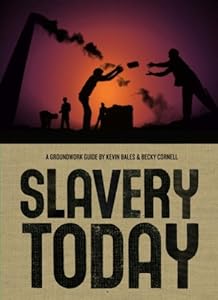 Cover of Slavery Today (Groundwork Guides)By Mark Curnutte • mcurnutte@enquirer.com • October 7, 2010
A story as complex and enormous as contemporary slavery might best be told through individuals.
That approach is the one the National Underground Railroad Freedom Center takes with its newest permanent exhibit, "Invisible: Slavery Today," which opens Saturday.
As many as 12 to 17 million people worldwide are forced to work against their will.
The set for the exhibit is a makeshift warehouse - designed as a dark place stumbled into by an unsuspecting public.
• Photos: Slavery exhibit
"What we hope to do, at very least, is raise awareness that this exists," said Paul Bernish, the Freedom Center executive in charge of its contemporary slavery exhibit and programs, believed to be the first such position in the American museum field. "Secondly, we want to offer people things they can do to become engaging to ending these forms of slavery."
The education comes first.
The realms of labor, child labor, sex trafficking, domestic servitude and bonded labor - work demanded as repayment of a loan - are humanized by real-life stories that greet visitors to the exhibit warehouse and represented by crude statues.
The soundtrack is staccato, looping sharply punctuated street sounds, factory machines and whistles and grinding chains.
The victims include:
Tatyana, who hoped to escape poverty in Moldova by answering a newspaper ad for work in a Milan nightclub. Instead, she is repeatedly raped, drugged and tortured. She is one of the estimated 2.5 million people caught in the international sex trade. Her likeness in the exhibit is that of dismantled mannequin limbs trapped in the folded metal frame of a single rollaway bed.
Mariano, 33, is a Guatemalan who left crippling poverty for the promise of work picking tomatoes in Florida, which he does 14 hours a day while living in squalor and fears being exposed as an illegal immigrant. His image is built from a series of tomato cans commonly found in groceries.
Helia, a five-year-old Haitian girl, was sold or simply given away by her parents for the promise of an education. In reality, she is denied the chance to go to school in favor of ceaseless domestic servitude, the limbs of her likeness represented by mops and brooms and draped in a work smock.
Freedom Center copywriters and editors and outside designers limited the amount of text in the exhibit and increased the visuals by incorporating documentary video footage and startling depictions of bare mattresses, crude tools and tattered clothing.
The Freedom Center, buoyed by positive early response by Haitian and Indian visitors who'd seen the incomplete exhibit, plans to create a traveling contemporary slavery show.
"We hope to ignite a spark in people that will move them to become activists and act upon what they believe freedom to be," museum curator Dina Bailey said.
The second gallery of "Invisible" offers information and details efforts already underway by anti-slavery groups that it worked with to create the exhibit, such as International Justice Mission, Free the Slaves, Polaris Project and GoodWeave. National media, including the New York Times and ABC News, have already visited Cincinnati to report stories on the exhibit.
The Freedom Center has continued to sharpen its focus and find an increasingly strong voice with exhibits examining lynching and domestic terrorism.
The creative staff thinks it has come upon a defining statement with "Invisible."
"We feel really good about it," Bernish said.
Expectations have been almost unrealistically high for the six-year-old museum.
Degraded by some as an "African-American" institution, bogged down by exaggerated attendance projections that billed it as Cincinnati's economic savior, and clearly appreciated more nationally and internationally than in its hometown, the Freedom Center wants to answer criticism that it is irrelevant in content and time.
Slavery remains a scourge. Many would rather pretend it didn't exist. " Invisible" is designed to keep slavery visible and connect its contemporary applications to its root in America.
Soft music with an introspective flute line drifts from the ceiling in the second "Invisible" gallery, dedicated to change and challenging action. On a wall is printed this passage:
"We are living in the midst of a tragic paradox; no longer is there an underground network to guide slaves to freedom but rather there is an underground criminal network to entrap them and sell them into slavery.
"Until we unite to confront this grave human rights violation, it will continue to plague the world and feed off vulnerable men, women and children."
Exhibit examines modern-day slavery | cincinnati.com | Cincinnati.Com
Source: Cincinnati.com

Tuesday, September 7, 2010
Federal Indictments in Human Trafficking Scheme | The Investigative Fund
In May, The Investigative Fund's John Bowe dug into the world of legal human trafficking by companies feeding workers into this country's H-2A guest worker program. Now the target of that probe is under federal indictment.
Bowe's investigation, published as a feature in Mother Jones, focused in on one American recruiting firm, Global Horizons, and its president and founder, Mordechai Orian. The firm recruited Thai farmers for agricultural jobs in the United States and charged them upward of $10,000 a piece — with interest — for job placement. Workers borrowed the money, even putting their homes up for collateral, only to arrive in remote parts of Washington State or Hawaii for sporadic work that didn't even pay enough for them to cover their loan payments. The workers slept in tightly packed barracks and were fed insubstantial food rations, leaving them to forage in the bushes for food. One Global Horizons agent in Hawaii walked the fields armed with a knife, a gun, or a baseball bat, threatening workers with deportation if they didn't behave. Bowe's reporting exposed the H-2A program as opening the door for a new form of indentured servitude.
Orian refused to take responsibility for the practices of his subcontracted recruiters, telling Bowe only, "Middlemen are always going to seek an incentive."
Last Thursday, the Justice Department announced that a federal grand jury in Honolulu has indicted Orian, three of his employees and two of his Thai labor recruiters for engaging in "a conspiracy to commit forced labor." If convicted, Orian faces a maximum sentence of 70 years in prison. The indictments have been covered in major media outlets from the New York Times and the Los Angeles Times to CNN, One Thai community advocate calls it a "mind-boggling" case and a "major, major victory." The FBI has characterized the Global Horizons operation as the largest human-trafficking scheme ever to result in criminal charges in the United States.
Orian turned himself in to federal authorities on Friday and the offices of Global Horizons are now closed.
The guest worker program, which brought some 60,000 workers into the country last year, has enjoyed the support of everyone from the late Ted Kennedy to the US Chamber of Commerce — and some immigration reform proposals would dramatically expand it.

Federal Indictments in Human Trafficking Scheme | The Investigative Fund

Wednesday, July 28, 2010
Slavery: Be your own change in the world
Langley Advance
Dear Editor,
How many of us wake up in the morning and say, “Wouldn’t it be great if I could change the world in which we live?”
Is this not what drives us in our daily lives to excel at our careers, to make an impact?
Sometimes, though, the task is so immense, so daunting that we are overwhelmed by the magnitude of the problem. But you can, in the words of Mahatma Ghandi, “be the change we wish to see in the world.”
The M.A.D. Challenge (www.madchallenge.ca) is a movement originating in Sherwood Park, Alberta, of students aged 12-18 who want to see slavery and human trafficking come to an end in our lifetime, and who are ready to do something about it.
The Challenge was born out of a desire to see a generation of young people reaching out and helping those who cannot help themselves, a generation filled with compassion, not content to live their lives isolated from the tragic realities of our world, a generation that will hear the cries of the oppressed and respond with mercy, a generation willing to stand together and Make A Difference.
At its core, the M.A.D. Challenge is a call for all of us to participate in the process of bringing light to the darkest places in whatever ways we can. It is an opportunity to be part of the solution.
You may not be aware that mass atrocities and modern-day slavery share a common and deplorable distinction. The world agrees that each is intolerable, yet both persist today on a massive scale.
Human Trafficking is one of the most dehumanizing and victimizing acts perpetrated on the most vulnerable of our societies. There are more slaves on the planet now than at any time in history – an estimated 27 million men, women, and children are enslaved across the globe.
Modern-day slavery manifests itself in many forms, from forced labor to sex trafficking, but each is alike in that it poses a severe threat to the future of human freedom.
Sometimes hidden in the dark corners of our globalized world and at other times occurring in plain sight, modern-day slavery and human trafficking are legal nowhere but present in every country across the globe. In South Asia alone, nearly 10 million people languish in debt bondage. As many as two million people have been traf_cked into prostitution or forced labor.
So right about now you are asking yourself what it is that we want.
The challenge that we have taken on is two-fold: raising awareness, and raising funds to help end slavery once and for all. One hundred per cent of the funds that we raise during the M.A.D. Challenge will go to help the International Justice Mission.
International Justice Mission is a nonprofit human rights agency that secures justice for victims of slavery, sexual exploitation, and other forms of violent oppression. They are currently working in Cambodia, the Philippines, Thailand, India, Kenya, Rwanda, Uganda, Zambia, Guatemala, Honduras, and Peru.
IJM’s founding principle is the defense and protection of individual human rights for all people by bringing the law to bear on their behalf, and by prosecuting perpetrators who violate local and international laws.
Its casework has a four-fold purpose: victim relief, perpetrator accountability, victim aftercare, and structural change.
IJM investigators, lawyers, and social workers work in partnership with state and local authorities and at all stages of the justice process, from investigation to prosecution.
In addition to the services provided to individual victims through IJM’s casework, the organization’s firsthand interaction with local justice systems makes them uniquely qualified to identify systemic challenges, to achieving justice within these systems. In collaboration with local authorities, IJM addresses these specific challenges to better serve the urgent needs of victims of injustice.
The work of IJM has been featured by “60 Minutes II,” “Dateline NBC,” “Anderson Cooper 360,” FOX News, MSNBC, CNN, National Public Radio, Forbes Magazine, The Washington Post, The Guardian, and The New York Times.
Even though many of us in society have more or less heard of and known about this issue of modern day slavery, most choose to either ignore or forget it. After all, don’t we have other important business waiting for us to deal with?
In this fast-paced 21st century, it seems that we do not have enough time to care about those far away from us who might be in misery. Individually, we might have compassion about the poor and the oppressed, but might feel powerless confronting the issue, or unsure about how to participate in the struggle against slavery.
Furthermore, the issue of modern slavery is also far more complex and difficult to deal with than ever before; today, it involves a larger scale of transnational interests and international situations in the global context.
This is where the scope and knowledge of the legal profession shines. Lawyers worldwide are on the forefront of this fight to rid the world of the slave trade. IJM and other organizations like them work closely with the legal profession to bring about justice and restore the human dignity of these individuals.
We would encourage people to visit our web page (www.beingthevoice.com) to see firsthand the stories of some of these men, women, and children whose lives have been restored to them, and to hear of the good works by the legal profession world wide.
The Voice is stepping out boldly by seeking to raise funds by asking lawyers, doctors, business people, and individuals to support the good work of the IJM. We would deeply appreciate your support to get the message out on this matter, to see this cause furthered to help in the world wide fight to end human slavery, once and for all.
Our mission is to be a Voice for change. Please stand with us in this fight. We have big ideas but little practical experience. We are after all only 14 years old and in high school.
Rachel Fagan, Langley
© Copyright (c) Langley Advance
Slavery: Be your own change in the world

Subscribe to:
Posts (Atom)
