Showing posts with label Anti-Slavery Day Act 2010. Show all posts

Thursday, November 1, 2012

Trafficking in Motion Pictures: Help or Hindrance?

Trafficking in Motion Pictures: Help or Hindrance?: With Taken 2 just coming out in theaters, trafficking is being brought back into the mainstream conversation. While I’m not a movie critic, and have yet to see Taken 2, human trafficking’s eradication is something that is near and dear to my heart and when I see anything that is talking about it, it gets [...]
Enhanced by Zemanta

Saturday, October 27, 2012

It's time to tackle trafficking :: Cosmopolitan UK

http://www.cosmopolitan.co.uk/lifestyle/big-issue/its-time-to-tackle-trafficking?click=main_sr

Source: Cosmopolitan UK

Trafficking is on the rise - and now a unique project is tackling the issue head-on.


19 October 2012 by Rosie Mullender
Girl sitting on a bed with her back to the camera - Cosmo


Back in February, Cosmo interviewed Sophie Hayes*, 29, a British woman sold into sexual slavery by her best friend. For six months, Sophie was forced to sleep with up to 30 men a night, until her dramatic rescue.

It was a shocking story – and today, it was reported that although more work than ever is being done to crack trafficking operations, the number of people being trafficked to the UK for sex, forced labour or domestic slavery is on the increase.

Although this could partly be due to more incidents of trafficking being identified and reported, it’s a disturbing problem that the charity Stop The Traffik is keen to tackle.
In a unique project, they joined forces with the global initiative UN.GIFT to launch its GIFTbox project – a series of mammoth ‘presents’ standing at over 3m x 3m tall, which deliver the message that ‘things are not always as they seem.’ 

The front of each box pictures a smiling woman, accompanied by quotes including, ‘Enjoy a little extra cash,’ and ‘Provide financial support for your family.’

Once lured inside, visitors are faced with a powerful image: the monochrome faces of three women peering out from the darkness. Across them stretches a banner of text, which reads: ‘I was promised a life of great opportunity. I was sold to work. I was trafficked.’

It’s a powerful way to show how the equivalent of 35 double-decker buses full of people are trafficked every day – duped into thinking a better life is waiting for them before being sold into sexual or domestic slavery.

The boxes first appeared during Olympics in response to the increase in trafficking that is often seen during sporting events and now, GIFTboxes are being used in communities all around the UK – from schools to businesses – in order to raise awareness.
The project’s aim is to unearth the ugly secret of one of the world’s largest organised crimes and encourages us to do something about it. Trafficking might seem a world away from your front door, but Stop The Traffik is committed to showing people the difference they can make.
To find out what you can do to prevent human trafficking, click here – and watch the video below to see people’s responses to the GIFTbox project.
http://youtu.be/vQO60aCO_0son.

Enhanced by Zemanta

Thursday, October 25, 2012

Human trafficking: 'I never thought it could happen in this country' | Law | The Guardian

http://www.guardian.co.uk/law/2012/oct/18/human-trafficking-modern-day-slavery

Source: The Guardian

Hundreds of men and women are trafficked into Britain for the profit of their bosses, according to a government report


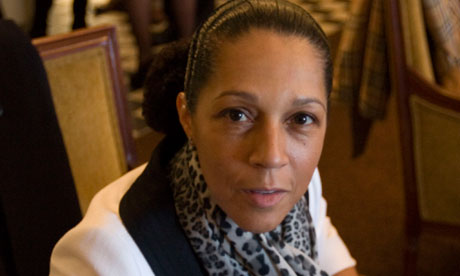
Helen Grant
Helen Grant, the newly appointed victims minister. Photograph: Martin Argles for the Guardian
Mike used to pride himself on his health, running double
marathons and working as a personal trainer, but now
he looked painfully thin and nervous. Sat in the bright
living room of a safehouse where he lived for three
months, he described having to retrain himself to eat
properly after being kept in squalid conditions and
forced to work unpaid for three years. He was, he
 said, a modern-day slave.
"Before this happened I never even thought it could
happen in this country, or that it could happen to
men," he said. "But if you are desperate enough,
anyone could find themselves in this trap."
Mike is one of hundreds of men and women who
are trafficked into Britain for the profit of their
unscrupulous bosses, according to a government
report. Estimates released on anti-slavery day
suggest the number of people being trafficked
into and around the UK is rising, with 946
 victims in contact with authorities last year,
compared with 710 in 2010.
The report by the inter-departmental ministerial 
group on human trafficking states that trafficking
gangs in China, Vietnam, Nigeria and eastern
Europe now pose the biggest threat. But it is
not just a foreign national problem, said Helen
Grant, the newly appointed victims minister. "This
exploitation of vulnerable people by predatory
 gangs is not something that any civilised society
should be prepared to accept," she said. "It is
happening to men, women and children, to foreign
nationals and to British citizens."
Perched on the edge of a bed in a safehouse for
trafficking victims in the south-east that the Guardian
had been given access to, Grant said it was difficult
 to know whether there had been an increase in
trafficking or just in the reporting of the crime, but
she believed the crime affected many more people
than the official numbers suggested. "Trafficking
 has been a forgotten issue that has happened
behind closed doors, but now I think we are
starting to see the true extent of it," she said.
"I certainly think the problem is greater than
we are seeing."
Grant worked as a solicitor supporting victims of
domestic violence before becoming a Conservative
 MP. "In the past there was a refusal to accept that
domestic violence happened, and thank goodness
 we have come along from that, but we have to realise
 that human trafficking for manual labour, sexual
exploitation or the harvesting of organs exists,"
 she said.
The report details two cases of people trafficked
 for illegal organ harvesting, which were stopped
before any operation was carried out. A report
from the Salvation Army released on Thursday
 said that of the 378 individuals it helped in
 2011/12, 44% were trafficked for labour
exploitation, 42% for sexual exploitation and one
 for the purposes of organ removal.
According to the government study, 712 adult
 victims and 234 child victims were reported
 last year to the national referral mechanism,
the body that identifies trafficking victims.
Campaigners suggest the true figures could
be significantly higher as many victims feared
 being deported if they tried to escape their
situation.
Aidan McQuade, director of Anti-Slavery International,
accused the government of a series of policy failings
 that he said could lead to an increase in trafficking,
 including the removal of the right for migrant domestic
 workers to change employers and the failure to
extend to remit of the gangmasters licensing authority.
"The fact that this issue continues to be seen through
 the prism of immigration means the decision on whether
 to protect a trafficked person is based more on their
nationality rather than their right under the law to receive
support," he said. "It seems clear that until the government appoints a trafficking commissioner to co-ordinate its
 anti-trafficking obligations we will continue to see policy
impeded by politics."
According to the report, Nigerians were the largest
group of potential trafficking victims, and Romanians
 the biggest group in Europe. It estimates there were
 92 organised crime groups in the UK with known
 involvement in human trafficking, and 142
defendants were charged with offences related to
human trafficking in 2011-12. It states that thousands
of frontline workers including doctors, police, border
 staff and airline workers have been trained to
 better identify victims of trafficking in the past two
 years.
At the safehouse, Mike described how he had been
 coerced into slavery after losing his job and becoming
homeless. After sleeping rough on a beach for two
weeks, a man approached him as he was making
 his way to a train station, offering him accommodation
and work in exchange for £20. His accommodation
was a filthy hut on a caravan site to be shared with
 another man; his payment between £5-10 a week
 for hard labour doing ground work seven days a
week. "I was just one of their tools, just a way to
 make them money," he said.
He was hit once for bringing no work in on a particular
 day, and said other men were hit daily. He felt unable
 to leave because of the threat of violence. "By the end
 I let go of all of my humanity and I just thought I deserved
 it," he said. "The fear was that if I tried to leave I
would be run over, hit by cars. In the end it seemed
 easier to stay than to go."
When the site was raided by police who suspected
 men were being used as slaves, Mike did not believe
 his ordeal was over. But he accepted help and spent
 three months in a safehouse run by the Salvation Army,
which runs 19 establishments across England and
 Wales after winning funding worth £2m from the Home
Office and Ministry of Justice last year.
Mike hoped his story might encourage others to
come forward and seek help. "I want to get the message
 out there, I want people to realise that it does happen.
 People need to get out and seek help because there
 is help out there." He was looking forward to a brighter
 future. "I am more positive, I just want a job, to work
in an office," he said. "I just want a normal life."
• This article was amended on 19 October 2012.
It quoted Helen Grant talking about the harvesting
of sexual organs. She was referring to the harvesting
of organs. This has been corrected.


Enhanced by Zemanta

Monday, October 22, 2012

United States Of America : Cotton Campaign: Obama, Romney to speak on ‘Uzbek slavery’ - Textile News United States Of America

http://www.fibre2fashion.com/news/textile-news/newsdetails.aspx?news_id=117182

SOURCE: Textile News United States Of America

October 22, 2012 (United States Of America)
President Obama and Mr. Romney, during the 2012 US Presidential election campaign the world is listening, and the children, women and men exploited in modern-forms of slavery await your leadership. On this Anti-Slavery Day, the Cotton Campaign calls on you to speak out against the modern day slavery used to produce the clothes we wear.


We acknowledge the efforts of the US government to combat modern forms of slavery, including the Trafficking Victims Protection Act and Global Trafficking in Persons Report.


There remains work to be done. Significantly, President Obama recently issued an Executive Order to build on these efforts by requiring contractors to the US government to assess risks of trafficking in persons in their supply chain and report on actions to ensure against complicity in forced labor and other forms of modern slavery. In addition to the Executive Order, President Obama’s highlighted programs to coalesce stakeholders around ending human trafficking, such as the Made in a Free World Initiative and Global Business Coalition Against Trafficking.


Ending state-sponsored forced labor of children and adults in the cotton sector of Uzbekistan should be a high priority within these anti-trafficking efforts, because this continuous and systematic violation of national law and international standards is detrimental to long-term development in this Central Asian country. The need for international leadership was highlighted in the latest assessment by the US Department of Labor, which stated, “In 2011, Uzbekistan made no advancement in efforts to eliminate the worst forms of child labor.”


In fact, every year the government of Uzbekistan forcibly mobilizes hundreds of thousands of children, teachers, public servants and private sector employees for the manual harvesting of cotton. The Uzbek government requires farmers to grow cotton, and regional governors (hokims) forcibly mobilize adults and children to harvest cotton and meet assigned quotas. The Uzbek government enforces these orders with threats and administrative pressure; detains and harasses Uzbek activists seeking to monitor the situation; denies access to international press; and continues to refuse to allow the International Labour Organisation to monitor the harvest.

Employers, workers and government representatives to the ILO2 have repeatedly called on the Uzbek government to accept tripartite ILO monitoring, and the Uzbek government continues to refuse. The UN Human Rights Committee3 and the UN Committee on the Elimination of Discrimination Against Women4 have echoed the call on the Uzbek government to comply with its commitments to protect citizens of Uzbekistan against forced labor.


Right now the people of Uzbekistan are finishing the 2012 cotton harvest, for the sole benefit of their government, which refuses to transparently disclose allocations of the estimated $1billion in annual cotton income. Once again this year, the Uzbek government’s refusal of independent monitoring has impeded human rights assessments during the cotton harvest, thereby undermining its own claims that child labor would not be used. Thus far, indications are that during the 2012 harvest the government has intensified the use of forced adult labor. According to Uzbek observers, estimated 20% of all government employees – teachers, doctors, nurses, health care workers, bank staff, non-ranking military, staff of ministries - and all university students have been ordered to pick cotton, under threat of losing their job, pay, benefits or expulsion from school.


In all likelihood, we have all worn Uzbek cotton picked under such modern-day slavery conditions. Uzbekistan is the 5th largest exporter of cotton. Uzbek cotton enters into the supply chains of global apparel companies through suppliers based in Bangladesh, China and other concentrations of apparel production. 
In addition to the government contractors highlighted by President Obama in his recent statement, all businesses have a responsibility to conduct due diligence that ensures human rights are respected in their supply chains, even if they have not contributed directly to the rights violation. Since slavery-like practices are used in Uzbekistan’s cotton fields, businesses must avoid using Uzbek cotton in their supply chains until the use of forced labor of children and adults in the Uzbekistan cotton sector is ended.
Today, 22 October, President Obama and Mr. Romney will command the attention of tens of millions of people around the world as they debate foreign policy issues. We call on President Obama and Mr. Romney to use the power of their podiums to publicly condemn modern forms of slavery and prioritize efforts to end forced labor of children and adults in the cotton sector of Uzbekistan, one of the most extensive systems of state-sponsored forced labor in the world. Millions of Uzbek citizens will benefit from bringing this egregious practice to an end.
The Cotton Campaign is a global coalition of human rights NGOs, investors, trade unions and business associations coalesced to build political will in the government of Uzbekistan to end forced labor of adults and children in its cotton sector. 

Cotton Campaign
Enhanced by Zemanta

Sunday, October 21, 2012

Trafficking: What happens if you're not the 'right kind' of victim? - TrustLaw

http://www.trust.org/trustlaw/blogs/the-word-on-women/trafficking-what-happens-if-youre-not-the-right-kind-of-victim 

SOURCE: TrustLaw


By Stacy Ziebell, Eaves | Friday at 5:11 PM | 
The Statue of Justice, depicted as a women with a sword in one hand and scale in her other, is seen on top of the London Central Criminal Court, the Old Bailey in London August 12, 2005.. REUTERS/Russell Boyce

Stacy Ziebell works for the London-based women's charity, Eaves, as a support worker at detention centres and prisons
Yesterday was Anti-Slavery Day; a day to raise awareness to end modern day slavery in the UK and around the world. 
If you looked at the media coverage yesterday, you would have been painted a picture of the UK winning the fight against human trafficking with victims being given the support and protection they deserve. Amidst all the coverage of policemen storming into brothels and rescuing children and women from horrible circumstances, a darker more silent story has been left untold.
It begins in the less conspicuous surroundings of a bail hearing where I, a support worker at Eaves’ Poppy Project, was supporting Kim*, a woman who the Government has formally identified as a potential victim of trafficking. It was here that I witnessed one of the biggest travesties of justice.
It seems that there is a ‘right kind’ of victim of trafficking and absurdly Kim did not fit that profile.
Her story is similar to many others trafficked into the UK. Kim was made promises of a new and better life in the UK working as an interpreter, but upon arrival she was forced to do unpaid domestic work and was used as a sex slave. Kim was not permitted to leave the house unless accompanied by men from the gang who were controlling her. She was arrested along with her exploiters when the police raided two houses belonging to the gang, one of which was used for cannabis cultivation.
Kim was charged in connection to the gangs criminal activities and has since spent many months in prison. She underwent a trial in which she was forced to sit alongside her traffickers in the dock, while they made threatening comments to her. The Judge had no sympathy for her plight and refused all applications to drop her case, despite the fact that British immigration authorities had already recognised her as a potential victim of trafficking. The Judge also refused the option of hearing her case separately from the gang members, regardless of the serious threats to her safety.
Kim has been officially recognised by the National Referral Mechanism (the government identification system) as a potential victim of trafficking, and as such she should be afforded protection and appropriate accommodation in line with government policy and international law.
As Kim was picked up in a house connected with cannabis cultivation, I suspect that she is seen as the ‘wrong kind’ of victim by both the police who interviewed her, by the CPS who decided to prosecute her and by the Judge. It seems from yesterday’s media coverage it is largely believed that the ‘right kind’ of victim is a person rescued from a brothel, a child who is being forced to clean houses or a man who is made to do hard labour for hours on end for no pay. The truth is that these are all victims of trafficking but so is Kim who did nothing wrong and was kept captive by a criminal gang. Perhaps if Kim had fit into a ‘typical’ trafficking profile then she would be given access to the support she deserves and the justice she is entitled to. Instead, Kim will remain in prison.
Why is Kim being sent back to prison on Antislavery Day and what does this say about the UK’s commitment to ending modern day slavery?
As far as I am aware I am the only professional whose sole responsibility it is to identify, assess and assist detained female victims of trafficking. Every day I work with women who are victims of trafficking who are treated as criminals. Starting today, I want to see the British Government increase their efforts to ensure all victims of trafficking are identified, not criminalised and detained, and are given the support they so desperately need and are entitled to. 
Much of the needed policy is already in place but every day I see the authorities disregarding the official guidance issued to them. As a country we are still sending many innocent, vulnerable women to a terrible fate they do not deserve and charities such as Eaves are the ones to pick up the pieces.
*Not her real name.
Enhanced by Zemanta

Saturday, November 5, 2011

allAfrica.com: Nigeria: 'Trafficking Should Be Included in School Curriculum'

Source: http://allafrica.com/stories/201110241450.html
Adie Vanessa Offiong

23 October 2011
It was a gathering of stakeholders against slavery yesterday at the one-day symposium themed, 'Take a stand against slavery' when all put heads together to discuss the worrisome issue plaguing nations across the world with Nigeria significantly in it.

Present at the event was Chief (Mrs) Titi Abubakar founder of Women Trafficking and Child Labour Eradication Foundation (WOTCLEF). In her address, she noted that, there should be more interest in such forays that discuss the issue of trafficking as it affects every sphere of the society. According to her, everybody has a role to play in curbing trafficing in persons. Laws enacted should be enforced and prosecution of offenders taken very seriously.

Describing human trafficking as the menace of the 21st century Executive Secretary of the National Agency for the Prohibition of Traffic in Persons (NAPTIP), Mrs Beatrice Agba, represented by Mrs Adefunke Abiodunm said "The battle against this kind of slavery is a very serious one because the nature of the crime is absolutely different from other crimes." While stating that poverty, ignorance, globalization, the inability of victims to testify against their traffickers amongst others, contributed to the challenges of combating traffic in persons, she noted that rehabilitating the rescued victims is also a problem as it is expensive and too difficult for the government to do alone.

Abidun urged all stakeholders to come together and take concrete actions/decisions that would end the scourge. "Effective social security should be put in place to assist the aged, unemployed and vulnerable persons."

Mrs Kate Imasuen, founder and initiator, Great Africa Network for Women and Kera Basil Foundation, has recommended that human trafficking and other related matters be included in children's school curriculum and made compulsory under the subject, 'Ethics'. According to her, it is no longer news that girls and boys are being sold into prostitution, domestic slavery and other activities for forced labour but that some of these victims even though they were trafficked enjoyed the trade and have become merchants in this same business.

The German-based organisation has rescued over 480 victims from across Europe and three from Burkina Faso last April.

She charged authorities to make available more resources dedicated to the cause.

Enhanced by Zemanta

Friday, October 28, 2011

Catherine McKinnell: Marking Anti-Slavery Day 2011

Source: http://www.huffingtonpost.co.uk/catherine-mckinnell/marking-antislavery-day-2_b_1014327.html


Catherine McKinnell


1807 is the date that is commemorated as the year in which Wilberforce's campaign to abolish slavery succeeded, with the passing of The Slave Trade Act 1807. But it was not until 1833 that the Abolition of Slavery Act was passed - Wilberforce died just three days after. His public work and tireless campaigning on this issue of profound importance was done.

Yet - almost 180 years after slavery was abolished - there is one form of trade that is still thriving in austerity Britain: the modern-day slavery that is the trafficking of human beings.

October 18th marks the UK's second Anti-Slavery Day in an attempt to raise awareness of this heinous and hidden crime.

The sheer number of children being brought illegally into the country is deeply concerning. Figures from the Child Exploitation and Online Protection Centre show an average of 300 children are trafficked into the UK per year. But it is the purposes for which they are brought that cause the most alarm. These include sexual exploitation, domestic servitude, benefit fraud, cannabis farming, street begging, theft and shoplifting. And a recent and sinister BBC report suggested at least 400 African children have been abducted and trafficked to the UK in the last four years, allegedly for witchcraft purposes.

Children identified as victims of trafficking in the UK are taken into local authority care, but as The Observer reported earlier this year, a disturbing number of these children simply go missing - often permanently, with many falling into the clutches of their abusers again.

That's why ECPAT UK has been working alongside The Body Shop (and indeed politicians from all parties) to campaign for the Government to establish a proper system of guardianship for the children who are victims of this appalling crime - delivering a 730,000-strong petition on the issue to Downing Street in May.

A guardian appointed to every victim would ensure that they get the right care, accommodation, education, healthcare and language support, and of particular importance, that the child has access to legal representation. This proposal is backed by the UN, and the UK Parliamentary Joint Committee on Human Rights. It is also a requirement of Article 16 of the new EU Directive on Preventing and Combating Trafficking in Human Beings and Protecting Victims, which the Coalition finally agreed to opt-in to in March.

Sadly, Ministers disagree - repeatedly arguing that Section 11 of the 2004 Children Act gives local authorities a statutory duty to ensure that they safeguard and promote the welfare of all children. Yet, this duty clearly isn't working, and how would Ministers know anyway? The Children's Minister Tim Loughton recently indicated in answer to a parliamentary question that the Government has no records of how many child trafficking victims are currently in care, or how many may have gone missing.

A proper system of guardianship would also help to increase the dismally low prosecution rate for trafficking offences against children - providing victims with the support they need through the prosecution process. But, the Attorney General - responsible for the CPS - made it quite clear in the Commons recently that the matter was outside of his remit. More worryingly, the CPS appears unable to track its own progress on the issue as it has admitted it 'has no records to identify how many prosecutions and convictions there have been of cases involving allegations of trafficking children'.

Despite the Government's attempts to take human trafficking seriously, all of this displays a worrying lack of joined-up thinking on the issue. What better way for Ministers to demonstrate they really are serious about tackling this growing problem - and indeed to mark Anti-Slavery Day 2011 - than to agree to establish a proper system of guardianship for child trafficking victims? It would not only change the lives of those vulnerable children, but also ensure that Wilberforce can rest in peace.

Follow Catherine McKinnell on Twitter: www.twitter.com/catmckinnellmp
Enhanced by Zemanta

Thursday, October 20, 2011

Children lost from care in human trafficking cases, says council | Law | The Guardian

Source: The Guardian

Twenty-five foreign youngsters aged 12–17 have vanished from care agencies, says Kent county council
    Figures show a jump in the number of cases of child trafficking into Britain, much of it in Kent.
    Figures show a jump in the number of cases of child trafficking into Britain, much of it through Kent. Photograph: Paul Shawcross/Alamy

    More than two dozen children suspected of being trafficked into the UK this year through Kent's channel ports have gone missing from care.

    Kent county council said it had no way of knowing what happened to almost a quarter of the unaccompanied foreign children who were being looked after in children's homes or by foster parents.

    The disappearance of the 25 children, aged 12 to 17, sparked fresh calls for reform of care for children trafficked into exploitation including prostitution, benefit fraud and cannabis farming.

    Anti-trafficking campaigners believe the children from Afghanistan, Vietnam, Algeria, Morocco, India, Albania and Palestine are likely to have fallen back into the hands of the international criminal networks who trafficked them into Britain.

    The news came on Anti-Slavery Day as the Home Office's UK Human Trafficking Centre and the Child Exploitation and Online ProtectionCentre released data showing a leap in recorded child trafficking into the UK.

    Some 202 suspected child trafficking victims were referred to the Home Office centre and through the NSPCC up to 15 September this year. It suggests an annual rate of 285 compared with 195 in the year to April 2011.

    The largest single group of victims in the latest snapshot came from Vietnam (48), followed by Nigeria (29) and Romania (23). Labour exploitation was the main reason for trafficking into the UK, with 54 children exploited in farms, restaurants and nail bars as well as on building sites, the report said.

    More than a quarter of all victims were trafficked for sexual exploitation, all female, while 23 were exploited as domestic servants, which Ceop identified as the most hidden form of abuse with children kept in homes, away from schools and doctors where they might be discovered.

    Commenting on the loss of suspected trafficking victims, Kent county council said there was no way of preventing them from leaving council care.

    "Unless we keep [children] under lock and key we can't guarantee they won't go missing and go into a horrendous life of trafficking ," said Jenny Whittle, Kent county council's cabinet member for specialist childrens services. "We will do everything possible to encourage these children to speak with us and build a relationship of trust."

    The council said that some of the children may have left care because they were approaching adulthood and then they would have to apply for leave to remain in the UK. 16 of the 25 were aged 17.

    Ecpat UK, an anti-trafficking campaign group, yesterday renewed its demand that the government introduce a system of guardians for child victims of trafficking to prevent them going missing from care in the face of Downing Street's rejection of the idea.

    In July, David Cameron responded to a petition with more than 730,000 signatures calling for the system by saying "the current arrangements for safeguarding trafficked children are sufficiently comprehensive and afford those vulnerable children the protection they deserve." In a letter to campaigners, he said introducing guardians for child trafficking victims would add "confusion and complexity" to the existing system.

    Ecpat said coalition policy was formed with no consultation with child rights organisations, professionals or the young victims and so was "lacking in transparency, uninformed and without foundation".

    "Children who have suffered months, if not years, of sexual abuse, violence and degrading treatment at the hands of traffickers need just one person they can trust, one person who can act in their best interest and someone who can make sure that they get the safety and support they need," said Christine Beddoe, chief executive of Ecpat UK. "We are convinced that guardianship will reduce the numbers of children going missing and being abused again and again."

    The NSPCC warned trafficking is now "carried out like a military operation with victims being taken through several countries and passed along a line of criminal agents".

    "The gangs who bring these vulnerable children into the UK are highly organised and ruthless," said John Cameron, head of the NSPCC's helpline. "Even if the children are intercepted by the authorities and put into care they are frequently tracked down again by the people exploiting them and spirited away to a slave-like existence."

    Tuesday's figures showed that 21 of the children referred to the government this year were trafficked to work in cannabis farms. The report said all but three were Vietnamese boys and were in many cases orphans in Vietnam or in private fostering arrangements, before being trafficked through China to Russia and then over land in lorries to the UK. Sometimes they had already worked in cannabis farms in Russia and France.

    "Victims are forced into working as 'gardeners' on private residences converted into cannabis farms," the report said. "Some have reported being locked in and prevented from leaving. These victims are not paid for their work and often claim they are coerced into working on cannabis farms through violence. Victims have also reported being sexually exploited."

Enhanced by Zemanta

Tuesday, October 18, 2011

Anti-slavery day: Highlighting a domestic problem | Emily Jupp | Independent

Source: The Independent
trolley 225x300 Anti slavery day: Highlighting a domestic problem

Today, a number of representatives from charities like the International Organisation for Migration, Barnardos and the Human Trafficking Foundation will be in Trafalgar Square, London, imprisoned underneath a giant, upside-down shopping trolley.

Today is anti-slavery day, and the publicity stunt has a serious purpose. It represents the plight of trafficked workers – who are shipped to the UK to work for little or no cash, often unable to leave their job and effectively kept as prisoners.

“For too long the belief has been that human trafficking can only be tackled in source countries,” says International Organisation for Migration Director, General William Lacy Swing. But this is not the case, “human trafficking is driven by the demand for unreasonably cheap labour and goods across the world, including in the UK.”

The IOM has helped hundreds of trafficked workers. They sent me the story of an 18-year-old who came to London hoping to get work to support his family. He was recruited by a man who gave him a job distributing leaflets for 18 hours a day with no break. He made no money, had his documents confiscated and could not interact with anyone other than the man that recruited him. He was also physically abused.

Another couple who saw an advert for a packing company on the internet came to the UK to earn some money to support their disabled son. On arrival they were escorted to a town they didn’t know. With no family in the country and without access to a phone or email they had no access to the outside world. They were forced to work for no money, imprisoned in the factory and shared workers’ flats.

These are not isolated accounts. Kalayaan, an NGO, estimates that between 16,000 and 18,000 migrant domestic workers enter the UK each year, brought by their employer on a specific visa. Around 58% of those surveyed by the charity reported having their passports withheld and said they were not able to leave the house without someone else to accompany them. According to the report, around 9 of the workers who were reported to their local authorities as victims of trafficking were brought to the UK by diplomats.

This situation has become worse over the last 30 years, according to an International Labour Office report on fairer treatment for domestic workers, and it could continue. The Government is planning to remove protections provided by the migrant domestic worker visa, which gives them the ability to change their employer, ensures they are recognised as workers and allows them to renew their work visas. Kalayan says the result of losing these protections will be an “increase in abuse, exploitation and trafficking for domestic servitude.”

What can I do?

  • Buy fair trade where possible
  • Email or write to your local shop to ask for more guarantees about where its products come from
  • Look at sites like www.buyresponsibly.org to get advice on how to buy responsibly
  • Visit www.kalayaan.org.uk for information on the trafficking of workers
  • Write to your local MP and Damian Green MP, the Immigration Minister
Related articles
Enhanced by Zemanta

Monday, October 17, 2011

The business of slavery - Public Service

Source: PS Public Service.CO.UK

17 October 2011

Christine Beddoe
Christine Beddoe highlights the training needed to address some of the difficulties for public sector agencies in tackling child trafficking and abuse – particularly relevant in light of the potential increase resulting from opportunities presented by the Olympics 2012

October 18th is UK Anti-Slavery Day. Far from being something that reflects the history books Anti-Slavery Day was incorporated into law in 2010 by a Private Members Bill put forward by Anthony Steen, former Member of Parliament for Totnes, to remind us that slavery continues to exist in the UK today in the form of human trafficking. The Anti-Slavery Day Act 2010 specifically recognises children and it is truly shocking that one in four people referred to the government's 'National Referral Mechanism' (NRM) for victims of trafficking is under 18 years of age .

In the two years to March 2011, police and local authorities referred 390 children to the NRM. 186 children were referred because of concerns around labour exploitation, including domestic servitude; 115 were referred because of sexual exploitation and 89 were referred with the primary exploitation type unknown. 47 nationalities in total were noted and the top 3 countries of origin for children were Vietnam (107); Nigeria (48) and China (45). A staggering 85 % of all these children were under 15 years of age at the time they were found. However these figures represent the tip of the iceberg as not all children are identified and not all get referred because agencies simply don't know of the NRM. The NRM is simply a Home Office administrative process and doesn't automatically guarantee the child will be kept safe and be protected.

There is no comprehensive reporting framework on the numbers of children trafficked to the UK and being looked after by local authorities. Subsequently there is no single agency responsible for mapping outcomes for this group of highly vulnerable and traumatised children, most of whom will have missed out on basic education as a result of being sold and abused, over and over again.

Children are trafficked to the UK, within the UK and out of the UK for a range of purposes including sexual exploitation, labour exploitation, domestic servitude, forced criminal activity such as cannabis growing and pickpocketing, and benefit fraud. The commonality across all these children is that they will have suffered abuse and neglect, often multiple forms of physical and sexual abuse, over a sustained period of time. Child trafficking is a child protection issue of the highest order. It is not, as some officials often frame it, an immigration issue – it is child abuse requiring complex child abuse investigations and it has significant implications for those who are responsible for the care and welfare of children and young people.

Children who are trafficked are often moved from place to place, moving between local authority and police boundaries. Significantly there are very few, less than 5, convictions for child trafficking, using the UK's human trafficking legislation. The UK has no specialist child trafficking police investigation unit. Even London's Metropolitan Police "The Met" does not have a single specialist unit for the investigation of child trafficking, although various teams including the Met's "Paladin Team" deal with child trafficking from time to time as part of their general workload. The lack of one single focal point makes it difficult for other agencies, such as health, education, children's social services and voluntary sector agencies to pool information, receive quality advice and importantly get access to justice for children who are often both victim and vulnerable witness.

The impact of not getting immediate specialist support can be shattering. Child victims of trafficking can be still under the control of their trafficker when first encountered by police, immigration or social work teams. Children are groomed what to say and will almost certainly not have their own identification documents. Even after being taken into care children can be threatened, coerced or forced to return to the trafficker. Training and clear procedures are needed to ensure safety plans are enacted within the 'Golden Hour', the very first hour after encountering the child and the immediate 24 hours after that. However, these plans should not be dependent on a child's disclosure but by a robust and early identification process that acts quickly on the basis of professional 'I suspect but I cannot prove' that will trigger a multi-agency assessment and protection protocols.

The UK Government has ratified a number of international instruments that require it to take all steps to provide 'special protection measures' for child victims of trafficking, including specific references to guardianship. Article 16 of the EU Directive on combating trafficking is to "take the necessary measures to ensure that, where appropriate, a guardian is appointed to unaccompanied child victims of trafficking in human beings". This is yet to happen as part of the government's human trafficking strategy but ECPAT UK is campaigning vigorously so that each child who is suspected as being trafficked would have one person that they could trust, who could act in their best interest and who would assist them navigate the maze of legal, welfare, immigration, health and education services. It is important to recognise that in most circumstances these vulnerable, isolated children will not speak English and will have no-one in the UK who they know or who can help them. It is not uncommon for family members in their home country to have been complicit in the sale or traffic of children and therefore it can never be assumed that going home will be safe.

ECPAT UK was the first organisation to uncover the extremely high numbers of suspected and known trafficked children who have gone missing from Local Authority care and are never found. ECPAT UK's 2007 report Missing Out report identified 80 known or suspected child victims of trafficking in a small-scale study in Manchester, Newcastle and the West Midlands. Forty-eight of these children went missing whilst in local authority care. In the same year, the Child Exploitation & Online Protection Centre (CEOP) estimated in its own report that over an 18 month period, 183 of 330 victims of child trafficking had gone missing from local authority accommodation illustrating major problems in providing safe placement.

The concept of 'safeness' and protection can only be fully realised when children believe that they have a safe haven that affords them more protection than being back on the streets or with the traffickers. There are no quality standards across the UK for the provision of 'safe accommodation' for child victims of trafficking but it is incumbent on all professionals to work collaboratively to ensure a circle of safety is placed around the child without waiting for them to ask for it.

There are concerns that human traffickers could target the Olympics and the government is working with a range of agencies, including charities like ECPAT UK to deter and detect trafficking. The main identified risk to children is through organised criminal gangs exploiting children through forced begging and pick pocketing. The Olympics presents an opportunity for those criminal gangs already active in the UK to capitalise on local communities and a huge influx of visitors. Hugh Robertson, Minister for Sport and the Olympics recently stated that 'Regular threat briefings take place between the Secretary of State, the Minister for Sport and the Olympics, and the Olympic Intelligence Centre, and departments will be continuously reviewing the threat of human trafficking'.4

1 http://www.soca.gov.uk/about-soca/about-the-ukhtc/statistical-data
2 Missing Out ; A Study of Child Trafficking in the North-West, North-East and West Midlands Beddoe C ECPAT UK London 2007
3 A Scoping Report on Child Trafficking in the UK Child Exploitation and Online Protection Centre and Border and Immigration Agency, London June 2007
4 House of Commons, Hansard Written Answers for 11th January 2011


Christine Beddoe is Director of ECPAT UK

ECPAT UK (End Child Prostitution, Child Pornography and the Trafficking of Children) has been campaigning against the sexual exploitation and trafficking of children since 1994. ECPAT UK works in the UK and with international partners to research, provide training and advice and provide a valuable advocacy and support network for child victims of trafficking. ECPAT UK advises the All Party Parliamentary Group on Trafficking of Women and Children by providing guidance and support on issues specific to child trafficking.

www.ecpat.org.uk
Enhanced by Zemanta