Showing posts with label Denis MacShane. Show all posts

Sunday, October 24, 2010

The new slaves: Children forced to work as farm labourers - Home News, UK - The Independent

Our campaign aims to persuade the Government to tackle human trafficking

By Emily Dugan

Sunday, 24 October 2010

Children as young as five are thought to have worked picking spring onions from 7am until dusk without food or water in this field in Worcester

TIM CARTER

Children as young as five are thought to have worked picking spring onions from 7am until dusk without food or water in this field in Worcester

Seven Romanian children – some as young as nine – were found being forced to work as farm labourers in near-freezing conditions in Worcester last week, The Independent on Sunday has learned.

The children were among 50 Romanian workers discovered picking spring onions in a field in the Kempsey area of Worcester by the Gangmaster's Licensing Authority (GLA). The seven children, aged between nine and 15, were being made to work from 7.30 in the morning until dusk, dressed in thin summer clothes, as temperatures dropped close to zero.

Wellington boots that looked suitable for a five-year-old were also found in the field, suggesting even younger children had worked there. Investigators for the GLA say it is the first time they have come across such young children working in fields in the UK.

They were brought to the field in the back of a box van, with no food or water for the day. Six of the children have been taken into local authority care. Some were working alongside parents, but others appeared to have been brought to the farm on their own.

The workers said they were not sure how much they would be paid, but intelligence suggests that a household of up to 40 people would get no more than £100 a week for the job. The GLA, West Mercia Police and the UK Border Agency are still investigating and plan to arrest at least one unlicensed gangmaster this week.

Paul Whitehouse, chairman of the GLA, said: "In 2007 we celebrated the 200th anniversary of the end of the slave trade, but in 2010 we've got people working in appalling conditions who, while not actually being slaves, are very close to it."

The actress Juliet Stevenson is one of many leading figures supporting the IoS's campaign for an end to modern slavery and human trafficking, describing them as "the worst manifestation of human cruelty".

The actress said: "If it doesn't concern people that someone can be hijacked, kidnapped and manipulated away from their homes and families into horrendous situations that are at best hardship and at worst physical and mental brutality, then what does concern people?"

Stevenson said victims of trafficking who managed to escape their tormenters in Britain often have to go through a second ordeal at the hands of immigration authorities. "If you're not discovered you have to endure ongoing hell, but if you are discovered and thrown into an increasingly ruthless and unjust asylum system then you're also damned."

"Human trafficking represents just about the worst manifestation of human cruelty. If you're talking about the 'great' in Great Britain, let's look at having some moral leadership."

The Government faces calls from a growing number of high-profile campaigners to sign up to the EU directive on human trafficking, which would make it easier to prosecute traffickers and protect victims. Caroline Lucas MP, leader of the Green Party, and Yvette Cooper MP, Shadow Foreign Secretary and Minister for Women, have joined those demanding that the Government opt into EU trafficking legislation. There were signs that the Government feels compelled to respond to pressure to sign up to the directive. Simon Hughes MP, deputy leader of the Liberal Democrats, said last night: "Signing up to the EU directive has not been ruled out; it is under consideration by the Government."

The GLA is still waiting to hear the size of the cuts it can expect following the Comprehensive Spending Review. The authority is funded by the Department for Environment, Food and Rural Affairs, which faces budget cuts of 29 per cent.

Voices for change

"It's appalling that, in the 21st century, slavery still exists. That's why the Government must back Europe-wide action against trafficking. By pandering to anti-European prejudices in some parts of the Conservative Party, ministers are putting the safety of thousands of women and children at risk."

Yvette Cooper MP, Shadow Foreign Secretary and Women's Minister

"It seems a no-brainer. I oppose modern slavery like I oppose ancient slavery. Where's the argument? It's like saying 'should we care if someone is killed'."

Joan Bakewell, Broadcaster

"It's definitely a hidden problem because we think of slavery as being abolished. When I hear about modern slavery I tend to think of the Arab princes that bring their own staff and treat them abominably."

Alexei Sayle, Comedian, actor and author

"Wilberforce described slavery as 'a disgrace and a dishonour to this country', and I'd say exactly the same about the coalition's decision to opt out of the EU directive on human trafficking. I've signed this petition on behalf of the Green Party because Greens will always be on the side of people who are vulnerable, oppressed or abused."

Caroline Lucas MP, Leader, Green Party

"I'm astonished that we are so limp in this business. We know it's going on but we don't do anything about it. It's a moral principle. If we go back to Wilberforce, all the moral arguments against slavery were established then and we shouldn't go back on them by neglect."

Brian Sewell, Art critic

"For too long sex slavery and other forms of trafficking have been brushed under the carpet. The Archbishop of Canterbury said sex trafficking is a form of modern-day slavery and it is vital it becomes a public policy issue. The Independent on Sunday's campaign is vital in raising the profile of this issue. It's a shame that David Cameron and William Hague's Euro-scepticism is preventing the UK signing up to the EU directive to protect these people, but I also feel the police should name and shame the people who create the demand."

Denis MacShane, Rotherham MP and former Europe minister

"It's important because it's the thin end of the wedge. So many people rely on the minimum wage so if that's being eroded it can affect a lot of people."

Barry Cryer, Writer and comedian

Interviews by Joe Rowley

Join the IoS campaign

The Independent on Sunday is campaigning to persuade the Government to sign up to the EU directive on human trafficking. The directive will strengthen our laws to protect victims and make it easier to prosecute those who enslave them. Readers can call on David Cameron and Nick Clegg to do the right thing by signing the petition on the campaigning website 38 Degrees.

To sign the petition, go to: www.38degrees.org.uk/page/s/stop-human-trafficking

The new slaves: Children forced to work as farm labourers - Home News, UK - The Independent

Source: The Independent on Sunday
Enhanced by Zemanta

Monday, September 6, 2010

Britain's sex trade needs tackling | Denis MacShane | Comment is free | guardian.co.uk

FROM GUARDIAN.CO.UK

By opting out of an EU directive on sex slave trafficking, we continue to ignore the plight of vulnerable girls and women

A powerful three-part Channel 4 series on sex slave trafficking promised more than it delivered. Its timing was excellent: the three-hour film was shown in the week the Guardian revealed the government's decision to opt out of the new EU directive on sex slave trafficking. Twenty years ago a Tory government opted out of EU directives protecting workers. Today David Cameron and Nick Clegg are opting out of a directive aimed at protecting teenagers and young women from being trafficked into the UK's burgeoning brothel and massage parlour industry.

With luck the C4 documentary should alert public opinion to this depressing aspect of globalisation and the new patriarchalism which obliges young women to "have sex with 10 to 15 men a day against their will" as one detective constable told the film-makers. Shot and edited with consummate skill with a breathy linking commentary read by Helen Mirren in the style of Laurence Olivier declaiming the World at War script, the programme eschewed analysis in favour of showing police work in close-up detail. Two small west country forces co-operated fully with C4. The officers came over as decent, good men with female officers on the margin to help arrest women pimps and their victims.

But a huge amount of police time and work, including a trip to Thailand for Devon and Cornwall officers, results in a meagre haul. Minor Chinese and Thai pimps get prison sentences of between 12 and 18 months. At the same time there were court cases against Albanian and Slovakian pimps which resulted in longer prison sentences and details of the most brutal cruelty against trafficked women. There is no shortage of cases in all major cities, though it is not clear why the Devon and Cornwall or Gloucestershire chief constables agreed to co-operate with C4 rather than the Met where more dramatic examples of trafficking abound. But the documentary noted that the Home Office is winding down the Pentameter operations against trafficking. Mirren concluded: "You will find brothels and victims in every English town. Those individuals who use these brothels should think about what they are doing and stop using these services."

Thanks, Helen. Actually it is British men – not genderless "individuals" – who insist on a right to put money down and insert their penises into women's bodies. Serving this demand has led to massive increase in the supply of prostituted women. There is a sterile debate over numbers which C4 sensibly ignored. Getting the figures is impossible. The United Nations' International Labour Organisation says there are 2.45 million women trafficked into sex slavery worldwide. The Red Cross and other global outfits also insist that millions of women are traded. The idea Britain has only a few is laughable, despite a report in the Guardian by Nick Davies claiming that sex slave trafficking was hugely exaggerated. ACPO produced a report recently which talked of 4,000 trafficked women but British NGOs who work with the victims of sex slave trafficking criticised the methodology of ACPO's work and said the figure was much higher.

An organisation called the English Collective of Prostitutes, which has spokespersons but no details of membership or finances, is always available for Newsnight or the Guardian to pooh-pooh the problem of trafficking into or within Britain. Its solution is to legalise prostitution. Where this has been tried as in Nevada, the death and injury rate of prostituted women rises and students at universities in the US state believe it is impossible to rape a prostituted woman.

The C4 film avoided this debate or any effort to examine the ideology of male oppression that lies behind the extraordinary growth in sex trafficking. Detectives held up adverts in the Southampton Echo placed by one of the pimps in which "fresh" bodies were on offer for the delight of Southampton men. There was no challenge to the newspaper editors who are complicit in the sex slave industry by carrying adverts for sexual services.

After one raid, a detective talks to a punter and politely asks him to stay in touch. But there is no arrest even though a brave group of Labour women ministers and MPs changed the law to make it a crime to pay for sex with a victim who has been coerced in any way into working as a prostitute. Another detective described how a trafficked woman's "customer insisted on putting bits of metal into his condom causing her injury". So why wasn't the man arrested and charged? The C4 policemen donned armour and dramatically crashed their way into brothels. But no British male was arrested.

It is only by dealing with the demand side that any real progress will be made in reducing the inflow of trafficked women. The low-life, high-income foreign pimps arrested in the film have thousands ready to replace them because trafficking women is hugely profitable.

One of the last acts of Tony Blair's government was to sign and ratify the Council of Europe's convention on trafficking which I campaigned for in the Commons. The Home Office originally fought the convention, as Whitehall is today trying to derail the EU directive. Later under Gordon Brown the law was changed to make men open to naming and shaming if they paid for sex with a woman who had been trafficked or coerced into working in the sex trade. It is up to the police to apply the law and to editors to stop being accomplices of sex slavery by publishing the industry's adverts. It would be good if the liberal male media establishment could rethink their denigration of campaigners against sex slave trafficking.

The C4 documentary deserves loads of prizes. It was compelling television. But we need analysis, policy and police work to squeeze the demand side.

Britain's sex trade needs tackling | Denis MacShane | Comment is free | guardian.co.uk


Enhanced by Zemanta

Monday, August 30, 2010

Labour condemns UK 'opt out' from EU directive against sex trafficking | World news | The Guardian

Denis MacShane appeals to Lib Dems, as coalition invokes its right not to sign up

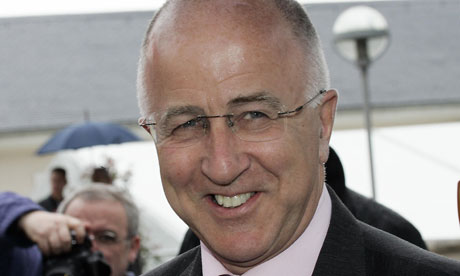
British Minister for Europe Denis MacSha
Labour's former Europe minister, Denis MacShane, launched an appeal to the coalition government to rethink its stance on sex trafficking. Photograph: Gerard Cerles/AFP/Getty Images

David Cameron and Nick Clegg stand accused of sending the "wrong signal" to pimps and human traffickers across the world after the coalition decided against endorsing an EU directive designed to co-ordinate European efforts to combat the trade in sex slaves.

As new figures show that fewer traffickers are being jailed than at any time in the last five years, Labour called for a government rethink on the directive, appealing to the pro-European Liberal Democrats to explain to their coalition partners the benefits of EU action.

Denis MacShane, Labour's former Europe minister, launched the appeal after the government decided not to sign up to the directive. The document includes a common definition of the crime of trafficking, to make it easier to convict offenders in the EU's 27 member states.

Campaigners regard co-ordinated EU action as essential because many victims are trafficked through the new member states of Bulgaria and Romania. The directive would allow suspects to be prosecuted for offences in other member states, and would boost the rights of victims.

The coalition is invoking a special British right on any EU justice and home affairs measures. The directive will be decided in the EU by the system known as qualified majority voting, according to which no member state can wield a veto. But Britain has the right to decide whether to "opt in".

MacShane called for the coalition to do so. In a letter to Clegg, he wrote: "Women in particular will be alarmed to learn that the Liberal Democrats are willing to support these efforts to weaken the directive. It is the wrong signal to send to the pimps and traffickers. I hope you can persuade the prime minister to drop his opt-out policy on this welcome effort to combat sex-slave trafficking."

His comments were endorsed by the charity Anti-Slavery International. Klara Skrivankova, co-ordinator of the charity's programme on trafficking, said: "Despite significant positive steps, the government cannot become complacent and say that the UK is already doing enough. Without international co-operation, the government will lose the battle with the traffickers. By choosing not to opt in to the directive, the government is failing in its efforts to combat this transnational crime."

A Home Office spokesman said: "Human trafficking is a brutal form of organised crime, and combating it is a key priority for the government. The UK already complies with most of what is required by the draft EU directive.

"The government will review the UK's position once the directive has been agreed, and will continue to work constructively with European partners on matters of mutual interest. By not opting in now but reviewing our position when the directive is agreed, we can choose to benefit from being part of a directive that is helpful but avoid being bound by measures that are against our interests."

The row over the directive came as new figures challenged the claim by law enforcement agencies that they are cracking down on criminal gangs which have forced an estimated 2,600 foreign women into prostitution in brothels in England and Wales. Only five people were convicted of human trafficking for sexual exploitation in the first six months of this year, according to figures from the UK Human Trafficking Centre, compared with 33 and 34 in the previous two 12-month periods. A further nine were convicted of other offences, having been arrested on suspicion of trafficking.

The apparently significant fall in the rate of convictions for the crime, which carries a maximum 14-year sentence, follows claims last month by the Crown Prosecution Service that "combating human trafficking is a high priority for the CPS and the criminal justice system".

The number of prosecutions has remained reasonably steady, at 114 in 2008/09 and 102 in 2009/10, according to figures released by Dominic Grieve, the attorney general; but the conviction rate has dropped.

A spokesman for the CPS said the number of convictions varied for several reasons, including the fact that fewer cases may be brought to prosecutors for consideration, and that fewer defendants may be involved in each trial.

"We acknowledge that it is challenging to successfully prosecute human trafficking cases, but we are committed to bringing prosecutions when there is sufficient evidence and it is in the public interest to do so," he said.

Labour condemns UK 'opt out' from EU directive against sex trafficking | World news | The
Guardian

Enhanced by Zemanta