Showing posts with label ICE. Show all posts

Thursday, July 28, 2011

Mexican cartels move into human trafficking - The Washington Post


Anne-Marie OConnor/The Washington Post - Mexican Congresswoman Rosi Orozco, the sponsor of a new Mexican law against human trafficking, with girls rescued from sex traffic.

MEXICO CITY — The Salvadoran single mother was hoping to support her children in the United States. Instead, gunmen from the Zeta drug cartel kidnapped her in Mexico and forced her to cook, clean and endure rapes by multiple men.

Now the survivor of this terrifying three-month ordeal is a witness for a growing group of legislators, political leaders and advocates who are calling for action against the trafficking of women in Mexico for sexual exploitation.

As organized crime and globalization have increased, Mexico has become a major destination for sex traffic, as well as a transit point and supplier of victims to the United States. Drug cartels are moving into the trade, preying on immigrant women, sometimes with the complicity of corrupt regional officials, according to diplomats and activists.

“If narcotics traffickers are caught, they go to high-security prisons, but with the trafficking of women, they have found absolute impunity,” said Rosi Orozco, a congresswoman in Mexico and sponsor of a proposed law against human trafficking.

In Mexico, thousands of women and children are forced into sex traffic every year, Orozco said, most of it involving lucrative prostitution rings.

“It is growing because of poverty, because the cartels have gotten involved and because no one tells them no,” said Teresa Ulloa, the regional director of the Coalition Against Trafficking in Women and Girls in Latin America and the Caribbean. “We are fighting so that their lives and their bodies are not merchandise.”

“This is an inferno of sexual exploitation for thousands and thousands of women,” President Felipe Calderon told officials in mid-July after they heard the testimony of a young survivor. “With this new law, we will all be obliged to act, and no authority can say it’s not my responsibility or turn a blind eye to the terrible crime of human trafficking.”

Mexico passed a law against human trafficking in 2007.

Hopes for enforcement have been raised by the appointment of Mexico’s first female attorney general, Marisela Morales, who was praised for her efforts against human trafficking this year when Secretary of State Hillary Rodham Clinton honored her as an International Woman of Courage.

Authorities said federal police mounted a massive raid against human trafficking in bars and hotels in Ciudad Juarez last weekend, arresting hundreds of suspects and recovering a missing 15-year-old girl and four other minors who were being used for sexual exploitation.

But convictions are still rare, making the attention seem like empty political rhetoric or a response to international pressure, said Saul Arellano, an analyst at the CEIDAS think tank. He viewed the proposed law as a much-needed step in the right direction, but he said it would have to be matched by a stronger effort to arrest and convict traffickers.

A ‘godfather’ sentenced

U.S. prosecutors have won stiff sentences for Mexican traffickers in recent years, often in cooperation with Mexican authorities. In Georgia, a Mexican “padrote,” or “godfather,” from a trafficking stronghold in Tlaxcala state, was sentenced to 40 years in March for luring 10 victims, one of them 14, to the Atlanta area and then forcing them into prostitution. If they refused to work, he beat them.

A U.S. Immigration and Customs Enforcement probe led to the conviction in Mexico of four people, sentenced in late June to 16 to 18 years, for involvement in a ring that forced immigrant women into prostitution in Miami by holding their children hostage in Mexico.

Some witnesses in trafficking cases find refuge in a new privately funded shelter in Mexico City.

There is a skinny 9-year-old from Cancun whose father began renting her to traffickers for 100 pesos a day when she was 7. A 13-year-old from Oaxaca whose aunt sold her to traffickers in Puebla. A tiny, shy 14-year-old, taken from her foster mother in Guatemala and offered to men in southern Mexico.

Two 15-year-old girls from Honduras were sent to the shelter after escaping a trafficker who demanded that they service 20 men a day.

One survivor-advocate was 17 when she accepted a job offer in Monterrey and found herself locked in an upscale brothel with women smuggled in from Slovakia, China, Russia, Venezuela and Cuba — the kind of transnational operation that is drawing the attention of drug cartels.

The Zetas have begun their own prostitution ventures, rather than acting as suppliers of women, diplomats say.

“They’re starting to change their business model and branching out into things like sex trafficking,” a U.S. official in Mexico said. “They realize it is a lucrative way to generate revenue, and it is low-risk.”

Kidnapped immigrants

One arrested Zeta leader was accused of “buying” Central American teenagers from an immigrant smuggler and forcing them into prostitution in Reynosa bars and hotels.

A few weeks ago, Zeta gunmen kidnapped Nicaraguan immigrant Maria de Los Angeles, 29, in Veracruz, with another immigrant woman. The Zetas said they would send them to Monterrey or the United States.

“They wanted to put us in a prostitution network or give us to their friends to be the women of mafiosos,” Maria said.

The women, who fled to a church, escaped by promising the gunmen thousands of dollars that they said relatives had wired to a town nearby.

The Zetas have held women for weeks or months for forced sexual services.

The Salvadoran single mother was traveling through Veracruz by train when strange men turned her group of immigrants over to the Zetas.

She was brought to a house where brutality ruled. Immigrant men were ordered to get money from families abroad. “The Butcher” executed some who couldn’t.

Dozens of immigrant women passed through the house during her three-month captivity.

Zetas from nine safe houses held meetings to inspect the female arrivals. A few they raped right there. Others they took to hotel rooms. When the women returned, “they cried a lot,” she said. “They had bruises.”

One night in early 2009, a gunman let her go, along with a Guatemalan woman whose uncle had traded her to the Zetas for his freedom.

“I knew they robbed you along the way, but no one warned me about this,” the Salvadoran woman said. “I prayed to God to let me see the faces of my children again. I thought I would never live to tell.”

Source: The Washington Post
Enhanced by Zemanta

Friday, July 22, 2011

4 arrests in forced labor case at Flagstaff wedding boutique

LARRY HENDRICKS News Team Leader | Posted: Friday, July 22, 2011 5:10 am

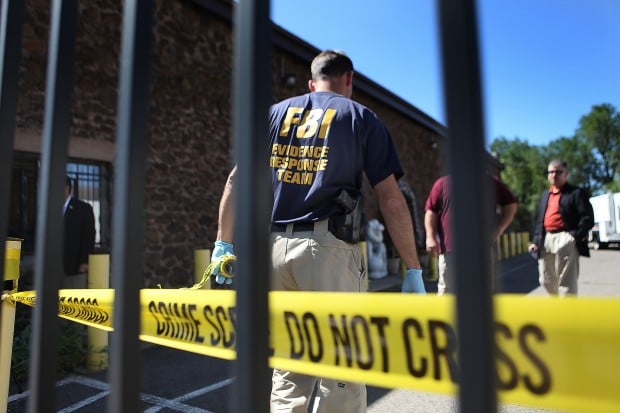
A member of the FBI evidence response team secures the crime scene perimeter around I Do! I Do! Wedding Boutique on Thursday morning. The owners have been federally charged with exploiting the labor of illegal workers. (Jake Bacon/Arizona Daily Sun)

Four members of a Flagstaff family who own the I Do! I Do! wedding boutique business were arrested Thursday morning on charges that they exploited workers brought illegally from Vietnam.

Huong Thi "Kelly" McReynolds, 58; James Hartful McReynolds, 60; Joseph Minh McReynolds, 36; and Vincent Minh McReynolds, 32, are all scheduled to have initial appearances in U.S. District Court in Phoenix on Friday to be formally read the charges against them.

The investigation into the McReynolds' business has been ongoing for the last two years, said Special Agent in Charge Matthew Allen of the Immigration and Customs Enforcement Homeland Security Division.

'MODERN-DAY SLAVERY'

The indictment alleges that the four "... operated a scheme in which they caused Vietnamese women, men and children to work against their will at the 'I Do, I Do/Sweet Nothings' wedding boutique ... largely unpaid."

The victims would work seven days a week for up to 11 hours a day at the store, then work more hours at the defendants' residences.

The indictment also alleges the victims were lured to the country on the promise of marriage to one of the McReynolds family members, education and a better life.

Once here, the victims were stripped of their passports and identification and put to work.

According to the indictment, the family members "... intended to cause the workers to believe if they did not perform the labor and services, the workers and other persons would suffer serious harm, and by means of the abuse and threatened abuse of law and legal process."

"The thrust of this case is that it's a human trafficking investigation as opposed to a human smuggling investigation," Allen said.

Smuggling deals with transportation of illegal immigrants. Trafficking deals with exploiting the labor of illegal immigrants.

"In this case, they've been exploited for labor purposes," Allen said. "We refer to it as 'modern-day slavery.'"

He later added, "It goes on in our communities. It does happen."

SEARCH WARRANTS SERVED

Agents served three search warrants and three arrests warrants in Flagstaff Thursday morning. An additional search and arrest warrant was served on a McReynolds home in the Valley. Allen said investigators were in search of "documentary evidence."

According to a federal indictment unsealed Thursday:

-- Kelly is charged with five counts -- forced labor conspiracy, forced labor, unlawful conduct with respect to documents in furtherance of forced labor, violation of fair labor standards act, and marriage fraud conspiracy.

-- Joseph is charged with three counts -- forced labor conspiracy, forced labor and marriage fraud conspiracy.

-- Vincent is charged with two counts -- forced labor conspiracy and forced labor.

-- James is charged with one count of marriage fraud conspiracy.

The U.S. Marshals Service has also begun forfeiture and restitution proceedings against the four, according to the indictment.

Allen said the family assets are in the process of being seized by the government.

VICTIMS RETICENT

Allen said the lengthy investigation proved a challenge because victims, when identified, were reticent to come forward, and then their stories had to be corroborated with evidence.

Dennis K. Burke, U.S. Attorney for Arizona, stated in a press release, "Huong Thi McReynolds and her family lured these victims to the United States on the promise of the America Dream; what the victims got instead was indentured servitude."

Burke continued: "The defendants created a climate of fear inside their home and business by carrying firearms, berating the victims and threatening to physically harm them and shame their families in Vietnam. They weren't just exploited for their labor, they were robbed of their basic human dignity."

Six victims were identified by initials in the indictment, and the crimes were alleged to have happened between September 2001 and September 2008.

The following charges carry the following maximum penalty upon conviction:

-- Conspiring to engage in forced labor: 5 years in prison and a $250,000 fine.

-- Forced labor: 20 years in prison and a $250,000 fine.

-- Unlawful conduct with respect to documents in furtherance of forced labor: 5 years in prison and a $250,000 fine.

-- Conspiring to engage in marriage fraud: 5 years in prison, $250,000 fine.

-- Fair Labor Standards Act violation: 6 months in prison, $10,000 fine.

The telephone number for the wedding shop will remain operational. Customers with immediate questions can contact the shop at 774-8996. U.S. Marshals also will be attempting to contact existing customers.

Allen said the Federal Bureau of Investigation, the U.S. Department of Labor and the U.S. Marshals Service also were instrumental in the investigation.

Larry Hendricks can be reached at 556-2262 or lhendricks@azdailysun.com.

Source: azdailysun.com
Enhanced by Zemanta

Thursday, July 21, 2011

infoZine - Government Introduces Anti-human Trafficking Awareness Campaign - Kansas City, Missouri News

Wednesday, July 20, 2011 :: Staff infoZine

By Nadia Tamez-Robledo - U.S. Customs and Border Protection unveiled a human trafficking awareness campaign Tuesday aimed at three regions that are often final destinations for victims.

Washington, D.C. - infoZine - Scripps Howard Foundation Wire - “Don’t Be Fooled” public service announcements will begin running Monday here and in Georgia and Florida. The ads illustrate how immigrants can become victims of forced labor or sexual slavery by the smugglers they trust to get them across the border.

“We want to bring human trafficking out of the shadows, show its ugly faces and show that it does too often happen here,” said David Aguilar, deputy commissioner of U.S. Customs and Border Protection.

The campaign targets family members of potential human trafficking victims who may encourage them to travel to the United States.

“They are inadvertently putting them into a pipeline of potential exploitation,” Aguilar said.

photo: Kumar Kibble, of U.S. Immigration and Custo
David Aguilar, left, of U.S. Customs and Border Protection, and Kumar Kibble, of U.S. Immigration and Customs Enforcement, say drug cartels are becoming more involved in human trafficking. Their agencies kicked off an anti-trafficking campaign Tuesday. SHFWire photo by Nadia Tamez-Robledo
CBP also seeks to educate the general public about
human trafficking and how individuals can alert authorities to potential victims.


Human trafficking is often perpetrated by drug cartels, Aguilar said, and the 257,000 illegal border crossings every year present a tremendous risk of exploitation or death of immigrants at the hands of smugglers.

“These too often are the fate of illegal immigrants who literally lease their lives to smugglers,” he said.

Kumar Kibble, deputy director for U.S. Immigration and Customs Enforcement, said that cartels’ control of drug routes allows them to expand their operations beyond narcotics into trafficking. And they can impose fees on human traffickers who want to use their territory.

He reinforced the importance of being able to indentify victims and recalled a California case involving a 12-year-old Egyptian girl who was being held as a domestic servant. Neighbors helped rescue her by calling authorities when they noticed she was never sent to school.

“At ICE, we talk about them being hidden in plain sight,” he said.

The launch of the domestic campaign comes a year after CPB initiated the Spanish-language version, “No Te Engañes,” in Mexico and Central America. The original campaign also ran in the southwestern states and has generated more than 34,000 calls to the crisis and information hotline in the United States alone.

“Don’t Be Fooled” is part of the anti-human trafficking Blue Campaign created by the Department of Homeland Security last year. The initiative is operated in partnership with the Polaris Project, which runs the National Human Trafficking Resource Center hotline.

“When citizens become aware of human trafficking looks like, they will step forward and report it,” Aguilar said.
`
Source: infoZine
Enhanced by Zemanta

Thursday, May 27, 2010

The Blotter | Kent man accused of having sex with Cambodian girls | Seattle Times Newspaper

May 10, 2010 at 10:50 AM

Posted by Jennifer Sullivan

Craig Thomas Carr, 59, will appear in U.S. District Court in Seattle on Monday on allegations that he had sex with underage girls in Cambodia.

Carr was arrested by Cambodian National Police on Jan. 22 and was brought back to the U.S. by Immigration and Customs Enforcement agents on May 6, according to the U.S. Attorney's Office. The charges against Carr are detailed in a five-count criminal complaint filed in U.S. District Court.

Carr is charged with travel with intent to engage in illicit sexual conduct, engaging in illicit sexual conduct in a foreign place and sexual exploitation of a child.

According to affidavit in the case, the investigation into Carr began in December 2009 when the Cambodian National Police, acting on information from the French National Police, learned that a taxi driver in Phnom Penh had advertised that he could connect people with child prostitutes. Carr responded to one of the Internet advertisements in November 2009 and the two men exchanged approximately 20 e-mail messages, the U.S. Attorney's Office said.

In the e-mails, Carr told the man that he wanted to have sex with girls around the age of 12, the U.S. Attorney's Office said.

Carr traveled to Cambodia on Jan. 13, authorities said. The next day, Carr met the taxi driver at his hotel and was driven to a local guest house, where he met an adult female who appeared to be managing a brothel, according to the U.S. Attorney's Office.

Over the next week, Carr had sex with three different female juveniles, authorities said. Carr paid the man about $3,000 when he arrived in Cambodia and had made two additional payments -- of $3,000 and $1,800 -- to the adult female who allegedly operated the brothel, the U.S. Attorney's Office said. Carr also paid each young girl $20 to take sexually explicit photographs of them, according to the U.S. Attorney's Office.

The Cambodian National Police arrested Carr on Jan. 22. The taxi driver, who was not identified by the U.S. Attorney's Office, was also arrested by Cambodian authorities.

The Blotter | Kent man accused of having sex with Cambodian girls | Seattle Times Newspaper

Reblog this post [with Zemanta]

Monday, March 8, 2010

14-year-old girl was state's first human trafficking case - WIS News 10 - Columbia, South Carolina |

Posted: Mar 01, 2010 10:49 PM EST Updated: Mar 08, 2010 8:50 AM EST

Lonely trailer park gives way to state's first human trafficking case, Jody Barr reports

By Jody Barr - email

[Trafficking Monitor: Click on URL at the end of the article to view and listen to video report]

COLUMBIA, SC (WIS) - $32 billion -- that's how much United Nations officials estimate human trafficking is worth around the world.

Now, before you go and dismiss it as a crime that only happens elsewhere in the world, be aware that the Palmetto State has seen a human trafficking case.

Tucked away in a trailer park just a few miles outside the Columbia city limits was the center of South Carolina's first human trafficking case.

Inside was a child, smuggled into the US, then trafficked to a pimp and forced to service dozens of men a day in the Midlands.

"I told my agents, I said, 'We're going to treat this little girl like she's our daughter and we're going to hunt this little girl down and get her out of this trailer,'" said Ken Burkhart, an agent from Immigration and Customs Enforcement.

Burkhart got a call from Mexican authorities in February 2007 about a 14-year-old runaway who called her sister in Mexico for help and gave a vague description of the trailer on Sharpe Road.

ICE agents put the trailer under surveillance. On Feb. 27, 2007, the agents moved in.

"Wasn't really seeing anything and with a minor being involved, I didn't want to wait much longer, so we made the decision to simply knock on the door. When I knocked on the door the 14-year-old answered the door," said Burkhart. "I was shocked. I didn't expect that, I expected anybody else but my girl to answer that door."

Unaware of who was inside, Burkhart knew he had to act fast.

"I told her we had been in contact with her sister and shook her hand and just gently led her right out of the door and I had several agents, along with officers from the Richland County Sheriff's Office who assisted, and just kind of passed her right over to those agents," said Burkhart.

It took days, Burkhart says, before the girl agents called "AR" could trust them.

"They have been trained not to trust law enforcement, that we're the bad guys, that we're really not there to help them, so initially AR would tell me that everything was fine, she was okay; she was in no danger," said Burkhart.

When she opened up, AR told investigators she was smuggled in from Mexico in July 2006 by Jesus Perez-Laguna.

Perez-Laguna ran a sex trafficking ring in Charlotte where he pimped AR and several other girls out around the area for several weeks, pocketing the money the girls made.

AR told investigators she was then traded out to Guatalupe Reyes-Rivera, also known as Mama Martina, who lived in Columbia.

"She actually liked her because she didn't beat her like the man in Charlotte did," said Burkhart.

AR told investigators a third pimp, Ciro Bustos-Rosales, pimped her out at Columbia's Mauldin Village Apartments on Mauldin Avenue, a few miles away from Columbia College. The girl was forced to have sex with dozens of men a day.

In 2007, SLED director Reggie Lloyd was the US attorney who prosecuted the case against the three.

"We got our first look at really an organized human trafficking network in that case," said Lloyd.

It took Lloyd only six months to get convictions on Perez-Laguna and Bostos-Rosales.

"It ratchets up what is already a very horrible crime when you see women being treated like this, but when you see children being treated like this, it really makes you want to go after these guys and put them away," said Lloyd.

The obstacle for law enforcement is getting the public to accept the fact that human trafficking isn't a foreign crime.

"Most people don't believe that this is going on, most people that have never seen it, never heard of it, so it makes it very difficult for them, as the average citizens to take a look at a situation and say, you know, this could be a human trafficking case," said Lloyd.

David Thomas heads up the FBI's Columbia bureau.

"In it's most basic form, it's slavery," said Thomas.

Thomas says hot spots for trafficking include agriculture, strip bars, massage parlors, and tourist areas.

Department of Justice figures show worldwide, there are nearly 900,000 human trafficking victims, with 20,000 inside the United States.

Thomas says traffickers mainly target Asian and Latin American countries.

The FBI says traffickers use natural disasters like the Indonesian tsunami, and the earthquake in Haiti to kidnap victims.

"They can be removed from those countries and no one knows who is the father of that child, or where is the family member, so it's something that we really have to gear up and look at when we see these types of disasters occurring around the world," said Thomas.

For Lloyd, the only way to break human trafficking cases is for the public and law enforcement to accept the reality that human trafficking is real, and to take a closer look at crimes, like prostitution that could lead authorities to something much bigger.

"These guys aren't going to stop with just the women they've already put in these situations, they're going to be constantly recruiting and bringing in more women and more girls into these situations," said Lloyd.

"If it's not for the attention, if it's not for the people understanding that yes, this is going on right here in our own backyard, it makes it very difficult for us to be able to identify and investigate these kind of cases," said Lloyd.

This case we profiled is still not closed.

Federal agents are still trying to hunt down Mama Martina, whose real name is Guatalupe Reyes-Rivera for her role in this trafficking case.

Both Perez-Laguna and Bostos-Rosales pleaded guilty in 2007. Perez-Laguna is serving a 14-year sentence, Bostos-Rosales is serving five-and-a-half years.

The penalties for trafficking carry up to life in federal prison, and in some cases, qualifies for the death penalty.


14-year-old girl was state's first human trafficking case - WIS News 10 - Columbia, South Carolina |


Reblog this post [with Zemanta]

Thursday, February 4, 2010

ICE arrests 104 people during operation targeting illicit transportation businesses

ethiopianreview.com | February 4th, 2010 at 12:31 am

HOUSTON – Twenty-two people arrested on Tuesday during a local U.S. Immigration and Customs Enforcement (ICE) operation are being charged criminally with using their businesses to transport recently smuggled aliens into the country. These charges were announced on Wednesday by John Morton, Department of Homeland Security (DHS) assistant secretary for ICE, and U.S. Attorney Tim Johnson for the Southern District of Texas.

ICE agents on Feb. 2 also executed nine search warrants at various businesses associated with the defendants; 81 illegal aliens encountered at the businesses were arrested administratively and have been placed in removal proceedings. One individual was criminally arrested for re-entering the United States after having been previously deported, which is a felony.

The three-month investigation, dubbed “Night Moves,” focused on Houston-area transportation businesses, which ranged from store-front operations to individually contracted drivers. Since November, ICE and U.S. Border Patrol agents have administratively arrested 209 individuals as part of the operation, including citizens from Mexico, El Salvador, Guatemala and Honduras.

“Human smugglers are ruthless criminals who prey upon and profit from people seeking a new life in our country. This crime undermines our borders and reaches every state in the interior, leaving a trail of exploitation,” said John Morton, DHS assistant secretary for ICE. “ICE is committed to preventing human smuggling by using every available resource to investigate, dismantle and present for prosecution businesses involved in the unlawful activity.”

U.S. Attorney Tim Johnson, Southern District of Texas, said: “Alien smuggling is a significant problem in our city. Those arrested and charged today with alien smuggling are the owners and managers of transport companies that allegedly accepted cash from alien smugglers to move undocumentedaliens in vans and SUVs from Houston to other cities around the United States.

“This is not legitimate business. It’s a violation of federal law. We will continue to investigate and prosecute those engaged in such activity,” he said.

The following defendants associated with the named Houston transportation businesses remain in federal custody:

* Salvador Ramirez-Medina, 35, with Transportes Tres Estrellas de Oro, 7700 block of Park Place Boulevard
* Felipe Banda-De Jesus, 44, and Rogelio Banda, 37, with Transportes Banda, 5600 block of Harrisburg Boulevard
* Antonio Duran, 37; Tito Jimenez, 41; Liliana Madrigal, 30; and Benito Tapia, 34, with Transportes El Cadete and Los Angelitos, 2300 block of South Wayside Drive
* Rene Garcia-Garces, 61, Rene Alberto Garces, 33, Rene Leiva, 25, Alejandro Perez-Romero, 32, with Transportes Medrano and Amigo, 6300 block of Harrisburg Boulevard
* Maritza Herrera, 40, and Jose Manzur Romero-Luna, 31, with Transportes Sarahi, 7400 block of Tuck Street
* Blanca Estela Torres, 49; Jose Torres Mandujano, 52; and Jose Antonio Torres, 27, with Transportes Los Plebes, 500 block of Wayside Drive
* Santos Alejandro Yaxon, 47, with El Pionero Van Tours, 5500 block of East Mt. Houston
* Alejandro Rodriquez-Garcia, 43, Paola Rodriquez-Juarez, 50, Luis Sosa-Juarez, 47, with Super Express Van Tours, 7200 block of Long Drive.

Each of the defendants is charged with conspiracy to transport illegal aliens, which carries a maximum punishment of 10 years in prison and a $250,000 fine.

All defendants are scheduled to appear before U. S. Magistrate Judge Stephen W. Smith on Wednesday in Houston. A preliminary examination and bond determination hearing for each defendant may be set as early as today.

Among the 23 individuals charged in the Southern District of Texas, which includes the alien charged with re-entry after deportation, ICE agents arrested Gaspar Campos, 36, and Angel Bravo, 42, associated with Transportes Latinos, another Houston transportation company. The arrest warrants for Campos and Bravo were issued by U.S. District Court in the District of New Jersey.

Campos and Bravo are both charged with conspiring to transport illegal aliens and are also set to have their initial appearance in federal court today in Houston. However, they are scheduled to be transferred to New Jersey to await trial.

During Tuesday’s enforcement operation, ICE agents also seized 32 vehicles and 18 weapons, including one weapon that was reported stolen.

ICE, the largest investigative agency within DHS, enforces laws related to human smuggling and human trafficking. Human smuggling illegally imports people into the country by deliberate evasion ofimmigration laws. This offense includes bringing illegal aliens into the country, as well as the unlawful transporting and harboring of aliens already in the country illegally. Unlike human trafficking, which exploits aliens already in the country, human smuggling is transportation-based.

For those aliens who were administratively arrested, ICE may release individuals for medical or humanitarian reasons following an interview and evaluation. So far, ICE has released two people for humanitarian reasons. Both individuals have been served with a Notice to Appear before animmigration judge at a later date.

The following agencies also participated in this ICE-led investigation: U.S. Customs and Border Protection’s (CBP) Air, and Fines Penalties & Forfeiture; Houston Police Department; Harris County Sheriff’s Office; and the U.S. Department of Public Health.

(Source: ICE)


ICE arrests 104 people during operation targeting illicit transportation businesses

Reblog this post [with Zemanta]

Friday, January 1, 2010

Ask Questions Later: Victims are too often deported - KansasCity.com

By MIKE McGRAW
The Kansas City Star
Posted on Tue, Dec. 15, 2009 10:15 PM

GUATEMALA CITY, Guatemala | In a dingy reception center across from the new terminal at La Aurora International Airport, Guatemalan immigration agents don surgical masks and brace for another day of controlled chaos.

A U.S. government passenger jet — one of up to seven a week — taxis to a stop. More than 100 disheveled deportees shuffle down the stairs and head for the center. Agents check for criminal records and swine flu and return shoelaces confiscated stateside, usually as a suicide precaution.

One thing the agents won’t do, however, is check to see if the deportees were victims of human trafficking while on U.S. soil.

“We don’t look at that,” said a Guatemalan immigration agent. “That’s done by the U.S. government before they send them here.”

In fact, that’s not the case.

Instead, The Kansas City Star found, the U.S. government compounds their suffering by deporting them back to the same impoverished conditions they fled in the first place. Up to one-fourth of the victims who might have testified against their traffickers were deported.

What’s more, deportees on one of two Kansas City-based government airlines have been abused or sedated in violation of federal regulations, The Star found.

“These are very disturbing allegations and this is not permitted under our system,” said Rep. Zoe Lofgren, a California Democrat who heads the House subcommittee that oversees detention and deportation procedures. That is “completely at odds with our policy,” she noted, adding that The Star’s findings should be investigated.

U.S. Immigration and Customs Enforcement (ICE) officials who charter the flights said they take great care to identify trafficking victims, but would not comment specifically on whether they screen all deportees for human trafficking status, or whether they are aware of deporting trafficking victims.

They said they have guidelines to prevent abuse of deportees, but they acknowledged that earlier this year at least one deportee was sedated on a Marshals Service flight in direct violation of those regulations.

Yet ICE said in a statement that it “takes allegations of trafficking very seriously and investigates any claims that a person makes to indicate they have been a victim of trafficking or trafficking-related crimes.”

The State Department and Congress recognize the need for more aggressive screening to keep from deporting human trafficking victims, said Luis CdeBaca, the director of the State Department’s Office to Monitor and Combat Trafficking in Persons.

“We are going to be working … to make sure those vulnerable populations are not just shown the door,” he said.

Top officials, however, have known about the problem for years.

Trafficking expert Julianne Duncan, formerly of the U.S. Conference of Catholic Bishops, told federal officials in 2005 that trafficking victims — who are often forced into prostitution or hard labor — are “frequently deported rather than provided services. This is shockingly the case even for children.”

That’s allegedly what happened to Mardoqueo Valle-Callejas and many of the 388 workers swept up in a workplace raid last year at a Postville, Iowa, meat processing plant.

The Guatemalan father of five came to America illegally to earn money for his family. But he told The Star that he was forced to provide hours of free labor to his bosses, work when injured and that he had questionable fees deducted from his remaining earnings.

Iowa officials are also pursuing some 9,000 child labor law violations involving 32 young Guatemalan workers caught up in the same raid, some as young as 15. Some were illegally put to work at jobs that exposed them to dangerous chemicals at the Postville plant, according to a complaint by the Iowa attorney general.

“These are classic examples of human trafficking victims,” said attorney Sonia Parras Konrad, who is representing many of those swept up in the raid. ICE never screened them for victim status, she said.

Had they been identified as human trafficking victims, they could have qualified for aid and ultimately may have been allowed to remain in the United States.

Instead, most were jailed for five months and then deported.

The Star’s investigation also found more than 100 instances, most between 2007 and 2009, in which the government violated or tried to sidestep its own rules for the treatment of deportees on government flights carrying trafficking victims and other vulnerable detainees such as children, the mentally ill, the sick and the dying.

The findings are based on court documents and thousands of pages of reports released under the Freedom of Information Act.

In some cases deportees were boarded on four- to five-hour flights without needed medication. Some were boarded despite being too ill to fly, at times potentially exposing guards and other passengers to communicable diseases.

Medical problems aboard the flights clearly resulted at least in part from mismanaged health care inside U.S. immigration detention centers, according to a report released last week by Dora Schriro, a special adviser to ICE.

Schriro found that ICE often sent immigrants to detention centers before assessing their health needs, resulting in some not getting proper medical attention. She also said that ICE’s “assessment, treatment, and management of pandemic and contagious diseases were inconsistent.”

In addition, Schriro, a former Missouri prison official who now runs New York City’s jails, said, “Medical summaries were not always provided when detainees were transferred.”

Other deportees were harassed or denied permission to use lavatories on the planes, causing some to soil their clothing. Some deportees — chained at the wrists, ankles and waist — also were sedated with dangerous drugs, even after federal officials promised to discontinue the practice.

And that represents only the cases guards and nurses actually documented.

Many others may have gone unreported, some guards said, because of an unspoken rule that “what happens on the plane stays on the plane.”

Deportation frenzy

During his presidential campaign, Barack Obama said it was unrealistic to believe the United States could deport all of the 12 million illegal immigrants estimated to be living in America.

“We are not going to send them home,” Obama said.

But the government seems to be trying. For the fiscal year ending Sept. 30, the United States deported 387,790 illegal immigrants — the seventh consecutive record for deportations.

At some point most of them were passengers on one of two government “airlines” headquartered in Kansas City, one operated by ICE and the other by the U.S. Marshals Service.

A few deportees are criminals, but most are what ICE calls “non-criminal” immigrants who entered the United States illegally. Most are from Mexico and nearly all came to find higher-paying jobs.

Some also are human trafficking victims, according to a report last year funded by the Justice Department.

“People definitely get deported who shouldn’t be deported,” said Nancy Morawetz, a professor at New York University School of Law and an expert on deportation law.

In fact, the United States has mistakenly been deporting its own citizens, including 31 specific cases recently documented by Jacqueline Stevens, a professor at the University of California, Santa Barbara.

One was Mark Lyttle, a cognitively disabled man who was born in North Carolina, but deported to Mexico even though he speaks no Spanish and has no Mexican heritage.

Lyttle was chained and boarded onto a U.S. Marshals Service plane late last year, flown to a staging area in Texas, and ordered to walk across the border.

Lyttle’s strange odyssey began after he served jail time for inappropriately touching an employee at a group home where he lived. A jail form showed his birthplace as Mexico, and he gave ICE conflicting statements.

Stevens, who has studied the federal file on Lyttle, said records ICE checked showed Lyttle was born in the United States and was a U.S. citizen, but that ICE agents “falsely swore to the contrary.”

Lyttle finally made it home in April this year, after he persuaded a consular officer in the U.S. Embassy in Guatemala to contact his family. ICE did not respond to a request for comment.

Federal auditors documented numerous weaknesses in ICE’s “alien removal decision making” process, especially during large workplace raids such as the one in Iowa. The problems included a failure to identify “humanitarian issues,” such as child welfare and medical problems.

It’s little wonder then, critics contend, that human trafficking victims sometimes get deported.

Agents should be required to screen for such victims after all workplace raids, said Leslye Orloff, director of the Immigrant Women Program, Legal Momentum.

“If we take the Postville case, we know there were at least some women who were picked up in the raid and later deported that may well have been crime victims,” Orloff said.

While ICE officials acknowledged they were told of substandard working conditions and inadequate pay at Postville, they said no one claimed to be a human trafficking victim.

But victims are often reluctant to step forward, experts said, especially during raids such as the one in Postville.

“We ask other countries to make sure they are not deporting human trafficking victims,” said Mark Lagon, former director of the State Department’s Office to Monitor and Combat Trafficking in Persons. “But there’s every reason to think that we have deported them, too.”

Shroud of secrecy

An ICE public affairs officer accompanied a Star reporter and photographer on one deportation flight in August from San Antonio to Guatemala City.

Deportees on the flight were “non-criminal” illegal immigrants, and none were in chains. Conditions mirrored those on other flights, said Pat Reilly, an ICE spokeswoman. But documents, lawsuits and interviews with deportees, nurses and guards paint a different picture when the media isn’t around — especially on ICE’s partner airline run by the U.S. Marshals Service.

Deportations and transfers occur under a shroud of secrecy, often after detainees have been locked up for weeks or months.

Because of space limitations in some detention centers, many are repeatedly transferred by ICE or Marshals Service planes in what one recent report described as a game of musical chairs.

“The transfers are devastating, absolutely devastating,” immigration attorney Rebecca Kitson told Human Rights Watch for a recent report on the transfers.

Kitson said detainees “are loaded onto a plane in the middle of the night. They have no idea where they are, no idea what state they are in. I cannot overemphasize the psychological trauma to these people.”

The transfers also severely disrupt the attorney-client relationship, said Human Rights Watch, “because attorneys are rarely, if ever, informed of their clients’ transfers.”

ICE said the process is designed to reduce security risks.

But records show that some of those transferred and deported on the planes have been subjected to inhumane treatment and physical abuse on the trip, even those who were shackled.

As recently as last year Dianna McChargue, a Marshals Service supervisor, said in a sworn statement that she told her bosses that some guards on the flights were sexist and racist toward fellow guards and others, but that they ignored her warnings.

A few years earlier, McChargue admonished guards for discouraging deportees from “defecating during lavatory call” because of “unpleasant odors.” She ordered them to stop preventing deportees from using lavatories in any way they needed.

The Marshals acknowledged “isolated cases” where deportees were denied permission to use lavatories during flights but added, “We can assure you these incidents have been addressed.“

Internal documents show ICE and the Marshals Service continue to disagree on how deportees should be treated on the flights.

In fact, the Marshals refused a request from ICE this summer to stop carrying stun guns, sedating passengers and restraining females and juveniles on the flights it operates for ICE.

The Marshals cited security concerns, adding that deportees are clearly in Marshal custody during those flights. ICE insists, however, that deportees remain in ICE custody, even while on Marshals Service planes.

Pre-flight cocktails

From 2003 to 2007, numerous deportees were injected with “pre-flight cocktails” before their flight home, according to congressional testimony.

The main ingredient: Haldol, a potent antipsychotic that can cause death. In some cases, sedated deportees needed wheelchairs to get off the plane.

The practice became so controversial that ICE ordered it stopped and said it would no longer involuntarily sedate immigrants without a court order. “There are no exceptions to this policy,” an ICE memo said at the time.

But The Star found that the practice never really stopped, at least for detainees on Marshals Service flights operated as ICE charters.

Records show the Marshals Service in May forcibly injected a Jamaican detainee with Haldol — even after he had been moved to the back of the plane and was no longer disruptive.

Ashim Mitra, a pharmacy professor at the University of Missouri-Kansas City, called it a clear violation of ICE policies and an overreaction that risked harming the patient.

ICE told The Star it learned of the incident after the fact and sent the Marshals a memo asking them to stop. The Marshals said that they are aware of the memo, but that the action was called for under their own policies, and they don’t intend to make changes.

Incident reports obtained by the newspaper also show that ICE boarded or tried to board detainees who were too physically or mentally ill, or too far along in their pregnancy to travel under ICE’s own guidelines.

The reports also showed that ICE often failed to provide nurses on Marshals Service flights with required medical records for deportees, and that seriously ill deportees were sometimes boarded without their medications.

“It was unbelievable the condition some of these people were in when they arrived,” said Nina Siulc, a professor at the University of Massachusetts, who interviewed several thousand Dominican deportees within minutes of their arrival there.

Scott Allen, a doctor with Physicians for Human Rights, said, “The documents I reviewed show multiple cases involving pressure on flight nurses to board improperly screened patients, or patients without proper medical documentation. This is simply bad practice.”

Neither the Marshals Service nor ICE responded directly to the allegations in the reports, but both said they have guidelines to prevent such incidents.

Court documents show some deportees also have been harassed and threatened aboard the planes.

Marshals Service guard Fernando DaCosta held a switchblade knife in the face of a young Mexican deportee on one flight and threatened to cut his throat if he didn’t give DaCosta his correct name, according to allegations in a federal anti-discrimination lawsuit.

The Marshals suspended DaCosta for two weeks in 2006 for “obscene and derogatory language” directed toward fellow workers and others, and “conduct unbecoming an aviation enforcement officer.”

ICE and the Marshals Service refused to comment about DaCosta, calling it a personnel matter. DaCosta, who is no longer with the Marshals Service, said the incident “never happened.”

The Star also found that guards, deportees and others potentially have been exposed to communicable diseases such as tuberculosis because ICE failed to follow its own screening criteria. On several occasions, records show ICE agents attempted to board detainees despite what a nurse called “grossly positive” TB skin tests.

ICE insists all deportees are carefully screened and that deportees who test positive for TB are not sent home if they are contagious.

But in May 2003, in what federal auditors later called “an extreme case of failed medical screening,” a Marshals Service crew was ordered to board a female detainee who met the plane in Chicago.

She and two ICE agents wore surgical masks and protective clothing, and she showed symptoms of SARS, or severe acute respiratory syndrome.

Top Marshals Service officials in Kansas City ordered the woman boarded over objections from the nurse and the rest of the crew. The incident sparked a mutiny, and the crew refused to continue the mission.

She was later transported on a commercial airliner filled with passengers.

Valle-Callejas’ journey

Advocates for detainees rounded up in the 2008 workplace raid in Postville said a lack of proper screening by ICE also led to the deportation of potential human trafficking victims.

They included Valle-Callejas, who was deported on one of the flights to Guatemala City.

With his family gathered around in his impoverished village of Calderas, Valle-Callejas told the story of his ill-fated trek to America.

After putting up his house for a loan to smugglers, he was shuttled across the U.S. border illegally and traveled north looking for work. He said he ended up in a job where his illegal status was held over his head.

“I worked 86 hours a week and never got paid for more than 60,” he recalled. “If we complained, they would take the job away, and this was the only job available.”

After his arrest, U.S. authorities gave Valle-Callejas and the others a choice. Plead guilty to illegal entry and identity theft and spend five months in prison before being deported, or plead not guilty and face up to two years in prison.

Valle-Callejas and most of the others took the deal.

While Valle-Callejas was in jail he lost his house in Guatemala, and now he and his family are homeless.

“I came back feeling desolate for the way they treated us,” he said.

Were they human trafficking victims as their advocates insist? No one knows, because they allegedly were never properly screened.

But once they were back home, some told Guatemalan officials they were exploited or abused and felt they were victims of forced labor, said Antonio Escobedo, director general of consular and migratory affairs in Guatemala City.

“There was absolutely no consideration of whether they were victims of trafficking, exploitation or child labor,” said Erik Camayd-Freixas, who served as a translator for the U.S. government after the Postville raid. “They all got the same raw deal.”

Still, many come back for more.

A Salvadoran who would only give his first name as Raoul said he already had been deported once. But this summer he was leaving a migrant shelter near the Guatemalan border in an effort to sneak back into the United States.

“In El Salvador I make $3 a day from 7 a.m. to 4 p.m.,” Raoul told The Star as he prepared to ride a makeshift raft across the Suchiate River that divides Guatemala from Mexico.

Despite the risks of being deported again, Raoul said it’s worth it.

“People in the U.S. should know that we suffer on the way. We know the risks, and we know we broke the laws in the U.S. But that is better than what we have here.”

http://www.kansascity.com/975/story/1633621.html

Reblog this post [with Zemanta]

Hostage House, Part 4: Armed men, just outside the door - KansasCity.com

By LAURA BAUER
The Kansas City Star
Posted on Tue, Dec. 15, 2009 10:15 PM

It’s 6:30 a.m. at the two-story drop house in Southern California, and men with guns are quietly circling outside.

The middle-aged woman from Central America — who came here looking for a better life but was enslaved in a human trafficking ring — is in the kitchen making coffee for her pregnant niece.

There is one last moment of silence in this dreaded place … and then, boom!

Within seconds, men are bursting through the front door and running from room to room, barking orders at sleepy-eyed immigrants. You can hear women screaming, children crying.

It’s like a movie.

For some reason, the aunt thinks this as the door comes down — the same door through which hundreds of victims have passed the last few years.

In their uniforms, with shielded masks over their faces, the men make their way to the kitchen. The aunt instinctively raises her hands in surrender. To whom she’s surrendering she doesn’t know.

This is a raid.

•••

Upstairs, men, women and children sleep piled on the floor. So many bodies that arms and legs overlap. Some people sit up as they sleep, just so more bodies can fit latticed across a dirty carpet.

A total of 60 immigrants are in the house. All controlled by the traffickers.

The niece is getting up as she hears the commotion downstairs.

La migra, she thinks. Immigration.

But at this point, eight months pregnant, she doesn’t care.

Just get us out of here.

After 10 months in this house, she doesn’t care if she’s sent back to Central America. She just wants to be free again. Anywhere.

Amid the tumult, a Spanish-speaking man walks through the house trying to calm everyone.

Don’t worry, relax, he tells them in Spanish. What we are doing is to help you guys out.

For many of the immigrants, this next part — where federal agents question them and sift traffickers from possible victims — is almost as scary as what they’ve already gone through.

Traffickers warned them about this day. Their words still resonate:

If you ever speak, we’ll catch you.

We know your family, we know where they live, they will pay the consequences.

They will send you back. We know people at immigration.

So many of them stay silent. Can they trust these uniformed agents? These men with guns telling them what to do? In their home countries, police are often part of the corruption.

Scared and confused, they can’t know that the raid is part of a three-year human smuggling investigation by Immigration and Customs Enforcement.

Authorities will soon have three of the traffickers under arrest.

•••

The aunt? No problem, she’s ready to talk. She’s already given up so much, what more could she lose?

But the decision is not so easy for the niece, her story harder to tell.

The rape. The shame. She still hasn’t told her aunt about these things. And she’s thinking about the uncertain future she and her baby face. She just needs to think.

Her aunt is back in the kitchen, restless.

I’m hungry, she tells agents.

And there, in the same place where she cooked and cleaned for others, followed orders from men who stank and drank and did drugs, she serves herself breakfast.

First a glass of milk.

And then, without even thinking, she grabs the pan dulce, the sugary Mexican sweet bread that has been reserved for the traffickers.

On this morning, she takes a bite.

Because she can. Because, for the moment, she’s free.


http://www.kansascity.com/975/story/1633871.html

Reblog this post [with Zemanta]

Monday, December 14, 2009

Sex slaves often victimized twice in U.S. trafficking war | McClatchy

The Kansas City spent months investigating human trafficking and the U.S.'s inability to stop it.

By Laura Bauer | Kansas City Star

KANSAS CITY — Sitting in the jail in Boone County, Mo., the Chinese woman didn't look like a criminal to Kelley Lucero. She looked like a middle-aged mom.

Soon, Lucero learned that the woman had indeed come to America to scout out a college for her teenage son. She had come, legally, as part of a cultural exchange program, but her life had taken an unexpected and terrifying turn in Middle America.

Forced to work in a one-room massage parlor, she ended up being arrested for prostitution at a truck stop between Kansas City and St. Louis.

Only an experienced eye like Lucero’s could see something that Boone County deputies appeared to miss. What so many in law enforcement all over the nation still are not trained to see.

“This wasn’t a prostitute,” said Lucero, a sexual abuse program coordinator for a domestic violence shelter in Columbia. “She was a human trafficking victim.”

And yet, the Chinese woman sat in jail for five months.

When the United States took a global stand on human trafficking in 2000, lawmakers wanted to rescue foreign-born women turned into American sex slaves. In too many cases, though, that hasn’t happened.

In its six-month investigation into America's effectiveness in the war on human trafficking, The Kansas City Star found that the system orginally designed with sex trafficking in mind is often unsuccessful in reaching those victims.

Some are mistakenly identified as prostitutes and end up either lost in the criminal justice bureaucracy or back on the streets. Even when victims are identified by law enforcement, some are reluctant to go through the gantlet that accompanies the prosecution of their trafficker, too untrusting or scared to reveal the horrible things that happened to them. Critics complain that the U.S. law is inherently flawed because it connects victims’ aid with their willingness to help make cases.

“No one is seeing the situation for what it is,” said Karen Stauss, an attorney with Polaris Project, an anti-trafficking organization based in Washington, D.C. “It’s like we’re saying, ‘We blame you for what you are suffering.’ ”

The government also has been slow to recognize an emerging class of new victims: young American girls. While millions are spent each year to combat international sex trafficking, lawmakers have yet to approve funding for domestic victims — perhaps the fastest-growing class of those trafficked in the United States.

Anti-trafficking experts say that the current federal and state laws are blunt legal instruments in trying to address the complexity of an ever-evolving global criminal enterprise and do not account for the trauma of women forced into sexual abuse. Of all human trafficking crimes, The Star found, the ones involving sex slavery have proved to be the most difficult when it comes to catching and prosecuting the traffickers.

The Trafficking Victims Protection Act “is not creating the legal environment we worked so hard to create so we can prevent human trafficking,” said Norma Ramos, of the Coalition Against Trafficking in Women. “It’s a federal law that’s really not that useful for what it was supposed to do — end human trafficking.”

When the mother from China was arrested, deputies in Boone County hadn’t been trained to recognize human trafficking. They didn’t know what questions to ask.

Or that the crime requires a victim-centered approach, much different from what officers are traditionally schooled in.

Boone County Assistant Prosecutor Merilee Crockett said she couldn’t discuss specifics of the case, but generally cases that may involve human trafficking are a “conundrum” because if victims are released they could end up back with their traffickers. And sometimes there is no safe place to keep them other than jail.

“Where is the rescue? What do we do for them? How do we protect them?” Crockett said.

Law enforcement authorities also have different priorities, explained Ivy Suriyopas, staff attorney for the Asian American Legal Defense and Education Fund. “They focus on catching perpetrators, making sure the public is safe from additional crimes. That doesn’t necessarily correlate with the needs of the victims.”

Some police officers get it and know how to work human trafficking cases, advocates acknowledged. Yet many don’t. At least not at this point.

But experts say that’s not surprising.

“They are being asked to take off their glasses and put on a slightly different prescription,” said Bill Bernstein of Mosaic Family Services, which works with human trafficking survivors in Dallas. “They’re having to view some people who we think might be victims in a slightly different light. That’s beginning, but it will take time.”

Further complicating anti-trafficking efforts is that Immigration and Customs Enforcement (ICE) agents are supposed to not only screen victims for possible human trafficking, but also root out illegal immigration — what some see as a conflict of interest.

At the very least, that creates an “inherent challenge,” according to Kristyn Peck Williams, screening and field coordinator of the anti-trafficking services program for the U.S. Conference of Catholic Bishops.

“ICE would do the raid, but they would also be the ones in the position to identify trafficking victims,” Williams said.

The initial contact with potential victims is crucial, advocates maintain. If agents use the same hard demeanor they use investigating other crimes, it can further traumatize a victim and destroy the case.

In one instance, a federal agent in the southern region of the United States interviewed a foreign-born woman picked up in a brothel raid. “So you were a prostitute?” the agent asked during the investigation.

An immigration attorney in the room said that the woman instantly clammed up. Later, she was deported.

“I’ve seen a lot of women who were helped, but I see a lot of women who slipped through the cracks,” said the attorney, who didn’t want to be identified for fear of retribution by law enforcement.

In routine prostitution cases, officers are usually only interested in the money generated by the ring and the people involved. But human trafficking cases require more sensitivity and different questions.

“We now ask, ‘Where do you live? Who do you live with? Where did you come from? How are you paid?’ ” said Capt. Ken Bergman of the Independence, Mo., Police Department, who works with the local anti-trafficking task force and has six “very trained” detectives who know how to identify victims.

The local task force has trained more than 2,000 officers throughout Missouri and Kansas about trafficking.

Still, that’s only a fraction of the officers in both states.

“You have to know what you are looking for or you will miss it,” Bergman said.

Without the right approach, a sex trafficking victim can be recycled into a lifetime of slavery.

From the outset, the system set up to help trafficking victims had a major flaw, advocates found. Especially when it came to helping sex trafficking victims.

The protection act concentrated on three Ps: preventing trafficking, protecting victims and prosecuting the traffickers. Some critics, however, believe that the United States has put too much emphasis on prosecution.

Victims are required to show reasonable cooperation with law enforcement before they receive all the benefits intended for them, such as food stamps, shelter and the opportunity to stay in America.

In effect, victims are told, they may not get help from the government unless they help the government prosecute the trafficker.

“It is very wrong to have this condition,” said Joy Ngozi Ezeilo, appointed last year as the United Nations’ Special Rapporteur on human trafficking. “Countries must avoid that.”

Victims are not given enough time for reflection or counseling, Ezeilo said, before they have to agree to cooperate. Given time to heal, some victims may be more likely to help prosecute their trafficker.

Kelly Heinrich, who has studied human trafficking and the laws addressing it, said the federal law is more witness-centered.

“It’s the way it was designed to begin with and implementation made it worse,” Heinrich said.

Many victims aren’t stable enough to immediately tolerate having to relive what they went through, said Judy Okawa, a licensed psychologist specializing in the evaluation and treatment of survivors of severe trauma.

One sex trafficking survivor Okawa has worked with said she relives her abuse every time the sun goes down. She told Okawa it’s then — when the quality of light is at a certain level — she’s reminded of the time she was forced to have sex.

Other survivors have different triggers. But the last thing they want to do is speak of the abuse. Or look into the eyes of the perpetrator.

It brings it all back, Okawa said. The fear. And the threats.

“If that trafficker is not in jail or dead, there’s always a chance he or she will hurt them,” Okawa said. “(The trafficker) says, ‘You can run, but you can’t hide from me. I will find you and I will kill your family.’ ”

One trafficking victim reached out to a domestic violence advocacy program in Kansas. Her trafficker was forcing her to work long hours for little pay, stopping her from leaving the country, and frequently sexually assaulting her.

Pregnant with his baby, she wanted help.

But she was afraid to pursue a trafficking visa designed for victims because it would mean having to report her trafficker, which could put her, and her baby, in more danger.

“Although she may have had a remedy available … she didn’t feel like she could do that. She was too afraid,” said Pamela Jacobs, immigration project attorney for the Kansas Coalition Against Sexual and Domestic Violence.

“Being asked to testify against a person you’ve been afraid of for a long time, and someone who could still hurt you, and your child, is very difficult. Just having a visa does not guarantee a victim’s safety.”

The woman did not see a way to escape, and advocates do not know what happened to her.

In the late spring of 2007, Johnson County authorities undertook the first major human trafficking investigation in the Kansas City area. Law enforcement at the time said they “rescued” 15 women from strip-mall Asian massage parlors — one called China Rose — and there could be many more victims.

Originally from China and Korea, the women worked 14 hours a day, seven days a week, performing sex acts. Sometimes they slept on the same bed where they serviced customers.

For investigators, on paper they looked like human trafficking victims.

But as time went on, and the case wound through criminal court, more information surfaced. Some women came to Kansas City knowing they would work as prostitutes. One woman, according to statements made by one of the defendants, made about $15,000 in a month.

Others said they had no idea they would be prostituted when they got here.

Ultimately, prosecutors didn’t charge the four main defendants with human trafficking. Instead, they were charged with and pleaded guilty to coercing females to travel for prostitution.

Court testimony and other information prompted the federal judge hearing the case to dismiss the notion that there were “vulnerable victims.”

“The victims were more participants than victims,” said Chief U.S. District Judge Fernando Gaitan in sentencing the lead defendant, Ling Xu. “They appeared to be professionals.”

Defense attorney Melanie Morgan, who represented Ling, said she believes prosecutors tried too hard to make the case into something it wasn’t.

“This wasn’t human trafficking,” Morgan said. “This was a very consensual arrangement.”

The case provided a small window into the complexity of sex trafficking investigations. Prosecutors across the country are filtering through scenarios where the water is muddy regarding what is coercion and what is consensual.

In the China Rose case, federal prosecutors said evidence supported the charges filed, and the government still contends that some of the women met the definition of a human trafficking victim.

Those women were offered trafficking visas, said Assistant U.S. Attorney Cynthia Cordes, who specializes in trafficking cases.

“But they wanted to return home to their families,” Cordes explained.

Our own backyard

Ever since passage of the Trafficking Victims Protection Act nearly a decade ago, foreign-born victims have been the law’s focus. They get extensive counseling, visa assistance and help with food and housing costs as they rebuild their lives.

For victims born in the United States, however, state governments were expected to take care of children prostituted by pimps or family members.

But that rarely happens.

“You talk about frustration,” said Thomas Egan of Catholic Charities in Phoenix. “We found hundreds of prostituted kids and no funding available to help them.”

Kristy Childs sees it every day.

As founder and director of the nonprofit Veronica’s Voice, Childs works to help Kansas City area women and girls escape the commercial sex industry.

That’s what Childs did this summer when she and her staff searched the streets for a 12-year-old girl. Day after day, they heard from sources on the street, the junior-high-school girl was forced to prostitute herself.

“Every day she’s out there, she’s in more danger,” Childs said one day as they went out to search again. “…We’re trying to save the world and we can’t. We can’t even save the victims in our own backyard.”

With American-born victims, it becomes a maddening game of catch and release.

Most welfare programs require recipients to be at least 18 to receive benefits. Since many young domestic trafficking victims are considered unaccompanied minors, they don’t qualify.

Critics said this is another area where the law is deeply flawed.

“They (lawmakers) messed up,” said Theresa Flores, who was sex trafficked as a teenager growing up in Michigan and now works as a victim advocate. “They didn’t include Americans, and they should have.”

Four years ago, Childs and other advocates lobbied U.S. legislators to make it clear that domestic victims should be protected under the act. They specifically wanted American-born girls under the age of 18 who are sex trafficked to be considered victims entitled to services and benefits.

Lawmakers included that provision in the 2005 reauthorization of the protection act.

But they didn’t fund services for domestic victims, leaving thousands of young girls vulnerable to further abuse.

“We’re going to point the finger at other countries for how they deal with their domestic trafficking, but then we’re not doing enough for our own citizens?” asked Colette Bercu of Tennessee’s Free for Life International, a nonprofit organization that supports trafficking survivors. “We’ve got a problem.”

At a national symposium in July, social workers and health care experts pointed out that resources available to help domestic victims don’t come close to what’s available for foreign-born victims.

Near the top of the list is housing. Police and community organizations are having a tough time finding somewhere to take domestic victims lucky enough to have escaped their pimps.

“As a result, many domestic minor victims are housed in juvenile detention centers, which often do not recognize or treat these youth as victims of a crime, but rather as perpetrators,” a symposium report said.

Cordes said she prosecutes domestic sex trafficking cases with the same fervor as cases with international victims but it can be challenging.

“We have a duty to protect our own citizens and children,” she said. “Because the domestic victims are ineligible for funding under the (protection act) each case demands extra effort and creativity to obtain services.”

More than 1,800 Las Vegas youths under the age of 18 were in juvenile lockup on prostitution-related charges between 1996 and 2007, according to a study released this year by Shared Hope International, which rescues victims of sex trafficking. In Dallas, 165 youths were in police custody on prostitution-related charges in 2007 alone. Shared Hope officials believe all of these kids were victims and should not have been thrown in jail.

“We have to stop criminalizing, arresting the kids,” said Shared Hope founder Linda Smith.

For the 12-year-old in Kansas City, police were more understanding. Especially after Childs called them when her search came up empty.

Within a day, law enforcement had found her. But only after two officers spent a night doing nothing but looking for her. She was taken to a local hospital and examined.

Authorities tried to connect her with Veronica’s Voice and Childs, to get her the counseling she needed. But somehow she slipped away.

Now, Childs worries she’s back on the streets.

A long way home

With foreign-born human trafficking victims, the line between victim and criminal isn’t always clear, either.

Consider the Chinese woman Lucero met in jail.

The woman paid $13,000 — her family’s life savings — to enroll in what she thought was a cultural exchange program that would bring her to the United States. Her teenage son planned to go to college in America, and someone in their family had to come in advance to get a job and earn money.

She made the trip on a six-month visa, Lucero said. But when she got off the plane in Los Angeles, she was taken to a Chinese restaurant where she went to work washing dishes.

Next, she thought she’d get a job as a nanny for a wealthy family. But then she met a man who said he was from her province in China. He told her about the massage business, how she could get a license and make good money.

She believed him. With what the woman thought was a legitimate license in hand, she traveled with several other women to the Midwest.

Twelve of them worked 12 hours a day inside cramped parlors set up inside truck stops across Middle America.

“They gave her half of what she was making,” Lucero said, noting that she still knows very little about the traffickers.

The woman ended up with a couple of hundred dollars a week. Most she’d send to family back in China.

Then police got a tip about a one-room massage parlor operated out of a Boone County truck stop along Interstate 70. The night she was arrested, police didn’t have a translator and she couldn’t tell her story.

The Chinese woman never told Lucero all she was forced to do. She even denied having sex.

“It would be too humiliating,” Lucero explained.

The woman spent Christmas 2007 behind bars.

“My parents are old and sick,” she later wrote Lucero. “My mother knows I’m in jail and she’s had a heart attack and is in the hospital. My husband (still in China) … can’t work because of my situation.”

Eventually, charges were dismissed. The woman went to California and got her temporary visa extended. Then she headed east to work, she said, in a market.

But before she left the Midwest, she wrote Lucero about missing her homeland.

“The only thing I wish for is to leave America and go to my loved ones,” she said. “I feel like America is a place where they talk a lot about human rights, and I know I have the right to go back to China. Can you please help me?”

For almost a year, Lucero didn’t hear from her and wasn’t sure where she ended up.

Then last week, Lucero received an e-mail. The woman is on the East Coast waiting for her green card.

“She just wanted to say merry Christmas to me and tell me that she loves me,” Lucero said. “And that we have a special connection.”

http://www.mcclatchydc.com/homepage/story/80588.html

Also see:
http://www.mcclatchydc.com/251/story/80576.html?storylink=omni_popular
Reblog this post [with Zemanta]

Tuesday, November 17, 2009

Secretary Napolitano’s Discussion on Human Trafficking at the Danish Institute for International Studies

A human trafficking awareness poster from the ...Image via Wikipedia

Release Date: November 3, 2009

For Immediate Release
Office of the Press Secretary
Contact: 202-282-8010

Copenhagen, Denmark—Department of Homeland Security (DHS) Secretary Janet Napolitano today delivered remarks about expanding international coordination to combat human trafficking at a forum hosted by Humanity in Action and the Danish Institute for International Studies.

“Human trafficking is a global problem that requires a global solution.” said Secretary Napolitano. “The United States, Denmark and all our international partners must continue to work together to better identify and dismantle criminal trafficking organizations.”

During the forum, Secretary Napolitano highlighted the efforts of U.S. Immigration and Customs Enforcement (ICE) to dismantle global human trafficking infrastructure through close cooperation with the Danish National Police and international law enforcement partners and more than 300 ICE Victim Assistance Coordinators worldwide who work with non-governmental organizations to help provide long-term assistance efforts.

Secretary Napolitano discussed the critical role played by border officials in recognizing potential trafficking victims and criminals and highlighted U.S. Custom and Border Protection’s international Human Trafficking Awareness Campaign—designed to enhance transnational collaboration, educate the public and empower victims.

Secretary Napolitano also emphasized the shared public responsibility in remaining vigilant and aware about the prevalence of human trafficking. ICE recently unveiled the “Hidden in Plain Sight” campaign in the United States—designed to raise public awareness of trafficking victims in communities nationwide.

While in Copenhagen, Secretary Napolitano also held meetings with Danish Justice Minister Brian Mikkelson and Transportation Minister Lars Barfoed to discuss ongoing multinational efforts to address human trafficking and other criminal activity, as well as transportation security and bilateral criminal information sharing partnerships.

Later this week, Secretary Napolitano will travel to Belgium, Spain, the United Arab Emirates and the United Kingdom to meet with her international counterparts to discuss information sharing and privacy protection; collaborative efforts to secure cyber networks worldwide; international response to the H1N1 global pandemic; and coordination to combat transnational criminal activity and the global threat of terrorism.

http://www.dhs.gov/ynews/releases/pr_1257263394677.shtm


Reblog this post [with Zemanta]