




At some point in a company's supply chain, it’s likely they are using products, supplies or services that involve trafficked people, says one senior company executive. Photograph: Martin Godwin for the Guardian


Companies often use complex global procurement systems to deny their part in human trafficking but what can responsible businesses do to address the issue? Oliver Balch reports
Seven years ago, David Arkless took a call from the first lady of an African state. She wanted to know what his company was doing about human trafficking. His answer was blunt: "What human trafficking?"
The question prompted him to investigate. The figures proved startling. According to the UN Office on Drugs and Crime, more than 2.4 million people are being exploited by traffickers at any one time. Some campaign groups suggest the annual number of victims could be as high as 27 million.
"There are more slaves today than in any time in human history", says Arkless, who heads up corporate and government affairs for ManpowerGroup, a global employment services firm.
He's become something of an evangelist on the subject. As board president of the campaign group End Human Trafficking Now, he helped push through the Athens Ethical Principles – a seven-step charter designed to stamp out the use of trafficked labour by companies and other organisations.
Arkless' attempts to win over other senior executives are met with mixed responses, however. While most companies lament the problem, he says, they fail to see what it has to do with them.
They're wrong, the ManpowerGroup executive maintains. And he tells them as much: "At some point in your supply chain or partner's supply chain, it's likely that you are using products, supplies or services that involve people who have been trafficked."
The human trafficking industry is now estimated to be worth £32bn per year. If correct, that would make it more lucrative than narcotics. The reason for the traffickers' 'success' is simple, according to Baroness Mary Goudie, a leading advocate on the subject: "Unlike drugs, you can use people more than once."
Those not destined for the sex trade find their way into labour-intensive industries, such as agriculture and low-skilled manufacturing.
For Goudie, companies are all too often wilfully ignorant of the issue, using the pretext of complex global procurement systems to deny direct responsibility.
"We know that the household names cannot be paying people properly to produce at these prices", she argues. "And they know it too."
Aidan McQuade, director at UK campaign group Anti-Slavery International, goes one step further. Trafficking isn't on the corporate agenda, he maintains, "because [companies] think they can probably get away with it".
Not all businesses are turning a blind eye. The Athens Ethical Principles now counts around 12,500 signatories, a number of whom are companies. The question facing corporations is what should they do?.
The solutions to trafficking appear almost as opaque as the problem itself. To date, most businesses engaged on the issue have concentrated on awareness-raising. The Freedom Project, an initiative by US broadcaster CNN to televise accounts of modern day slavery, is perhaps the best example.
Publicity is a good start, but more must be done, Arkless argues. Companies need to see the issue as a "complete closed system" and develop integrated solutions for each phase of the problem.
The criminal element must clearly be addressed. Working more closely with police, border authorities and other government agencies, companies can proactively help clamp down on trafficking networks. First in line should be ferry companies, airlines and other firms directly involved in transporting people.
However, curbing abusive practices within companies' supply chains presents a tougher task. For companies that are vertically-managed, a mixture of carrots (such as a 'trafficking free' label) and sticks (like factory inspections and fines) could go a long way to ensuring compliance among key suppliers and sub-suppliers.
The problem of compliance occurs further down the line, however, when suppliers multiply into hundreds if not thousands of smaller firms. Social audits are an important deterrent, but they can only achieve so much.
Alongside audits, businesses should run preventative anti-trafficking programmes together with local unions and labour rights groups, says McQuade.
The final cog in the system – the supply of trafficked persons – represents the toughest challenge of all. Many of the victims of trafficking are vulnerable individuals, often marginalised in their home nations for economic, racial or religious reasons. The trafficker's promise of a better life abroad can sound sorely tempting.
The root causes behind the supply of trafficked people run deep. Manpower hopes a programme it is running in Colombia can make a small indent; the aim is to assist abandoned and at-risk young people by providing counselling, training and employment support. McQuade would like to see such initiatives massively scaled up, with corporations providing 0.7% of pre-tax profits for remediation and prevention projects.
An injection of this sort of money would serve as a rallying call to governments to also begin prioritising the eradication of trafficking and related labour abuses.
As yet, however, human trafficking remains off most corporate radars. "Companies treat it as a PR issue that needs to be managed rather than a human rights abuse that needs to be addressed," laments McQuade.

Recently, a series of reports from CNN's Dan Rivers traced slavery in the supply chain. He began in Cambodia, where a woman grieved for her daughter, to a factory in Malaysia where the girl was forced to work for no pay and, ultimately, went to shops in London that sell the products made by slaves.
Luis CdeBaca, the U.S. human trafficking czar - more formally known as the ambassador-at-large for the U.S. Office to Monitor and Combat Trafficking in Persons - sat down with CNN's Max Foster to talk about what consumers can learn from the reporting and other tips for keeping slavery out of the supply chain.
CNN: What can we learn from these stories?
CDEBACA: The report that Dan Rivers did is, I think, critically important because his journey from the village, the woman looking for her daughter, going to the factory, but then going back to London and talking to consumers is the exact kind of journey that we all need to take as we look at our own contributions to modern slavery. He's really tracing it back to where it matters, and that's the point of sale.
CNN: It seems that once you see the report, there are problems all the way through the process, and that makes it such a big problem to deal with, doesn't it?
CDEBACA: Well, I think we'd all like to say that this is a problem of some corrupt official or, in the case of Cambodia, an official's wife, or that it's the problem of some factory owner who's taking people's passports and locking them in.
But at the end of the day, it all is responding to the demand of us in developed countries, as well, for these cheap goods.
So, I think that it shows that there's a lot of work to do at each step of the chain, really. At the end of the day, this is a supply chain that reaches all the way back into these villages and to people's houses.
CNN: So, if we consider the consumer's role in this, how actually do we resolve this, because any consumer told that the product they're buying was created thanks to slave labor wouldn't buy the product. I think most people wouldn't, at least, even if it was cheap.
So, how do you inform them apart from doing programs like this? Because there needs to be a bigger drive towards some sort of solution on the consumer side.
CDEBACA: Well, on the consumer side, one of the things that we've found, much as Dan Rivers did when he was asking people on the street in London, is that when people find out about this, they're appalled and they want to do something about it.
And so, that's one of the reasons why we've funded a project recently, Slavery Footprint.org, which is an opportunity for people to go in and calculate their own, for lack of a better word, slavery footprint, kind of like we do with carbon footprint.
What is the impact that I'm making with my consumption patterns and with what I have in my house and my daily life to this global problem of forced labor, this global problem of modern slavery.
CNN: That's a great solution on the face of it, isn't it? But when you have the company that isn't fully aware of the slave labor-related product in its product, how do consumers get the information that they need and make the judgment?
CDEBACA: I think that's, to me, the best thing about Slavery Footprint. It's not just a one-time, take the test and get your slavery number as far as how many slaves around the world are you impacting.
It then has this notion of what are the offsets. And those offsets are making sure that the companies know, I'm in your store, I'm thinking about slavery.
Right now, there's not very many companies out there that have anti- slavery policies, but the ones that do, especially, for instance, the Body Shop, which is very forward-leading on this, you can go into their store and ask the store manager, "What are you doing on this issue?"
If more people do that in more locales, whether it's retail or otherwise, I think we're going to see corporations responding to that.
Related: Are you a slavery-free consumer? Look around at the items you use every day and identify a few you feel certain are slavery-free. It may be harder than it would seem. iReport: Are you a slavery-free consumer?

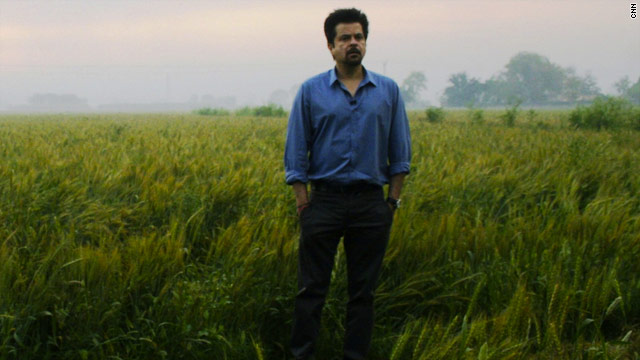
Half-hour documentary reveals tradition of trafficking in Bharatpur, India; finds hope in younger generation
WATCH THE TRAILER HERE.
Actor, producer and Indian film luminary Anil Kapoor has partnered with the CNN Freedom Project to expose one region’s secret tradition of trafficking in 'Trapped by Tradition: A CNN Freedom Project Documentary.' This is the year’s second major documentary produced by the CNN Freedom Project, the network’s multi-platform initiative which aims to expose the horrors of modern-day slavery and to push for change. 'Trapped by Tradition: A CNN Freedom Project Documentary' premieres Saturday, September 24 at 0900ET on CNN International.
As a special contributor to the CNN Freedom Project, Kapoor visits Bharatpur, a district in his native India where many young girls and women are sold into the sex trade often by members of their own family. This is the second trip to Bharatpur in two years for the film star, who is internationally recognized for his work in the award-winning film ‘Slumdog Millionaire.’ Kapoor has been involved in the fight against human trafficking for the past several years through his involvement with Plan India, an organization working on the frontlines to protect children against abuse and exploitation.“Human slavery in today’s modern world is unacceptable and unpardonable. We should do whatever we can to eradicate it completely,” says Kapoor. “It was clear we must change the mindset of the people in [Bharatpur] – they had to understand there are other options."
'Trapped by Tradition' follows Kapoor to Bharatpur, where he spends time with many young girls and women who followed the socially-accepted tradition of joining the sex trade. One of the women he meets says her brother convinced her to join the business more than 20 years ago and every penny she’s earned is used to support her family. While her story is not an unfamiliar one in Bharatpur, it becomes clear the district’s poverty, illiteracy, family pressures and geographical location all contribute to the perpetuation of trafficking females for family honor and commercial gain.
However, Kapoor notices a growing awareness among the families during this visit – something he did not witness two years ago. Despite having a mother working in the sex trade, one young girl tells Kapoor she wants to continue her education in Mumbai as she dreams of becoming an actress. It is through this increased education that Kapoor believes young girls and women are learning about lifestyle choices they have outside Bharatpur and India’s sex trade.
The Freedom Project blog will be the online home for special coverage of 'Trapped by Tradition.' Leading up to the premiere of the documentary, users will be encouraged to submit questions to Kapoor related to the documentary through the blog, Twitter and the Freedom Project Facebook page.
'Trapped by Tradition' replays Saturday, Sept. 24 at 1500; Sunday, Sept.25 at 0700 and 2100; and Tuesday, Sept. 27 at 0530 and 1330 on CNN International. All times Eastern.
CNN Worldwide, a division of Turner Broadcasting System, Inc., a Time Warner Company, is the most trusted source for news and information. Its reach extends to nine cable and satellite television networks; one private place-based network; two radio networks; wireless devices around the world; CNN Digital Network, the No. 1 network of news Web sites in the United States; CNN Newsource, the world’s most extensively-syndicated news service; and strategic international partnerships within both television and the digital media.
Source: CNN Press Room - CNN.com Blogs
