Child sex trafficking victim seeks congressional action - Washington Times:
Showing posts with label Hawaii. Show all posts
Showing posts with label Hawaii. Show all posts
Saturday, May 16, 2015


Commission Meeting Focuses on Sex Trafficking and Foster Childre - NBC29 WVIR Charlottesville, VA News, Sports and Weather
Officials gathered at the General Assembly Building in Richmond on Tuesday for a meeting of the Commission on Youth. They say foster kids are at a higher risk to become victims of sex trafficking.
Read HERE
Commission Meeting Focuses on Sex Trafficking and Foster Childre - NBC29 WVIR Charlottesville, VA News, Sports and Weather:
Read HERE
Commission Meeting Focuses on Sex Trafficking and Foster Childre - NBC29 WVIR Charlottesville, VA News, Sports and Weather:


Friday, May 8, 2015
New bill aims to end child sex trafficking in Georgia - WTVM.com-Columbus, GA News Weather & Sports
"Governor Nathan Deal and human trafficking rescue groups both agree something needs to be done stop the issue, but they disagree on how to fix the problem."
Read HERE
New bill aims to end child sex trafficking in Georgia - WTVM.com-Columbus, GA News Weather & Sports:
Read HERE
New bill aims to end child sex trafficking in Georgia - WTVM.com-Columbus, GA News Weather & Sports:

Tuesday, October 7, 2014


Thursday, June 5, 2014
HONOLULU: 4 Hawaii farms settle Thai workers suit for $2.4M - Business Breaking News - MiamiHerald.com
Source: MiamiHerald.com:
HONOLULU -- Four Hawaii farms are settling a discrimination lawsuit for a total of $2.4 million over allegations that they exploited hundreds of Thai workers.
The U.S. Equal Employment Opportunity Commission filed a federal lawsuit in 2011 against California-based labor contractor Global Horizons and six Hawaii farms, with allegations including subjecting workers to discrimination, uninhabitable housing, insufficient food, inadequate wages and deportation threats.
Read story here:
http://www.miamiherald.com/2014/06/03/4155840/4-hawaii-farms-settle-thai-workers.html

HONOLULU -- Four Hawaii farms are settling a discrimination lawsuit for a total of $2.4 million over allegations that they exploited hundreds of Thai workers.
The U.S. Equal Employment Opportunity Commission filed a federal lawsuit in 2011 against California-based labor contractor Global Horizons and six Hawaii farms, with allegations including subjecting workers to discrimination, uninhabitable housing, insufficient food, inadequate wages and deportation threats.
Read story here:
http://www.miamiherald.com/2014/06/03/4155840/4-hawaii-farms-settle-thai-workers.html
Tuesday, November 19, 2013
Human trafficking—or something that looks a lot like it—has been taking place in Hawaii – Quartz
SOURCE: Quartz
It seems that Thailand and Hawaii have more in common than just being tourist paradises. Thailand is trying to get itself removed from the US human trafficking watch list, where it risks heavy sanctions if it doesn’t clean up its act. And American fruit giant Del Monte has just agreed to pay $1.2 million to a group of migrant workers—who are, ironically, Thais—in Hawaii, over some of the very same practices that have bedeviled Thailand.
CONTINUE HERE:
http://qz.com/148766/human-trafficking-or-something-that-looks-a-lot-like-it-has-been-taking-place-in-hawaii/

It seems that Thailand and Hawaii have more in common than just being tourist paradises. Thailand is trying to get itself removed from the US human trafficking watch list, where it risks heavy sanctions if it doesn’t clean up its act. And American fruit giant Del Monte has just agreed to pay $1.2 million to a group of migrant workers—who are, ironically, Thais—in Hawaii, over some of the very same practices that have bedeviled Thailand.
CONTINUE HERE:
http://qz.com/148766/human-trafficking-or-something-that-looks-a-lot-like-it-has-been-taking-place-in-hawaii/

Tuesday, February 19, 2013
Human Trafficking of Thai workers shows U.S. map of exploitation | WNN – Women News Network
http://womennewsnetwork.net/2013/02/16/human-trafficking-thai-workers-us/
Source: WNN – Women News Network


Source: WNN – Women News Network
A tenement shack where a forced Thai worker lived on a Hawaii, U.S. farm shows deplorable conditions. Image: 808 HALT
(WNN/VOA) Los Angeles, California, UNITED STATES: In 2004, Nopphon Fuchumpa was promised a great opportunity in the United States. The Thai laborer was told if he raised sufficient funds, he could travel to the U.S. and find work there. “They told me there are a lot of opportunities for work, especially work in farming,” he said.
What followed was a nightmarish saga that Fuchumpa said led to his being trafficked. He had to take out a loan for approximately $10,000 and hand over a deed for what he called his “ancestral land.” Then, he was told he had to supply an additional $10,000.
“First, I didn’t want to come (to the United Sates) because it’s such a large amount of money,” he said. “I paid half of it and I made the commitment to pay the other half. I kept thinking there would be a lot of opportunities to work in America, and I asked a recruiter, ‘Are you sure they’re real jobs there?’ And he said ‘Yeah, there are a lot of real jobs there. You’re halfway there, keep going.’”
Fuchumpa is one of more than 200 Thai workers involved in a legal case against Global Horizons Manpower Company, a labor contractor based in Los Angeles, California.
In September of 2010, agents working for the company were accused of luring farm workers to Hawaii from Thailand and mistreating them in what the FBI said is the largest human trafficking case ever charged in U.S. history.
The U.S. Justice Department dismissed charges of conspiracy to commit human trafficking against the company in the summer of 2012, saying the accusations could not be proved beyond a reasonable doubt. A civil case is still pending. Global Horizons has denied the charges, and did not respond to WNN news partner VOA’s request for an interview.
The financial impact on Fuchumpa has been lasting. In Thailand, Fuchumpa said he asked family members for help. He said his mother and sister-in-law helped by taking out additional loans.
When Fuchumpa arrived at the airport in Bangkok for his flight to the United States, he was warned that if he told anyone that he had paid the equivalent of $20,000 to make the trip, he would be sent back home.
In Los Angeles, the Thai Community Development Center has long been involved in trying to help people like Fuchumpa. The organization participated in the groundbreaking El Monte Trafficking case in 1995, when 72 thai women were found working in a sweatshop in Los Angeles County.
Chanchanit Martorell, the executive director of the Center, said she sees mainly labor trafficking involving men, defying the common perception that trafficking usually affects women and girls.
“It has become a huge industry where everyone stands to profit from the recruitment and trafficking of Thai individuals, women, children and men, even your Thai grandmother in a village could get paid to find someone, and turn that person over to a trafficker,” she said.
When Fuchumpa arrived in the U.S., he was sent to pick apples on a farm in the northwestern state of Washington. When that ended, he was sent to Hawaii to work 10-hour days in brutal heat on a pineapple farm.
“The conditions were very harsh, especially the weather,” he said. “We had to pick up the pineapples directly under the sun, and we were told if we couldn’t do the job fast enough we would be sent back to Thailand.”
Another Thai worker, Amphon Kanthawang, said he was trafficked, and arrived in the U.S. in 2004. Like Fuchumpa, he had to pay about $20,000 to come to the U.S., where he initially worked on a North Carolina potato farm. When that assignment ended, he was sent also to Hawaii to pick pineapples.
“It was kind of like a military camp,” he said. “There was no direct pipeline that brought water to us…we had storage tanks…they had to ration the water, only so much to bathe yourself, and most importantly to drink and eat.”
For his part, Fuchumpa said the workers sometimes didn’t have enough to eat, and that some fainted in the fields.
“The workers had to wake up at four in the morning to get in line, there would be two long lines to get food early in the morning,” he said. “People who were at the end of the line, sometimes they didn’t even get food, you’d get a little box of maybe rice or something, it was barely enough to eat.”
The workers said they were also subjected to verbal abuse, and their employers would criticize them for not doing enough work, warning them they would be sent back to Thailand.
According to Martorell, such behavior is routine in trafficking cases. “The passports are confiscated, you’re left to live in a flophouse with no utilities, no running water, no furnishings, and then you’re guarded 24/7, not allowed to leave the premises, and you have no contact with the outside world, so your freedom has been completely stripped,” she said.
Most trafficking cases are discovered only because victims decide to take matters into their own hands and escape. Fuchumpa and his fellow workers met secretly on the pineapple farm, and vowed to meet one day in Los Angeles. “We said, ‘We have to go out and risk and die with the sword, or else we’ll have nothing left,’” he said.
Fuchumpa was sent from Hawaii to Fresno, California, where he was told he would be sent back to Thailand. He was able to phone a friend in Los Angeles, and the friend sent a taxi to collect him at an apartment complex in Fresno. Fuchumpa threw his belongings over a wall, climbed over the wall, and fled into the waiting taxi. He settled in Los Angeles, where he now works in construction, and hopes one day to return to Thailand on his own terms.
Kanthawang also fled his traffickers. He now lives in Los Angeles, and has worked in construction and in restaurants.
“Workers summon the courage and risk their lives, and their family’s lives, to escape because they couldn’t stand it anymore — to be denied their freedom, and to be denied contact with the outside world and to be treated in the most inhumane way,” said Martorell.
She said trafficking exists in the open, yet its victims are hard to recognize,” said Martorell.
“It could be someone who is waiting on you at a Thai restaurant. They may appear to be completely free, but in fact, they’re not getting paid, “ she said. “In fact they’re being housed and not allowed to leave their housing.”
“They’re completely psychologically threatened, so even though they may be out in the open, serving food, they’re not going to escape because they’ve been so programmed,” Martorell added.
_________________________________________________
When Hawaii, U.S. immigration attorney Milissa Vincenty was brought into a Thai farm worker case that was brought to her attention by a social worker who was trying to come to the aid a local farm worker who was working as a slave, she realized that the facts uncovered a much larger scheme to traffick workers from Laos, Vietnam and Thailand. What has been alleged as a deceptive bait technique by a jobs and labour provider in the U.S. who used the cover of a legal U.S. government immigration program to offer fraudulent jobs to workers from Asia may be part of the largest case of human trafficking in U.S. history. This 5:43 min video narrated by Theresa Tilley and produced by 808 HALT, a coalition campaign which works to promote awareness about human trafficking in Hawaii, is a January 2012 Youtube release.
_____________
WNN/VOA

Thursday, July 26, 2012
Exclusive: Global Horizons CEO Speaks Out About Human Trafficking Allegations – and the Justice Department’s Decision to Drop the Charges | Hawaii Reporter
http://www.hawaiireporter.com/exclusive-global-horizons-ceo-speaks-out-about-human-trafficking-allegations-and-the-justice-departments-decision-to-drop-the-charges/
SOURCE: Hawaii Reporter
Tuesday, July 24th, 2012



 Besides the pending private litigation, the Equal Employment Opportunity Commission continues to investigate Global Horizons and several farms here and in the mainland that hired Global workers. All of the farm owners who could be reached for comment denied wrongdoing.

SOURCE: Hawaii Reporter
Tuesday, July 24th, 2012
BY MALIA ZIMMERMAN – After Mordechai Orian of Global Horizons Manpower Company was indicted in 2010 on charges related to human trafficking, he told Hawaii Reporter in several exclusive interviews to follow that the federal government was “overzealous” and he was innocent of the charges against him.
The FBI claimed Orian was responsible for the largest human trafficking case in U.S. history involving some 700 workers and spent millions of dollars and dedicated countless man-hours to prove it.
FBI agents arrested Orian, confiscated his plane, held him in federal prison, ordered him under house arrest in Hawaii instead of his home in California, issued press releases about his alleged wrongdoing to media worldwide, and essentially shut down his business when they seized his company’s files and computers.
Six Global Horizons employees were indicted criminally in September 2010, including Orian, three executives and two Thai labor contractors. On January 14, a 10-count superseding indictment charged two other people in Los Angeles, Joseph Knoller and Bruce Schwartz, as co-conspirators. Three people pled guilty in federal court.
Orian’s trial, documented in volumes of paperwork in United States v. Orian, was set for August 28, 2012, after it was delayed at the federal government’s request.
But on Friday, the federal government dropped the case against Orian.
“I got a phone call from my lawyer and he said they agreed to dismiss the charges and it’s over. Honestly I just stopped the car and my hands were shaking and I just had tears coming from my eyes. It was the first time (I cried) even when bad things happened. I was just – you know – uncontrollable,” Orian said in an exclusive interview with Hawaii Reporter on July 24, 2012.
Nanda Chitre, spokesperson for the Department of Justice, offered little explanation for the decision, saying only “A team of attorneys and agents determined the government is unable to prove the elements of the charged offenses beyond a reasonable doubt, the high standard applied in criminal prosecutions, and that proceeding with the prosecution no longer serves the public interest.”
Orian said even though he was happy, he also had mixed feelings about not being able to go to trial. "I think it was my chance to show what kind of people I am dealing with. I didn’t have the chance to do that. They took it away out of me.”
Trial Team Has Poor Track Record in Hawaii
The same Washington DC-based federal prosecution team that originally brought charges Global Horizons – which includes Susan French and Kevonne Small of the Criminal Section of the Civil Rights Division – is the same team that bungled the forced labor case filed against Mike and Alec Sou of Aloun Farms in 2009.
Both the Aloun Farms and Global Horizon cases involved laborers brought from Thailand to work on farms in Hawaii around the same time period.
After a series of missteps, French fell ill during the second week of the September trial, which was expected to continue for another two to three weeks. The judge would not delay the trial. A couple of days later, the U.S. Justice Department announced the agency would drop the charges against the Sou brothers.
Prosecutors would not say why, after two years of preparation, they abruptly gave up. The brothers, who were charged in 2009 with 14 counts of visa fraud and forced labor, originally pled guilty to one count each, but withdrew their plea and requested a trial.
Some 44 Thai workers were brought to Hawaii by the Sous. Several said they were outraged with the Justice department decision.
The workers took out loans so they could pay up to $20,000 each to come to America on the promise of working in Hawaii for three years. Instead they said they were released in 5 months, underpaid and forced to live in storage containers. They were told to borrow the money in Thailand to come here and now are losing their homes and rice fields used as collateral. The workers said they were never able to tell their story to a judge.
Orian, who was a labor contractor for the Sous before they brought in workers on their own, attended every day of the Sous’ criminal trial.
When the case was dismissed against the Sou brothers, Orian predicted the federal government would drop the charges against him because their case was essentially based on the same premise and was mounted by the same prosecution team.
According to Orian and attorneys for the Sous, French misrepresented the date the trafficking law was updated by Congress, rendering her indictments moot.
During the final hours of the Sous’ trial, French admitted to the judge she told the grand jury that it was illegal to charge excessive recruitment fees from workers on H2A workers visas in 2004, the year the Sous personally recruited the workers from Thailand. Congress in fact passed the legislation in 2008, some four years later. Orian alleges French made the same misstatement of this important fact in his grand jury proceedings.
Orian said in an earlier interview that labor law in Thailand says if a worker fails to complete their contract and returns home to Thailand, they must be able to recoup a proportional amount of the fees actually paid.
The Justice Department won’t discuss specifics, but said in its Friday release it “moved for the dismissal (of the Orian case) based on an additional review of the evidence following the August 2011 dismissal in United States v. Sou.”

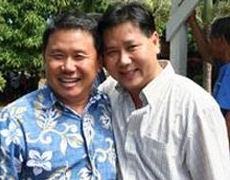
Mordechai Orian of Global Horizons discusses the human trafficking charges against him with Hawaii Reporter editor Malia Zimmerman
Before, during and after the brief trial, Orian was not hesitant to share his strong opinions about what he believed was an incompetent and inept federal prosecution.
When French disappeared in the middle of the Sous’ trial after what many observers thought was a disastrous and disorganized presentation of the case against the Sous, Orian maintained she left the Sou trial “under a cloud of ethical suspicion.” He also maintained she had a personal vendetta against him.
“But you know, who ever made the decision to destroy my life, succeeded. Because they shot me down, they humiliated me and it’s going to take me a long time to get back on my feet.”
Orian said the experience has been hard on his family.
“I can take it, but my family, what they’ve been through, the people around, the friends that disappeared. All the things that you see that you can’t even imagine - that’s what breaks you. The experience take its toll on the family more than anybody.”
He said he does not want revenge, but wants justice.
“Honestly, I don’t wish ill of anybody but I just wish the guys who did this to me would lose their jobs so they don ‘t have the chance to do something like to any other people again. That’s what upset me more than anything. People who have the power and they just destroy somebody’s life without any mercy. Nothing. No chance to talk to the grand jury, no way to fight, nothing. ... I will try to get back in life. I don’t even know where I’m going to start yet.”
Civil Litigation Pending
Neither Orian nor the Sou brothers have seen the end of these allegations against them.
While the criminal litigation has been dismissed, attorneys for the Thai workers plan to file lawsuits against both the Sous and Orian.

Thai laborers speak to the media with one of their civil attorneys, Clare Hanusz, behind them
Melissa Vincenty and Clare Hanusz are representing some of the Thai workers.
Hanusz, now living in Australia, said on July 24, 2012, “The dismissal of the case leaves us with more questions than answers.”
She said there have been allegations that this case, like the case again the Sou brothers of Aloun Farms, came about because attorneys coached the Thai farm workers to lie.
“Speaking for the dozens of Thai victims we represent, this is patently false, and I don't know any attorney who would be stupid enough think they could get away with coaching foreign workers to lie so they could get legal immigration status. The Department of Justice is standing behind the victims, and the case fell apart for other reasons, reasons we are not privy too. It was a great disappointment for the victims.”
Vincenty, who is also living in Australia, told Hawaii Reporter that Global Horizons had a “weapon of control” over the workers – money.
“Workers were not paid on time, not paid for all of the work they performed, not paid for weeks and months of furloughed time. While this was happening, the debts back in Thailand increased daily and the workers became more and more desperate.”
Most workers not have any contacts for the government or assistance outside of the farms, Vincenty said, especially those in isolated locations.
“The workers I have spoken with felt that they had to keep trying to get work from Global Horizons or their lives would be ruined,” Vincenty said. “Workers were told to stop complaining or they would be sent home, which meant the destruction of the men’s families and farms.”

Hawaii Immigration Attorney Melissa Vincenty courtesy of HawaiiConversation.org
Vincenty maintains there were many broken promises, including wages and terms of contract. “All of the workers were promised three years of consistent work in the U.S. by recruitment companies hired by Global Horizons. The men calculated this, balanced this promise against the recruitment fees that were being asked of them, and knew that if they had three years of work, they could pay off their loan in two years and take one year of salary home with them,” Vincenty said. “They were not told that the work or their visas would last only for a small fraction of that time. They were not told it would be two weeks of work followed by two months off, then 3 weeks of work in another state, then more time off or even time back in Thailand. This was misleading and dishonest.”
“The moment that Global Horizons learned of the excessive recruitment fees, they should have fired that recruitment company and reported them to the Thai Department of Labor. But, instead, in the U.S., Global Horizons supervisors attempted to get more fees from the workers.”
Thai Worker Shares His Story
Kiet Jainukul is a client of Vincenty and Hanusz. He told Hawaii Reporter in a 2011 interview that he came to work in America in hopes he could bring his family out of poverty.
He says a manpower recruiter from SAIM TP in Udon, Thailand required him to pay 650,000 baht (approximately $17,000) in cash, even though Thai recruiters are not allowed to collect just 65,000 baht or $1,500 in fees.
The recruiter escorted him to Krungsri Ayutthaya Bank also known as Bank of Ayudhya to borrow half the money, and he “went out of the system” to get the rest from wealthy villagers at a much higher interest, using his family’s home and rice farm as collateral. He never touched the cash. His level of education, which like most of his peers did not go past grammar school, was noted on his form.
When it came time to leave the country, and the money had already been paid, the recruiter told him he must not tell the Thai Department of Labor that he paid more or he would have his visa, job and deposit revoked. Scared he would lose everything, he kept quiet and signed a government document that said he paid the maximum legally allowed in fees and no more. He was optimistic that in a year, he could pay off the debt, and make two years profit.
But in reality, that plan would never materialize. After leaving Thailand bound for Arizona farms, Jainukul said he was redirected to Los Angeles where Global Horizons was headquartered and spent a month in an apartment with 10 other Thai workers waiting to get to work.
He said they only brought $20 to $100 each to America, and that money didn’t go very far in pricey LA when they needed to buy their own food. They mostly ate Saimin.
“We were very, very hungry, but afraid to go out any place, because could not speak language,” said Jainukul. “No one wanted to speak up because we did not want to get sent home. There was a lot of pressure. I felt suicidal, like I wanted to hang myself, because there was no way to pay debt. I imagined killing myself.”
Jainukul is one of 11 workers brought to America in that group in 2002. Three other Thai workers interviewed from the group of 11 said in a 2011 interview that they were also victimized and they blame the manpower company and Global Horizon. They said that the worst part is the debt and the fact that Global did not follow the contract or take care of the workers with living conditions, food, or payments, as they had been promised.
Broken families, being unable to return home to see family members, a deeper level of poverty, and the possibility of losing their homes, also makes them extremely sad. “Nobody cares about us,” the workers told Hawaii Reporter.
Chancee Martorell, who is a spokesperson for the Thai CDC, a California-based organization that advocates for the Thai workers, said the Thai CDC advocates were "shocked, dismayed, disappointed, angry and upset" when they received the news about the charges being dropped.
"Thai CDC has worked on this case for nine years since the first worker escaped in 2003. Despite sending the case to the DOJ initially, they didn’t take up the criminal prosecution until 2009. But we had already gone ahead to work on the civic case through EEOC and on the workers’ T-visas. The over three years that the workers spent cooperating with DOJ hoping to see justice rendered has now all come to a sudden end with this dismissal. You can imagine how upsetting all of us and the workers are."
Martorell said they have been busy holding meetings with the workers to help explain this latest development to them.
"They (the workers) are infuriated and see this as a travesty of justice or justice denied. The fact that not even one charge stuck is completely mind boggling to them. And they are in total disbelief that the DOJ has also withdrawn the guilty pleas," Martorell said.
More Troubles from the Equal Employment Opportunity Commission
 Besides the pending private litigation, the Equal Employment Opportunity Commission continues to investigate Global Horizons and several farms here and in the mainland that hired Global workers. All of the farm owners who could be reached for comment denied wrongdoing.
Chitre of the Department of Justice confirmed the dismissal of the criminal case does not impact any ongoing civil litigation being conducted by the Equal Employment Opportunity Commission.
An April 20, 2011, the EEOC laid out its case: “The EEOC asserts that between 2003 and 2007, Global Horizons enticed Thai male nationals into working at the farms with the false promises of steady, high-paying agricultural jobs along with temporary visas allowing them to live and work in the U.S. legally. The opportunity came at a price: high recruitment fees creating an insurmountable debt for the Thai workers. When they reached the U.S., Global Horizons confiscated the workers’ passports and threatened deportation if they complained, which set the tone for the abuses to come.
“The Thai workers were assigned to work at six farms in Hawaii (Captain Cook Coffee Company, Del Monte Fresh Produce, Kauai Coffee Company, Kelena Farms, MacFarms of Hawaii, and Maui Pineapple Farms) and two farms in Washington (Green Acre Farms and Valley Fruit Orchards), harvesting a variety of items from pineapples to coffee beans. The EEOC asserts that the farms not only ignored abuses, but also participated in the obvious mistreatment, intimidation, harassment, and unequal pay of the Thai workers.
“At some farms, the Thai workers were forced to live in dilapidated housing infested with rats and insects, with dozens sleeping in the same room.”
U.S. District Judge David Ezra last year threw out the original EEOC complaint against Global and the farmers. EEOC attorneys filed another complaint last week.
“Honestly I don’t think it will go too far. This is the EEOC, the federal government is going to spend the money again to go after Global. ...” Orian said today.
“Now that I have time, I can put the energy in fighting the federal government because that’s not only about me. It’s also for the farmers. They texted me right away (when the charges were dropped) and said 'can you help us now?’ And of course, I will.”
“Those farmers would not give up because they know they have done nothing wrong. What does the government blame them for? My company brought them (the Thai workers to Hawaii), not the farmers. If you want to go against somebody, go against me. .... Honestly, the farmers have nothing to do with that. We will prove it in court,” Orian said.
Global Horizons vs. Aloun Farms
Mike and Alec Sou of Aloun Farms
Ironically, Orian and the Sou brothers aren’t on such good terms.
The Sou brothers brought Orian to Hawaii when they first hired him to recruit Thai workers to work on the West Oahu farm.
Orian said they still owe him $800,000, and if they don’t pay, he will file a lawsuit to recoup the money.
He said Alex Sou “is a sneaky guy who would do anything for the money.” Orian said “he (Alex) treats people very bad.”
He said the Sous treated their employees poorly. “I was really upset with them (the Sous). … “We have laws in this country. We have to follow the laws. They don’t care.”
Justice Department: Prosecutors Making Headway Against Human Trafficking
The Justice Department maintains, that while it had to drop this case, its prosecutors are making headway in combating human trafficking.
“The Department of Justice is committed to identifying, assisting and seeking justice on behalf of human trafficking victims who have been trapped in some form of slavery, coerced labor, debt bondage or sex trafficking.”
“Over the last three years, we’ve achieved significant increases in human trafficking prosecutions – including a rise of more than 30 percent in the number of forced labor and sex trafficking prosecutions, and we will aggressively continue to bring significant cases, ranging from single-victim domestic servitude cases to prosecutions that dismantle transnational organized criminal networks.”
Wednesday, December 7, 2011
Special Investigation: Laotian Workers Suffer Health and Financial Problems on Oahu Farms | Hawaii Reporter
http://www.hawaiireporter.com/laotian-workers-suffer-health-and-financial-problems-on-oahu-farms/123
Tuesday, December 6th, 2011

BY MALIA ZIMMERMAN - Alay Tansili left his family and home in Vientiane, Laos, in 2006 and moved to Hawaii after his wife encouraged him to seek a job in America. Like many Laotians in that impoverished country, Alay and his family believed America to be the land of opportunity, a safe place to work and make enough money in a year or two to pull the family out of poverty forever.
He never dreamed that just five years later at age 46 he'd be confined to a bed in the hospital after suffering a debilitating stroke, facing the possibility that he'd never walk again, and in the middle of a tug of war with his employer and his attorney over whether he should be forced to return home while he's unable to care for himself.
Alay's story is shared by many Laotians now secretly working on farms in Hawaii. For a steep price, a recruiter in Laos helped Alay arrange his travel and prepared him for questions from American Embassy officials. He did not realize he was coming to Hawaii on a B2 visitor visa, not an H2A work visa. His B2 visa expired quickly, leaving him unable to work in the country legally and unable to pay back the recruiter.

But Hawaii is rife with farm owners looking for cheap labor, and while there are many honest, diligent farmers, there are also many unconcerned with workers´ immigration status. Alay says he secured a job for $1,500 a month at a Kahuku farm where he picked beans and bananas for as long as ten hours a day, seven days a week, for the next four years. He slept in a tiny makeshift plywood shack with no plumbing or electricity and no furniture except for his cot. The structure, which has no windows or doors and no front wall, has no barrier to the rats, chickens, peacocks, mosquitoes, spiders and centipedes that live there.
The hard farm labor exhausted Alay. He found it difficult to sleep. Even worse were the many bad reactions he suffered after mixing and spraying chemicals on the crops and burning the chemical containers as he was directed.
 After
handling hazardous chemicals without training or protection for as many
as three days a week for at least four years, he collapsed this week.
He was transported to Kahuku Hospital and then to Castle Medical Center
where he is now recovering from a stroke.
After
handling hazardous chemicals without training or protection for as many
as three days a week for at least four years, he collapsed this week.
He was transported to Kahuku Hospital and then to Castle Medical Center
where he is now recovering from a stroke.
While Hawaii employers are obligated to pay for medical insurance coverage for their workers, Alay's employer did not offer this benefit. Now he is unable to qualify for the 24-hour care he requires, which means he will have to face the reality that at age 46, he may never walk again.
But Alay has one glimmer of hope - his friend Khamfanh Keohavong, also from Laos, worked on the farm with Alay for four years before quitting for similar reasons, and is now helping him.
Khamfanh said he collapsed several times after spraying the same chemicals that hurt Alay. A doctor in Queens Medical Center said in recent weeks the chemical exposure may have caused Khamfanh to develop a brain tumor.
Melissa Vincenty, a local immigration attorney who represents several dozen human trafficking victims in Hawaii originally from Thailand and Laos, agreed to help Khamfanh, and now she is also representing Alay. Vincenty said that after interviewing her new client, she discovered that Alay's sister and mother were in Hawaii under the same conditions.
On Friday, Vincenty visited the farm in Kahuku where Alay said he works so she could meet with the farm owner, Tony Law, and obtain Alay's passport and personal effects.
Vincenty said Alay and Khamfanh have worked under "terrible conditions" and they were sickened after spraying chemicals several days a week over a period of years.
While Khamfanh experienced blackouts and numbness is his limbs, Alay suffered from rashes, shortness of breath, headaches, fatigue, numbness in his arms and legs and the loss of his sense of taste.
Alay had been afraid to leave the farm as Khamfanh did, because he was under the impression that his situation is not as bad as what other Laotian workers are experiencing in Hawaii.
Farm owner Tony Law, who was reached by phone Monday, refutes any connection to Alay other than being his "friend."

Law said Alay came by the farm from time to time as a friend to help him. He denies his workers handle chemicals - Law says he personally takes care of that.
Law also rebuffs the accusation he employs illegal workers even though some of his own farm laborers say he's employed up to a dozen at one time.
Law said he didn't have to provide medical care for Alay or farm laborers because they float from farm to farm and are not his employees.
Law also refutes the accusation that workers live or work in poor or dangerous conditions.
Law has been aggressively trying to get Alay to return home immediately to Laos, even taking his passport to a travel agent to secure a ticket.
But Alay, who has not yet been discharged from the hospital after his stroke last week, told Vincenty and Khamfanh that he wants to remain in Hawaii - at least until he is strong enough to travel on his own.
Even though doctors had already told Law that Alay could not be released, Law came to pick up Alay at the hospital this weekend.
Law brought two other men with him to the hospital and wheeled Alay out of his room toward the elevator twice on Saturday morning.
Vincenty said the first time a nurse stopped Law, and the second time, Alay's friends who came to visit stopped Law and told him that Alay could not leave the hospital, much less Hawaii.
Law denies he was trying to sneak Alay off the grounds and said he was only trying to give Alay a break from being in his small room.

But Joanna Thakhamhor has her suspicions. She was at the hospital on Saturday with Khamfanh and her husband planning to visit Alay when they ran into Law wheeling Alay down the hallway for the second time.
Vincenty said Alay's story is similar to many other Laotians she interviewed over the last few months.
"What we seem to have uncovered is part of a bigger problem that has been going on for some time. These Laotians are stuck here until they are sent home because they are not useful to the farm owners any more. Many are in their fifties, sixties and seventies and suffer heart attacks and strokes because of their working conditions, schedules and lack of health care and nutrition. We need help to figure out how to help them," Vincenty said.
Vincenty and others involved in interviews with Laotians are just beginning to evaluate the extent of the recruiter fees they paid, who they were paid to in Hawaii and Laos, and how the network that brought the workers here operates.
"But we are going to get to the bottom of it," Vincenty promised.

Alay and Khamfanh and others have been brave enough to tell their story," Vincenty said, adding that those who came forward are getting the help they need.
But for some, like Toune Tipphavanh, help will not come in time.

Toune, a 51-year old Laotian farm laborer working at a Kahuku farm owned by Tony's brother, Thomas Law, became ill one day while at work and died shortly afterward.
Hawaii Reporter's Jim Dooley attended a cremation ceremony held for her in early November.
Friends said Toune was not taken to a doctor for several years despite a known heart condition.
Her husband, who traveled here with her in 2006, returned home to bring their children the sad news.
Vincenty said these stories can have a better ending if people come forward.
"We highly urge people not to be afraid and to assist with this investigation," Vincenty said.

Tuesday, December 6th, 2011

Laotian
national Khamfanh Keohavong gives a tour of where he lived and worked
on a Kahuku farm before he collapsed after using chemicals
BY MALIA ZIMMERMAN - Alay Tansili left his family and home in Vientiane, Laos, in 2006 and moved to Hawaii after his wife encouraged him to seek a job in America. Like many Laotians in that impoverished country, Alay and his family believed America to be the land of opportunity, a safe place to work and make enough money in a year or two to pull the family out of poverty forever.
He never dreamed that just five years later at age 46 he'd be confined to a bed in the hospital after suffering a debilitating stroke, facing the possibility that he'd never walk again, and in the middle of a tug of war with his employer and his attorney over whether he should be forced to return home while he's unable to care for himself.
Alay's story is shared by many Laotians now secretly working on farms in Hawaii. For a steep price, a recruiter in Laos helped Alay arrange his travel and prepared him for questions from American Embassy officials. He did not realize he was coming to Hawaii on a B2 visitor visa, not an H2A work visa. His B2 visa expired quickly, leaving him unable to work in the country legally and unable to pay back the recruiter.

Alay's home on the Kahuku farm
But Hawaii is rife with farm owners looking for cheap labor, and while there are many honest, diligent farmers, there are also many unconcerned with workers´ immigration status. Alay says he secured a job for $1,500 a month at a Kahuku farm where he picked beans and bananas for as long as ten hours a day, seven days a week, for the next four years. He slept in a tiny makeshift plywood shack with no plumbing or electricity and no furniture except for his cot. The structure, which has no windows or doors and no front wall, has no barrier to the rats, chickens, peacocks, mosquitoes, spiders and centipedes that live there.
The hard farm labor exhausted Alay. He found it difficult to sleep. Even worse were the many bad reactions he suffered after mixing and spraying chemicals on the crops and burning the chemical containers as he was directed.
 After
handling hazardous chemicals without training or protection for as many
as three days a week for at least four years, he collapsed this week.
He was transported to Kahuku Hospital and then to Castle Medical Center
where he is now recovering from a stroke.
After
handling hazardous chemicals without training or protection for as many
as three days a week for at least four years, he collapsed this week.
He was transported to Kahuku Hospital and then to Castle Medical Center
where he is now recovering from a stroke.While Hawaii employers are obligated to pay for medical insurance coverage for their workers, Alay's employer did not offer this benefit. Now he is unable to qualify for the 24-hour care he requires, which means he will have to face the reality that at age 46, he may never walk again.
But Alay has one glimmer of hope - his friend Khamfanh Keohavong, also from Laos, worked on the farm with Alay for four years before quitting for similar reasons, and is now helping him.
Khamfanh said he collapsed several times after spraying the same chemicals that hurt Alay. A doctor in Queens Medical Center said in recent weeks the chemical exposure may have caused Khamfanh to develop a brain tumor.
Hawaii Immigration Attorney Melissa Vincenty courtesy of HawaiiConversation.org
Melissa Vincenty, a local immigration attorney who represents several dozen human trafficking victims in Hawaii originally from Thailand and Laos, agreed to help Khamfanh, and now she is also representing Alay. Vincenty said that after interviewing her new client, she discovered that Alay's sister and mother were in Hawaii under the same conditions.
On Friday, Vincenty visited the farm in Kahuku where Alay said he works so she could meet with the farm owner, Tony Law, and obtain Alay's passport and personal effects.
Vincenty said Alay and Khamfanh have worked under "terrible conditions" and they were sickened after spraying chemicals several days a week over a period of years.
While Khamfanh experienced blackouts and numbness is his limbs, Alay suffered from rashes, shortness of breath, headaches, fatigue, numbness in his arms and legs and the loss of his sense of taste.
Alay had been afraid to leave the farm as Khamfanh did, because he was under the impression that his situation is not as bad as what other Laotian workers are experiencing in Hawaii.
Farm owner Tony Law, who was reached by phone Monday, refutes any connection to Alay other than being his "friend."

Chemicals on the kahuku farm are mixed and sprayed before the containers are burned
Law said Alay came by the farm from time to time as a friend to help him. He denies his workers handle chemicals - Law says he personally takes care of that.
Law also rebuffs the accusation he employs illegal workers even though some of his own farm laborers say he's employed up to a dozen at one time.
Law said he didn't have to provide medical care for Alay or farm laborers because they float from farm to farm and are not his employees.
Law also refutes the accusation that workers live or work in poor or dangerous conditions.
Law has been aggressively trying to get Alay to return home immediately to Laos, even taking his passport to a travel agent to secure a ticket.
But Alay, who has not yet been discharged from the hospital after his stroke last week, told Vincenty and Khamfanh that he wants to remain in Hawaii - at least until he is strong enough to travel on his own.
Even though doctors had already told Law that Alay could not be released, Law came to pick up Alay at the hospital this weekend.
Law brought two other men with him to the hospital and wheeled Alay out of his room toward the elevator twice on Saturday morning.
Vincenty said the first time a nurse stopped Law, and the second time, Alay's friends who came to visit stopped Law and told him that Alay could not leave the hospital, much less Hawaii.
Law denies he was trying to sneak Alay off the grounds and said he was only trying to give Alay a break from being in his small room.

Joanna Thakhamhor
But Joanna Thakhamhor has her suspicions. She was at the hospital on Saturday with Khamfanh and her husband planning to visit Alay when they ran into Law wheeling Alay down the hallway for the second time.
Vincenty said Alay's story is similar to many other Laotians she interviewed over the last few months.
"What we seem to have uncovered is part of a bigger problem that has been going on for some time. These Laotians are stuck here until they are sent home because they are not useful to the farm owners any more. Many are in their fifties, sixties and seventies and suffer heart attacks and strokes because of their working conditions, schedules and lack of health care and nutrition. We need help to figure out how to help them," Vincenty said.
Vincenty and others involved in interviews with Laotians are just beginning to evaluate the extent of the recruiter fees they paid, who they were paid to in Hawaii and Laos, and how the network that brought the workers here operates.
"But we are going to get to the bottom of it," Vincenty promised.

Touane Tipphavanh
Alay and Khamfanh and others have been brave enough to tell their story," Vincenty said, adding that those who came forward are getting the help they need.
But for some, like Toune Tipphavanh, help will not come in time.

Toune Tipphavanh, a 51-year old Laotian farm laborer, became ill at work and died shortly afterward.
Toune, a 51-year old Laotian farm laborer working at a Kahuku farm owned by Tony's brother, Thomas Law, became ill one day while at work and died shortly afterward.
Hawaii Reporter's Jim Dooley attended a cremation ceremony held for her in early November.
Friends said Toune was not taken to a doctor for several years despite a known heart condition.
Her husband, who traveled here with her in 2006, returned home to bring their children the sad news.
Vincenty said these stories can have a better ending if people come forward.
"We highly urge people not to be afraid and to assist with this investigation," Vincenty said.
Saturday, November 19, 2011
Scammed In Laos, Trapped in America | Hawaii Reporter
http://www.hawaiireporter.com/scammed-in-laos-trapped-in-america/123
Wednesday, November 16th, 2011
BY Malia Zimmerman - Bouala Phommachanh, 55, agreed to leave his wife and five children behind in the fall of 2005 to take a farming job in Hawaii after a recruiter visited his home in the Laos capitol of Vientiane.
The Laotian recruiter promised that if Bouala answered the questions correctly at the American Embassy, he could make enough as a farm worker in Hawaii to pull his family out of poverty. Bouala wasn’t convinced, but his wife was, and she urged him to go.
The recruiter instructed Bouala to tell the interviewer at the American Embassy that he was visiting his brother in Hawaii. Her plan worked like it had so many other times for Laotian laborers -apparently with assistance from Embassy officials - and Bouala was granted a visa. What he did not know was it was a temporary B2 visitor visa and not an H2A work visa that could be extended for anywhere from months to years.
Bouala was aware that he had to pay the Laotian recruiter, but he didn’t have the sense to ask how much. He thought his wife would take care of such things, and besides he was trusting. The recruiter said it would be easy to repay her because he’d be making considerably more on a farm in Hawaii than he would trying to sell his rice in Laos.
Little did Bouala know, that like thousands of Laotians before him, he would have been better off had he signed a deal with the devil instead.
Journey to Hawaii
When he arrived in Hawaii in October 2005, Bouala was picked up at the airport by one of the two main labor recruiters responsible for bringing illegal Laotian workers into Hawaii. They delivered him to a farm in the mountains above Kunia where he would spend the next four years picking vegetables for $4 an hour. It was backbreaking work, starting at 7 a.m. and finishing long after the sunset.
He and several other “B2” workers lived in a makeshift plywood shelter that he was told to construct. There was no kitchen, bathroom or plumbing. Workers took showers with a garden hose and had only a freestanding portable for a bathroom. The farm owner took $200 a month out of Bouala's meager earnings to pay for his share of meals, which were delivered from outside.
Only after he arrived in Hawaii did Bouala learn from his family back in Laos that they owed the recruiter $20,000, and if they didn’t repay her, she’d take away their home. He also found out that he was unexpectedly in debt another $10,000 – he owed that money to the Hawaii recruiter who’d taken him to the farm. Even though there was nothing in writing, and no contract, the Hawaii recruiter came to the farm regularly to collect Bouala’s paycheck. Those regular collections every payday made it virtually impossible to repay the Laotian recruiter or send money to his family.
One problem many Laotians have is finding a doctor who will see them. They don’t have health insurance, and because they are in Hawaii illegally, they cannot qualify for a state insurance. They also don’t have the money for an emergency visit, so they can’t get medical care.

When Bouala became sick soon after he arrived in Hawaii, his employer and his recruiter wouldn’t take him to the doctor. This went on for years, despite his repeated requests that some times turned frantic. A tumor was growing in Bouala’s sinuses making it virtually impossible to breathe from his nose, and the dusty farm and his poor living conditions made this simple act even more difficult. As more years passed with the tumor untreated, the bigger the blockage grew.
Another illegal farm worker from Laos had an appendicitis attack when Bouala was on the farm, and instead of getting her to the doctor, the farm owner ordered her and her husband to leave because he did not want an ambulance driver discovering the poor living conditions and illegal workers. Bouala’s heart sank knowing he’d never be able to get treatment, even though he thought he might be dying.
Bouala didn’t dare run away. He’d been warned by both his recruiter and farm owner that if he left the property or spoke to anyone outside the perimeter, he would be arrested and deported back to Laos, which would mean he’d be unable to repay the debt and would lose his family home. He was sick, he was broke and he was stuck.
Rescue Efforts Underway
In 2011, Bouala was quietly rescued by another Laotian/Thai family living here legally. The first request Bouala had from them was to visit the doctor. The second was to see Waikiki Beach – a place he’d heard about and saw in a postcard but he had never been allowed to visit. He could see the city lights from his make shift shelter on the farm, and dreamed of what it would be like to go there.

Bouala was welcomed by other people in the community who gave him a nice home, new clothes, housing supplies, food and spending money. He also told his story to Hawaii immigration attorney Melissa Vincenty, who helped rescue him, and she reported his story to the proper authorities and helped him obtain a work visa so he could stay here legally.
But several weeks after that, Bouala, now 62, decided to go home and face whatever reality he’d have to in Laos. His seven years in Hawaii without family, friends and culture was lonely, difficult and too much for him to bear. Generous Laotians gave him the money for the ticket home and he slipped quietly back behind his country’s border.
Not everyone is as lucky as Bouala and can make it home.
Some Laotian Farm Workers Not so Fortunate
On October 28, 2011, Touane Tipphavanh, a 51-year old Laotian farm laborer who was about to return to Laos to see her sick child, became ill at work. She died shortly after on a Kahuku farm and was taken to Kahuku Hospital where she was pronounced dead.
Friends say she was not given health insurance as would be required under Hawaii law for any employee working more than 20 hours a week at either of the two farms where she worked, and she had not been taken to a doctor for several years despite a known heart condition.
A cremation ceremony was held for her in early November. Her husband, who traveled here with her in 2006, planned to return home to face their children.
Bouala and many other farm workers interviewed by Hawaii Reporter over the last several months have similar stories of being trapped in Hawaii or mainland states.
They are unable to go home because of huge debts incurred after being tricked by recruiters in Laos and America, fees that range between $10,000 and $30,000 a person.
They can’t make any money to send home because the recruiters take it, some of the farm owners take advantage of them with illegally low wages and no benefits, and they are afraid to leave because they have been told they will be arrested and they don’t speak English. As a result, the workers are stuck living as modern day slaves.
Laborers Suffer in Deplorable Living Conditions, Unsafe Work Environments
Many have also told horror stories not only about their living conditions, but also about their working conditions.
“I am disgusted and ashamed at what I have personally seen and experienced on these farms,” said immigration attorney Melissa Vincenty after she helped rescue Bouala.
“Victims right now are dealing with deplorable living conditions, severe medical conditions, and unsafe work environments. Questionable pesticides are being sprayed on the produce that we are buying in Chinatown and local farmer's markets. Victims of this form of labor trafficking are also on the mainland and continue to live in the shadows,” Vincenty added.
Immigrants Seek Help
Some Laotians interviewed believe there are up to 1,000 others living like them on Hawaii farms.
Joanna Thakhamhor, a Laotian who spent her early childhood in Laos and Thailand before moving to Hawaii, speaks a number of languages, and has acted as a community resource and advocate for many Asian immigrants.
She said dozens of B2 workers have sought her help over the years, and in some cases, the farm owners have asked for her assistance to drive farm workers to the doctor, file paperwork or take care of other necessities. Many Asian farm workers, including so called “B2s”, just show up at her doorstep.
“I deal with many B2s because they come forward. Some farm owners are good and they want to get help for their workers and do what is right. Other B2 workers say they need help, but are not allowed to leave,” Thakhamhor said.
”I am worried for them because they have medical problems, especially some of the older workers. There are those who are treated as slaves and they are stuck because of the loans they have to pay,” Thakhamhor added.
Vincenty said the abuse of the B-2 program has been going on for years, but little has been known about where these recruited workers lived and worked.
Now that more has been documented, both Vincenty and Thakhamhor are helping to initiate a wider rescue effort.
“The reality is that these workers have been trapped on Hawaii farms for years. As a community, we cannot let this go on for any longer,” Vincenty said.
Thakhamor said the workers can get help if they ask – she personally has connected dozens of workers over the years with the proper services.

Plight of Thai Workers Investigated but so Far Laotians Ignored
Considerable national and international attention has been focused on Hawaii farm labor issues since Aloun Farm owners Mike and Alec Sou were indicted in 2009 on criminal charges of visa fraud and forced labor related to importing 44 Thai laborers to work on their Kapolei farm.
The Sous’ case was dropped in the midst of the September federal trial by U.S. prosecutors who gave no explanation, and the case is still in court because the Sous, who at one time pled guilty to one count of forced labor before changing attorneys and recalling their plea, are seeking compensation for their legal fees.
Another criminal case against employees of Global Horizons Manpower Company based on similar charges to those brought against the Sou brothers is set for trial in February 2012. The Thai workers placed on various Hawaii and mainland farms by Global were brought to America legally through the H2A visa program.
These cases are unrelated to the Laotian workers’ plight and the Laotian B2 workers are not employed at any of the farms included in the U.S. Equal Employment Opportunity Commission complaint against six Hawaii farms and two mainland farms related to alleged poor treatment of Global Horizons’ Thai recruits.
While the Thai workers who came here legally are getting some help and jobs, Laotian workers who never realized they arrived on the wrong kind of American visa until it was too late, are turning more desperate.
Laotians Being Threatened
Since several workers have been interviewed by Hawaii Reporter over the last several weeks, the main Laotian labor recruiter, who will be named along with others in a future Hawaii Reporter story, apparently ordered farm owners to prevent the B2 workers from leaving their respective farms for any reason, whether to buy groceries or to see a doctor. The B2 workers are threatened with being fired and deported if they don't comply.
The workers said they have been told that if they see anyone new coming on to the farm to run and hide in the mountains or they may be arrested.
Many of the Laotian workers believe they are trapped in Hawaii, that no one is looking out for them. They see no easy way out.
Vincenty, who has helped a number of human trafficking victims in Hawaii and currently represents Thai workers in pending civil litigation against Aloun Farms, said that it is no longer in question that members of our community entrapped victims for their own financial gain, but how to deal with this reality “is up to us as a community.”
“We need to hold the farm owners, recruiters and those who were complicit in this scheme accountable for their actions,” Vincenty said.
“Many people knew about these abused workers and did nothing to help them. Now that we know what has happened, it is time to step up, make sure the perpetrators are punished, and ensure a stable future for all of the victims. These victims are here, and it is our responsibility that their voices are heard loud and clear.”
Bouala Phommachanh's name was changed in this story to protect his family from physical and financial harm.

Wednesday, November 16th, 2011
BY Malia Zimmerman - Bouala Phommachanh, 55, agreed to leave his wife and five children behind in the fall of 2005 to take a farming job in Hawaii after a recruiter visited his home in the Laos capitol of Vientiane.
The Laotian recruiter promised that if Bouala answered the questions correctly at the American Embassy, he could make enough as a farm worker in Hawaii to pull his family out of poverty. Bouala wasn’t convinced, but his wife was, and she urged him to go.
The recruiter instructed Bouala to tell the interviewer at the American Embassy that he was visiting his brother in Hawaii. Her plan worked like it had so many other times for Laotian laborers -apparently with assistance from Embassy officials - and Bouala was granted a visa. What he did not know was it was a temporary B2 visitor visa and not an H2A work visa that could be extended for anywhere from months to years.
Bouala was aware that he had to pay the Laotian recruiter, but he didn’t have the sense to ask how much. He thought his wife would take care of such things, and besides he was trusting. The recruiter said it would be easy to repay her because he’d be making considerably more on a farm in Hawaii than he would trying to sell his rice in Laos.
Little did Bouala know, that like thousands of Laotians before him, he would have been better off had he signed a deal with the devil instead.
Journey to Hawaii
When he arrived in Hawaii in October 2005, Bouala was picked up at the airport by one of the two main labor recruiters responsible for bringing illegal Laotian workers into Hawaii. They delivered him to a farm in the mountains above Kunia where he would spend the next four years picking vegetables for $4 an hour. It was backbreaking work, starting at 7 a.m. and finishing long after the sunset.
He and several other “B2” workers lived in a makeshift plywood shelter that he was told to construct. There was no kitchen, bathroom or plumbing. Workers took showers with a garden hose and had only a freestanding portable for a bathroom. The farm owner took $200 a month out of Bouala's meager earnings to pay for his share of meals, which were delivered from outside.
Only after he arrived in Hawaii did Bouala learn from his family back in Laos that they owed the recruiter $20,000, and if they didn’t repay her, she’d take away their home. He also found out that he was unexpectedly in debt another $10,000 – he owed that money to the Hawaii recruiter who’d taken him to the farm. Even though there was nothing in writing, and no contract, the Hawaii recruiter came to the farm regularly to collect Bouala’s paycheck. Those regular collections every payday made it virtually impossible to repay the Laotian recruiter or send money to his family.
One problem many Laotians have is finding a doctor who will see them. They don’t have health insurance, and because they are in Hawaii illegally, they cannot qualify for a state insurance. They also don’t have the money for an emergency visit, so they can’t get medical care.

Laotian workers here on expired B2 visitor visas are spread out on farms across the state
When Bouala became sick soon after he arrived in Hawaii, his employer and his recruiter wouldn’t take him to the doctor. This went on for years, despite his repeated requests that some times turned frantic. A tumor was growing in Bouala’s sinuses making it virtually impossible to breathe from his nose, and the dusty farm and his poor living conditions made this simple act even more difficult. As more years passed with the tumor untreated, the bigger the blockage grew.
Another illegal farm worker from Laos had an appendicitis attack when Bouala was on the farm, and instead of getting her to the doctor, the farm owner ordered her and her husband to leave because he did not want an ambulance driver discovering the poor living conditions and illegal workers. Bouala’s heart sank knowing he’d never be able to get treatment, even though he thought he might be dying.
Bouala didn’t dare run away. He’d been warned by both his recruiter and farm owner that if he left the property or spoke to anyone outside the perimeter, he would be arrested and deported back to Laos, which would mean he’d be unable to repay the debt and would lose his family home. He was sick, he was broke and he was stuck.
Rescue Efforts Underway
In 2011, Bouala was quietly rescued by another Laotian/Thai family living here legally. The first request Bouala had from them was to visit the doctor. The second was to see Waikiki Beach – a place he’d heard about and saw in a postcard but he had never been allowed to visit. He could see the city lights from his make shift shelter on the farm, and dreamed of what it would be like to go there.

Waikiki Beach - Photo: Emily Metcalf
Bouala was welcomed by other people in the community who gave him a nice home, new clothes, housing supplies, food and spending money. He also told his story to Hawaii immigration attorney Melissa Vincenty, who helped rescue him, and she reported his story to the proper authorities and helped him obtain a work visa so he could stay here legally.
But several weeks after that, Bouala, now 62, decided to go home and face whatever reality he’d have to in Laos. His seven years in Hawaii without family, friends and culture was lonely, difficult and too much for him to bear. Generous Laotians gave him the money for the ticket home and he slipped quietly back behind his country’s border.
Not everyone is as lucky as Bouala and can make it home.
Some Laotian Farm Workers Not so Fortunate
Touane Tipphavanh
On October 28, 2011, Touane Tipphavanh, a 51-year old Laotian farm laborer who was about to return to Laos to see her sick child, became ill at work. She died shortly after on a Kahuku farm and was taken to Kahuku Hospital where she was pronounced dead.
Friends say she was not given health insurance as would be required under Hawaii law for any employee working more than 20 hours a week at either of the two farms where she worked, and she had not been taken to a doctor for several years despite a known heart condition.
A cremation ceremony was held for her in early November. Her husband, who traveled here with her in 2006, planned to return home to face their children.
Bouala and many other farm workers interviewed by Hawaii Reporter over the last several months have similar stories of being trapped in Hawaii or mainland states.
They are unable to go home because of huge debts incurred after being tricked by recruiters in Laos and America, fees that range between $10,000 and $30,000 a person.
They can’t make any money to send home because the recruiters take it, some of the farm owners take advantage of them with illegally low wages and no benefits, and they are afraid to leave because they have been told they will be arrested and they don’t speak English. As a result, the workers are stuck living as modern day slaves.
Laborers Suffer in Deplorable Living Conditions, Unsafe Work Environments
Many have also told horror stories not only about their living conditions, but also about their working conditions.
Hawaii Immigration Attorney Melissa Vincenty courtesy of HawaiiConversation.org
“I am disgusted and ashamed at what I have personally seen and experienced on these farms,” said immigration attorney Melissa Vincenty after she helped rescue Bouala.
“Victims right now are dealing with deplorable living conditions, severe medical conditions, and unsafe work environments. Questionable pesticides are being sprayed on the produce that we are buying in Chinatown and local farmer's markets. Victims of this form of labor trafficking are also on the mainland and continue to live in the shadows,” Vincenty added.
Immigrants Seek Help
Some Laotians interviewed believe there are up to 1,000 others living like them on Hawaii farms.
Joanna Thakhamhor, a Laotian who spent her early childhood in Laos and Thailand before moving to Hawaii, speaks a number of languages, and has acted as a community resource and advocate for many Asian immigrants.
She said dozens of B2 workers have sought her help over the years, and in some cases, the farm owners have asked for her assistance to drive farm workers to the doctor, file paperwork or take care of other necessities. Many Asian farm workers, including so called “B2s”, just show up at her doorstep.
“I deal with many B2s because they come forward. Some farm owners are good and they want to get help for their workers and do what is right. Other B2 workers say they need help, but are not allowed to leave,” Thakhamhor said.
”I am worried for them because they have medical problems, especially some of the older workers. There are those who are treated as slaves and they are stuck because of the loans they have to pay,” Thakhamhor added.
Vincenty said the abuse of the B-2 program has been going on for years, but little has been known about where these recruited workers lived and worked.
Now that more has been documented, both Vincenty and Thakhamhor are helping to initiate a wider rescue effort.
“The reality is that these workers have been trapped on Hawaii farms for years. As a community, we cannot let this go on for any longer,” Vincenty said.
Thakhamor said the workers can get help if they ask – she personally has connected dozens of workers over the years with the proper services.

Joanna Thakhamhor and Melissa Vincenty team up to help Hawaii B2 workers
Plight of Thai Workers Investigated but so Far Laotians Ignored
Considerable national and international attention has been focused on Hawaii farm labor issues since Aloun Farm owners Mike and Alec Sou were indicted in 2009 on criminal charges of visa fraud and forced labor related to importing 44 Thai laborers to work on their Kapolei farm.
The Sous’ case was dropped in the midst of the September federal trial by U.S. prosecutors who gave no explanation, and the case is still in court because the Sous, who at one time pled guilty to one count of forced labor before changing attorneys and recalling their plea, are seeking compensation for their legal fees.
Another criminal case against employees of Global Horizons Manpower Company based on similar charges to those brought against the Sou brothers is set for trial in February 2012. The Thai workers placed on various Hawaii and mainland farms by Global were brought to America legally through the H2A visa program.
These cases are unrelated to the Laotian workers’ plight and the Laotian B2 workers are not employed at any of the farms included in the U.S. Equal Employment Opportunity Commission complaint against six Hawaii farms and two mainland farms related to alleged poor treatment of Global Horizons’ Thai recruits.
While the Thai workers who came here legally are getting some help and jobs, Laotian workers who never realized they arrived on the wrong kind of American visa until it was too late, are turning more desperate.
Laotians Being Threatened
Since several workers have been interviewed by Hawaii Reporter over the last several weeks, the main Laotian labor recruiter, who will be named along with others in a future Hawaii Reporter story, apparently ordered farm owners to prevent the B2 workers from leaving their respective farms for any reason, whether to buy groceries or to see a doctor. The B2 workers are threatened with being fired and deported if they don't comply.
The workers said they have been told that if they see anyone new coming on to the farm to run and hide in the mountains or they may be arrested.
Many of the Laotian workers believe they are trapped in Hawaii, that no one is looking out for them. They see no easy way out.
Vincenty, who has helped a number of human trafficking victims in Hawaii and currently represents Thai workers in pending civil litigation against Aloun Farms, said that it is no longer in question that members of our community entrapped victims for their own financial gain, but how to deal with this reality “is up to us as a community.”
“We need to hold the farm owners, recruiters and those who were complicit in this scheme accountable for their actions,” Vincenty said.
“Many people knew about these abused workers and did nothing to help them. Now that we know what has happened, it is time to step up, make sure the perpetrators are punished, and ensure a stable future for all of the victims. These victims are here, and it is our responsibility that their voices are heard loud and clear.”
Bouala Phommachanh's name was changed in this story to protect his family from physical and financial harm.
Subscribe to:
Posts (Atom)
