Source: UNODC
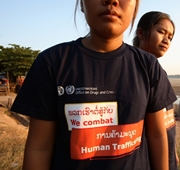
La (not her real name) is 14 years old from Ban Pakpet, Sayaboury province. She was deceived by her 18 year old friend from the same village to go to Thailand to work as a labourer in a corn field. Her friend told her that she would receive Thai Baht 3,000 per month. In fact she received only Baht 1,200 after working very hard for many long days.She escaped from her workplace and tried to make her way back home. However as she was about to reach Chong Pong, Chiangrai, the Thai Police, found that she had no official documents and fined her, taking all the cash she had. With no money left for transport, she had to walk many kilometers to the Mekong River and the Lao border. On the Lao side, the army border guards found her and called the Police in Paktha district to deal with the case.
The police officer who received the call was participating in the Workshop on Human Trafficking for Legal and Law Enforcement Officials, as well as Victim Service Providers that was organized by UNODC from the 19-21 September 2012. The police officers left the workshop at 17:30 pm on the 21 st September 2012 to interview La. Instead of arresting her for illegal border crossing the police officers used interview techniques learnt from the training to comfort her and treated her as a victim and not a criminal. They found a safe place for her to stay while waiting for her relatives to pick her up.
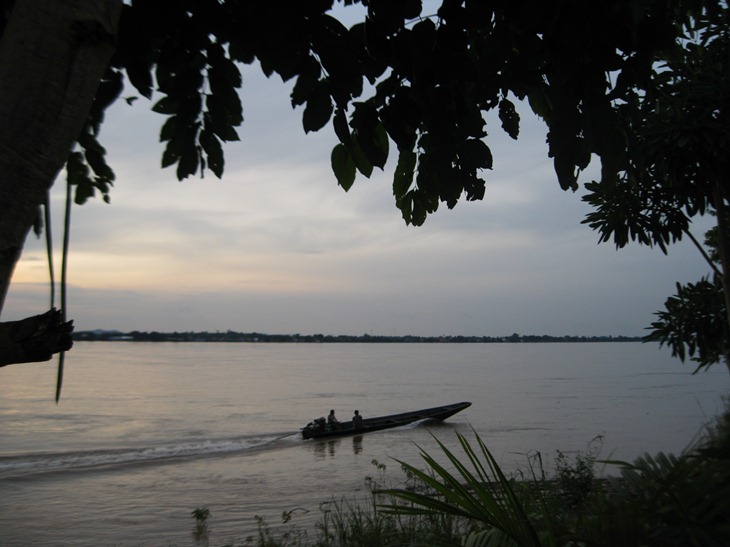 In another case, Noi, (not her real name) a 16 year old girl from Meun District was persuaded by Ms. Seuy an older woman to work in Thailand. Ms. Suey told her parents that Noi would get good money. However when she arrived in Thailand, Noi was beaten, locked up and forced to work as a sex worker servicing 20 men a day. Noi was rescued in August 2012 and returned home where plans are being made to help rehabilitate her.
Capacity building of legal and law enforcement institutions at grass root levels is a key integral part of the fight against human trafficking
The problem of human trafficking continues to be an issue of serious concern among legal and law enforcement officers in Laos. Training and building capacity amongst criminal justice practitioners and law enforcement officers is an important factor to addressing this problem.
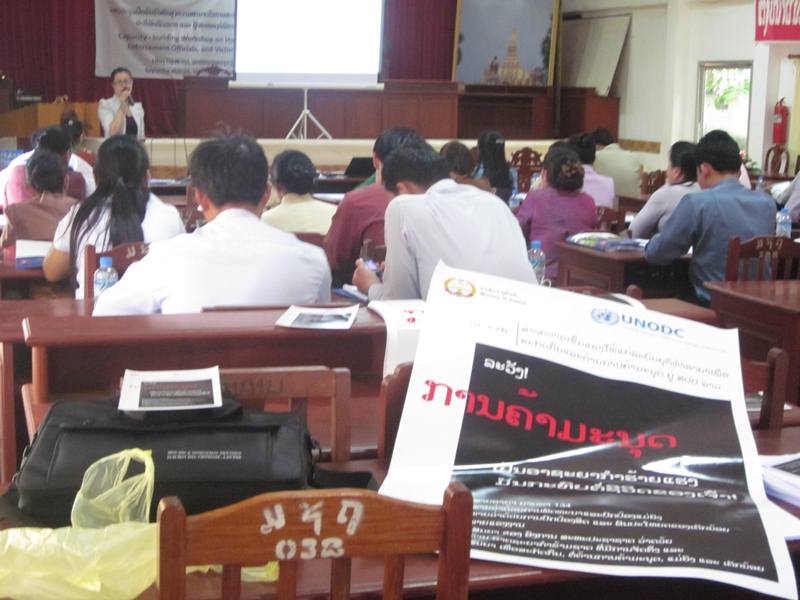 To deal with this problem a Core Training Group (CTG), consisting of a cross-cutting group of officials from the Lao legal sector, was established under a previous UNODC R76 Project. This trainer group forms an integral part of the new X26 Project "Strengthening Criminal Justice Responses to Human Trafficking in Lao PDR". The CTG provided awareness-raising and training workshops at provincial level to sensitise their counterparts in the legal and law enforcement institutions on the issue of human trafficking and how to respond with the cases they are facing in their work. The projects are funded by the Government of the United States of America.
The CTG has completed training workshops at the provincial level for all 17 provinces throughout country. The representatives from the Courts, Prosecutor's office, Police, Lao Women's Union, Youth Union, the National Assembly, Social Welfare and Banking sectors have participated in the training.
The Project X26 is continuing to support the CTG to provide training workshops at the district level. Five capacity-building workshops for legal and law enforcement officials, as well as victim service providers at district level have been held.
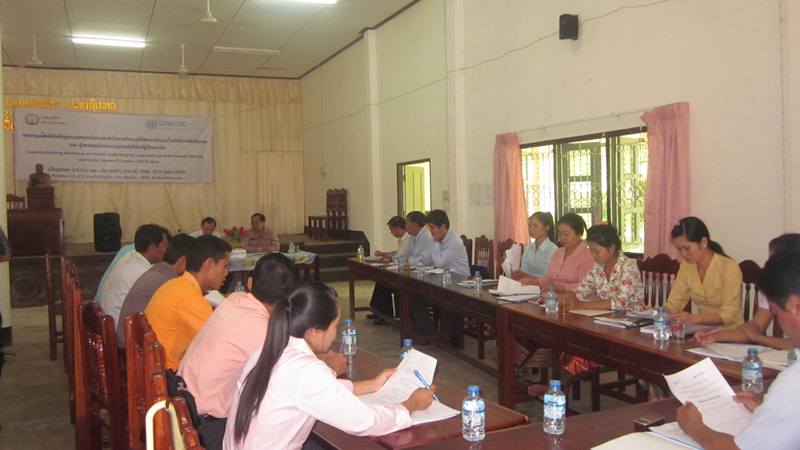 Workshops have taken place in Vientiane Capital for law enforcement officers from 7 districts on 14-16 August 2012; in Vientiane Province, Meuan district on 5-7 September and Sanakham district on 10-12 September 2012; in Bokeo Province, Paktha district on 19-21 September and Houysai district on 24-26 September 2012. A total of 138 participants (24 women and 114 men) participated in the training workshops.
The Project is planning another three missions to the south in Thatphabath and Khamkerd district of Bolikhamsay Province this year and in Sebangphai and Hinboon districts of Khammouan Province and in Songkhone and Khanthaboury districts of Savanakhet Province early 2013.


