Showing posts with label Somaly Mam. Show all posts
Showing posts with label Somaly Mam. Show all posts
Tuesday, October 7, 2014
Cambodia Won’t Let Somaly Mam Start New NGO
Somaly Mam may want to forget all about Newsweek’s cover story on her in May and start over in her anti-sex-trafficking activism, but Cambodia won’t let her, according to The Cambodia Daily.
Cambodia Won’t Let Somaly Mam Start New NGO:


Saturday, June 21, 2014
Scandal Detracts from True Trafficking Problem, Rights Workers Say
Source: VOA
PHNOM PENH — Cambodia remains a country mired in the problem of sex trafficking, where inequality and poor educations leave entire communities susceptible to the crime.
Cambodian sex trafficking was thrust into the limelight earlier this month, when a Newsweek expose uncovered a series of lies and exaggerations made by Somaly Mam, a Cambodian woman whose anti-trafficking efforts made her an international celebrity.
Continue:
http://www.voacambodia.com/content/scandal-detracts-from-true-cambodia-trafficking-problem-rights-workers-say/1938881.html
Monday, June 9, 2014
Sex Trafficking, Lies & Money: Lessons From the Somaly Mam Scandal | The Nation
Source: The Nation:
First Greg Mortenson, the world-famous author of Three Cups of Tea, raised millions of dollars for schools in Afghanistan and Pakistan that turned out not to exist. Now Somaly Mam, the world-famous Cambodian campaigner against sex trafficking, one of Time’s 100 Most Influential People in the World, has stepped down from her eponymous foundation in the wake of charges that she fabricated her harrowing autobiography of having been sold into sex slavery as a child.
Continue:
http://www.thenation.com/article/180132/sex-trafficking-lies-money-lessons-somaly-mam-scandal#

Thursday, May 29, 2014
Somaly Mam resigns from foundation after probe into her personal history
Source: Thomson Reuters Foundation
Lisa Anderson
NEW YORK (Thomson Reuters Foundation) — Somaly Mam, one of the world’s best-known activists against sex trafficking, resigned Wednesday from the foundation she created after an investigation uncovered discrepancies in the shocking personal history she used to raise millions of dollars in funding around the world.
Continue here:
http://www.trust.org/item/20140528212842-43u8o/

Thursday, November 21, 2013


Thursday, May 24, 2012
Controversial Cambodian Activist Fights Southeast Asian Sex Trade | The Jakarta Globe
Controversial Cambodian Activist Fights Southeast Asian Sex Trade | The Jakarta Globe
![]() Somaly Mam attends the Somaly Mam Foundation's Voice of Change Anti-Human Trafficking event at The Box on April 6, 2010, in New York City. (AFP Photo/Andrew H. Walker/Getty Images)
May 23, 2012
Related articles
3 Convicted in Somali Sex Trafficking Case in US11:32am May 5, 2012
Ugandan Women Tricked Into Malaysian Sex Work8:16am Feb 21, 2012
Angkot Drivers Sell 3 Teen Girls into Prostitution11:10am Feb 21, 2012
Deaf Girl: I Was Kept in UK Cellar as Sex Slave10:23am Feb 14, 2012
Police Nab Women Who Lured Girls to Sex Trade2:59pm Jan 28, 2012
Sold into a brothel as a child, Cambodian activist Somaly Mam has become one of the most recognizable, glamorous and controversial faces of the global anti-sex slavery movement.
The quirky, energetic campaigner boasts a string of celebrity supporters and has been named a CNN hero of the year, but she is as divisive among anti-trafficking activists as she is beloved by the international press.
Most recently, Mam kicked up a storm of controversy when she allowed her “old friend,” New York Times correspondent Nicholas Kristof, to “live-tweet” a brothel raid in the northern Cambodian town of Anlong Veng in November.
“Girls are rescued, but still very scared. Youngest looks about 13, trafficked from Vietnam,” Kristof wrote to his more than one million followers on the Twitter microblogging website, in remarks that trafficking experts say raised questions of safety and consent.
For Mam, who created the anti-trafficking organisation AFESIP and now runs an eponymous foundation, the benefit of the attention Kristof brings to trafficking issues outweighs the security concerns.
“Even if you’re not tweeting it is also dangerous ... but if [Kristof] tweets it, it’s better because more people get awareness and understanding,” Mam told Agence France-Presse in an interview during a visit to Vietnam.
Tania DoCarmo of Chab Dai, an anti-trafficking group working in Cambodia, said the raid coverage was an “unethical” PR stunt which broke Cambodian anti-trafficking laws and which “sensationalizes” a very complex issue.
“Doing ‘impromptu’ coverage of children in highly traumatizing situations would not be considered ethical or acceptable in the West ... it is inappropriate and even voyeuristic to do this in developing nations such as Cambodia.”
“This is especially true with children and youth who are unable to provide legal consent anyway,” she said.
AFESIP says it has been involved in rescuing about 7,000 women and girls in Cambodia, Thailand, Laos and Vietnam since 1997.
In Cambodia alone, there are more than 34,000 commercial sex workers, according to a 2009 government estimate.
The line between “victim” and “trafficker” is often not always clear. Women who were tricked into working in a brothel may go on to recruit others in the same way.
Mam, who is in her early-40s but does not know her exact year of birth, was sold into a brothel in her early teens by a man who she says was either her grandfather or an uncle and then repeatedly raped and abused until, after watching a friend be killed in front of her, she managed to escape.
“I was completely broken,” she said, adding that this experience of being a victim is something she cannot forget and is what drives her anti-trafficking campaigning.
Within the anti-trafficking field, Mam takes a controversially hard-line stance: all sex workers are victims, whether of trafficking or circumstance, as no woman would really choose to work in a brothel.
“Sometimes a woman — she tells me she is choosing to be a prostitute (but if you ask) how about your daughter? You want her to be? She’ll say: No, no, no’,” said Mam. “[they] have no choice”.
This position, which underpins Mam’s reliance on brothel raids as a tool to fight trafficking, enrages other activists, such as the Asia Pacific Sex Worker Network, which argues consenting adult sex workers need “rights not rescues.”
Sweeping raid-and-rescue operations and police round-ups of street-based sex workers are not only ineffective, experts say, but lead to “systematic violations of sex workers’ human rights,” New York-based Human Rights Watch said in 2010 report.
Mam’s organization, AFESIP, has also been criticized for accepting sex workers picked up during Cambodian police roundups which HRW has said constitute “arbitrary arrests and detentions of innocent people.”
Mam dismissed HRW’s assessment.
“When a girl has been killed in the brothel does HRW go into the brothel? So who are you exactly? When I am in the brothel, one of my friend she has been killed. Did HRW go there? No,” she said.
Consenting, adult sex workers detained during the police raids — who say they were neither victims of trafficking nor wanting AFESIP’s services — have also reported being held against their will at AFESIP shelters.
“The first time [a sex worker] come to the shelter she don’t want to stay ... because she don’t know us,” Mam said, adding that women are so “broken” by sex work they want to stay in the familiar surroundings of the brothel.
“I always say: please, can you just stay one or two days, treat it like a holiday,” she said, adding that if women chose to stay in the brothels she respected that decision.
“I’m not going to force them, I have been forced my own life. It’s up to them,” she said, adding that this applied within the shelters, with no girl being forced to speak to the press or share her experiences with anyone.
Mam says she tries to listen to and learn from criticism of her tactics and approach, adding that she has “made a lot of mistakes in my life,” and has never claimed to have all the answers to how to end sex slavery.
“What I know how to do is just helping the women,” she said.
Agence France-Presse
Saturday, November 5, 2011
The Road to Traffik - YouTube
 Image by Fortune Live Media via FlickrThe Road to Traffik - YouTube
Uploaded by somalymamfoundation on Sep 17, 2010
Narrated by actress and humanitarian Lucy Liu, "The Road to Traffik" reveals the shocking world of sex trafficking that Somaly Mam, a former Cambodia sex slave, is heroically waging a crusade to expose and end. The filmmakers accompany photographer Norman Jean Roy on his painful journey to document the brutal rape and suffering that thousands of children face daily in the brothels of Cambodia and Southeast Asia.
To learn more about human trafficking, SMF, and how you can get involved, click here: http://bit.ly/somalymamfoundation

Thursday, November 11, 2010

Monday, May 3, 2010
Human Trafficking, There and Here - Nicholas D. Kristof Blog - NYTimes.com
 Image by Getty Images via Daylife
By NICHOLAS KRISTOF
On Friday I was on a panel at Bay Path College along with Somaly Mam, my friend and hero. Somaly is a Cambodian who was trafficked into a brothel as a little girl but managed to escape — and then started an anti-trafficking organization to fight the brothels and help other girls escape. She has been extraordinarily courageous in keeping up the fight when the brothel-owners just want to kill her, and she seems so unbelievably poised when she speaks in English — her fourth language — before large audiences under a spotlight. But on Friday, I saw a reminder of how that past haunts her and anyone who went through such a trauma.
To get to the stage, we took a freight elevator, and it was vaguely like a dark cage. That terrified Somaly, because it reminded her of the cages in which she had been punished and tortured when she was in the brothel. Many of the Cambodian brothels have underground rooms in which they beat and terrorize girls who are considered insufficiently cooperative. Just entering that elevator was enough to bring back those hideous memories of torture for Somaly, and it left her shaken and rattled.
To me, that was a sobering reminder of just how traumatic those experiences are and how long-lasting the mental impact. Westerners who see the brothels in Cambodia or Malaysia or India or Pakistan see girls smiling and gesturing, and rarely appreciate the brutality that makes those operations work. To learn more about Somaly’s heroic work, check out her website.
But we shouldn’t make the mistake of thinking that terrible abuses happen only on the other side of the world. Americans sometimes are willing to accept that girls are enslaved in Delhi, but can’t imagine that it happens in New York. In truth, the abuses tend to be worse in Asia, but they certainly happen in America as well. My take is that the worst exploitation and mistreatment is often directed not at foreign women trafficked into the U.S. but rather at American teenage girls who flee abusive homes, end up at the bus station — and then the only person there to “help” is a pimp.
The Houston Chronicle has an article looking at a 13-year-old girl who was arrested for the crime of prostitution, while her pimp apparently wasn’t even investigated. The article, by Dottie Lester, writes:
Pending before the Texas Supreme Court is In the Matter of B.W., a case in which a 13-year-old child was found to have engaged in delinquent conduct for agreeing to have sex for money. She was found to be in need of rehabilitation and placed on probation for 18 months in the custody of juvenile probation officials.
At the time B.W. was arrested by a Houston police officer, she was living with a “boyfriend” more than twice her age. According to briefs filed with the state Supreme Court, he was never investigated. The Trafficking Victims Protection Act states that any minor involved in commercial sex is a victim of trafficking and anyone prostituting a minor under 14 years of age can face a federal life sentence. To date, only B.W. has faced prosecution in this case. How is this possible?
Alas, that happens far too often. There is a bizarre misperception that pimps are business partners of prostitutes, even though the pimps beat the girls, sometimes brand them with tattoos, and take every penny they earn. Yes, they sometimes manipulate the girls emotionally and pretend to be their boyfriends, but in no way is it a partnership. And the way to end this kind of exploitation is to arrest the pimps and throw them in prison, not to go after the girls as criminals. There’s also some evidence that going after johns will help.
So there we have it. Two reminders of human trafficking both far away and at home, and of the toll of modern slavery in the 21st century.
Human Trafficking, There and Here - Nicholas D. Kristof Blog - NYTimes.com

Tuesday, March 9, 2010
Human Trafficking Survivor Somaly Mam Leads the Call for Action at the Summit to End Violence Against Women
Washington, DC – Human trafficking survivor and advocate Somaly Mam joins activist Eve Ensler, actress Reese Witherspoon, Dr. Denis Mukwege, Ambassador-at-Large Luis CdeBaca, journalist Judy Woodruff, and experts in the field for a global summit on violence against women.
“It is time for governments to invest significant resources in a coordinated global effort to end all forms of violence against women..." -Somaly Mam
Washington, DC (PRWEB) March 8, 2010 -- Human trafficking survivor and advocate Somaly Mam joins activist Eve Ensler, actress Reese Witherspoon, Dr. Denis Mukwege, Ambassador-at-Large Luis CdeBaca, journalist Judy Woodruff, and experts in the field for a global summit on violence against women.
The Global Partnership to End Violence Against Women Summit, which is being held during the week of March 8th in Washington, DC, is the result of a partnership between Vital Voices Global Partnership, Avon Foundation for Women, and the US State Department. It is the first step of a coordinated effort to end violence against women through innovative solutions, the sharing of best practices, and co-ordination of strategies. The three-day summit will focus on the three most pervasive crimes against women: human trafficking, domestic violence, and sexual assault, which includes rape as a weapon of war.
This event brings together the public and private sectors from fifteen countries for a series of panel discussions and working groups facilitated by leading journalists and activists. Sectors include business, government, law enforcement, the NGO community, media, and academia.
“It is time for governments to invest significant resources in a coordinated global effort to end all forms of violence against women. This summit is the right step forward and I am encouraged to see people like Dr. Mukwege, Eve Ensler and Ambassador CdeBaca joining forces as part of this public-private partnership. Together, we can create a world where women and their children no longer need to live in fear,” said Somaly Mam.
Bill Livermore, executive director of the Somaly Mam Foundation, said “We are thrilled that Somaly Mam is taking part in this important effort to end violence against women. As a survivor herself, she knows all too well the key role that survivors must play in creating effective, innovative solutions to the global tragedies of human trafficking, rape and domestic violence. The solution will take collaboration from all sides: government, nonprofits, private organizations, and individuals. We’ve seen the progress that can be made through our own partnerships with the Cambodian government, the UN and companies like The Body Shop and LexisNexis. This summit is an excellent example of that type of collaboration, and an important step toward ending the suffering of the millions of women and children who are victims of violence and the crime of modern day slavery.”
About Somaly Mam
Somaly Mam, a survivor of human trafficking, went on to found the largest shelters in Southeast Asia and has rescued over 5,000 girls in the past ten years. Somaly has garnered worldwide respect for her work and is now a renowned leader, advocate and protector of human trafficking victims. Universally recognized as a visionary for her courage, dignity, ingenuity, and resilience, Somaly was honored as one of Time Magazine's 100 Most Influential People of 2009 and was featured as a CNN Hero. She is also the recipient of the Prince of Asturias Award for International Cooperation, The World's Children's Prize for the Rights of the Child (WCPRC), Glamour Magazine's 2006 Woman of the Year Award, and has won accolades from the U.S. Department of Homeland Security.
About The Somaly Mam Foundation
The Somaly Mam Foundation is a nonprofit public charity committed to ending modern day slavery around the world.
Human trafficking, a multi-billion dollar industry, is the fastest growing criminal enterprise in the world. With over one million women and children sold into sexual slavery each year, it is a global crisis that must be stopped. More resources are critically needed to support the rescue and rehabilitation of these young victims.
Founded by sexual slavery survivor, Somaly Mam, the foundation supports rescue, shelter and rehabilitation programs across South East Asia, where the trafficking of women and girls, some as young as five, is a widespread practice. The Somaly Mam Foundation also runs global awareness and advocacy campaigns that shed light on the crime of sexual slavery and focus on getting the public and governments involved in the fight to abolish modern day slavery.
More about Somaly Mam at:
http://somaly.org/whoweare/somaly
More about the Somaly Mam Foundation at:
http://somaly.org
Press Contact:
Chris Wright
cwright (at) somaly (dot) org
202.253.2900
###
Human Trafficking Survivor Somaly Mam Leads the Call for Action at the Summit to End Violence Against Women
Friday, February 12, 2010
February 12, 2010 ~ Rescuing Child Sex Workers | Religion & Ethics NewsWeekly
February 12th, 2010
Rescuing Child Sex Workers
[TRAFFICKING MONITOR: Click on URL at the end of the article to listen to the interview; transcipt of the interview follows.]
LUCKY SEVERSON, correspondent: This is a big day for the girls here at this secluded place a few hours drive south of Phnom Penh, Cambodia. Their mom is coming for a visit. Not their real mother, although she might as well be. Her name is Somaly Mam.
(speaking to Somaly Mam): Where are their mothers?
SOMALY MAM: They don’t have their mothers here. A lot of them, they have been exploited, raped.
SEVERSON: Not the little girl wasn’t raped?
SOMALY MAM: Yes, of course.
SEVERSON: This little girl?
Somaly Mam was very young when she was sold to a brothel, doesn’t know how old she is now or who her parents are. She doesn’t even know her real name. She says her life didn’t begin until she ran away after she was forced to watch a pimp shoot another young girl in the head.
post01-somalymam
Somaly Mam
SOMALY MAM: One year I cannot close my eyes. Because of everything that has happened to me. I cannot close my eyes.
SEVERSON: After escaping the brothel, Somaly married and moved to Paris but was haunted by the knowledge that thousands of other young girls were still experiencing the horror she was trying to forget. So she went home again and created a recovery shelter like this, where girls can escape sexual slavery. Somaly now operates sanctuaries in Cambodia, Thailand, Laos, and Vietnam that care for over 500 girls. There are 72 girls and four children in this center on the outskirts of Phnom Penh. Most of the girls here are over 18, but many of them were sold or forced into prostitution when they were only 12, and they have the emotional scars to prove it. This young girl, who was afraid to give her name, was forced into prostitution when she left her very poor family in the country and came to Phnom Penh to find a job at a restaurant.
CAMBODIAN GIRL THROUGH TRANSLATOR: One day I had been raped by a policeman. I did not know any people in Phnom Penh, and the guy said to me if I dare to make complaint or tell anybody I will be killed.
SEVERSON: The policeman then sold her to a brothel where she says she was beaten if she didn’t have sex with five men a day. She was sold again before finally being rescued by a man who took pity on her. Then she found her way here, where she can attend school and learn skills like hair and makeup, sewing—anything that will keep her off the streets.
CAMBODIAN GIRL THROUGH TRANSLATOR: I hope that when I get skill from the center, and I get my own income, other people will not look down on me.
SEVERSON: Many girls were as young and innocent as these kids on the Phnom Penh streets when they were coerced into sex. Even though they are victims, like the little girls shown in undercover footage, they are also the condemned. It’s hard for many to go home, because in Cambodian society guilt is often attached to the girl, not the man.
post02-somalymamSOMALY MAM: I get very upset with the culture. The culture is very bad. They never ask the question about the man, about the client. Because they are poor, because they have bad luck, it’s always their fault.
SEVERSON: She says the police are getting better at investigating sexual slavery but says too many are still corrupt. She’s especially angry and frustrated with the justice system Cambodia that often seems to favor the predators.
SOMALY MAM: One little girl died here a few months ago. She had been raped, 7 years old, and then we go to the court. The court tell it’s her fault because she wear very short skirts.
SEVERSON: The little girl committed suicide, which tragically is not that uncommon, according to psychologist Kim Ratsmey. He counsels Somaly’s girls and says many suffer depression, and too many commit suicide.
KIM RATSMEY (Cambodian Psychologist): Maybe 30 percent commit suicide.
SEVERSON: Thirty percent?
RATSMEY: Yes, 30 percent.
SEVERSON: Like Natalie, most of Somaly Mam’s girls grew up in a culture where the vast majority of citizens embrace Buddhism, which teaches that suffering is a necessary part of life and a result of karma, or a person’s behavior in a past life. Natalie was raped and severely beaten when she was nine. She’s been with Somaly for six years and wants to be a translator when she grows up. She has not forgotten, but she has been taught to forgive the man who abused her.
SOMALY MAM: Why I have to teach my girls to hate men or to hate the people? Forgive them. It’s not for them, but for yourself.
SEVERSON: Somaly says she does not hate men, but she discovered when she got married that she could never love a man again.
SOMALY MAM: I talked to him. I never get in love with you. I cannot love you, and he tell me don’t worry. We will try. I will help you.
post03-somalymamSEVERSON: Their marriage ended in divorce, although they are still friends. Her passion is reserved for her girls, and she works closely with undercover police to help them escape from brothels. She has been threatened many times, but none worse than when her 14-year-old daughter was kidnapped. The police recovered her daughter several days later.
SOMALY MAM: The day that I found her I had to leave her. She had been drugged, she had been raped, and I had to leave her.
SEVERSON: It was a decision that still pains her, but she says she had to travel abroad to raise money for her shelters.
SOMALY MAM: In the shelter we have no rice, not money, nothing to feed the children. If I’m going they give money. I have almost 500 girls, and I have one daughter. One daughter between 500 girls, which one you choose?
SEVERSON: Her passion has not always endeared her to human rights groups and Cambodian authorities. Patrick Stayton is the Cambodian field director for the International Justice Mission, a faith-based organization that works to improve justice systems in Third World countries. He knows Somaly.
PATRICK STAYTON (International Justice Mission): She has ruffled her share of feathers, but you can’t help but to respect and appreciate her tenacity and the cause.
SEVERSON: She upset human rights groups when she refused to allow mothers who had sold their daughters into sexual slavery to visit them at her centers.
SOMALY MAM: They sold their children, and I don’t want them to sold their children. I have to protect these kids. I don’t care about the rumors. I’m not here for all of them to love me. I’m here just for saving them.
SEVERSON: Somaly Mam has gained international attention and attracted celebrities and friends in high places, but has become increasingly frustrated with authorities who don’t enforce laws that are on the books, and with those who offer to help but don’t follow through.
SOMALY MAM: The organized crime, they are very, very organized. The people who fight against organized crime, they are very bad—bad because they just keep talking.
STAYTON: I think it may be tougher for her sometimes at home here, because you know the person that stands up in the crowd and talks about injustices that they see and demanding something to be done about it—that’s not the popular person to be often in this kind of culture.
post04-somalymamSEVERSON (speaking to Cambodian girl named Lytaiye): Where are your mom and dad?
LYTAIYE: I no have mom and dad.
SEVERSON: No mom and dad?
LYTAIYE: No..
SEVERSON: Fourteen-year-old Lytaiye wants Somaly to keep fighting, keep ruffling feathers. Her grandmother sold her to a stranger before she was 12. The man raped and beat her before she escaped.
LYTAIYE: It’s a very bad story, but we have to be strong, and we have to try to study, and we have a good life.
SEVERSON: So you have a happy ending?
LYTAIYE: Before I’m not happy, but now I’m very happy.
SEVERSON: These men are setting up for a wedding tomorrow. What makes Somaly Mam the happiest is when one of her girls gets married to someone she wants to marry.
SOMALY MAM: All the girls who get married, I go to see her husband: You have to be careful with my girl. If not…
You know, if you have to say thank you it’s not to me. It’s to them. They give to me everything.
SEVERSON: It’s estimated that there are as many as 50,000 sex slaves and prostitutes in Cambodia and that one in 40 girls born in this country will be sold into sexual slavery.
Fore Religion & Ethics NewsWeekly, I’m Lucky Severson in Phnom Penh.
February 12, 2010 ~ Rescuing Child Sex Workers | Religion & Ethics NewsWeekly
Tuesday, February 2, 2010
Nomi Network: The Agony of Cambodian Female Victims of Sex Trafficking and Exploitation
 Image by Getty Images via Daylife
Friday, January 29, 2010
The Agony of Cambodian Female Victims of Sex Trafficking and Exploitation
By Sopheap Chak
I first became aware of prostitution in Cambodia when I was 10. On the way home from the Phnom Penh Airport, we drove down Tol Kork Street. I was puzzled to see so many ladies wearing short skirts and heavy make-up. They were standing in front of their small cottages and waving at us. It was explained to me that they were prostitutes. Yet, I became even more puzzled. Why did they choose to become prostitutes? Will I end up like them? Are there other choices?
The word for prostitute in the Cambodian language is, “Srey Khauch,” or, “Srey Phaka Meas.” The phrase indicates a bad lady who chooses to earn income by having sex with men. It does not acknowledgement the vulnerability of women to sex trafficking. Yet, the reality is that given a choice, they would not become prostitutes. Events, circumstances, and conditions force women into prostitution, and I prefer to call them victims instead of prostitutes.
Factors that Make Women Vulnerable to Sex Trafficking and Exploitation
In the search for economic opportunities, many migrants become victims of trafficking for sexual exploitation, labor exploitation, begging, or forced marriage. In Cambodia, many people migrate from the poorer rural areas into the cities for work. The International Organization for Migration conducted a survey of returned trafficking victims and found that 62% reported that the main reason for migration was to find jobs to help support their family. They are often exploited by co-workers, relatives, friends, or in some cases by their boyfriends, who sell them to brothel owners or other men. A survey of Cambodian sex trafficking victims in Thailand reported that 25% of victims were trafficked by a stranger, while two-thirds of the victims were trafficked by someone that they knew.
According to, “Traffick report: Cambodia,” from World Vision, other factors that contribute to trafficking are gender discrimination, physical and sexual violence, family dysfunction, impact of HIV/AIDS, and indebtedness. The following are examples taken from the World Vision report. Their real names have been changed.
Nary: She came from a small village. Five armed men raped her when she was 13 years old. The shame and guilt from this attack stigmatized her, and she drifted from family to family until one family sold her to a Phnom Penh brothel. Nary was trapped there for over two years as a sex worker. She tried to escape but was caught, beaten and forced to work again. Finally, the police raided the brothel, found Nary, and placed her at World Vision’s Trauma Recovery Centre. She is receiving trauma counseling plus healthcare advice. Nary is HIV positive.
Srey: She borrowed money from a broker to come to Phnom Penh and work as a domestic servant. One day, after she came home later than she should have, the family who had employed her threw her out. She was too afraid to tell her mother that she had lost her job, but she still owed the broker a substantial amount of money. The broker placed her into a brothel to pay off the debt to him. She was never able to do so. Srey contracted HIV and AIDS at the brothel, where she was forced to have sex with clients without protection.
Sopheap: Now 16, she quit school when she was in the third grade because her family needed her to work. She would scavenge for garbage to sell on the nearby Thai border. As an illegal immigrant, she was imprisoned in Thai custody many times. When a young woman flattered her beauty and told her how much she could earn working in a karaoke bar, she decided to go, without informing her parents. She did not expect that her employer would force her to have sex, or that they would not allow her to leave. She was rescued by her father. He filed a complaint against her trafficker, but the young woman who tricked her had already fled.
Pross: Pross was kidnapped when she was 13 and sold to a brothel in Phnom Penh. She was beaten and tortured until she agreed to have sex with customers. You can read more detail in the New York Times story by Nicholas D. Kristof, “If this isn’t Slavery, What is?”
The Suffering of Victims of Sex Trafficking
Girls who are forced to work as sex slaves are controlled by beatings and torture. They are electrocuted or have parts of their body cut off. In Pross’ case the brothel owner gouged out her right eye with a piece of metal. Torture, fear and degradation are employed to make the girls compliant, to get them to accept their fate, and not try to escape.
Somaly Mam is a former sex slave who escaped from a brothel and who has transformed her suffering into courage to fight the evil of sex-trafficking. She founded the Somaly Mam Foundation and became the leader of AFESIP (Agir Pour les Femmes en Situation Precaire). Her story reveals much about the terror and fear of being a sex slave. When she was 15, a man posing as her grandfather sold Somaly Mam to a brothel in Phnom Penh. In an interview with Time Magazine, she described that time as a decade of horrific rape and torture. She simply said "I was dead. I had no affection for anyone."
While a smaller percentage of rescued victims can rebuild their strength on their own and assimilate back into society, the majority of girls are very traumatized by their experience. They also find it difficult to return home due to social stigma and shame. Sadly, some accept their fate in life as sex workers, with some resigned to waiting for death from HIV/AIDs.
Does the Current Economic Crisis make Females More Vulnerable?
With the current economic crisis, many female workers in the Cambodian garment sector have lost their jobs. As a result, many have sought work in the entertainment business where there is a great risk of becoming entrapped in sexual exploitation and trafficking.
Singapore Reuters reported that recently, HE Mrs. Chou Bun Eng, Secretary of State for Ministry of Interior of Cambodia, in a meeting in Singapore warned that "More women and more girls will be entering the entertainment business and will face issues of sexual exploitation," A survey by The United Nations Inter-Agency Project on Human Trafficking (UNIAP)estimated between 15 and 20 percent of former garment workers who have lost their jobs during the global economic crisis have joined the capital’s entertainment sector. According to statistics from the Ministry of Labor, more than 30,000 garment workers lost their jobs in the first three quarters of 2009, meaning that, at least 4,500 women have entered the entertainment sector this year alone. In November 2009, Mom Kunthear, a journalist with the Phnom Penh Post reported that an additional 30,000 garment worker jobs have been suspended.
Hope and Motivation from Anti-sex Trafficking Activists
The only hope for the reduction of sex trafficking comes from the anti-sex trafficking activists and the government. Under the leadership of Somaly Mam, AFESIP employs a holistic approach that ensures victims not only escape their plight but provide therapy and education so that they have the emotional and economic strength to face the future with hope.
She launched the Somaly Mam Foundation in 2007. It is a funding vehicle to support anti-trafficking organizations and provides victims and survivors with a platform from which their voices can be heard around the world. She has earned much respect, recognition, and accolades because of her efforts, including being honored as one of Time Magazine's 100 Most Influential People of 2009, being featured as a CNN Hero, and being the recipient of the Prince of Asturias Award for International Cooperation, The World's Children's Prize for the Rights of the Child (WCPRC), Glamour Magazine's 2006 Woman of the Year Award, and accolades from the US Department of Homeland Security.
However, her efforts have resulted in death threats to herself and her family. Even worst, in 2006, her 14-year-old daughter was kidnapped by brothel owners, who drugged and raped her. This has not stopped Somaly Mam, but motivated her even more. Once, when asked why she continued to fight in the face of such fierce and frightening opposition, she resolutely responded, "I don't want to go without leaving a trace."
She established a model for addressing the sex-trafficking issue and has already helped more than 4,000 women escape the brothels. In turn, some of them have also become activists fighting against sex trafficking.
Sex trafficking in Cambodia is against the law. The government of Cambodia must enforce the law and arrest sex-traffickers. They have raided many brothels and prosecuted many sex-trafficking cases. The government should also monitor sex trafficking and make an effort to minimize the conditions which make women vulnerable. In response to the economic crisis, the Ministry of Labor and Vocational Training has plans to create regional job centers aimed to provide vocational training for unemployed workers. It was reported that one job center has already opened in Phnom Penh, and six more are expected to be opened by the end of 2010. This effort by the government is an excellent effort by the government to help people that are vulnerable to sex-trafficking. Never the less, the government needs to drastically increase its law enforcement efforts.
(Sopheap Chak is a graduate student of peace studies at the International University of Japan. She runs a blog, www.sopheapfocus.com, in which she shares her impressions of both Japan and her homeland, Cambodia. Meanwhile, she is also running the Cambodian Youth Network for Change mobilizing young activists around the country. Sopheap is currently the contributing author for Global Voice Online and UPI Asia Online. She was previously advocacy officer of the Cambodian Center for Human Rights.)
Posted by kabloona at 4:49 PM
Labels: Cambodia sex-trafficking Somaly Mam Phnom Penn
Nomi Network: The Agony of Cambodian Female Victims of Sex Trafficking and Exploitation

Monday, February 1, 2010
Human Trafficking Survivors Train Cambodian Police and Government Officials
Image by Getty Images via Daylife
The power of these public-private partnerships can be seen in the eyes of the young women who escape the human sex slave industry and become advocates for change.
(PRWEB) February 1, 2010 -- Cambodian human trafficking survivors will work with the United Nations Inter-Agency Project on Human Trafficking (UNIAP) and the Coordinated Mekong Ministerial Initiative Against Trafficking (COMMIT) Task Force to eradicate human trafficking.
The survivors, part of the Somaly Mam Foundation’s Voices for Change (VFC) program, will train police and government officials on laws and issues related to sex trafficking and forced labor in Cambodia.
The training will focus on four Cambodian provinces -- Pailin, Battambang, Kampong Cham, and Takeo. The survivors will help participants better understand Cambodian anti-trafficking laws and the need for compliance with the Rule of Law. The training will also raise awareness of the underlying issues that lead to human trafficking and the specific needs of trafficking victims. The survivors will both lead the training sessions and help monitor and evaluate progress in the area after the training concludes.
A public service initiative will complement the training courses in each area. Two television and 24 radio talk shows are already committed to scheduling programs in 2010 that raise awareness of sexual exploitation and human rights issues in Cambodia. Voices for Change participants will help the stations create programs on topics such as trafficking for sexual and labor exploitation, child sex tourism, safe migration, new anti-trafficking laws, and victim assistance.
William Livermore, Executive Director of the Somaly Mam Foundation, says that programs like Voices for Change are perfect examples of Public-Private sector partnerships -- governments, corporations and NGO’s working together to address society's needs. “The Somaly Mam Foundation is proud to be able to partner with the United Nations, our corporate sponsor LexisNexis, and the Cambodian Government on such an important program,” Livermore said. “The power of these public-private partnerships can be seen in the eyes of the young women who escape the human sex slave industry and become advocates for change.”
About Human Trafficking:
Human trafficking, a multi-billion dollar industry, is the fastest growing criminal enterprise in the world. With over one million women and children sold into sexual slavery each year, it is a global crisis. South East Asia is particularly hard hit by the effects of this crime. Sexual tourism and a lack of enforcement result in the victimization of thousands of young women and children every year.
About the Somaly Mam Foundation:
The Somaly Mam Foundation (www.somaly.org) is a non-profit public charity committed to ending modern-day slavery around the world.
Founded by sexual slavery survivor, Somaly Mam, the foundation supports rescue, shelter and rehabilitation programs across Southeast Asia. The Somaly Mam Foundation also runs global awareness and advocacy campaigns that shed light on sexual slavery and involve the public and governments in the fight to abolish slavery.
About the Voices for Change Program:
The Somaly Mam Foundation provides interested and qualified survivors from its rehabilitation program the opportunity to help eradicate human trafficking.
Voices for Change (VFC) is designed to give survivors an opportunity to help themselves by helping others, and to provide a platform for their voices to be heard in the courts and by the public. The organization's vision is that a new generation of leaders in the fight against human trafficking will arise from those who have experienced the pain of slavery.
Program participants join legal training seminars and courageously share their stories with magistrates, judges, and other members of the legal community to help them better understand sex slavery. Survivors who have undergone rescue, recovery, education, and reintegration also provide critical services to fellow victims of human trafficking. VFC members speak with new victims brought to the centers, complete intake forms, teach classes, share life skills training, and provide love and support.
About the LexisNexis Rule of Law Initiative:
LexisNexis combats human trafficking by applying our resources, people, solutions, legal expertise and direct financial support to combat human trafficking wherever it exists.
LexisNexis sponsors the Somaly Mam Foundation and Agir Pour les Femmes en Situation Précaire (AFESIP), or Acting for Women in Distressing Situations. LexisNexis also sponsors special events around the world for government and legal professionals in order to raise awareness of the existence of human trafficking.
###
Human Trafficking Survivors Train Cambodian Police and Government Officials

Saturday, January 16, 2010
Cultivating awareness
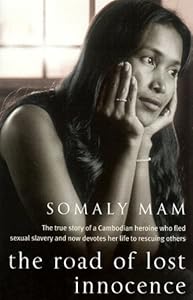 Cover of The Road of Lost Innocence
[Photo]Nate Chute/Daily Inter Lake
Flathead High School Junior Tierney Strandberg hugs fellow Flathead Abolitionist Movement club member Ashley Judd as the crowd moves into the auditorium for a viewing of the documentary “Call + Response.” About 200 people attended the showing.
Posted: Saturday, January 16, 2010 2:00 am
By KRISTI ALBERTSON/Daily Inter Lake
Tierney Strandberg had no idea that a sick day last fall would change her life.
She couldn’t go to school, so instead she picked up a book, “The Road of Lost Innocence.” Somaly Mam’s book tells the true story of a Cambodian woman who escaped sexual slavery and is working to rescue other women and girls still trapped in that lifestyle.
“I was overwhelmed by what was going on,” said Strandberg, a junior at Flathead High School.
But she wasn’t stymied by the situation’s magnitude and horror for long. As soon as she was healthy and back in school, Strandberg turned to her peers and teachers — if anyone could help her help others, it would be the people in Flathead’s International Baccalaureate program.
Those students and teachers spend class time discussing international issues, and community service is emphasized throughout the program. All full IB students — those seeking an IB diploma — must complete 165 hours of creativity, action and service (CAS) projects.
“I knew as an International Baccalaureate student, I would have access to people who would help,” Strandberg said. “People are interested [in international issues] and they have power in the school to do something about it.”
Genia Allen-Schmid coordinates Flathead’s CAS in Action groups, which are designed to help students brainstorm ways to fulfill their hours in a meaningful way. Strandberg arrived at the first meeting fired up about raising awareness about slavery and human trafficking, Allen-Schmid said.
Strandberg’s first thought was to hold a community fair at the school, but she was limited by time, money and resources, Allen-Schmid said. But a week later, Strandberg’s chance to get involved found her.
Sue Rolfing, a representative of the Flathead Abolitionist Movement, came to Flathead to ask if the group could show “Call + Response,” a documentary about the global slave trade, at the school.
“I just about jumped out of my seat,” Allen-Schmid said. “I said, ‘We have a student who wants to do this very thing.’”
Strandberg leapt at the opportunity to get involved with the abolitionist group. She started a corresponding student group, FAM at FHS, and has worked tirelessly to help the community group find ways to get high school students involved in the cause.
In addition to helping organize the documentary’s showing Jan. 10, which attracted more than 200 people, Strandberg is helping organize two other events.
The first is a section of the annual Martin Luther King Jr. Day celebration, which takes place at 7:30 p.m. Monday in the Flathead High auditorium. FAM at FHS will give speeches about human trafficking and perform music as part of the event.
The second is a panel discussion scheduled for 3 p.m. Feb. 14 at Glacier High School. Panel members will discuss slavery as it exists today, both in foreign countries and in the United States.
Strandberg is also selling merchandise to help the cause. She has bags made by Cambodian women and cards and jewelry made by Thai women who have escaped slavery.
Money from the sales will help women and girls get back on their feet, Strandberg said.
“You can buy someone out of slavery, but then you have a 12-year-old girl who can’t reintegrate into society,” she said. The money “will help them build a life, teach them a trade.
“It’s basically giving them a new life.”
Strandberg is in a unique position of being able to raise awareness about human trafficking nearly every weekend. She is a member of Flathead’s speech and debate team, and her original oratory speech is all about modern-day slavery.
“It’s really cool to give my speech all over the state every weekend,” Strandberg said. “I’m trying to cultivate awareness. It’s really hard to realize as a teenage girl that this is happening all over the world — and people don’t know. Really, people don’t know.”
The judges who hear her speech are often shocked, she said. Judges give feedback on speeches, and Strandberg’s comments have ranged from, “I can’t believe I didn’t know about this,” to “You need to be president.”
Strandberg said she is just glad for the opportunity to raise awareness about such an important topic.
“I’m not necessarily changing the world, but I am making a difference, if even a small one,” she said. “I really believe in the power of one.”
Reporter Kristi Albertson may be reached at 758-4438 or by e-mail at kalbertson@dailyinterlake.com
Cultivating awareness

Subscribe to:
Posts (Atom)
