Showing posts with label Sierra Leone. Show all posts

Monday, December 16, 2013

Pope Francis speaks out on human trafficking | CatholicHerald.co.uk

Pope Francis speaks out on human trafficking | CatholicHerald.co.uk:


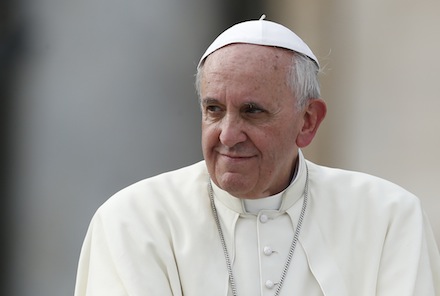
Pope Francis (CNS)

The trafficking of human beings is a crime against humanity and must be stopped, Pope Francis has told a group of diplomats.

“It’s a disgrace” that people are treated “as objects, deceived, raped, often sold many times for different purposes and, in the end, killed or, in any case, physically and mentally damaged, ending up thrown away and abandoned,” he said.
Continue:
Enhanced by Zemanta

Monday, June 10, 2013

IPS – Sierra Leone’s Child Trafficking to Blame for Street Kids | Inter Press Service


FREETOWN , Jun 7 2013 (IPS) - On a street corner in downtown Freetown, Sierra Leone’s capital city, 12-year-old Kaita sits with a friend on a peeling steel railing watching the headlights of motorbikes cruising through the otherwise silent streets. It is after midnight, and motionless human forms lie curled up in doorways or stretched out on pavements nearby. For Kaita, these streets are home, and have been for almost six years.

To continue, go to:
Enhanced by Zemanta

Sunday, October 3, 2010

We've got to stamp out modern slavery | Felicity Lawrence | Comment is free | guardian.co.uk

Workers are powerless against the contractors used by multinationals who relocate to wherever production is cheapest

The re-emergence of slavery on ships off West Africa is profoundly shocking but it is not a surprise. Last week slavery its modern form came to light in cases of forced labour uncovered on trawlers fishing for the European market. In a haunting echo of the 18th century triangular trade, west African workers were found off the coast of Sierra Leone on board boats where they lived and worked in ships' holds with less than a metre of head height, sometimes for 18 hours a day for no pay, packed like sardines to sleep in spaces too small to stand up, with their documents taken from them and no means of escape.

It is no accident that globalisation has seen the reemergence of slavery. The human degradation off West Africa is replicated elsewhere. I first came across modern slavery when investigating the UK chicken supply chain in Thailand in 2002. UK retailers and manufacturers now source much of their cheap commodity chicken from Asian factories. On the subcontracted farms around Bangkok that supply the international poultry processing factories I found illegal Burmese migrants trapped in debt bondage and forced labour. Fifteen Burmese refugees, interviewed for me by the American Centre for International Labour Solidarity, described sleeping in one room on the floor working whatever hours their Thai boss required of them, without pay and without a day off for two months. They had been kept in order by violence and by the threat of deportation if they complained.

In Brazil, investigating the explosion in soya production in the Amazon region for my book Eat Your Heart Out, I heard of the slaves found on farms being cleared in the rainforest. A Dominican priest, Xavier Plassat, who campaigns to free them told me how he had just returned with government swat squads from a farm 60km off the road where 200 workers were being kept in slavery, labouring without pay, deprived of freedom of movement and controlled by debt bondage. They had no clean water and little food and were living 30 to a room. Plassat believed slavery and agribusiness were inextricably linked. Monoculture for export, the large-scale intensive farming dominated by transnational corporations (TNC), and favoured by trade rules and international financial institutions, had created the conditions for slavery by eliminating the traditional small scale farming that provided food for 60% of the Brazilian population. He is not alone. Kevin Bales, the great expert on modern slavery, has shown how driving peasant farmers off the land has created a new supply of dispossessed workers who can be pressed into this condition.

Expansionist agriculture and empires have always depended on slave labour, as Latin authors of the Roman empire complained centuries ago. Today, we live in an era when the dominant powers don't officially "do" empire, so economic control takes a new privatised form in the TNC. Modern slavery has evolved to match. The straightforward ownership of chattel slavery is gone, replaced instead by an outsourced, subcontracted kind of control over people, which can be terminated when they have served their purpose. The transnationals universally abhor any idea of slavery or forced labour and yet it is found in their supply chains. Slaves and exploited migrants, often driven into migration by the squeeze on family agriculture, are what make the economics of today's agribusiness work.

In a globalised world, footloose corporations have relocated to wherever labour and resources are cheapest. And then in order to compete, companies in the developed world have reimported the labour conditions of the least developed countries with the fewest protections back to Europe and the US. So even in rural England I have found examples of debt-bonded South African workers and Anti-Slavery International finds itself taking up the plight of Mexican farm workers suffering extreme exploitation in California.

It was in part revulsion among consumers of the products of slavery in the 19th century that led to the movement to abolish it.

The sugar trade of the 17th and 18th centuries unlocked the power of mass consumption in England. Slaves on the plantations of the Caribbean laboured to produce it, creating wealth that mostly returned to Britain, and for others to accumulate capital. They paid with their lives. But it was also the sugar trade that threw up one of the earliest examples of ethical shopping.

An early 19th century sugar bowl in London's Museum of Docklands is inscribed with the message: "East India Sugar not made by Slaves. By Six Families using East India instead of West India sugar, one less slave is required." Like so much ethical shopping it exposes its own limitations. Abolishing slavery in the 19th century required reform of a whole political and economic system.

How should we respond to news of slavery re-emerging today? Stamping it out needs as big an overhaul of prevailing power structures as previously. And yet, it was on small tokens of concern that a political movement against slavery was originally built. It's time we made our revulsion clear again.

We've got to stamp out modern slavery | Felicity Lawrence | Comment is free | guardian.co.uk

Source: guardian.co.uk


Enhanced by Zemanta

Thursday, September 30, 2010

Modern-day slavery: horrific conditions on board ships catching fish for Europe | Law | The Guardian

Exclusive: Crews marooned at sea off Africa found in squalor, with cardboard bunks, 18-hour shifts, and payment in fish

The ships are crewed by untrained, illiterate workers housed in dismally unsafe and unhygienic living conditions Link to this video

When environmental campaigners began tracking a hi-tech South Korean trawler off the coast of West Africa, they were looking for proof of illegal fishing of dwindling African stocks. What they uncovered was an altogether different kind of travesty: human degradation so extreme it echoed the slavery they thought had been abolished more than a century ago.

"It was horrendous," said Duncan Copeland, a senior campaigner at the Environmental Justice Foundation, who boarded the South Korean-flagged trawler at the end of 2008 with naval forces from Sierra Leone.

"The men were working in the fish hold with no air or ventilation in temperatures of 40-45 degrees. It was rusty, greasy, hot and sweaty. There were cockroaches everywhere in the galleys and their food was in disgusting boxes. All they had for washing was a pump bringing up salt water. They stank. It was heartbreaking."

As their investigation continued, the EJF found vessel after vessel, some up to 40 years old, rusted and in terrible repair, engaged in pirate fishing – an illegal trade that damages already fragile marine stocks and exploits human labour in shocking conditions.

The 36 crew members on the boat boarded by Copeland came from China, Vietnam, Indonesia and Sierra Leone. Eight men shared a tiny windowless area of the fish hold with four cardboard "bunks" resting on planks. Four worked in the hold sorting and packing fish for the European market while four slept, and they would alternate, literally rolling out to allow the next to roll in.

The Sierra Leonean crew members said they were not paid with money but in boxes of "trash" fish – the bycatch rejected by the European market – which they would be given to sell locally. If anyone complained, the captain would abandon them on the nearest beach, they said.

"The conditions aren't good, but we can't do anything about it," a worker on another South Korean-registered ship told investigators. "We live with it, because it is hard to find work. If someone offers you a salary of $200 to support your family it's not good, but we have to live with it."

In May, about 150 Senegalese men were found labouring in a ship off Sierra Leone; working up to 18 hours through the day and into the night, eating and sleeping in spaces less than a metre high. The vessel carried a licence number for importing fish to the EU, showing it had passed apparently strict hygiene standards.

EJF also found several apparently redundant trawlers out at sea still with crew on board, some of whom had been there more than a year with no radio or safety equipment.

"I was sent here by the company," said one fisherman on a trawler off the coast of Guinea. "The company sends a boat with supplies to bring me food like fish and shrimps. Nobody wants to come here."

The fishermen's tales reveal the human toll of pirate fishing, a business thought to produce a catch of at least 11m tonnes of fish a year worth more than $10bn (£6.3bn).

Pirate fishing ship quarters Living quarters inside one of the pirate fishing ships. Photograph: EJF

Vessels often stay at sea for months on end, with reefers coming alongside every couple of weeks to unload the catch and resupply them. As they operate in remote waters, they can avoid detection for long periods. The crew are effectively imprisoned, most cannot swim and many of those interviewed by EJF meet the UN definition of forced labour. Reports of violence, withholding of pay and retention of documents are common, said Copeland.

The investigators found a crew of 200 Senegalese operating off Sierra Leone in 2006. The men were living in a makeshift structure built on the stern of the ship, divided into four levels with barely a metre of headroom and cardboard packing boxes crammed together to serve as mattresses.

The ship did not appear on the official list of vessels licenced to fish in Sierra Leone at the time of sighting. Records show that it has visited Las Palmas in the Canary Islands, which is the largest landing point for west African fish into Europe and has been criticised by senior EU officials for its lax inspection regime.

But the investigators' original interest in fish stocks also produced worrying evidence.

Several of the vessels boarded by EJF are bottom trawlers, licensed to import to the EU, catching high value fish such as shrimp, lobster and tuna. Bottom trawlers drag heavy chains across the sea bed, scraping up everything in their path including coral. In one case, the boat had been dumping more than 70% of its catch overboard, including sharks – once the fins had been removed for the Asian market.

The vessel's owner had been putting its Senegalese crew out to sea in small boats to bring in tuna and shark to sell as caught by "hook and line, having first identified fishing targets with global positioning software. Many of the Senegalese were fishermen unable to sustain a livelihood in their own waters because stocks have been decimated by overfishing by hi-tech trawlers.

The EJF believes most illegal fishing is carried out by ships flying flags of convenience. Under international maritime law, the country where a ship is registered is responsible for its activities. Some countries allow vessels of other nationalities to register with them for a few hundred dollars and are known to ignore offences.

Pirate vessels can re-flag several times a season and frequently change their name. They are often backed by shell companies, which makes their real owners hard to trace and law enforcement extremely difficult. The maximum fine for illegal fishing is around $100,000, which is typically less than two weeks' profit from the trade, according to EJF.

The South Korean captain, first mate and engineer of one of the ships were arrested by the Sierra Leone navy and fined $30,000 plus their catch for fishing in the country's inshore exclusion zone. The same ship was however spotted in August, fishing again off the coast of Sierra Leone and Liberia according to EJF.

All at Sea, the Abuse of Human Rights aboard Illegal Fishing Vessels, EJF. www.ejfoundation.org

Does illegal fish make it to UK?

Deciding whether the fish on your plate is from an illegal catch from west African waters remains difficult, but it should be getting easier after a crackdown in recent months by the British and European authorities.

Under an EU regulation brought in this year, it is forbidden to import fish into the member states unless it has been certified as legal by the flag state of the vessel. That means if a ship sails under a Spanish flag, Spain has to certify the catch as legal. Campaigners believe the problem remains that some countries, including South Korea and China, are not effectively policing fishing vessels using their flags.

Investigators believe pirate fish are "laundered" – packed in boxes with the stamp of a licensed fishing boat. During checks in 2006 and 2007 the Environmental Justice Foundation found west Africa-caught denton, commonly sold in the UK as snapper or sea bream, in London fish markets. Some boxes of frozen denton carried the logo of a Chinese company that operates many of the illegal fishing vessels the EJF had observed operating in Guinea. The problem of pirate fish reaching the plate is thought to be greater for consumers in southern Europe, which consumes the bulk of west African fish, shrimp, prawn and lobster.
SOURCE: guardian.uk.com

Modern-day slavery: horrific conditions on board ships catching fish for Europe | Law | The Guardian
Related articles by Zemanta
Enhanced by Zemanta

Wednesday, February 3, 2010

CBC News - World - German brothels raided in trafficking probe

Map indicating Western AfricaImage via Wikipedia

Last Updated: Wednesday, February 3, 2010 | 11:30 AM ET
CBC News

German authorities say they have searched around 600 brothels across the country in an effort to track down women who may have been smuggled from West Africa as part of an international human trafficking ring.

The Federal Criminal Police Office said Wednesday that Tuesday evening's raids turned up more than 100 women from West Africa and that there were indications that some were victims of human trafficking.

German investigators say the nationwide crackdown follows investigations that suggest a network of West Africans active in Germany and other European countries is involved in prostitution, human trafficking, passport forgery and other illegal activity.

About 63 per cent of the roughly 400,000 sex workers in Germany are migrants, the majority arriving from central and eastern Europe, according to 2008 figures from the European Network for HIV/STI Prevention and Health Promotion among Migrant Sex Workers, known by the acronym Tampep.

While prostitution in Germany is not illegal, migrants cannot obtain entry into Germany as a sex worker, meaning many who enter the country do so illegally.

This makes them more vulnerable to exploitation, Tampep said in their latest report on working conditions in the country.

Africa is the source of about 12 per cent of all migrant sex workers in Europe and accounts for about six per cent in Germany, according to Tampep.

Nigeria, Morocco, Cameroon, Sierra Leone and Algeria are the African countries most often cited by European officials as the countries of origin of migrant sex workers, some of whom are believed to have been brought into the countries through illegal means.
With files from the Associated Press

Read more: http://www.cbc.ca/world/story/2010/02/03/germany-trafficking.html?ref=rss#ixzz0eVk2RB9w


CBC News - World - German brothels raided in trafficking probe

Reblog this post [with Zemanta]