Showing posts with label New York City. Show all posts

Tuesday, September 9, 2014

This Is What Modern-Day Sex Slavery In America Looks Like | Business Insider

Source:  Business Insider:

The New York City mayor’s office recently helped launch a program to give legal assistance to victims of sex trafficking, and a woman in her 40s who endured years as a virtual slave appeared at its news conference.
That woman, who now goes by the name Kika Cerpa, survived an ugly crime that has started to get attention in America only in recent years. While many survivors come from impoverished circumstances, others, like Cerpa, had jobs before falling prey to sex traffickers. Some victims come from the U.S., while many others come from overseas. Their stories vary, but traffickers use some of the same tactics to control their victims.
Continue: 

Thursday, May 29, 2014

Somaly Mam resigns from foundation after probe into her personal history

Source: Thomson Reuters Foundation 

 Lisa Anderson

NEW YORK (Thomson Reuters Foundation) — Somaly Mam, one of the world’s best-known activists against sex trafficking, resigned Wednesday from the foundation she created after an investigation uncovered discrepancies in the shocking personal history she used to raise millions of dollars in funding around the world.

Continue here: 
http://www.trust.org/item/20140528212842-43u8o/
Enhanced by Zemanta

Tuesday, February 25, 2014

Want to Fight Trafficking? Fight Homelessness | Kevin M. Ryan

Source: The Blog,  Huffington Post

"If we want to fight the sexual exploitation of young people, we absolutely must fight youth homelessness. Kids who don't have a safe place to stay enter a direct pipeline to the pimps and exploiters who recognize their desperation and are waiting to prey on them."


Read more of Kevin M. Ryan 's article here:

http://www.huffingtonpost.com/kevin-m-ryan/want-to-fight-trafficking_b_4826947.html
Enhanced by Zemanta

Saturday, May 25, 2013

Kevin M. Ryan: New Study Reveals Vulnerability of Homeless Youth to Trafficking

http://www.huffingtonpost.com/kevin-m-ryan/homeless-youth-sex-trafficking_b_3321193.html

Source: The Huffington Post

Kevin M. Ryan


05/24/2013 9:44 am

Today we are releasing the findings from one of the largest human trafficking studies among homeless youth in New York history, and the news is numbing. In interviews with almost 200 randomly selected homeless youth over the last year, researchers at Covenant House and Fordham University found that almost half -- 48% in total -- of those who engaged in commercial sexual activity said they did it because they did not have a place to stay.
Almost one out of every four homeless young people we interviewed were at some point in their lives either victims of trafficking or had engaged in survival sex (trading sex acts to meet basic needs like food or shelter). Kids who had a history of childhood sexual abuse, who lacked a caring, supportive adult in their life, and who had no means to earn an income were particularly vulnerable to such exploitation. Since Covenant House offers shelter and care to more than 3,000 youth in New York City each year, it is possible that we work with as many as 700 youth annually who have experienced trafficking or survival sex.
Imagine that - in two buildings in midtown Manhattan, we may see as many as 700 kids every year who have been sexually exploited, trafficked or forced to exchange sex for shelter. That is disgraceful, and a wake up call to all of us, including all of us at Covenant House, that we have to be prepared to respond to the needs of victims by making sure we do everything in our power to help them leave the streets safely and permanently.
Solid figures have been particularly hard to come by in growing discussions of human trafficking, in part because many survivors don't like to talk about having been exploited. Working with the Applied Developmental Psychology Department at Fordham, researchers at Covenant House developed a set of interview questions to make it easier to find trafficking victims, and we were surprised and dismayed by the extent of exploitation the young people who participated in the interviews had suffered.
We knew when the research team launched its study of human trafficking among our kids, that those who didn't have a safe place to sleep at night were particularly vulnerable to being exploited, pimped out, even enslaved, but the incidence is more common than I had anticipated. For advocates working with homeless youth across the United States, the study is a thunder clap - the fight against human trafficking is ours.
The kids told researchers stories that are hard to comprehend, but they were consistent over time. Those who had been compelled into sex trafficking reported being gang raped, intimidated, and beaten up. Four were kidnapped before being forced into prostitution, and several described repeated and unsuccessful attempts at escape. Their traffickers were often family members, friends of family, or boyfriends who at first pretended to love and care for them. How do you ever learn to trust again, after such experiences?

We learned that more than 40 percent of the young people in the study were over 18 when they first traded sex for something of value like food and shelter, either through trafficking or survival sex. This is an older starting age than earlier studies‎ have shown - many trafficked youth report having started selling sex at age 12 or 14. According to the research team, the sample of kids represented in today's study may have started later because many didn't experience enduring homelessness until they were over 18, when they left foster care, for example, or were kicked out of their homes for being gay. The findings starkly underline the correlation between youth homelessness, exploitation and commercial sexual activity.

We have to remember that older adolescents who have been trafficked have the same needs for help, love, and guidance, as younger ones do. The older trafficked kids are often suffering from more entrenched problems and educational deficits, yet some in the public tend to look at them as guilty criminals, rather than as young people who have grown up with constant trauma who were left to survive on the streets.
It is clear to me that if we want to reduce the number of young people who are trafficked -- and who doesn't? -- we need to attack the problems of supply and demand. Too many of us focus on just the demand side of this nightmare -- fighting important battles to detect, arrest, prosecute and punish those pimps, johns, gangs and cartels who buy and sell young bodies, while deterring others who may do so next.
The truth is we will never arrest our way out of this. We cannot effectively end the exploitation of young people if we do not focus on the root causes and conditions of their vulnerability. And that means we have to ensure stable housing for many more kids than we currently do, so they won't have to make impossible choices between shelter and dignity, between shelter and innocence, between shelter and safety.
All across the nation, both at the federal, state and local levels, government is withdrawing aid to homeless youth while in some instances establishing new anti-trafficking programs or heralding new safe houses for trafficking survivors. It makes no sense for public leaders in New York and elsewhere to increase aid to shelter human trafficking victims while simultaneously slashing support for homeless youth shelters. These are the same kids!
The nation's expanding state and federal anti-trafficking coalitions must build agendas that go beyond a criminal justice response for traffickers; we need robust prevention initiatives. We need to keep kids safe from sexual abuse, promote firm family ties, and ensure kids are equipped, through housing, education and job training, to live safely and independently when they are old enough.
Of course every young person deserves a future of opportunity, one free from sexual exploitation. But keeping them safe from the predators who lurk in the darkest corners of society is going to require that we get real about the causes of human trafficking and start building more bridges from homelessness to hope.

Follow Kevin M. Ryan on Twitter: www.twitter.com/covhouseprez


Enhanced by Zemanta

Monday, September 17, 2012

Philippine U.S. Consulate Faces Trafficking Heat | Womens eNews

http://womensenews.org/story/prostitution-and-trafficking/120915/philippine-us-consulate-faces-trafficking-heat

Source:  Womens eNews

Monday, September 17, 2012
A Filipina trafficked by a Kuwaiti diplomat spoke out last week about her abuse. A New York advocacy group that helped her win a settlement is staging a Sept. 21 demonstration to prod her country's U.S. consulate to help victims like her.
Dema Ramos, middle, was trafficked by a Kuwaiti diplomat

Dema Ramos, middle, was trafficked by a Kuwaiti diplomat  
Credit: Samantha Kimmey

NEW YORK (WOMENSENEWS)--Dema Ramos' voice quivered as she recounted over three years of abuse she endured during her time with a Kuwaiti diplomat and his family, both in the Middle East and in New York City.
Through a translator at a press conference here last week, Ramos said that, at an earlier point in her life, she did not believe a country could be worse for workers than the Philippines. But the deep, calming breaths and pregnant pauses she had to take underscored how wrong she was.
The 57-year-old Filipina, now certified by the U.S. government as a victim of trafficking, said she began working for the family in 2006 after she responded to an ad seeking domestic workers in Kuwait. She wanted to earn money to help support her family.
She is one of many women who are "lured by the promise of high-paying jobs," said Enecita Brodsky, chair of the event-hosting organization Damayan Migrant Workers, which helped Ramos escape her abusive situation, find legal representation and receive a settlement from her former employer.
After this major victory, Damayan will be staging a rally on Sept. 21 in New York City to light a fire under the Philippine U.S. consulate to do more to protect its overseas workers here.
Various members of Damayan have filed affidavits at the consulate indicating that their passports were stolen -- a known sign of worker abuse -- but "the consulate hasn't done anything to help those women," said Leah Obias, campaigns coordinator and case manager at Damayan, in a phone interview.
"We're not seeing the kind of support from the consulate that there should be," she said.
Obias theorized that a lack of training in what trafficking looks like might be a contributing factor, but also noted that the consulate works with diplomats, which "puts them in a certain kind of position with diplomats themselves." But, she added, "diplomacy should not come at the expense of workers' basic rights."
She also said, however, that the August ratification of a new international labor convention on domestic workers' rights was "a good first step."

Sleepless Years

During her two and a half years in Kuwait and Lebanon, Ramos made about $165 a month. She barely slept as she cared for five children, cleaned the house, cooked and washed and ironed clothes. Other maids rotated in and out as they were hired and quickly left, although at least one of those women was physically assaulted before she quit.
While with the family for eight months in New York City, where the father worked as a diplomat, she typically made about $500 per month. Considering her long hours, she said that amounted to about 69 cents an hour. She received only two days off during that time: Christmas and New Year's Day.
After the family arrived in the city, they swiped her passport. The prospect of attempting an escape without documentation frightened Ramos.
The Philippine economy enjoys a huge influx of earnings from overseas workers, with over $20 billion in remittances sent there every year. Ten percent of Filipinos work overseas, said the panelists.
Manila classified about 150,000 of its overseas workers as domestic and household workers in 2011, according to a Sept. 11 letter sent by Damayan and the National Employment Law Project to the Philippine consulate in New York City.
When diplomatic immunity becomes involved, as in Ramos' case, workers face particular challenges because it almost always protects the diplomat from prosecution. A Washington Post article from 2009 cites the case of Mildrate Yancho Nchang, a domestic worker abused by a Cameroonian diplomat's family. Her case was dismissed when the diplomat invoked immunity.
Between 2000 and 2007, the Philippines issued more A3 visas -- those typically given to the domestic workers of diplomats -- than any other country in the world, according to the U.S. Government Accountability Office.
The letter sent to the Philippine consulate in New York City asks that it work with Damayan to prevent abuses and advocate for additional protections in cases of "abuses of diplomatic immunity."

Rape, Abuse Common

Many Filipinas working abroad as domestic workers "face rape, physical violence and sexual abuse," according to the State Department. Ramos made no such allegations during last week's press event.
Ramos' lawyer, Nicole Hallett, said that her client suffered health problems and emotional distress while working for the Kuwaiti family.
While she was caring for the children outside the family home she asked other domestic workers from her country how she could get help. Someone connected her to Damayan and during a rare outing when she was allowed to attend church, she escaped in a prearranged getaway car.
Ramos is currently applying for a T-visa, which is available to trafficked workers. She will obtain a green card, a type of temporary residency permit, and may be allowed to bring her family to the states.
Ramos did not have to file a lawsuit against the diplomat because the employer was quick to settle, which, Hallett said, "We see as a victory." Hallett could not disclose the details of the financial settlement reached by the diplomat and Ramos.
Damayan has been pushing the issue of Philippine workers' rights in response to both the Philippines' ratification -- which happened just last month -- of the International Labor Organization's first convention for domestic workers and Ramos' desire to speak out, Obias said at the event.
The convention -- which requires domestic workers to receive the same protections for hours worked, overtime, minimum wage, time off and more -- is the first set of global standards for domestic workers, according to Human Rights Watch. The Philippines is the second country to ratify it, after Uruguay did so earlier this year.

Legal Force Treaty

When a country ratifies an International Labor Organization convention, it becomes a treaty with legal force, although all such conventions are treated as international standards of labor. The International Labor Organization's 185 member states must submit all conventions to their own legislatures for ratification or other action.
The United States hasn't ratified that convention but does have the Trafficking Victims Protection Reauthorization Act.
Hallett noted that few cases are brought under the act, which she argued was not a reflection of the rate of abuse but the fear victims have in coming forward.
Panelists were mixed about the significance of the International Labor Organization's convention. One panelist said only time would tell if it had "teeth." Hallett added that laws and regulations are the "first step, not the last step."
Ramos castigated her country's consulate, saying, "They were supposed to be supporting Filipinos abroad."
While the Middle East and Persian Gulf are most notorious for domestic-worker abuses, her case spotlights infractions taking place on American soil.
Other Asian countries have also been contending with the plight of overseas workers. In August, Nepal announced that it was barring women under 30 from working in Persian Gulf states due to reports of abuse, reported CNN in early August. Human Rights Watch, based in Washington, D.C., condemned that decision, labeling it discrimination and calling for Nepal to instead improve protections for female workers.
In 2010, a Human Rights Watch report found a steep increase in female migrant workers in recent decades. Such women are now about half of all such workers worldwide.
In August 2012, a Philippine official said that the country would begin a five-year plan to bar exploitative employers in other countries from hiring Filipino workers, although rights advocates argue that there are ways to work around such a system, reported Gulf News.
Samantha Kimmey is a writer in Brooklyn, N.Y., covering women and politics this election season.
Enhanced by Zemanta

Monday, July 9, 2012

On Radio, Bloomberg Signs Taxi Sex-Trafficking Bill

On Radio, Bloomberg Signs Taxi Sex-Trafficking Bill: For the New York City government, it was almost certainly a first: a sitting mayor signing a bill into law in the midst of a live radio interview, applying his signature from the unglamorous confines of a Lower Manhattan studio. So it was that MayorMichael R. Bloomberg on Friday ended the suspense over a City Council bill about cabbies and sex trafficking that, improbably, became the talk of city politics this week.
Enhanced by Zemanta

Tuesday, May 29, 2012

The complicated, sad truth of American sex trafficking

http://www.statesman.com/opinion/the-complicated-sad-truth-of-american-sex-trafficking-2379617.html

Source: statesman.com


Paul Krugman, The New York Times


Monday, May 28, 2012


We think of branding as something ranchers do to their cattle. But it's also what pimps do to women and girls they control across America.
Taz, a 16-year-old girl here in New York City, told me that her pimp had branded three other girls with tattoos bearing his name. When she refused the tattoo, she said, he held her down and carved his name on her back with a safety pin.
More about Taz in a moment. That kind of branding isn't universal, but it's very common.
An alleged pimp indicted last month in Manhattan is accused of tattooing his street name on a prostitute's neck, along with a bar code. He allegedly tattooed another prostitute with a symbol of his name on her pubic area, along with a dollar sign. In each case, the message was clear: They were his property, and they were for sale.
Such branding is a reminder that women being sold on the streets in America are — not always, but often — victims rather than criminals. That consciousness is spreading, and we are finally seeing considerable progress in tackling domestic sex trafficking.
So far, in 2012, states have passed more than 40 laws relating to human trafficking, according to Megan Fowler of Polaris Project, an anti-trafficking organization.
Prosecutors and police are increasingly targeting pimps and johns, and not just the women and girls who are their victims.
In Manhattan, the district attorney's office recently started a sex trafficking program and just secured its most comprehensive indictments for sex trafficking. Likewise, a federal prosecutor in Virginia brought sex trafficking charges last month against a man accused of selling a 14-year-old girl in several states.
Now President Barack Obama is said to be planning an initiative on human trafficking.
I'm hoping that he will direct the attorney general to make sex trafficking a higher federal priority and call on states to pass "safe harbor" laws that treat prostituted teenage girls as victims rather than criminals.
The other important shift is growing pressure on Backpage.com, a classified advertising website that dominates the sex trafficking industry.
Calls for Village Voice Media, which owns Backpage, to end its links to sex trafficking have come from attorneys general from 48 states, dozens of mayors from around the country and some 240,000 Americans who have signed a petition on Change.org.
Resolutions are pending in the Senate and House calling on Village Voice Media to get out of this trade.
At least 34 advertisers have dropped Village Voice Media publications, including the flagship, Village Voice in New York City.
In its defense, Village Voice Media notes that it screens ads and cooperates with the police. That's true, but Taz — the 16-year-old with her former pimp's name carved into her back — told me that three-quarters of her "dates" had come from Backpage.
I met Taz at Gateways, a treatment center outside New York City.
She told me that she ran away from home in New York City at the age of 14 and eventually ended up in the hands of a violent 20-year-old pimp who peddled her on Backpage.
Skeptics mostly believe that prostitutes sell sex voluntarily, and anti-trafficking advocates sometimes suggest that they are almost all forced into the trade. The truth is more complicated.
Taz wasn't locked up, and, at times, she felt a romantic bond with her pimp. She distrusted the police — with reason, for when officers found her in December, they arrested her and locked her up for four months in juvenile detention.
Yet Taz wasn't exactly selling sex by choice, either.
She said her pimp issued his four girls a daily quota of money to earn; if they didn't, he would beat them.
They could never leave, either, Taz said, and she explained what happened when her pimp caught her trying to run away:
"I got drowned," she recalled. "He choked me, put me in the tub, and when I woke up, I was drowning. He said he'd kill me if I left."
Another time, Taz says, she tried to call 911.
"He hit me over the head with a glass bottle," she recalls.
Then he ordered another of his girls to sweep up the broken glass.
I bet the police looked at Taz and saw an angry, defiant prostitute who hated them and didn't want to be rescued.
There was an element of truth to that. But there's another side as well, now visible, and it underscores the importance of helping these girls rather than giving up on them.
Taz is emerging as a smart, ambitious girl with dazzling potential.
She loves reading and writing, and when I asked her what she wanted to be when she grows up, she smiled a bit self-consciously.
"I'd like to be a pediatrician," she said.
Krugman writes for The New York Times.
Enhanced by Zemanta

Thursday, May 24, 2012

Op-Ed Columnist: She Has a Pimp’s Name Etched on Her

Op-Ed Columnist: She Has a Pimp’s Name Etched on Her: Across America, pimps are branding their victims like cattle and selling them like property. Finally, there are hints of progress.
Enhanced by Zemanta

Thursday, April 12, 2012

Members of Sex Trafficking Nonprofit Talk Faith, Hope and Restoration for Victims

http://global.christianpost.com/news/members-of-sex-trafficking-nonprofit-talk-faith-hope-and-restoration-for-victims-73110/

Source: Global Christian Post

Restore NYC Hosts Fundraiser Gala to Help Those Affected by Sex Trafficking


Attendees are seen at the Restore NYC gala at City Winery April 10, 2012 in New York City.
(Photo: The Christian Post/Ivana Kvesic)
Attendees are seen at the Restore NYC gala at City Winery April 10, 2012 in New York City.
By Ivana Kvesic , Christian Post Reporter
April 12, 2012|3:17 pm

NEW YORK - Restore NYC, a faith-based nonprofit created in 2006 to help rebuild the lives of foreign-born survivors of sex trafficking in New York City, celebrated its third annual gala Tuesday night to raise funds for restoring freedom and hope to survivors of sex trafficking.

The Christian Post was on hand for the event, held at City Winery in downtown Manhattan, and spoke to volunteers, staff members, and other attendees about the importance of Restore NYC and its mission to assist survivors of one of the fastest growing transnational crimes on Earth.
Current Executive Director of Restore NYC Jimmy Lee began working with the organization in 2008 by volunteering as a board member. Lee had been working for several years on global health issues, particularly HIV/AIDS, and quickly realized that it was women and girls who are most affected by not only the disease – but injustice.
"The more I worked on those issues the more I realized they are issues of gender violence, rape, gender inequity, gender oppression – and that's what got me interested," he shared with CP.
It was through his wife that Lee got connected with former Executive Director and co-founder Faith Huckel and started out as a board member to the organization. Now, as someone who has succeeded Huckel to the position of executive director, Lee finds that it is the faith aspect of Restore NYC that makes the organization truly unique.
"We know that the ultimate restoration can only happen through Jesus," Lee said.
"Trafficked women in New York are some of the vulnerable and oppressed women in our great city. They really have nowhere to go and Restore plays such a unique role," Lee told CP. "Our safe house is just groundbreaking in what it offers – there is nothing else like it and we are really the only Christian organization that is working actively on this in the city and that's why we pray that God sends these women to us – that we can offer them complete care in every sense of the word.
"I feel like being part of a social service organization if we didn't have that faith understanding, (it) would be great, but incomplete. If we weren't a Christian organization we would still be unique. But being driven by faith and giving women optional opportunities to seek God and to know God for me makes us all the more unique and important," he added.
Attorney and board member Sarah Shore was also in attendance at Tuesday night's gala, and shared what she felt was the most challenging aspect of working with an organization that helps survivors of egregious crimes.
"What is most challenging is that at the root of trafficking is treating people, and in the case of our clients – particularly women – as less than human," Shore said. "As a Christian, I believe that we are made in God's image, and it's just a very dark, an incredibly dark thing, when other people are capable of treating these women really in the way that you wouldn't even treat an animal."
Shore said that working with such crimes is challenging because "it's one of the darkest parts of the human heart coming out" but despite her job being overwhelming at times, having trust in God helps get her through the difficulties.
"You have to focus on what it means to help one client at a time and to believe that God is at work in many places and much bigger than you know in terms of his influence, his guidance, and his knowledge of what people need," Shore shared with CP.
Fay Sardjono, head of external affairs for the organization, became involved with Restore NYC because she "wanted to bridge the gap between knowledge and suffering of victims of human trafficking."
"I wanted to work with a Christian organization because I didn't think that kind of suffering could be healed without God," Sardjono said at the gala.
For Kara Kim, a former program manager who was a part of Restore NYC at its beginning stages, working with the nonprofit was not just about watching the organization grow and evolve – it was about establishing the connection with clientele who had faced indescribable abuse, mistreatment, and grave injustices.
"Making the connection with clients was the most rewarding. Showing (them) a semblance of love, kindness, and respect and looking into their eyes and seeing their reaction is something I can take with me forever," Kim told CP.
Although Restore NYC is a Christian organization that offers Bible-based spiritual guidance and support to clients, it does not mandate that its services go solely to believers of Christ, but opens its doors to all victims of sex trafficking.

Enhanced by Zemanta

Wednesday, February 15, 2012

'Very young girls' documentary highlights problem of sex trafficking in the U.S. — NewsWorks


Source: NewsWorks

February 15, 2012

By Yasmein James for NewsWorks


Like most people, Chestnut Hill College (CHC) freshman Brittany Lee thought of human trafficking as something that occurred in other countries. She didn't realize that it was something that was happening in her own country and as close as her own state.

That is until last Thursday when she attended a program entitled "Trafficked in our backyard of Philly," which explored human trafficking through the viewing of the Girls Educational Mentoring Services film "Very Young Girls."

According to the Trafficking Victims Protection Act of 2000, human trafficking includes sex trafficking in which a commercial sex act is induced on someone under 18 years of age.

The film exposes the commercial sexual exploitation in New York City by following adolescent girls ranging from the ages of 12 and 16 and highlighting their struggles and triumphs as they seek to exit the sex industry. It also includes footage from a homemade video created by pimps giving a rare insight into the cycle of exploitation.

The internationally acclaimed film includes the story of Dominique who grew up in a household filled with domestic violence. Tired of the abuse, she ran away and walked right into what is being called modern-day slavery by getting into a stranger's car. She didn't know that he was a pimp and that he was in her neighborhood to recruit another girl. She was just 14 years old when she was introduced to the sex industry.

Watching the almost identical stories of how the girls met their pimps and how they were picked up was hard for Lee to watch because she recalls similar situations in her own life.

"I can remember someone trying to get me in their car and I think back and think who knows what that would have led to," said Lee. "It makes me just want to tell everyone be careful of the people you let into your surroundings."

Following the film, a panel discussion was conducted by Hugh Organ and Teresitia Hinnegan to help the audience resolve their emotions about the film and learn how they can help. During the discussion, audience members wanted to know whether they could truly help a trafficking victim if they couldn't personally relate to their experiences. Organ and Hinnegan agreed that the best way to help trafficking victims is to respect them for who they are without judgment.

Organ is the associate executive director of Covenant House Pennsylvania. Hinnegan is the board president of Dawn's place, a non-profit organization that aims to improve the lives of sexually exploited women by providing housing, recovery and vocational services.

Organ also encouraged the audience to vote to have Pennsylvania state Senate bill 338 passed, which will require establishments such as hotels to post signs with information regarding the National Human Trafficking Resource Center Hotline.

"A lot of these girls, especially when you are talking about US citizens of domestic trafficking, they are being trafficked in various hotels across the country," said Organ. "Having that hotline posted, is an avenue for them to possibly get help."

For more information, go to rescueandrestore.org or patcoalition.org


Enhanced by Zemanta

Tuesday, November 22, 2011

Meeting the Service Needs of Human Trafficking Survivors in the New York City Metropolitan Area: Assessment and Recommendations 2011

http://lifewaynetwork.org/resources/hofstra-university%E2%80%93lifeway-network-2011-report/
Gregory M. Maney, Ph.D., Tineka Brown, Taylor Gregory, Rafia Mallick, Steven Simoneschi
Charisse Wheby, Nicole Wiktor
APPLIED SOCIAL RESEARCH AND PUBLIC POLICY PROGRAM, HOFSTRA UNIVERSITY

IN PARTNERSHIP WITH
Joan S. Dawber, SC
LIFEWAY NETWORK

Executive Summary

Human trafficking is a modern form of slavery prevalent domestically and abroad, including in the New York City metropolitan area.1 Accompanied with the violations of human rights, trafficking is an affront to the personal dignity of its victims. Furthermore, trafficking is in violation of both domestic and international law. Survivors require a variety of health, legal, and social services after they are identified in order to transition successfully to life outside of trafficking. A failure to provide for these service needs increases the likelihood of several negative biographical consequences, including being re-trafficked, physical complications, psychological complications, social isolation, substance abuse, unemployment, poverty, and suicide.

Between May and December of 2010, LifeWay Network and the Department of Sociology at Hofstra University conducted a survey of area private service providers along with in-depth interviews with representatives from funding and coordinating agencies (both public and private), service providers (both public and private), and law enforcement agencies.2 The study aims to shed light on a variety of issues associated with trafficking; in particular the need for and availability of social services. We also set out to
ascertain challenges in identifying survivors and connecting survivors to service providers.

Based upon data from our survey, we estimate that private service providers in the New York City metropolitan area have interacted with at least 11,268 survivors between 2000 and 2010. Our estimate considerably exceeds previously released official estimates for reasons discussed in the full report. It is important to note the likelihood that some trafficking victims have not interacted with private service providers, further underscoring that a large population exists locally.

After case assessment of trafficking survivors, private service providers have determined that there is a great need for long-term housing. Unfortunately major gaps exist in meeting this need. Our survey data indicates that a greater number of survivors would benefit more from either long-term housing (86.6%) or transitional housing (74.5%) than from emergency housing (64.9%). Unfortunately, the survey data indicate that despite the need, safe, affordable long-term housing is virtually non-existent, with only 3.9% of clients needing long-term housing actually receiving it. The majority of service providers responding to our survey assessed both the duration and suitability of emergency housing (the main form of housing currently available) as somewhat or highly unsatisfactory. Both survey respondents and key informants that we interviewed stated
that trafficking survivors needed the sustained provision of multiple services by highly trained staff in a closed, secure environment.

A gap also exists in meeting several other service needs. While demand for a handful of the 30 services assessed was largely met, 11 of the services fall below a 20% rate of serviced demand. In particular, high rates of demand for the following services were largely unmet: medical care, telephone services, formal/general education, and volunteer programs for survivors. Furthermore, respondents indicated that sub-groups of survivors are frequently underserved, including male survivors, transgender survivors, domestic born survivors, survivors under the age of 18, and female labor trafficking survivors. The
reasons for these exclusions range from restrictive rules of eligibility to service providers indicating an inability to serve certain sub-populations.

Based upon these findings coupled with our review of the relevant literature, we make 20 recommendations to funding and coordinating agencies (both public and private), service providers (both public and private), and law enforcement agencies for ways to increase the identification of trafficked persons, to fill gaps in service provision, and to further cooperation between law enforcement agencies and service providers:

Increasing the Identification of Trafficked Persons

1. Expand trainings targeting: (1) leadership in law enforcement agencies that do not view trafficking as a local problem; and (2) less recently graduated patrol officers and precinct officers.

2. Expand trainings for the staff of agencies currently providing services to survivors and the staff of agencies that have the potential to provide services but have yet to knowingly interact with survivors (especially domestic violencefocused providers and health care providers).

3. Increase outreach efforts utilizing communications technologies most likely to be available to victims; in particular publicity through radio programs, television programs, newspapers, and magazines. We further recommend contacting media outlets using languages most frequently spoken by survivors.

4. Utilize advocates to distribute literature in locations identified as experiencing trafficking.

5. Extensively publicize one hotline that focuses solely upon trafficking victims.

Filling Gaps in Service Provision

6. Prioritize the creation of long-term, safe housing programs that offer a comprehensive set of services to survivors.

7. Create new and in-depth service programs that assist survivors with medical care, telephones, formal/general education, and volunteer programs for survivors.

8. Increase the provision of foster care or permanent placement to survivors under the age of 18. Develop family counseling and parenting classes for survivors with children.

9. Increase the provision of services to male survivors, transgender survivors, domestic-born survivors, survivors under 18 years of age, and female labor trafficking survivors.

10. Increase the number of bilingual staff and English language courses to facilitate communication with ESL survivor.

11. Develop strong case management systems that include a comprehensive initial assessment, awareness of referral opportunities, and a commitment to working with survivors to gain access to available services.

12. Develop and maintain a detailed, centralized, and shared database of actual and potential service providers in the New York City metropolitan area.

Furthering Cooperation between Law Enforcement Agencies and
Service Providers:

13. Ensure that both the New York State Interagency Taskforce on Trafficking and the New York City Anti-Trafficking Taskforce are inclusive of NGOs and have regular attendance by all members;

14. Schedule ongoing meet-and-greets to connect providers with law enforcement agencies to expand stakeholder networks and to build trust.


15. Expand and, where applicable, redefine Victim Assistance positions at law enforcement agencies to ensure that: (a) interviews with survivors are conducted in a respectful manner, and (b) survivors are immediately provided with safe housing in non-incarceration settings, medical care, and other services
determined to be urgently needed.

16. Advocate for statutory changes (where needed) to enable judges to waive grand juries in cases of human trafficking.

17. Fund new staff positions at service providers to serve as liaisons to law enforcement agencies during days and times that law enforcement are most likely to encounter victims;

18. Develop joint intake protocols articulated through memoranda of understanding, whereby law enforcement and service agency representatives work together to ensure that the survivor’s immediate needs are met and rights are respected while assisting law enforcement to the fullest extent possible in
taking action against traffickers.

19. Expand trainings of law enforcement officials focusing upon:
(a) protocols regarding the questioning of possible trafficking victims;
(b) the immediate service needs of survivors; and
(c) resources available to meet those needs, including safe emergency housing.

20. Expand trainings of current and potential service providers focusing upon:
(a) understanding criminal investigative procedures and judicial proceedings as they pertain to trafficking cases;
(b) cross-cultural competence, and
(c) the legal needs of survivors.

1 For the purposes of this study, we define the New York City metropolitan area as counties included in the New York-Northern New Jersey-Long Island, NY-NJ-PA Metropolitan Statistical Area as defined by the Office of Management and Budget.
2
See Appendix for a detailed discussion of the methodology used in this study.

Enhanced by Zemanta

Monday, October 17, 2011

Eve Blossom Is Building A Beautiful Supply Chain | Fast Company

Source: Fast Company

BY Lora Kolodny Today


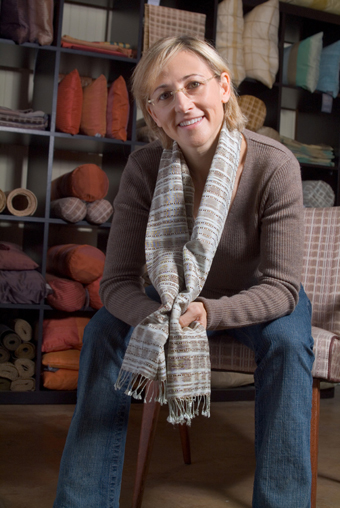
Eve Blossom, a former architect and a business school dropout, is using her design skills to reinvent the supply chain, starting with the textiles industry. Her company, Lulan Artisans, is generating profits for itself and for some 650 weavers, dyers, spinners and finishers around the world--including in Cambodia, Laos, Thailand, Vietnam and India.

Here's what drove and drives Blossom to make that material change...

Roots: Before starting her own business, Blossom worked as a trained architect and designer in Vietnam. Her primary charge there was to renovate French villas. Then, she witnessed something atrocious.

In a hotel bar in Hanoi, a European man spoke explicitly about his plans later that night to be "with a Vitenamese girl," and about "wanting a virgin." Unaware that Blossom could understand the language he was speaking, the man practically boasted that the girl's father had arranged everything, and the girl was just six years old. Sickened by this, Blossom tried with great urgency to intervene, but she could not change the outcome for the girl, she laments.

Research: After her chilling encounter, Blossom began to research human trafficking. According to Free The Slaves, a nonprofit advocacy group, some 27 million people are being held as slaves for sex or forced labor at any one time in the world. Global profits from this illegal trade are unknown, but estimated by the International Labor Organization to reach around $39 billion a year.

Blossom says her research confirmed something she already knew, at heart:

"Artisans were at risk, not being paid fair trade or for what they are worth. This has profound repercussions on their lives and ours. Prevention is key.

When there's job creation and an economic choice in a community, there's less risk of them falling into human trafficking. When people can achieve a good quality of life, and find stable jobs, they don't tend to sell their children, for example, or to take jobs in the city or in another country with somebody that they don't know well.

To prevent people from making these devastating decisions is a matter of respecting the work of others…"

Redesign: Dedicated to solving the problems at the center of human trafficking, in 2004 Blossom started Lulan Artisans as a for-profit, social venture that connects buyers, producers, and designers. Today, the company helps artisans sell their expertise, textiles, and other goods to interior designers and general consumers online and in showrooms. Some of Lulan's product is sold at the famed New York City store ABC Carpet & Home.

Weavers, dyers, spinners, and finishers around the world, especially in Southeast Asia, benefit from Lulan's business approach. The company teaches their artisan partners how negotiate fair trade prices for their work; what kind of design trends are driving buyers' decisions now; and why and how they should form cooperatives to stay successful in business long-term.

Lulan also implements tailored benefits programs for each community where it partners with artisans. (Blossom rejects phrases like "where we source product.") If the artisans need, say, education in their communities, or if they need eye care, Lulan finds a way to connect them to local schools or optometrists, and will pay for educational fees, or buy them glasses. The benefits Lulan sets up will vary community to community.

Blossom says Lulan invests in "whatever it takes to strengthen the community, near- and short-term, at the community's request." This is all part of her mission to celebrate crafts people, and to use "design thinking" to reinvent the supply chain.

By The Book: Blossom has written extensively about her work as a designer of beautiful things, but more so of sustainable business and systems in a new book, Material Change (October 8, 2011, Metropolis). The book contains stunning photography and art highlighting the ideas and people who inspired the bright-eyed, soft-spoken CEO and Aspen Fellow.

In a foreword to Material Change, design guru Yves Behar writes: "What does the future of design look like? It looks like this," and lauds Blossom and Lulan as a "new model for an exchange of service that goes far beyond a purely economic exchange."

High (Minded) Tech: In Material Change Blossom briefly touches upon the impact of technology--from traditional looms to design software like AutoCAD--on the world's supply chains. So far, technology hasn't made the impact she hopes it eventually will, she tells FastCompany.com:

"Technology is failing to address some of the most dramatic human problems because of a lack of design thinking. It has started to impact the transparency of supply chains related to businesses that provide us with any goods, from our food and electronics to anything else. But it can and must do more.

Ultimately when you talk about a supply chain, you have to talk about actual workers somewhere. What does their building look like, what does the work look like, how many hours are they working each day, how do their bosses treat these people, what are their wages, what does their future look like…?

When people-- and I mean CEOs, people in government and consumers alike-- begin asking all those questions, that's when technology can be used to make its strongest impact. Technology alone, that can't change things. Ideas alone can't either. It always comes down to how humans treat and value humans."

Next Big Thing: Blossom's next big plan for Lulan is to launch a website in 2012 called We've that provides "a novel way to buy and sell artisanal goods, and is driven by story." It's not a simple catalog or ecommerce site, she says. It will differ from sites like Etsy, where some millions of products are up for sale at any one time from designers in all walks of life.

"People will be at the center of We've," Blossom says. "We will have deep relationships with artisans that sell on We've. It will be highly curated. We've, like Lulan, will also give the artisans skills, especially in terms of design and business savvy, to help them market and connect with buyers."

We've represents a digital extension of what Lulan Artisans is already doing for the design industry with just four full-time employees. Blossom is currently in the process of raising funds to develop We've and expand her team in San Francisco.

Check out our Who's Next series for more profiles of the big thinkers everyone's talking about. For more leadership coverage, follow us on Twitter and LinkedIn.

Enhanced by Zemanta