I'm a writer at Justmeans in the Health category. I am also currently the Director of Biomedical Research and Development at Gallifrey Systems. I finished my PhD in experimental psychology in 1997 and have worked covering legislative initiatives, building statistical models and in technology development. I'm an expert in the areas of health behavior and health policy. I'm a huge proponent of c... Read More>>
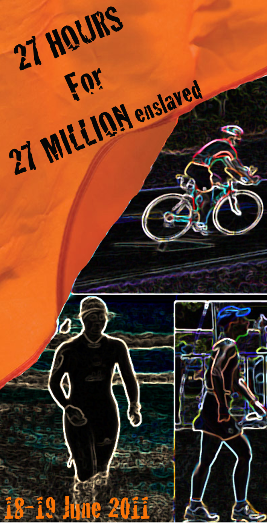 What can one person accomplish? Dr. Paula Heron is a a postdoctoral fellow at the University of Kentucky. Born in Zimbabwe, she's lived most of her life in South Africa. Ten years ago, Ms. Heron came to the US to complete her Ph.D. in neuroscience and has remained here. She decided to combine her triathlon experience with a passionate stand against human trafficking. The following is a verbatim record of my interview with Dr. Heron. For her, it began with a movie...
1.. What is Tri4Freedom and when did you start it?
2. What motivated you to take such an interest in human trafficking?
"Initially my own awareness about human trafficking stemmed from a movie about a young woman from an eastern European country who thought she was coming to the United States to pursue a dream job as a model but once she arrived she was forced into sex slavery. What struck me was the relative ease with which this travesty was committed by the trafficker and the finality of what had occurred from the victim's perspective. The excitement associated with arriving in a new country - something I can well relate to - is abruptly replaced with an indescribable fear. This I find terrifying and the realization that human slavery occurs within our communities and areas we deem safe to live, haunts me."3. How surprised are people to learn the extent of human trafficking, both in sheer numbers and global extent?
"I have found that the majority of people I speak to either have no idea what human trafficking is or they have heard of it but fail to recognize how prevalent it is in the United States. Most people see it as a third-world issue. People's responses have varied greatly when they hear that human trafficking occurs in their own cities. Some people prefer to continue ignoring the issue, while some are alarmed and take a genuine interest in what they can do to help the situation."4. It's literally an ancient crime. In terms of modern solutions, do you feel governments willfully ignore human trafficking or is it just so difficult to solve that it slips below the radar?
"Governments are certainly aware of the issue. Many states have anti- human trafficking laws; however law enforcement alone is not sufficient to combat the problem. The Not For Sale Campaign, a non-profit organization committed to the fight against human trafficking, maintains that abolishing slavery can only be achieved by creating a community task force. I think the fact that human trafficking occurs unnoticed to the general public has contributed to its escalation into the 32 billion dollar industry it is now. If people knew the extent of human trafficking it should prompt public outrage which would force governments into finding effective ways to combat it."5. How doe Tri4Freedom help the problem?
"As an individual deeply disturbed by the issue of human trafficking I created tri4freedom in an attempt to merge my passion for triathlon with my desire to see an end to human slavery. Firstly, Tri4freedom can raise substantial awareness about human trafficking within the triathlon community, including spectators of major races such as Ironman. Secondly, Tri4freedom aims to support The Not for Sale Campaign by raising funds and highlighting the efforts this organization is doing to combat the issue."
6. Why the link between triathlon and the cause?
"Triathlon by definition is comprised of three sports presenting a challenge that only the most dedicated and zealous individuals find appealing. Not surprisingly, demographics have indicated that the majority of triathletes are highly successful and educated professionals. For this reason I am hopeful that tri4freedom will spark enthusiasm from fellow triathletes who are entrepreneurs, lawyers, healthcare workers, teachers and community leaders. Collectively triathletes are in professional positions most likely to have an influential impact on finding effective solutions to combat human trafficking."
7. How much support are you receiving through the Tri4Freedom website? Domestically, internationally?"The support I have received so far has stemmed from letters I have written requesting sponsorship or from individuals that know me. The purpose of the website is to provide interested people with information and resources to help in the fight against slavery. As I promote my site more in the coming months I hope to achieve greater support from the general public and fellow triathletes."
8. Who are some of the "good actors" organizations that either partner w/Tri 4 Freedom or provide support in some way?"First and foremost the Not For Sale Campaign has demonstrated continuous support for Tri4freedom, which is raising funds for their Free2play initiative. In collaboration with this organization, we are working on promoting fair trade athletic apparel and increasing media awareness about Tri4freedom's contribution to their efforts in abolishing human slavery.
Local businesses have been very supportive. Most notably, Green's Toyota of Lexington has provided financial assistance to help promote the Tri4freedom event in June. This event would not have been possible without the support of SpindleTop Hall who kindly offered to host the event and help with local promotion. Ad-Venture Promotions, and In His Image Designs have also shown enthusiastic support for Tri4freedom. HFP racing has been very supportive in helping promote Tri4freedom at two of their race weekends this summer which will reach almost 1500 athletes. Newton Running has generously donated a free pair of their running shoes for me to wear during my 27 hour triathlon."9. What is this 27-hour event you are planning this summer?
June 18th-19th I will do a solo triathlon lasting 27 hours, which I named "Free2tri" after Free2play, which is the sole recipient of all funds we raise. 27 hours has significance- 27 million people are currently enslaved around the world. The event will be hosted by Spindletop Hall and will begin at 6am starting with a 2.5 hour swim, followed by a bike ride until sunset and ending with an overnight run until 9am the following morning. In collaboration with Not For Sale and our sponsors, planning is underway to encourage public attendance and donation incentives. As the date approaches we will release updates on the website. The purpose of "Free2tri" is to showcase Tri4freedom in the hopes of gaining athlete support, to raise funds for the Not For Sale Campaign and most importantly to highlight the widespread travesty of human trafficking.10. How can individuals help draw attention to and combat the problem of human trafficking?Talk about it. Get angry. Acknowledge that human trafficking exists and accept the reality that an end to human trafficking is going to require a change in behavior. For example one way to help is by only purchasing fair trade products. This ensures that employee's lives are enhanced. The current reality is that fair trade is expensive because there is no overwhelming consumer demand to drive the price down. We need to demand that companies and their supply chains adhere to a slave-free workforce. The success of this approach has been demonstrated in the chocolate industry where a few companies have been pressured by the public to make their chocolate fair trade.
People could further this issue by being vigilant in identifying potential victims of human trafficking and contacting local authorities or dialing the National Human Trafficking hotline 1888-3737-888. There are numerous resources available on the web that describes human trafficking cases and how the public can help. I good place to start is http://www.notforsalecampaign.org and my site http://www.tri4freedom.comSource: justmeans.com
Human Trafficking as a Public Health Crisis Part 3: What One Person Can Accomplish | Health