Trafficking Monitor is a blog I created and curate. It offers posts highlighting the multifaceted nature of human trafficking and forced/indentured labour. I draw on a diversity of sources for my posts. You are invited to recommend materials for posting.
Showing posts with label People's Republic of China. Show all posts
Showing posts with label People's Republic of China. Show all posts
This girl was nearly sold to a trafficker when she was 15. (Katsuo Takahashi/GlobalPost)
Full Frame features photo essays and conversations with photographers in the field.
Last year Chinese police freed 268 Burmese women who had been trafficked and forced into marriages with Chinese men. Human rights activists believe that this represents only a small fraction of the growing number of Burmese forced to marry Chinese husbands.
The causes of this disturbing trend lie both in China and Myanmar (also known as Burma). Seeking to escape Myanmar’s military regime and the horribly mismanaged economy, young women are often lured by recruiters who speak of well paid employment. Many of the victims are from rural areas near China’s Yunnan province and belong to Myanmar’s persecuted ethnic minorities.
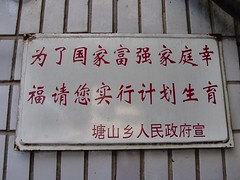
Beijing's "one-child policy," combined with the long-held national preference for male heirs, has resulted in a grossly lopsided male to female ratio; 120:100 in 2005. The massive shortage of potential brides drives many lonely Chinese men to resort to buying a foreign spouse.
Those women who are lucky enough to have escaped often tell a remarkably similar story. Usually they are recruited in their rural village and brought to the bustling towns on the Chinese side of the border. At this point they are handed over to another trafficker who will take them as far away as Beijing for their "job interview." The price of a bride depends on her age and beauty, but a Chinese buyer will typically pay between 40,000 to 50,000 yuan (roughly $6,000-$7,500).
Once married, escape is difficult, as the new bride is forced to do housework or farm for long hours. Her husband or his family members watch her at all times. Those who have escaped tell stories of rape, physical abuse and dire loneliness.
About the photographer:
Katsuo Takahashi is a Japanese freelance photographer based in Tokyo. He is a "voice of the voiceless" and shoots them to show their soul. He has been working on a documentary about Burmese migrants, which includes "Lured into a Trap."
Burmese migrant laborers repair a fish net at a fish market on Phuket island in Thailand, July 21, 2009.
BANGKOK—Burmese migrant workers in Thailand have described paying large fees to human traffickers who promised them jobs in the southeast Asian kingdom, only to sell them into forced labor on arrival.
One Burmese migrant from Myawaddy currently in the care of social services in Bangkok said he had been promised passage to Thailand and a job in the construction industry by a Burmese named Ko Sein Aung.
"He was the carrier who handed us over to the person taking us across to Thailand along the illegal route. We had to pay him for that. It was 2,000 baht (U.S. $60)," the worker said.
"He told us we would get a job in construction. He said we would earn 195 baht (U.S. $6) a day. We were all sold off including me for 22,000 baht (U.S. $658) each to the fishing industry."
He said people in charge of the boats locked up the workers every night, before taking them back to the boats the next morning. They were not paid for their work.
"Every day when the boat we were working on reached the jetty and after we had unloaded the fish at night we were taken to our rooms and kept there, and the door locked from the outside," he said.
"That was how we were detained. The next day only when the fishing boat is due to leave were we sent to the boat."
Forced to migrate
Currently, Thailand is home to an estimated 2 million Burmese migrant workers, of whom only around half are there legally.
Burmese workers are highly visible in and around Bangkok and near the Central World Plaza, and Burmese children under 10 years old can be seen selling food on street stalls.
Many of the migrants say they were forced to move because of extreme poverty back home.
An ethnic Karen migrant from the troubled border area between Thailand and Burma said some of the trafficking was being carried out by the Democratic Karen Buddhist Army (DKBA), which recently made a ceasefire agreement with Burma's military government.
"It was Ko Than Win from the DKBA who told us that he would find us work in Thailand. We had to pay him 15,000 kyat (U.S. $2,304)," the Karen migrant said.
"He took us to Bangkok. He said he would give us a good job in the shrimp industry. We had to wait 10 days along the way," he said.
"We were hungry. We were just given plain rice with nothing else."
Help for refugees
Some of the migrants are being taken care of by social services in Thailand after reporting beatings and other physical abuse after being sold off as slave labor, Thai officials said.
"There are a total of 47 Burmese nationals with us here," an official at the Patuhtani social welfare and rehabilitation department of the Thai government identified as Mr. Suwan said.
"We have arranged food and accommodations for them and are helping them with their rights and claims for damages," he added.
The group included men, women, and three 15-year-old children, according to a Thai lawyer surnamed Sriwun who is helping the refugees.
"Our lawyers’ group is helping refugees who have been treated unjustly, no matter what nationality they are," he said.
He said the Thai authorities had arrested a Burmese woman and two Thai nationals in connection with the allegations of human trafficking.
According to Mr. Suwan, the case could take up to 18 months to bring to trial.
The Myawaddy migrant said he was discovered by an aid group while working on the fishing boat. He had already been beaten following on escape attempt, he added.
"After we were caught they put me back in my room and beat me," he said. "A woman beat me with a two-yard pipe that she always carried. She beat me continuously. She also threatened to kill my father."
Trafficking hub
According to the U.S. State Department's latest Trafficking in Persons Report, Thailand is a source, transit, and destination country for men, women, and children trafficked for the purposes of forced labor and commercial sexual exploitation.
"Women and children are trafficked from Burma, Cambodia, Laos, the People’s Republic of China, Vietnam, Russia, and Uzbekistan for commercial sexual exploitation in Thailand," the report said, saying the trafficking victims were usually from poorer rural areas who were attracted by the kingdom's relative prosperity.
But it lauded efforts by the Thai government to address the problem, including the expansion of a network of temporary shelters for trafficking victims from 99 to 138, with at least one temporary shelter in each Thai province.
The Thai government refers victims of trafficking to one of eight longer-stay regional shelters run by the Ministry of Social Development and Human Security (MSDHS), where they receive psychological counseling, food, board, and medical care, the report said.
In 2008, Thai government shelters provided protection and social services for at least 102 repatriated Thai victims and 520 foreigners trafficked to Thailand.
Original reporting by Nay Rein Kyaw for RFA's Burmese service. Director: Nancy Shwe. Translated by Soe Thinn. Written for the Web in English by Luisetta Mudie. Edited by Sarah Jackson-Han.
WUHAN - A court in central China's Hubei Province Friday sentenced a woman to death and another two to life in prison for trafficking more than 40 children.
The 23-member child trafficking ring were convicted of buying 49 children from Shizong County in southwestern Yunnan Province and selling them to people in Shexian County in northern Hebei Province, the Wuhan Railway Transport Intermediate Court said in a statement.
The ring, busted in May and June last year, sold the boys for up to 40,000 yuan ($5,860) and girls for up to 20,000 yuan each between March 2005 and July 2009.
The court handed down the death sentence to Yu Lixiang, the ringleader, for trafficking 33 children and causing one to death. Du Minghua and Yu's sister Yu Xiaofen were sentenced to life in prison in the first-instance trial.
The rest 20 accomplices were sentenced to two to 15 years in prison.
GUIYANG, March 8 (Bernama) -- Rural women in southwest China's Guizhou Province are asked to yell, scream and find a crowd if they ever face abduction by human traffickers, reports Xinhua news agency on Monday.
Human trafficking in China is a serious and long-term issue. The problem is particularly serious in rural areas. In Guizhou, women were abducted and sold as cheap or slave labour.
The province also holding classes in March to teach hundreds of rural women on how to protect themselves from the region's increasing trafficking problem.
According to Xinhua's report on Monday, the courses teach women that when they are abducted, they should try to find a crowd and call for help, and also try to create conversation with the abducters to get more information on locations and prospective buyers.
Wu Kunfeng, chairperson of the provincial Women's Federation also reminded these women not to forego any chances that can lead them to contact the police, and always try to write notes to tell people of their situation.
"We always tell them (rural women) that they should never give up hope of rescue or escape," Wu said.
However, Wu said the classes did not include a self-defence course, as organizers feared that women who put up a physical fight could be injured or killed.
"We've found that many women were abducted, while out looking for jobs. They were not educated and were vulnerable to criminals," said Wu.
"So we've realized that not only should we act to combat the increasing social problem, but also teach more people to better protect themselves," Wu said.
Greater efforts were needed in China to fight trafficking of women and children, as the crime "grossly violates human rights", said China's police chief Meng Jianzhu on March 1. Meng urged local governments to address economic and social problems that could be at the root of rampant human trafficking, such as poverty and unemployment among women, inadequate education of children of migrant workers in cities, and illegal use of child labourers.
The Public Security Ministry launched a crackdown on child abduction and trafficking in April 2009.
As of Oct 12, more than 2,000 children had been rescued from more than 1,700 human trafficking cases.
Over 2,000 trafficked children have been rescued since China's government began a crackdown on the trade in stolen children earlier this year.
But as the BBC's Damian Grammaticas reports from Beijing, many thousands of children are being snatched off the streets to be sold every year and most are never recovered.
The footage from the CCTV security camera is soft and blurred, but a man can be seen walking down a street carrying a child away in the night.
He glances over his shoulder, wary. This is a child kidnapper in the act of committing his crime.
The man has snatched the boy off the street in Dongguan in southern China where he was playing.
Another camera films the abductor as he gets tired, pauses, puts the boy down, then picks him up and sets off again.
His air is unhurried. There are many passersby, but nobody questions him.
There are thousands of cases like this in China every year - children, often boys, stolen to be sold for profit.
Detective work
In another case a camera mounted in a bus station catches a man luring a boy into his trap.
The man is sitting, holding a baby turtle in his hand.
A young boy comes up to him, his sister by his side, to look at the animal. But it is the boy, three-and-a-half-year-old Luo Run, who is the target, not the girl.
He was abducted and spirited hundreds of miles away by a gang of traffickers.
In Luo Run's case the police were able to identify the man who snatched him.
Trailing the gang took them to the mountains of southern Fujian province.
There, posing as buyers looking for a child, detectives arranged a meeting with the so-called snakehead, the gangster who had sold the boy on.
The demand for children is driven by a deep-seated preference in southern China for sons, boys to keep the family name alive who have a duty to care for aged parents.
And some parents are prepared to buy a stolen child if they can not have a boy of their own.
It is thought China's One Child Policy exacerbates the problem. Couples the law applies to who have a girl first cannot then legally have another child, so many turn to the traffickers to procure a boy.
Arresting the snakehead who had sold Luo Run led detectives to trace and free not only him, but also more than a dozen children, all of whom had been stolen and traded to families in the area.
The children were all taken back to Guangdong province where they had come from and were reunited with their parents.
Abductions rising
Luo Run's parents are poor migrant labourers who live in a tiny flat in a workers' block in Guangzhou.
They say their son ended up with a well-off elderly couple who were desperate for a son of their own and showered the boy with toys. When he was rescued it took him days to accept his real parents again. Now they never let him out of their sight.
"When my son went missing, it was like my heart was being cut into pieces. It was the darkest time of my life, words cannot describe it," Luo Run's father Luo An Xin says.
"When my son came back, everything suddenly became clear, and it filled my heart with joy."
Happy as it is, Luo Run's rescue is an exception.
Nobody knows how many children are being kidnapped every year. But parents say it is thousands, and most are never recovered.
Even China's Supreme People's Court has said the numbers of stolen children are rising.
This week it sentenced two men to death for kidnapping and trading 15 children. It may be a sign that China's government wants to send a signal that it is cracking down on the trade.
Desperate search
On the streets of southern China's teeming factory towns the children of migrant labourers, playing unsupervised, are easy prey for the traffickers.
Two thousand stolen children have been recovered by Chinese police in a special operation launched this year, but often China's authorities can be callous in their response to the problem.
Some parents say local officials often do not want to deal with cases of stolen children. They say they have been warned to keep quiet and not campaign publicly to find their children lest they disturb social order.
Peng Gaofeng's two-year-old son Le Le was abducted right outside his shop. Le Le was a cheeky, vivacious boy, doted on by his parents.
Security camera footage shows a man walking away holding the boy. But it is too blurred to show the face of the man.
Peng Gaofeng agrees to meet us, but only discreetly in a local restaurant.
He has travelled across southern China looking for his son. He has put up posters and been on television.
But since he began his public campaign to find Le Le and other children, he says he has been monitored by police and warned against making too much fuss.
"If there were just one or two cases it would be a minor thing for the police. But there are thousands of us who've lost our kids. It's a massive issue," Peng Gaofeng says.
"By campaigning openly we undermine the image the government wants to project that this is a harmonious society."
For some officials finding Peng Gaofeng's child appears less important than preserving the facade of order.
So all he has now are some pictures of his son, and the security camera footage showing Le Le, vanishing into the night.
China has executed two men convicted of abducting and selling children, state media has reported.
Hu Minghua, 55, and Su Binde, 27 were earlier found guilty of kidnapping and selling 15 children, mostly young boys, Xinhua news agency said.
It said only six of the children, most of them aged between three and six, had been returned to their families.
Last month Chinese police said they had recovered more than 2,000 children in a six-month campaign against trafficking.
In the latest case, it is unclear whom the children were being sold to.
But the BBC's Damien Grammaticas in Beijing says China's "one-child" policy - combined with a preference for sons - is party responsible for the rise in child trafficking within the country.
Boys in China can be bought for about $5,000 (£3,036) each. They are prized as they continue the family name and traditionally care for elderly parents, our correspondent adds.
Crackdown
Hu Minghua and Su Binde were executed on Thursday, Xinhua said.
Hu had been convicted of snatching and selling nine children in 1999-2005, while Su had been found guilty for kidnapping and selling six children in 2005-06.
Many of the children are snatched while playing on the street or waiting at bus and train stations.
Their parents are often poor migrant workers unable to keep a constant watch over the children.
In its attempt to try to curb the trade, China has this year handed down a total of 1,700 convictions.
Since April, 2,008 children have been rescued across the country, and some have already been reunited with their parents, officials say.
Burmese migrant workers fall prey to traffickers with the promise of work in Thailand.
AFP
Burmese migrant laborers repair a fish net at a fish market on Phuket island in Thailand, July 21, 2009.
BANGKOK—Burmese migrant workers in Thailand have described paying large fees to human traffickers who promised them jobs in the southeast Asian kingdom, only to sell them into forced labor on arrival.
One Burmese migrant from Myawaddy currently in the care of social services in Bangkok said he had been promised passage to Thailand and a job in the construction industry by a Burmese named Ko Sein Aung.
"He was the carrier who handed us over to the person taking us across to Thailand along the illegal route. We had to pay him for that. It was 2,000 baht (U.S. $60)," the worker said.
"He told us we would get a job in construction. He said we would earn 195 baht (U.S. $6) a day. We were all sold off including me for 22,000 baht (U.S. $658) each to the fishing industry."
He said people in charge of the boats locked up the workers every night, before taking them back to the boats the next morning. They were not paid for their work.
"Every day when the boat we were working on reached the jetty and after we had unloaded the fish at night we were taken to our rooms and kept there, and the door locked from the outside," he said.
"That was how we were detained. The next day only when the fishing boat is due to leave were we sent to the boat."
Forced to migrate
Currently, Thailand is home to an estimated 2 million Burmese migrant workers, of whom only around half are there legally.
Burmese workers are highly visible in and around Bangkok and near the Central World Plaza, and Burmese children under 10 years old can be seen selling food on street stalls.
Many of the migrants say they were forced to move because of extreme poverty back home.
An ethnic Karen migrant from the troubled border area between Thailand and Burma said some of the trafficking was being carried out by the Democratic Karen Buddhist Army (DKBA), which recently made a ceasefire agreement with Burma's military government.
"It was Ko Than Win from the DKBA who told us that he would find us work in Thailand. We had to pay him 15,000 kyat (U.S. $2,304)," the Karen migrant said.
"He took us to Bangkok. He said he would give us a good job in the shrimp industry. We had to wait 10 days along the way," he said.
"We were hungry. We were just given plain rice with nothing else."
Help for refugees
Some of the migrants are being taken care of by social services in Thailand after reporting beatings and other physical abuse after being sold off as slave labor, Thai officials said.
"There are a total of 47 Burmese nationals with us here," an official at the Patuhtani social welfare and rehabilitation department of the Thai government identified as Mr. Suwan said.
"We have arranged food and accommodations for them and are helping them with their rights and claims for damages," he added.
The group included men, women, and three 15-year-old children, according to a Thai lawyer surnamed Sriwun who is helping the refugees.
"Our lawyers’ group is helping refugees who have been treated unjustly, no matter what nationality they are," he said.
He said the Thai authorities had arrested a Burmese woman and two Thai nationals in connection with the allegations of human trafficking.
According to Mr. Suwan, the case could take up to 18 months to bring to trial.
The Myawaddy migrant said he was discovered by an aid group while working on the fishing boat. He had already been beaten following on escape attempt, he added.
"After we were caught they put me back in my room and beat me," he said. "A woman beat me with a two-yard pipe that she always carried. She beat me continuously. She also threatened to kill my father."
Trafficking hub
According to the U.S. State Department's latest Trafficking in Persons Report, Thailand is a source, transit, and destination country for men, women, and children trafficked for the purposes of forced labor and commercial sexual exploitation.
"Women and children are trafficked from Burma, Cambodia, Laos, the People’s Republic of China, Vietnam, Russia, and Uzbekistan for commercial sexual exploitation in Thailand," the report said, saying the trafficking victims were usually from poorer rural areas who were attracted by the kingdom's relative prosperity.
But it lauded efforts by the Thai government to address the problem, including the expansion of a network of temporary shelters for trafficking victims from 99 to 138, with at least one temporary shelter in each Thai province.
The Thai government refers victims of trafficking to one of eight longer-stay regional shelters run by the Ministry of Social Development and Human Security (MSDHS), where they receive psychological counseling, food, board, and medical care, the report said.
In 2008, Thai government shelters provided protection and social services for at least 102 repatriated Thai victims and 520 foreigners trafficked to Thailand.
Original reporting by RFA's Burmese service. Director: Nancy Shwe. Translated by Soe Thinn. Written for the Web in English by Luisetta Mudie. Edited by Sarah Jackson-Han.


![Reblog this post [with Zemanta]](http://img.zemanta.com/reblog_e.png?x-id=38a072a3-0fa0-4c44-8e2d-7c8c01718771)

![Reblog this post [with Zemanta]](http://img.zemanta.com/reblog_e.png?x-id=d0273e36-aeff-42ab-b1d6-99e8e31e69ed)
![Reblog this post [with Zemanta]](http://img.zemanta.com/reblog_e.png?x-id=92d7fe16-fc1a-4d91-92fa-b175ba8b8714)

![Reblog this post [with Zemanta]](http://img.zemanta.com/reblog_e.png?x-id=a6492dbc-dc72-457f-ae2e-56dd44c38670)
![Reblog this post [with Zemanta]](http://img.zemanta.com/reblog_e.png?x-id=a519c8b9-1bf7-4a3a-bb81-1b7801c86711)
