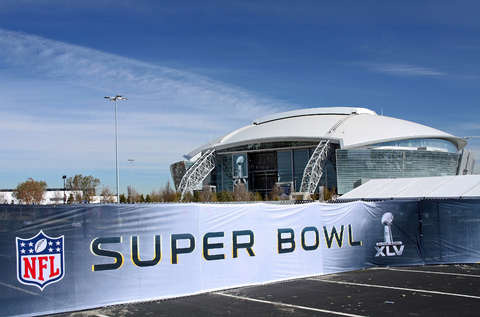
U.S. police arrest record 750 suspects in Super Bowl sex-...:
Thursday, February 9, 2017
U.S. police arrest record 750 suspects in Super Bowl sex-...
U.S. police arrest record 750 suspects in Super Bowl sex-...:
Friday, March 7, 2014
Super Bowl not cause of sex trafficking, ASU researchers say
Read the story:
http://www.azcentral.com/community/tempe/articles/20140306super-bowl-not-cause-sex-trafficking-asu-researchers-study.html
Also read
The Super Bowl and Sex Trafficking By KATE MOGULESCU in the New York Times of January 31, 2o14:
http://www.nytimes.com/2014/02/01/opinion/the-super-bowl-of-sex-trafficking.html?_r=0Wednesday, January 8, 2014
Sex Trafficking A Big Concern Ahead Of Super Bowl In New Jersey
EAST RUTHERFORD, N.J. (AP) — Law enforcement agents in New Jersey have redoubled efforts to fight what they worry could be one of the biggest menaces to come with next month's Super Bowl: sex trafficking.
Continue here:
http://www.huffingtonpost.com/2014/01/06/sex-trafficking-super-bowl-new-jersey_n_4549064.html
Related articles
Monday, February 6, 2012
Rachel Lloyd: Urban Legends and Hoaxes: How Hyperbole Hurts Trafficking Victims
Friday, March 4, 2011
Momentum gains to toughen Texas' human trafficking laws | Lubbock Online | Lubbock Avalanche-Journal
In mid-February, nearly two weeks after the city of Arlington hosted the 2011 Super Bowl, Texas Attorney General Greg Abbott said federal, state and local authorities succeeded in cracking down on sex traffickers, netting 133 arrests.
AUSTIN — In mid-February, nearly two weeks after the city of Arlington hosted the 2011 Super Bowl, Texas Attorney General Greg Abbott said federal, state and local authorities succeeded in cracking down on sex traffickers, netting 133 arrests.
“Thanks to a coordinated enforcement, public education and deterrence effort, Texas-based law enforcement officials were prepared to respond if we encountered human trafficking victims — or the ruthless criminals who trafficked them,” Abbott said. “By working proactively to prepare for the nation’s most high-profile sporting event, Texas was uniquely positioned to crack down on traffickers and provide much-needed help to their victims.”
But two groups fighting to end what they call modern-day slavery say the state’s efforts are not good enough, particularly when it comes to protecting underage girls, some as young as 9.
Houston-based Children at Risk and Shared Hope International of Vancouver, Wash., give the state a “C” for its fight against child trafficking.
Sen. Leticia Van de Putte, D-San Antonio, and Reps. Senfronia Thompson, D-Houston, and Randy Weber, R-Pearland, said after the two groups graded the
state that Texas must do much more to stop the rapidly growing crime.
“Today, we celebrate Texas Independence Day,” Van de Putte said Wednesday. “But for the children who are trafficked there is no independence; there is only life without hope.”
“We can do better,” she said.
Abbott’s spokesman, Jerry Strickland, said it is the Texas Legislature that passes the laws and the attorney general is ready to enforce any human trafficking laws the lawmakers pass.
Van de Putte said though she is not happy with the grade the two groups gave Texas, the Legislature is on track to make life tougher for child traffickers.
The progress in advancing these bills, she said, is measured by the change in response from her colleagues.
Several years ago, when she first proposed a crackdown on traffickers and pimps, some of her colleagues asked, “What do you mean trafficking? This only happens in third-world countries,” Van de Putte recalled.
But now most of her colleagues, regardless of party affiliation, are on board supporting tougher laws, especially making the crime a first-degree felony for a first conviction and a life sentence for subsequent conviction, said Van de Putte, whose Senate Bill 98 calls for sentences of 25 years to life in prison for convicted human traffickers.
Severe punishment is necessary to deter such crimes because the average age of a trafficked girl is 13 and the punishment the traffickers get is light, Van de Putte said.
For instance, about a year ago in her hometown of San Antonio, a married couple was convicted of prostituting a young girl but the man received only seven years in jail and the woman five.
Thompson, who has filed anti-trafficking bills in previous sessions as well as this session, said tougher laws are needed because of the more than a million women and children trafficked annually in the United States — about 20 percent of those are in Texas.
Thus, the purpose of her House Bill 7 is “to put the pimps out of business,” Thompson said.
Weber, who filed HB 1122, said his goal is also to punish men who have sex with trafficked girls.
“We should go after the johns,” Weber said. “To those who prey upon our children, we will not only find you but we will prosecute you.”
Van de Putte said as of now few traffickers and men who have sex with minors are prosecuted.
The three lawmakers are also calling for anyone convicted of trafficking or having sex with trafficked minors to be registered as sex offenders.
“Real men do not buy sex,” Van de Putte said. “Real men do not buy sex from children, and that’s the message we need to get across to Texas now.”
Although some law enforcement officials in West Texas say human trafficking is not a major problem in the region, Robert Sanborn, president of Children at Risk, said they are in denial.
“This is happening everywhere, not just in the big cities,” Sanborn said.
Although redistricting and a budget shortfall of up to $27 billion are expected to be the main priorities this session, human trafficking laws are also expected to pass.
Gov. Rick Perry supports the tough measures, his spokesman, Mark Miner, said after Abbott announced the results of the Super Bowl crackdown on traffickers.
In addition, at a recent human trafficking conference in Austin, Perry said: “Human traffickers and their illicit activities are scourge and must be driven from the state.”
Source: lubbockonline.com
Momentum gains to toughen Texas' human trafficking laws | Lubbock Online | Lubbock Avalanche-Journal
Related articles
Monday, February 14, 2011
Saturday, February 12, 2011
Sex trafficking in paradise - Hawaii News Now - KGMB and KHNL Home
HONOLULU (HawaiiNewsNow) - Pick any night in Waikiki and you'll see prostitutes plying their trade, pimps protecting their property, and the darker side of night life screaming "Sex for Sale."
"This is a multi-billion-dollar a year industry," said Kathryn Xian, co-founder of Pacific Alliance to Stop Slavery (PASS)..
Xian calls sex trafficking the modern day slave trade.
On a global scale law enforcement ranks human trafficking second only to drug trafficking. Pimps force women and young girls into prostitution then move them from city to city.
With its high-turnover tourist population, Waikiki's ripe for the sex trafficking circuit. Some girls on the street are local recruits but most are from out of town.
Beyond the high heels are horror stories. Xian hears them over and over.
"If they don't do what they're told they are severely beaten or raped or both, starved, other forms of torture," she said.
"It's all about power and money and greed," PASS outreach worker "Danielle" said.
She didn't want to use her real name because of her work with prostitutes who want to flee the streets.
"Danielle" was trapped in human trafficking where she experienced the strangle hold traffickers wield over their merchandise. She knows the desire many women have to escape.
"They either are afraid to ask for the help or they don't really believe that anyone will understand. There's a lot of shame that goes into that," she said.
"We see hundreds of girls annually just in Waikiki and that's not including the brothels," Xian said.
Hawaii is one of only a handful of states with no law that specifically targets human or sex trafficking.
Insiders say the money it generates is enormous.
One prostitute is worth $2,000 to $3,000 a night to her pimp. Some pimps have ten to twenty girls in their stable.
Xian said prostitutes are targets of police sweeps but the trafficker is the real criminal.
She helped craft Hawaii Senate bill 959 that would make sex trafficking a felony with hefty jail time.
"Go after the traffickers, not victimize or criminalize the victims, and really clean up this town," she said..
City prosecutor Keith Kaneshiro also wants to increase punishment on people who profit from prostitution. But he feels a roadblock to prosecution is fear. Prostitutes often refuse to testify against their pimps so he proposes witness protection.
"So they can come forward to us and tell us what's going on and we will protect them," he said. "Some prostitutes are criminals. That's why we have prostitution. And some prostitutes have been coerced to be prostitutes so in that sense they may be the victims."
While steps are taken behind the scenes to counter sex trafficking in Hawaii, Xian, "Danielle" and other outreach workers with PASS defy pimps and proposition prostitutes with their own offer.
"They can have a safe place to stay, warm bed, meals, and people to care for them, help them to go back to school or rebuild their lives," Xian said.
The group has a safe house. We can't show it to you because the girls being helped there fear reprisal from their pimps.
Xian said in the past eight months her group has helped two dozen prostitutes break free from their handlers.
The youngest girl is only eleven years old.
"They are human beings. They are worth more than they are conditioned to believe," Xian said.
"If you go up to any stranger, they have no idea that it exists, that there is slavery in the United States," "Danielle" said.
The average age of a sex trafficking recruit is twelve.
The U.S. State Department estimates 300,000 young people are at risk for sexploitation every year.
The crime is a worldwide concern and according to those who reach out to the women in Waikiki -- it's big business right here in paradise.
To learn more about the Pacific Alliance to Stop Slavery and how you can help combat sex trafficking go to traffickjamming.org.
Source: hawaiinewsnow.com
Related articles
- Bill targets sex trafficking in Georgia (ajc.com)
- Washington a hot bed for sex trafficking (rt.com)
- Will Nevada Legislature Pass Critical Anti-Trafficking Laws? (news.change.org)
- Olympic Games should not be magnet for sex trafficking gangs warns Yvette Cooper (dailymail.co.uk)
- Virginia Legislators on Cusp of Passing Critical Anti-Trafficking Laws (news.change.org)
Wednesday, February 9, 2011
Washington a hot bed for sex trafficking — RT
[TRAFFICKING MONITOR: Click on URL below to view
America is quick to condemn other nations for the sexual exploitation of girls, when in fact it occurs daily in the United States.
Contrary to public belief in America sexual exploitation of children does not only take place in developing countries.
The trafficking of minor is a big moneymaker, the third highest profit driver among organized crime in the United States. Often, American teens and children are recruited in public areas, such as malls, entertainment centers and schools.
Tina Frundt, the founder of Courtney’s House, a non-profit organization that helps girls who have been victims of human or sex trafficking, explained many in the US believe there are lots of laws put in place to protect trafficked children, when in reality there are not.
Powerful and rich men in the United States, specifically in Washington DC, seek out sex with girls that are often trafficked blocks from the White house.
Frundt, a survivor of sex trafficking, works in Washington to find and help those who are in danger.
“How do you identify a victim? Well at 3:00 and 4:00 in the morning downtown there’s nothing open, but there are many many men watching the girls. That’s what you look for to find the victims, the men watching them,” she explained.
Even with all all the police forces in Washington, the city is still a hot bed for trafficking, because currently the laws target victims, not traffickers.
“There is no risk for the traffickers or the buyers if we’re going after the victims,” she said. “Prostitution is illegal in the United States, so unfortunately we have to make laws to make the two different.
Frundt argued changes need to be made to help those who are forced into prostitution, to target traffickers and buyers as opposed to prostitutes.
Source: rt.com
Washington a hot bed for sex trafficking — RT
Related articles
Schuster Institute for Investigative Journalism: Sex (Trafficking) and the Super Bowl
Schuster Institute for Investigative Journalism
Sunday's Super Bowl seemed to be on everyone's mind, lips, and fingertips for weeks before the game. There were the commercials; there was Brett Keisel's beard; there were not the Jets (reports this Massachusetts native). But there was also a darker -- though hotly debated -- side to the celebration of athletic talent, strategy, and beer: the trafficking of women and young girls to satisfy the demand for paid sex.
Leading up the event, some activists and officials warned that human traffickers, seeing an economic opportunity in the sporting event, were trafficking hundreds or even thousands of women to the area surrounding Cowboys Stadium in Arlington, Texas for the big game. There was a "looming potential explosion of human trafficking around the Super Bowl," according to Texas Attorney General Greg Abbott, Newsweek reported. Abbot told USA Today that the Super Bowl is "commonly known as the single largest human trafficking incident in the United States." Hoping to discourage demand for paid sex, an organization named Traffick911 launched the "I'm Not Buying It Campaign", enlisting stars like Dallas Cowboys' Jay Ratliff to proclaim, "Real men don't buy children. They don't buy sex."
However, other commentators questioned those projections, arguing that estimates of hundreds and thousands of victims had no proof, were hyperbolic, or were "nothing more than myth." Some bloggers called it "hysteria."
Whether or not events like the Super Bowl trigger an enormous influx of trafficking victims is hard to determine. (Last year, Tampa authorities took in 24 children who had been trafficked to the city for sex work, according to Newsweek.) But we do know one thing for sure: there is human trafficking in Texas. In fact, it happens in every state, in areas rural and urban, within the U.S. and from abroad, according to law professor Bridgette Carr, director of the University of Michigan's Human Trafficking Clinic.
"One of the questions we hear over and over again in our work is, 'does human trafficking happen in my community?'" Carr says. "The answer, almost always, is: Yes it does."
Last week, Carr's Human Trafficking Clinic announced the release of the nation's only comprehensive online database of human trafficking cases, a project that's been in the works for years. "The clinic would receive calls from lawmakers, journalists and citizens from around the country asking about the prevalence of human trafficking or how to frame a specific case," Carr explained. Since there was no good central source, the clinic decided to create it.
The main goal was to maintain a database of all state and federal human trafficking cases, both criminal and civil, within the United States, since 1980. Searching for these cases required creativity, since not all prosecutors use the actual word "trafficking" -- in some cases charging other elements of the larger crime, such as assault or kidnapping. But that in itself can be useful to some of the database's intended users, Carr explained. "We have found prosecutors are sometimes reluctant to move forward on a human trafficking case unless it is the most extreme type of trafficking."
She says she was inspired to create the database in part to highlight alternative, but effective, ways to prosecute human trafficking cases. An example? Charge a pimp who tattoos underage girls with assault if there are good reasons not to bring human trafficking charges. "This way instead of requiring a victim to testify against her pimp" -- which can often result in re-victimization -- "the tattoo itself is the only evidence needed to convict" the pimp of a crime, she explains.
Carr contends that the justice system has long had the tools to prosecute those who traffic human beings -- even before there was a trafficking law under which to prosecute them. "I hope the database helps law enforcement, decision makers, and prosecutors realize this crime, while horrific, is not extremely unique or exotic," she writes. "We have known how to fight the elements of human trafficking for a long time. I want law enforcement to see the trafficking law as an extra tool to combat this crime, not the only tool."
So far, Carr's Human Trafficking Clinic has gathered about 150 cases -- more than a dozen in Texas -- and they're adding new cases each week, according to Jason Burns, a clinical fellow at the clinic. Carr and other experts agree that the database does not show the full extent of the problem. "Although identifying the exact number of trafficking victims in the United States is extremely difficult, any reasonable estimate would likely be in the tens of thousands," she writes in an email response to questions. "Traffickers often target victims from marginalized or vulnerable groups -- for example, undocumented workers or minor children -- who are susceptible to intimidation and who are less likely to seek help from law enforcement. This means that too often trafficking goes unrecognized and unreported."
Ambassador Luis CdeBaca, who leads the U.S. State Department's efforts against human trafficking, applauded the clinic's effort. "The University of Michigan's human trafficking database is a critical advance in the fight against modern slavery," he said, according to the law school's press release. "Whether a practitioner or a policy maker, an advocate or academic -- the work of all modern abolitionists will benefit from this compendium."
Carr hopes the database will also provide a resource to advocates, journalists, and citizens who wonder whether modern-day slaves can be found in their communities. That includes the Dallas area, where the Packers bested the Steelers on Sunday.
Take, for example, the case of a fourteen-year-old runaway who met Stephen Lynn Buggs in a Dallas bus station in November 2005. After Buggs gave the young girl a false identity indicating she was 23, he got her a stripping job and pimped her out on the streets of East Dallas. A couple months later, to punish her for talking to another pimp, Buggs tied her up in a closet after beating her with a statue and a beer bottle. The girl was never taken to a doctor, and instead treated her wounds with ointment and ibuprofen. Telling Buggs she was going to the store, she finally escaped to her mother, who called the police the next day. A Dallas county judge ultimately sentenced Buggs to 900 months in prison for human trafficking.
Or there's the case of Elian Jud Ramos, who in 2006 pleaded guilty to trafficking charges after he smuggled two Guatemalan women through Mexico to Hidalgo County, Texas where he withheld wages for domestic servitude and work in a daycare facility, threatening the women with jail and outing them to immigration enforcement if they complained. One victim worked more than 20 hours a day in Ramos' home. A jury found Ramos guilty of trafficking one of the victims after they escaped through a bedroom window and contacted the police.
Then there's the heartbreaking case of Isela Marquez Campos, who was smuggled from Mexico to be a domestic servant for two Texas brothers, Octavio and Joe Lozoya. The Lozoyas held Campos in a filthy trailer and abused her young child. When the 21-month-old toddler collapsed, no longer breathing, the brothers would not allow Campos to seek medical care. After the baby died, the brothers burned its corpse. Acting on a tip, the FBI rescued Campos in 2000. The brothers were later convicted of conspiracy charges and for harboring an illegal alien with death resulting.
The University of Michigan human trafficking database's cases range from the trafficking of women and men, girls and boys -- not just from foreign countries, but also within cities and small towns in the U.S. -- to perform all kinds of forced labor: in the sex industry, in agricultural fields, in restaurants, and as domestic slaves in Washington, D.C. diplomats' mansions.
Whatever the numbers, and whether or not the Super Bowl is indeed a sex trafficking magnet, the newly released Michigan database reinforces the fact that human trafficking is a crime that affects very real, often very vulnerable, people. And it's a crime which law enforcement, advocates, and lawmakers confronted long before -- and will confront long after -- Sunday's game.
By Lindsay Markel, assistant director and research specialist, the Schuster Institute for Investigative Journalism at Brandeis University. Research assistant Sean Petterson contributed to this article.Source: Schuster Institute for Investigative Journalism
Schuster Institute for Investigative Journalism: Sex (Trafficking) and the Super Bowl
Related articles
Friday, February 4, 2011
Point Person: Our Q&A with Bill Bernstein on the human trafficking problem in North Texas - The Dallas Morning News
Related articles
- Galley Gossip: Flight attendants trained to spot human traffickers at the Super Bowl (gadling.com)
- Will Nevada Legislature Pass Critical Anti-Trafficking Laws? (news.change.org)
- The Super Bowl of Sex Trafficking (newsweek.com)
- Super Bowl hyperbole and prostitution (thestar.com)
Galley Gossip: Flight attendants trained to spot human traffickers at the Super Bowl | Gadling.com

What do hundreds of flight attendants, thousands of under-age prostitutes and the Super Bowl all have in common? Dallas. On Sunday they're all traveling to Texas. American Airlines, American Eagle, Delta, United, and Qantas hope to help stop human traffickers from pimping out women and children by holding training sessions that will enable flight attendants volunteering their time on the ground to help spot signs of trafficking. According to Texas Attorney General Greg Abbot in an article posted by Reuters, the Super Bowl is one of the biggest human trafficking events in the United States. During the previous two Super Bowls fifty girls were rescued. This year with authorities, child welfare advocates, and the airline industry all collaborating to fight under-age sex crimes, even more lives could be saved.
How did the airlines even come to be involved in human trafficking? It all started with Sandra Fiorini, an American Airlines flight attendant based in Chicago. Because of Fiorini flight attendants now know what to look for and who to call if they see something suspicious on board a flight. This after Fiorini tried to report a situation and no one responded. It involved an eighteen year-old boy on a six-hour flight carrying a newborn infant with its umbilical cord still attached. No wife. Just one bottle of milk and two diapers stuck inside his pocket. In 2007 Fiorini met Deborah Sigmund, founder of the organization Innocents at Risk, and soon they began working together with airline employees to become the first line of defense against human trafficking.
Flight attendants aren't the only ones who can help. There are more frequent fliers now than ever before. Passengers should also be aware of what to look for while traveling.
Warning Signs
1. Someone who doesn't have control over his/her own identification
2. Someone who has few to no possessions.
3. Someone who is not allowed to speak for themselves, or is made to speak through a translator
4. Someone who isn't sure of where he or she lives or is or has no sense of time
5. Someone who avoids eye contact or appears fearful, anxious, tense, depressed, nervous, submissive.
6. Someone who rarely is allowed to come and go independently and may be accompanied by someone who controls their every movement
7. Someone who may be dressed inappropriately regardless of weather conditions.
Number to call
Human Trafficking Hot line 1-888-373-7888.
(Don't wait until it's too late. Put that number in your cell phone now!)
There are more slaves today than any other time in human history. A person can be sold several times a day for many years, opposed to drugs that can only be sold once. Because of this human trafficking is one of the fastest growing crimes in the world, only second behind drug trafficking. It generates 32 billion annually for organized crime. Each year two million women and children become victims. 300,000 children within the United States are being trafficked each year. Most are forced into a life of prostitution and pornography in large urban areas such as Washington DC, New York, Los Angeles, Las Vegas and Florida. If it can happen on my flight, it can happen on yours. Open your eyes. Get involved. Write that number down!
Photo courtesy of The Consumerist
Source: GADING.COM
Galley Gossip: Flight attendants trained to spot human traffickers at the Super Bowl | Gadling.com
Related articles
- Super Bowl hyperbole and prostitution (thestar.com)
- Super Bowl a magnet for under-age sex trade (reuters.com)
- Human trafficking at record low (search.japantimes.co.jp)
Department of Justice Announces Launch of Human Trafficking Enhanced Enforcement Initiative
WASHINGTON – The Departments of Justice, Homeland Security and Labor announced today the launch of a nationwide Human Trafficking Enhanced Enforcement Initiative designed to streamline federal criminal investigations and prosecutions of human trafficking offenses.
As part of the Enhanced Enforcement Initiative, specialized Anti-Trafficking Coordination Teams, known as ACTeams, will be convened in select pilot districts around the country. The ACTeams, comprised of prosecutors and agents from multiple federal enforcement agencies, will implement a strategic action plan to combat identified human trafficking threats. The ACTeams will focus on developing federal criminal human trafficking investigations and prosecutions to vindicate the rights of human trafficking victims, bring traffickers to justice and dismantle human trafficking networks.
The ACTeam structure not only enhances coordination among federal prosecutors and federal agents on the front lines of federal human trafficking investigations and prosecutions, but also enhances coordination between front-line enforcement efforts and the specialized units at the Department of Justice and federal agency headquarters. The ACTeam Initiative was developed through interagency collaboration among the Departments of Justice, Homeland Security and Labor to streamline rapidly expanding human trafficking enforcement efforts.
“This modern-day slavery is an affront to human dignity, and each and every case we prosecute should send a powerful signal that human trafficking will not be tolerated in the United States,” said Attorney General Eric Holder. “The Human Trafficking Enhanced Enforcement Initiative takes our anti-trafficking enforcement efforts to the next level by building on the most effective tool in our anti-trafficking arsenal: partnerships.”
“Working together, the entire U.S. government continues to make progress in convicting traffickers, dismantling their criminal networks and protecting their victims,” said Secretary of Homeland Security Janet Napolitano. “Combating human trafficking is a shared responsibility, and the ACTeam Initiative is a critical step in successfully leveraging all our federal, state and local resources to crack down on these criminals.”
“This pilot is a necessary tool in the federal government’s crackdown on human trafficking,” added Secretary of Labor Hilda L. Solis. “Victims of these contemptuous acts have been left in an unfamiliar land with no family, no support systems, and no way to make a life for themselves. We must do whatever we can to ensure that victims of trafficking receive full restitution, including denied wages.”
On Oct. 29, 2010, at an event commemorating the 10th anniversary of the Trafficking Victims Protection Act, the Department of Justice announced that the Interagency ACTeam Initiative would be implemented in conjunction with directives within the Department of Justice to enhance coordination among the Executive Office of U.S. Attorneys, U.S. Attorney’s Offices and the department’s subject matter experts in the Civil Rights Division’s Human Trafficking Prosecution Unit and the Criminal Division’s Child Exploitation and Obscenity Section.
The ACTeam initiative follows the July 22, 2010, launch of the Department of Homeland Security’s Blue Campaign, which includes new web-based training for law enforcement officers, enhanced resources for trafficking victims and expanded public awareness campaigns. The ACTeam Initiative also follows the Department of Labor’s March 15, 2010, announcement that it would, in coordination with other federal agencies, begin certifying U non-immigrant visas for human trafficking victims and other qualifying crime victims who are identified during the course of labor investigations and enforcement actions.
The locations of the pilot ACTeams will be announced upon completion of a competitive interagency selection process.
Related articles
- Will Nevada Legislature Pass Critical Anti-Trafficking Laws? (news.change.org)
- Human trafficking at record low (search.japantimes.co.jp)
- Report Recommends Vermont Make Human Trafficking Illegal (humantrafficking.change.org)
- Galley Gossip: Flight attendants trained to spot human traffickers at the Super Bowl (gadling.com)
Monday, January 31, 2011
Dallas Cowboy fights Super Bowl human trafficking - Dallas City Buzz | Examiner.com
Image by Getty Images via @daylifeJanuary 14th, 2011 12:02 pm CT,'
It’s a sad fact that where men and money converge, human trafficking follows. The Super Bowl is the pinnacle American sporting event, and a surge in prostitution will happen in this years host city of Dallas. To meet the demand, many prostitutes will be brought in, including children and teens. Many of these will be forced victims, literally being sex slaves for human traffickers.
Dallas Cowboy, three time pro-bowler Jay Ratliff has joined the fight against the tragedy of child human trafficking. He has endorsed Traffick911, a Dallas-Fort Worth based organization, in it’s mission to raise awareness and stop child human trafficking. Mr. Ratliff has filmed a public service announcement for their ‘I’m not buying it campaign (watch here).’
'It has recently come to my attention that American children are being bought and sold for profit and pleasure and I’m mad. Men, I’m talking to you’, declared Mr. Ratliff.
One gets the impression that no human trafficker would want to be caught alone in the same room with Jay Ratliff. He also will be in attendance among other celebrity sponsors and giving away an autographed football at their upcoming tailgate party on February 5th at the Artside Event and Conference Center in Mansfield. The full lineup of guest sponsors will be announced next week. Traffic911 has created an online petition for submission to the NFL Super Bowl Host Committee requesting support for this area cause that will be affected by Super Bowl XLV. So far over 3,300 and counting have signed.
It's estimated between 100 and 300 thousand U.S. children are trafficked within our own borders each year. Katie Pedigo, director of New Friends New Life, a Dallas area organization that helps sex workers escape the industry, told NBCDFW, she estimates 15,000 prostitutes will be brought into North Texas for this year’s Super Bowl. She also estimates approximately 10%, some 1500 women and girls brought in from out of town, will be abandoned here, left to fend for themselves once the festivities have ended.
'We feel like we will be flooded with women coming to us seeking a new life seeking hope and opportunity,' said Pedigo.
Irving Bible Church is hosting a screening today, Friday Jan. 14th, of the film 'Playground”, a documentary which chronicles the plight of American citizens, particularly minors, trapped in the sex industry. There will be a guest panel speaking afterword including American Idol contestant Phil Stacey. Proceeds will be donated to support New Friends New Life.
For more articles by Aaron Russell please go to menofmind.com.
Dallas Cowboy fights Super Bowl human trafficking - Dallas City Buzz | Examiner.com http://www.examiner.com/city-buzz-in-dallas/dallas-cowboy-fights-super-bowl-human-trafficking#ixzz1CdwBKmU3