Showing posts with label TVPA. Show all posts

Sunday, February 17, 2013

Renew the Violence Against Women Act - NYTimes.com

3/02/16/opinion/renew-the-violence-against-women-act.html?nl=todaysheadlines&emc=edit_th_20130216&_r=0 

Source: NYTimes.com

Published: February 15, 2013

This week’s 78-to-22 vote in the Senate to reauthorize the Violence Against Women Act provided a refreshing demonstration of bipartisanship that the House would do well to emulate. Last year, the Republican-led House blocked the act’s renewal over objections to new protections for gay, immigrant and American Indian victims of domestic violence and sexual assault. It falls to Speaker John Boehner to see that this does not happen again.

The Senate bill would provide services, like shelters and legal help, for abuse victims regardless of their sexual orientation or immigration status. To ease passage in the House, the measure’s lead sponsors, Patrick Leahy, a Vermont Democrat, and Michael Crapo, an Idaho Republican, dropped a provision that would have increased the number of visas available for battered women who were undocumented immigrants. Mr. Leahy has said he will push for the increase in future immigration reform efforts.

Other sticking points remain, chiefly the new powers the Senate bill would grant tribal courts, which currently cannot pursue non-Indians who attack Indian women on tribal land. Domestic and sexual violence has been soaring in tribal communities, and the law needs updating to address this prosecutorial gap. The Senate bill requires that criminal defendants in tribal courts be accorded normal constitutional protections. Negotiators are working on possible changes to alleviate Republican concerns about ensuring fair treatment of non-Indian defendants.
In one important change from last year’s bill, the Senate agreed to tack on a renewal of another stalled measure, the Trafficking Victims Protection Act. This would toughen penalties for sex traffickers and impose stronger protections for trafficking victims. What should be an uncontroversial bill has been held up by Republicans over the Obama administration’s proper insistence that contractors under the act afford victims access to a full range of reproductive health services.
Seventeen Republican members have written to Mr. Boehner urging action on a Violence Against Women Act renewal that reaches “all victims and perpetrators of domestic violence.” This is a sign that the G.O.P.’s rejection by female voters in November is causing some rethinking. Mr. Boehner should allow a vote on the Senate bill.

Other sticking points remain, chiefly the new powers the Senate bill would grant tribal courts, which currently cannot pursue non-Indians who attack Indian women on tribal land. Domestic and sexual violence has been soaring in tribal communities, and the law needs updating to address this prosecutorial gap. The Senate bill requires that criminal defendants in tribal courts be accorded normal constitutional protections. Negotiators are working on possible changes to alleviate Republican concerns about ensuring fair treatment of non-Indian defendants.

In one important change from last year’s bill, the Senate agreed to tack on a renewal of another stalled measure, the Trafficking Victims Protection Act. This would toughen penalties for sex traffickers and impose stronger protections for trafficking victims. What should be an uncontroversial bill has been held up by Republicans over the Obama administration’s proper insistence that contractors under the act afford victims access to a full range of reproductive health services.
Seventeen Republican members have written to Mr. Boehner urging action on a Violence Against Women Act renewal that reaches “all victims and perpetrators of domestic violence.” This is a sign that the G.O.P.’s rejection by female voters in November is causing some rethinking. Mr. Boehner should allow a vote on the Senate bill.
Enhanced by Zemanta

Friday, February 15, 2013

World Vision: Senate Gave Hope to Modern Day Slaves, House Should Follow

http://www.christianpost.com/news/world-vision-senate-gave-hope-to-modern-day-slaves-house-should-follow-89969/#iU2fkSgIFKwGXSmd.99 

Source: World Vision

By Alex Murashko , Christian Post Reporter
February 13, 2013|9:44 am

The Christian relief organization World Vision applauded the U.S. Senate passage of the Trafficking Victims Protection Reauthorization Act on Tuesday, but said the bill remains at risk unless the House also acts.

"This was a time to lead in the fight against modern-day slavery and the U.S. Senate rose to the occasion," said Jesse Eaves, senior policy advisor for Child Protection at World Vision. "At a time when it seems impossible to move important legislation, the Senate vote not only gives hope to millions of exploited men, women, and children around the world, but also to the thousands of advocates around the country who have worked tirelessly to push this legislation through. We now implore the House to take notice and follow suit so this life-saving bill can renewed."

Officials at World Vision said that at a time when bi-partisanship appears non-existent, the Senate "came together" to pass the bill that helps combat human trafficking. "However, the success in the Senate is still marred by partisan gridlock in the House of Representatives, and World Vision calls on both parties to put politics aside and pass this crucial bipartisan bill before the end of this Congress."

Originally passed in 2000, this legislation and the laws and programs it created have made the U.S. a global leader in the fight against modern-day slavery, World Vision stated.

The renewed legislation makes some important gains in the fight against human trafficking around the world. Some of the new aspects of the bill include:

• Allows survivors of trafficking in the U.S. better access to services
• Strengthens law enforcement efforts to crack down on American child sex tourists living abroad
• Allows the U.S. to form strategic partnerships with countries trying to crackdown on trafficking in their own country

"The partisan gridlock in the House only serves to take away from trafficking victims and gives solace to traffickers," said Eaves. "This is not a left or right issue. It's a right or wrong issue and it's time for the House to follow the lead of the Senate and allow the U.S. to remain a global leader combatting modern- day slavery."
The White House made last January, National Slavery and Human Trafficking Prevention Month and urged businesses leaders, religious organizations and citizens to become aware of how to get involved in preventing innocent children from becoming victims of trafficking.

"We will continue to take action by empowering investigators and law enforcement with the training they need, and by engaging businesses, advocates, and students in developing cutting-edge tools people can use to stay safe," the White House said in a statement.

"We will invest in helping trafficking victims rebuild their lives. And as one of the world's largest purchasers of goods and services, the Federal Government will keep leading by example, further strengthening protections to help ensure that American tax dollars never support forced labor," officials added.

World Vision is a Christian relief, development, and advocacy organization dedicated to working with children, families, and their communities worldwide to reach their full potential by tackling the causes of poverty and injustice.

Contact: alex.murashko@christianpost.com@AlexMurashko (Twitter); Alex Wire (Blog)


Enhanced by Zemanta

Friday, August 31, 2012

Opinion: Anti-slavery law needs saving

Opinion: Anti-slavery law needs saving:
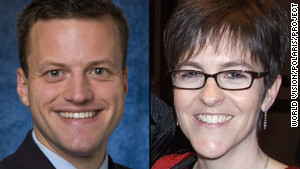
Editor's note: Jesse Eaves works as the senior policy adviser for child protection with World Vision, an international Christian humanitarian organization working in nearly 100 countries around the world. Mary C. Ellison currently serves as the director of policy for Polaris Project, a leading organization in the United States combating all forms of human trafficking and serving both U.S. citizens and foreign national victims, including men, women, and children. Together they are calling on U.S voters to make sure their senators pass a key anti-slavery bill.
With the upcoming elections, you can’t turn on the television without seeing a negative campaign ad or heated news segment giving Americans a glimpse of the political divisions that currently exist in our country.
While politicians argue over our future government, we lose sight of how the actions of our current government are impacting the lives of real people right now, like the millions of enslaved men, women and children in the U.S. and around the world at risk if Congress fails to pass the Trafficking Victims Protection Reauthorization Act by the end of the year.

 Track the bill's progress
Human trafficking is “the recruitment, transport, transfer, harboring or receipt of a person by such means as threat or use of force or other forms of coercion, of abduction, or fraud or deception for the purpose of exploitation." But it also has another name: modern day slavery. There are now more slaves in the world today than any other time in human history.
Sadly, this is not an issue that’s unique to developing countries. It also happens right herein our own backyards.
Organizations like World Vision and Polaris Project work with trafficking survivors in the U.S. and abroad every day to help them regain what they have lost as a result of being trafficked.
Survivors come to us from across the globe, having been trafficked by spouses, by strangers, by employers and others all promising hope and a future to those in need.
Instead, these survivors have been beaten, insulted, demeaned and degraded, been forced into commercial sex or labor, worked in horrendous conditions for little or no pay, and with the constant fear that they themselves or others would be harmed or even killed.
Despite their brokenness, we daily see the resilience of the human spirit shine in the eyes of our survivors.
We have seen them graduate from English as a Second Language courses, get married, have children, find jobs, move into and make their own homes and have what we all want and need: the freedom to live their lives independently.
We are able to identify, assist, and humbly walk alongside these courageous survivors because the United States has created a framework to combat human trafficking that seeks to protect trafficking victims, prevent human trafficking and prosecute human traffickers - and it is called the Trafficking Victims Protection Act (TVPA). Because of this law and those who work to use it each day, these survivors have found their way back to freedom and dignity.
Twelve years ago in 2000, a divided Congress came together to pass the landmark piece of legislation that is the cornerstone of all U.S. efforts to combat modern-day slavery in our country and around the world.
In 2003, 2005, and 2008 Congress unanimously passed the reauthorization. But on October 1, 2011, this important piece of legislation, the largest piece of human rights legislation in U.S. history, expired and - for the first time since its historic passage - Congress is at risk of failing to reauthorize the legislation by the end of its session.
If the bill isn't reauthorized in September, we risk losing funding for 2013.
This failure threatens United States’ global leadership in the fight against modern-day slavery and jeopardizes the progress made over the last decade.
If Congress fails to reauthorize the TVPA by the end of the year, no one is certain of the impact on the 20 million people currently enslaved around the world.
This legislation benefits both survivors who participate in the programs created and funded by the TVPA and advocates who work daily to fight trafficking.
In the United States, TVPA-funded programs strengthen prevention of trafficking, fund taskforces across the country to protect victims and prosecute traffickers, and fund important tools such as the National Human Trafficking Resource Center Hotline.
Internationally, anti-trafficking programs set-up awareness programs, strengthen community level protection networks, pass stronger laws, and provide better victims services.
Congress is setting a dangerous precedent for future reauthorizations and ending a signal to other countries that fighting modern-day slavery is not a priority for the United States.
This is dangerous, not because it fails to recognize modern-day slavery as an issue, but because it will affect the men, women, and children around the world and here at home that suffer from slavery and those committed to fighting it.
For the last 12 years we have been a leader in the fight against modern-day slavery. Countries abroad will watch the U.S. elections closely to determine our priorities.
Congress needs to send a clear message, that no matter the outcome of the election, ending modern-day slavery is still a priority for the United States.
As Americans, we have a role to play. According to the senators themselves, it is up to the people to use the power of their voices to put a stop to this.
This is your chance to make a difference in this fight, so if you believe it is wrong to enslave another human being, we urge you to join thousands of Americans across the country on September 4, 2012 for the National TVPRA Call-In Day. On that day, we will flood Senate offices with calls urging passage of the Senate bill.
This is not the time for political games and bickering, but a time to put aside what divides us and unite on an injustice we all know is wrong. We hope you’ll join us. Learn more and help spread the word at www.passTVPRAnow.org


Enhanced by Zemanta

Thursday, August 2, 2012

Politics, Power, and Preventive Action » Guest Post: Congressional Holdup on Human Trafficking

Politics, Power, and Preventive Action » Guest Post: Congressional Holdup on Human Trafficking

Source: Council on Foreign Relations


by Guest Blogger for Micah Zenko
August 1, 2012


The U.S. Capitol in Washington, DC (Jim Bourg/Courtesy Reuters).The U.S. Capitol in Washington, DC (Jim Bourg/Courtesy Reuters).

Emma Welch is a research associate in the Center for Preventive Action and the International Institutions and Global Governance program at the Council on Foreign Relations.
In less than a week, Congress will break for its August recess, and all pending legislation will enter a holding pattern for the next month. One of the most important items remaining on the docket is the reauthorization of the Trafficking Victims Protection Act (TVPA).
Signed into law in 2000 with robust bipartisan support, the TVPA made human trafficking a federal crime and established a comprehensive framework to coordinate antitrafficking initiatives across the U.S. government. It provides critical funding and resources to help victims, prosecute offenders, and monitor trafficking incidences in the United States and around the world. The law also established a dedicated interagency task force and the Office to Monitor and Combat Trafficking in Persons at the State Department, which is mandated to carry out annual country reporting. Republican senator Sam Brownback, one of its original cosponsors, hailed the passage of the TVPA as a means to combat the “ugly side of globalization.” During the George W. Bush administration, Congress reauthorized the TVPA with overwhelming support in 2003, 2005, and 2008.
In December 2011, however, the TVPA expired. The Senate Judiciary Committee introduced a leaner reauthorization that would allocate more money for victims’ services, expand enforcement tools, and extend its mandate through 2015—all within an annual budget that would be reduced by 30 percent. But, nine months later, the proposed bill has yet to reach a vote on the Senate floor.
Human trafficking touches every country around the world, albeit to varying degrees. The TVPA defines human trafficking as the “recruitment, harboring, transportation, provision, or obtaining of a person for labor or services, through the use of force, fraud, or coercion for the purposes of subjection to involuntary servitude, peonage, debt bondage, or slavery.” The most recent report on forced labor by the International Labor Organization (ILO) estimates that nearly 21 million men, women, and children, are victims of trafficking at any given time. Since the last ILO report in 2005, the number of victims has increased by 69 percent, although expanded data sources may account for a large share of the jump. And human traffickers disproportionately target women. According to the ILO, 55 percent of forced labor and 98 percent of sex trafficking victims are women and girls.
There is no conventional profile of a trafficking victim. Victims range from migrants forced to labor with no compensation, prostitutes trapped in a cycle of enslavement by their pimps, and children advertised for sex in online fora like CraigsList and BackPage.
The United States shares this global burden. The State Department estimates that at least 145,000 people are trafficked to the United States each year. In the 2012 Trafficking in Persons Report, the United States is described as a “source, transit, and destination country for men, women, and children—both U.S. citizens and foreign nationals—subjected to forced labor, debt bondage, involuntary servitude, and sex trafficking.” Although the Department of Justice has undertaken significant enforcement efforts—over the past three years, the number of prosecutions charged has increased by 30 percent—it only secured seventy convictions in 2011.
In a hearing last week, Senator John Kerry asserted: “In the end, none of us can escape our moral obligation to be a leader in the fight against this modern-day slavery. History teaches us that we are safest and stronger when… America takes the lead and we share the destiny of all people on this planet.” This legislation is a no-brainer for Congress. But when push comes to shove, the 112th Congress has demonstrated an uncanny ability to turn every piece of legislation into a zero-sum game of partisan tug-of-war. (A recent analysis shows that the 112th Congress is the least productive and most polarized in U.S. history.)
The reauthorization of TVPA should not wait until the eleventh hour. Not only does TVPA provide tangible, lifesaving resources for trafficking victims in the United States, it is also the linchpin of U.S. antitrafficking initiatives abroad. To show real leadership to combat human trafficking, Congress should vote to reauthorize the law without delay.
Enhanced by Zemanta

Wednesday, September 7, 2011

Conchita Sarnoff: When The Trafficking Victims Protection Act Fails

Conchita Sarnoff

Posted: 9/7/11 01:00 PM ET

According to the Department of Health and Human Services' fact sheet on the Trafficking Victims Protection Act (TVPA):
The TVPA ... created new law enforcement tools to strengthen the prosecution and punishment of traffickers, making human trafficking a Federal crime with severe penalties.

For example, if a trafficking crime results in death or if the crime includes kidnapping, an attempted kidnapping, aggravated sexual abuse, attempted aggravated sexual abuse, or an attempt to kill, the trafficker could be sentenced to life in prison.

Traffickers who exploit children (under the age of 14) using force, fraud or coercion, for the purpose of sex trafficking (a commercial sex act) can be imprisoned for life. [As defined by the Trafficking Victims Protection Act of 2000, the term "commercial sex act" means any sex act, on account of which anything of value is given to or received by any person.] If the victim was a child between the age of 14 and 18 and the sex trafficking did not involve force, fraud or coercion, the trafficker could receive up to 20 years in prison.

Moreover, the law addresses the subtle means of coercion used by traffickers to bind their victims in to servitude, including: psychological coercion, trickery, and the seizure of documents, activities which were difficult to prosecute under preexisting involuntary servitude statutes and case law.

According to WPBF, ABC's West Palm Beach affiliate, two women who were victims of a sex crime when they were underage but who settled their civil lawsuit with their attacker, Jeffrey Epstein, "are now suing the federal government, saying their civil rights were violated when prosecutors chose not to try Epstein."

Jane Doe Nos. 1 and 2, the two victims, are suing the government because they weren't consulted while Epstein was negotiating his plea deal with the Department of Justice. Their attorney, Brad Edwards, argues that is a violation of the Crime Victims' Rights Act of 2004.

According to the WPBF report, Epstein's attorney, Roy Black, argued that the written negotiations between Epstein and federal prosecutors shouldn't be made public. He said:

We are here because these are important issues for the client ... And I don't mean to make light of that, but these are important issues both for crime victims, for defendants, for defense lawyers, for prosecutors. These are important things that the courts are going to have to wrestle with. Congress passed statutes that have to be followed, and the court now is going to have to determine what are the contours of that.

If Black's argument is correct, then the most important question for the court remains: why wasn't Epstein prosecuted under the Trafficking Victims Protection Act to begin with?

Brad Edwards, the attorney representing the victims, said he just wants what is right for his clients. "What we really want is for the victims to have fair rights in court," he said. "Everybody's always catering to the defendant, and before the defendant gets a sweetheart deal, maybe we can prevent some of that if the victims were given the rights that the Legislature says they deserve."

As Black points to in his argument, "Congress passed statutes that have to be followed" -- only those that he refers to aren't exactly what should have been argued on behalf of his client. Instead, the TVPA, which should have applied in the first instance, can still be pursued today if new victims come forward in the same jurisdiction (Florida), or a different jurisdiction, such as New York, London, Los Angeles, Santa Fe or the U.S. Virgin Islands, where other victims might not have filed charges.

The Trafficking Victims Protection Act was made into public law (PL 106-386) by Congress in October 2000 to prosecute child sex traffickers. Child sex traffickers are defined as those who commit sexual crimes against minors. The TVPA aims to prosecute sex traffickers while at the same time protecting and helping rehabilitate underage victims who suffered sexual abuse under the TVPA criteria.

April Rieger wrote a compelling report in the Harvard Journal of Law & Gender that clearly explains why the TVPA at times fails to protect victims in the United States. In her report, "Missing the Mark: Why the Trafficking Victims Protection Act Fails to Protect Sex Trafficking Victims in the United States," Rieger quotes Susan W. Tiefenbrun, who explains:

Traffickers successfully lure women into sex work because these women are victims of poverty, of the social practice of marginalizing women, of the failure of some cultures and societies to place a value on traditional women's work, and of the lack of education and employment opportunities for women in developing and transition countries.

In Jeffrey Epstein's case, although he was not convicted of trafficking underage girls, his minor victims living in the United States certainly fit some of the criteria that facilitated his sexual abuse, including lack of a formal education, underprivileged families and lack of employment opportunities, by the sheer fact of their age coupled with stringent U.S. child labor laws.

Surce: Huffington Post

Enhanced by Zemanta

Wednesday, August 31, 2011

Health News - World Vision says fight against human trafficking will end if Congress doesn't pass Trafficking Victims Protection Act

(Washington, DC) – The House introduced its version of the Trafficking Victims Protection Act (TVPA) today (HR-2830), which if not renewed would effectively end the United States’ fight against human trafficking, says the Christian humanitarian organization World Vision.

"The Trafficking Victims Protection Act (PDF) is hugely influential in giving other countries the support they need to step up their fight against trafficking," said Jesse Eaves, World Vision's policy advisor for children in crisis. "It is the best diplomatic tool we have, and if it is not renewed, the United States' fight against trafficking will end on October 1."

World Vision is calling on Congress to support this bipartisan legislation immediately, ensuring that there is no gap in the fight to stop modern-day slavery.

The TVPA, first signed into law in 2000, is the cornerstone of U.S. policies against modern day slavery. It created the first comprehensive federal law to address human trafficking, with a focus on both the domestic and international dimensions of the crime.

The methods of human traffickers are constantly evolving and the law must evolve with them. In order to do this, the TVPA must be renewed every few years. Each time the bill is renewed, innovations and improvements are added. The current Trafficking Victims Protection Reauthorization Act expires on September 30, 2011. .

- END -

Call your members of Congress. Voice your support for the Trafficking Victims Protection Act. Find out how.

About World Vision
World Vision is a Christian humanitarian organization dedicated to working with children, families, and their communities worldwide reach their full potential by tackling the causes of poverty and injustice. We serve the world's poor— regardless of religion, race, ethnicity or gender.

Contact:
Laura Blank
708.872.5265

Source: HealthCanel.com

Enhanced by Zemanta

Thursday, June 17, 2010

Human Trafficking: 21st Century Involuntary Servitude - Salem-News.Com

Jun-17-2010 16:38printcomments

Human Trafficking: 21st Century Involuntary Servitude

Unfortunately, no country, including the United States, has developed a comprehensive response to this massive, growing crime.

Stop Human Trafficking Now
To learn more, please visit: trc.polarisproject.org

(SAN FRANCISCO) - In 1865, the Thirteenth Amendment to the Constitution was ratified abolishing slavery in the United States: "Neither slavery nor involuntary servitude, except as a punishment for crime whereof the party shall have been duly convicted, shall exist within the United States, or any place subject to their jurisdiction." Yet, over a hundred and forty-five years later, thousands of human beings are trafficked and forced to become sex slaves, domestic workers, child soldiers, or agricultural laborers.

The worldwide statistics are startling: about 27 million enslaved people worldwide; about 800,000 are trafficked across international borders each year; about 80 percent are women and young girls; about 100,000 children are exploited in the commercial sex trade each year; human trafficking is about a $32 billion industry growing faster than drugs or arms; and about 14,500 to 17,500 foreign nationals are trafficked into the United States each year.

Most trafficking victims do not speak English and have little or no confidence in the police based on their experience back in their home countries. Traffickers usually confiscate the victims' passports if they have one. And often traffickers threaten to hurt family members back home to prevent escape or their cooperation with police.

In October 2000, the Trafficking Victims Protection Act (TVPA) (22 U.S.C. § 7101 et seq.) was enacted to protect victims and prosecute traffickers. The TVPA has been reauthorized in 2003, 2005, and 2008 with each authorization enhancing and strengthening the law. The U.S. also utilizes special visas known as "T" and "U" visas, which are intended to protect foreign-born trafficking victims from being deported if they cooperate with police and prosecutors.

That same year, the world embraced international standards, known as the Palermo Protocol, to combat modern slavery. Currently, 137 countries have adopted it.

Prior to the TVPA, no comprehensive federal law existed to protect victims of trafficking or to prosecute their traffickers. Although cases such as U.S. v. Flores (1997), a case of agricultural slave labor; U.S. v. Mahtani (1996), an example of domestic servitude; or U.S. v. Kim, Phan, and Ortiz (1998), a case of forced prostitution and sexual exploitation could have been called human trafficking cases.

Portland, Oregon has been named as one of the main hubs in human trafficking. Routes I-5 and I-89 are easy pathways for pimps and prostitutes between British Columbia/Seattle and Los Angeles and other California destinations in between.

In 2007, Oregon passed its own human trafficking laws, which makes it a class B felony to take part in human trafficking (ORS 163.266) and to induce others to take part in prostitution (ORS 167.017). A class B felony conviction is punishable by a maximum of prison for 10 years and a maximum fine of $250,000. In March 2010, House Bill 3623 was signed into law. HR 3623 requires the Oregon Liquor Control Commission to include informational materials regarding human trafficking with certain license renewal notices, if the materials are supplied by a nonprofit organization. The federal and Oregon laws, however, punish violations, but do little about prevention such as training for law enforcement and tracking human trafficking.

Unfortunately, no country, including the United States, has developed a comprehensive response to this massive, growing crime. To learn more about human trafficking or to find a local human trafficking center, contact the National Human Trafficking Resource Center at 1-888-373-7888 or go to its website at trc.polarisproject.org.

To help you learn more about the issues and horrors surrounding human trafficking, the following films are recommended: "Lilia 4-Ever," a Swedish film depicting the struggles of Lilja, a 16-year-old girl living in an unidentified ex-Soviet republic; "Children for Sale," a Dateline documentary shot by a film crew that went undercover with a human rights group to uncover sex trafficking in Cambodia; "Promised Land," a film by Amos Gitai about human trafficking from Eastern Europe to Israel; "Trading Women," this film investigates the trade in minority girls and women out of Burma, Yunnan and Laos into Thailand; and "The Day My God Died," a documentary about young girls whose lives have been shattered by the child sex trade in Nepal and India.

==================================================

Salem-News.com writer Ralph E. Stone was born in Massachusetts. He is a graduate of both Middlebury College and Suffolk Law School. We are very fortunate to have this writer's talents in this troubling world; Ralph has an eye for detail that others miss. As is the case with many Salem-News.com writers, Ralph is an American Veteran who served in war. Ralph served his nation after college as a U.S. Army officer during the Vietnam war. After Vietnam, he went on to have a career with the Federal Trade Commission as an Attorney specializing in Consumer and Antitrust Law. Over the years, Ralph has traveled extensively with his wife Judi, taking in data from all over the world, which today adds to his collective knowledge about extremely important subjects like the economy and taxation. You can send Ralph an email at this address stonere@earthlink.net

Human Trafficking: 21st Century Involuntary Servitude - Salem-News.Com


Enhanced by Zemanta

Thursday, May 6, 2010

Trafficking Victims Protection Act: Progress and Promise

Luis CdeBaca
Ambassador-at-Large, Office To Monitor and Combat Trafficking in Persons
Department of Justice's National Human Trafficking Conference
Washington, DC

May 3, 2010

As prepared for delivery

Good morning and thank you for the opportunity to be here today to discuss the Trafficking Victims Protection Act: Progress and Promise.

Thank you James Burch for that kind introduction. The last time I attended the Department of Justice's National Human Trafficking Conference it was as a federal prosecutor. Today, I'm humbled to be here with all of you, my friends and former colleagues, in a new capacity as an inter-agency partner in the "whole of government" effort to combat human trafficking.

Modern history has witnessed as many manifestations of enslavement as there are attempts to define and respond to it in both the domestic and international communities. These manifestations have been to the detriment of victims, as exemplified in the United States v. Shackney case, where Luis Oros, his wife Virginia, and their five children were held in peonage in 1964, even as so many marched for civil rights. The definitional and response seesaw left the Oros family, who were immigrants from Mexico, in a lurch. As the appellate court ruled that a threat of deportation is not a legally recognizable form of coercion. A victim, the court stated, can choose to leave and get deported – even if it's a bad choice, it's still a choice.

While the 13th Amendment to the United States' Constitution affords freedoms to every person in America, it was clear through a series of appeals, such as the Shackney case that Congress must take a more hands-on approach to combat this abuse of human rights. Because when there's no progress on delivering on the promise of freedom, it's not an intellectual or analytical issue. It's real people, wondering if they will ever escape from bondage. And so another generation passed, with no progress.

Ten years ago, the United States and the United Nations each made yet another attempt, but this time there was a marked difference. Instead of focusing on one form of compelled service over another--forced labor, bonded labor, slavery, forced prostitution--the United States engaged in an effort to put forward the concept that all forms should be criminalized, victims of all forms deserved protection, and prevention of all forms was a worthwhile endeavor to attack the problem at its core.

This concept captured in the United States' Trafficking Victims Protection Act of 2000 is what we now know by the umbrella term "trafficking in persons" and respond to through the "three Ps": protection, prevention, and prosecution. But whatever the particular euphemism we see used, as Secretary Clinton recently said to the President’s Cabinet: "Let's call it what it is, a modern form of slavery."

Secretary Clinton is right; we are fighting a modern form of slavery, a crime that U.S. law enforcement has battled since the Civil War and continues today. Our modern efforts are easily broken down into three categories: pre-TVPA, the 10 years since, and the path ahead. I would like to share some thoughts on that with you this morning.

It seems like just yesterday there were a few federal prosecutors, some here in this room today, that pursued and prosecuted criminal cases that today would be termed trafficking cases. Cases that we all know, such as U.S. v. Flores, a case of agricultural slave labor; U.S. v. Mahtani, an example of domestic servitude; or U.S. v. Kim, Phan, and Ortiz, a case of forced prostitution and sexual exploitation. At the time, these cases were not called human trafficking, even though all of the elements existed.

When the Immigration and Naturalization Service (INS) uncovered more than 250 brothels in 26 American cities, known as Operation Lost Thai, there was no "whole of government" response. There were no uniform guidelines in place to respond to this undefined crime. And it was very hard to convince people even in government that a prostitute could also be a modern-day slave, and should be treated with dignity.

While we knew crimes were being committed, we pursued them under other federal statutes. Not only did it affect our prosecution methods, but it also affected our victim response. We faced issues with detentions and deportations--some of the same issues that we continue to face today--as well as lack of shelters and services. Prior to the passage of the TVPA we were limited in our ability to aid victims through "S" visas because of stringent guidelines.

In the mid-1990s, then-First Lady Hillary Rodham Clinton became interested and focused on this issue through her work with women and children. At the time, the most visible form of trafficking was women and girls from the former Soviet Union. There were duped by false advertisements for work in Western Europe only to find themselves trapped in brothels and strip clubs. The image of the blonde, beautiful, and vulnerable victim, reminiscent of anachronistic approaches to this problem back in the 1800s, garnered worldwide attention, but also demonstrated the weaknesses of that old legal regime. In the meantime, cases in the United States still involved men, women, and children--United States citizens and foreigners alike--in both sex and labor trafficking.

It became clear that a holistic approach was needed, one that focused more on the exploitation than merely on the movement of people for immoral purposes. Then-First Lady Clinton, along with Attorney General Janet Reno and Secretary of State Madeline Albright, were instrumental in bringing this issue to the attention of policymakers in Washington. Out of it was borne the Trafficking Victims Protection Act of 2000 (TVPA).

The TVPA emboldened states to pursue and enact legislation to combat trafficking at the state level. In fact, the successes of the TVPA and effectiveness of state law is clearly shown in a recent case, Ramos v. Texas where the legal pitfalls exemplified in the Shackney case were bridged. In fact, the Ramos case recognized that the threat of deportation is indeed coercion and a factor in determining a victim of trafficking in persons, even if the victim walked out through the front door rather than escaping through the window or in the middle of the night. The Ramos case is a prime example of what we can achieve through solid legislation and implementation of federal and state-level laws.

That same year, the world embraced international standards, known as the Palermo Protocol, to combat modern slavery. Currently, 137 countries have adopted it. The legal and policy achievements of the last decade have helped rehabilitate thousands of victims and led to the arrest and prosecution of thousands of traffickers.

Since the international and domestic efforts were rooted into law, we have seen a global growth of understanding of the issue and an expanding response through the "three Ps."

We know human trafficking is a human rights abuse; a byproduct of conflict; a threat to national security, public health and democracy; a labor and migration issue; and an ever-growing global phenomenon. It is also a crime: a crime akin to murder and rape and kidnapping.

We also know that modern slavery exists in communities and cultures spanning the globe. It is a fluid phenomenon, responding to market demands, vulnerabilities in laws, weak penalties, natural disasters, and economic instability.

International studies indicate that more people are trafficked for forced labor than commercial sex. We see in the field that there is less duping and kidnapping of naïve victims than there is coercion of people who initially agreed to do the work. In the last 10 years, we have learned that movement is not required to be considered trafficking in persons and that this crime is not limited to one gender, faith, or geographical area. In addition, traffickers use rape as a weapon against women, whether in a field, factory, brothel, or suburban home.

The Palermo Protocol mandates the criminalization of human trafficking, and the TVPA is enforcement driven, because a policy solution to a heinous crime problem must involve freeing the victims and punishing their tormentors.

No country, including the United States, has attained a sophisticated or truly comprehensive response to this massive, ever-increasing, ever-changing crime. Ten years of focused efforts is the mere infancy of a movement. Every country is still learning what trafficking is and what works in response to it. More must be done by the international community to fulfill the promise of the Palermo Protocol, as the vast majority of people enslaved today around the world have yet to see any progress.

The Obama Administration’s response builds upon 10 years of the "three Ps" in practice, which has illuminated a new path of promise for the future. I believe that the vision of the "three Ps" is more nuanced and better understood than it has been at any point in our 10 years working together. But it won’t be realized unless we all hold one another accountable to it.

The TVPA helps us do so with important new tools that stands for the proposition that ignorance is not an excuse. The strip club owner who looks the other way as so-called talent agents enslave women: that’s not a bystander; that’s an accomplice. The landlord who turns a blind eye and collects rent from "massage parlors" where foreign women are held for forced prostitution: that’s not rent; that’s complicity. So too for the grower who is comfortable with farm labor contractors using force and threats to harvest the crops as long as they get picked on time. To those who have turned a willfully blind eye to the exploitation in front of them, the updated law puts down a marker: whether you partake or profit, you're accountable. Period.

The United States has been a world leader in the fight to combat trafficking for a host of reasons, including the work all of you do. You are instrumental change agents on the front lines of this movement: you enforce the TVPA and implement its victim-centered approach. I thank you for your leadership and dedication against trafficking. The United States continues to share best practices with other countries based on what we see working and not working in our communities around the country.

As is the legacy of the United States throughout its history, we are looking to "lead by example" once again in the fight against modern slavery. This year, in the State Department's annual Trafficking in Persons Report, the United States will rank itself along with more than 175 other countries. This ranking is not meant to be a reprieve or a rebuke. It is to be a fair and real assessment based on the minimum standards outlined in the TVPA--the same standards to which the State Department ranks other countries. This ranking will not only strengthen our partnerships around the globe but also strengthen our partnerships here at home and allow us to take a closer look at what works in our victim-centered approach and to gauge what is not working.

Already, we know that our research and data collection must be more quantitative and evidence-based to ensure that all of you, the members of the 40 taskforces throughout the country, are equipped with the tools you need to identify and assist victims. As we press forward, we must find ways to expand the quality of information encapsulated in the Human Trafficking Reporting System so that it includes greater field information from the areas across America that do not have human trafficking task forces. Through the interagency coordination group’s research subcommittee, we are working hard to sharpen our understanding of this scourge.

The promise we seek to fulfill will be bolstered by what has now been coined as the fourth "p" – partnerships. We must strive toward better coordination with our interagency partners within our "whole of government" approach, but also partners from unlikely or untapped resources.

Non-governmental organizations have historically been strong partners in the anti-trafficking movement. Today, we are working to build on our historic relationships and cultivate new partnerships with the private sector, namely private business and corporations so that we can leverage the resources, expertise, and talents against trafficking.

Partnering with the private sector is essential to scrubbing modern slavery out of the supply chains that create our every day products--food, clothes, and cell phones to name a few. But, it's also an unmistakable opportunity to go back to the victim-centered approach and partner with businesses across the United States to provide victims in-kind assistance through job-training and employment.

In the last 10 years we have undoubtedly experienced progress thanks to many of the people in this room today. Building on that progress we see the promise that President Obama outlined in his proclamation earlier this year for Human Trafficking Awareness month.

As President Obama stated: "The victims of modern slavery have many faces. They are men and women, adults and children. Yet, all are denied basic human dignity and freedom. Victims can be abused in their own countries, or find themselves far from home and vulnerable. Whether they are trapped in forced sexual or labor exploitation, human trafficking victims cannot walk away, but are held in service through force, threats, and fear. All too often suffering from horrible physical and sexual abuse, it is hard for them to imagine that there might be a place of refuge. We must join together as a Nation and global community to provide that safe haven by protecting victims and prosecuting traffickers. With improved victim identification, medical and social services, training for first responders, and increased public awareness, the men, women, and children who have suffered this scourge can overcome the bonds of modern slavery, receive protection and justice, and successfully reclaim their rightful independence."

Through partnership, we must secure the safe place of refuge the President referred to; we must "lead by example" as we are known and expected to do; and we must allow every victim to realize his or her God-given potential. The United States has made historic progress on this issue, still in its modern infancy. We must devote ourselves to never again letting a generation go by without forward progress. Bursts of activity, and successes, in the early 1900s, the 1930s, and the early 1980s were allowed to fall dormant. We must not allow that to happen again. We can, and we must, get it right this time. Working toward a world without modern slavery is no doubt a bold proposition, but it is one that we must work toward. Thank you again for having me here this morning and for all you do to fulfill the promise of freedom in America.

Trafficking Victims Protection Act: Progress and Promise


Reblog this post [with Zemanta]

Thursday, October 8, 2009

Slavery still exists

Trish Hawley Posted on Oct 5, 2009


NEW ORLEANS (BP)--A few years ago the film "Amazing Grace" captivated the attention of evangelical believers in North America. The courage of William Wilberforce, John Newton and several others in the fight to end the slave trade in Great Britain reminded us of what it means to give our lives for a worthy, timely concern. Time and again, when passion subsided it was the reality of human suffering and ultimately the call of God to remain in the struggle that stayed them through many ups and downs.

What if I told you that the evil of human slavery today is worse than the time of William Wilberforce?

What if you knew that a United Nations report on violence says that up to 4 million women and children will be trafficked this year across geopolitical borders worldwide?

What if you knew that "cases of human trafficking have been reported in all 50 states, including Washington D.C. and some U.S. territories?"

What if understanding and ending slavery was not an issue addressed and put to an end more than 100 years ago, but a relevant and pressing reality for Christians today? What would be required of us?

First, clarity in definitions. There is a distinction between human slavery, human trafficking, sex trafficking and the slave trade. They are all related, and often have an interrelated role with one another. But there are a few nuances to be understood when trying to grasp the issues at hand. They are broadly referred to as various "forms of trafficking in persons" or the "human slave trade" for several reasons. The industry includes anyone who is coerced through force, fraud or manipulation for the purposes of sexual exploitation or forced labor. Sex trafficking pertains to transporting and detaining of "victims for the purpose of exploitation and profit through acts of sexual violence," according to International Justice Mission. Labor trafficking, often related to or combined with sex trafficking, includes the "recruitment, harboring, transporting, provision, or obtaining a person for labor or services through fraud, force, or coercion for the purpose of subjection to involuntary servitude, or debt bondage," according to the Trafficking Victims Protection Act of 2000.

The bottom line in understanding the driving international force of human slavery is financial profit. Human trafficking is the world's third largest criminal industry. The United Nations reports that human trafficking supports more than $30 billion of industry worldwide. The U.S. State Department says that "the global economic crisis is also boosting the demand side of human trafficking." Therefore, the issue is complex and complicated in causes, practices and in ways to end it. Ending it is not impossible, but definitely challenging.

In theological terms, sin and human depravity is at its darkest in creating and perpetuating the need and the supply of the human slave trade. So, what does this mean for Christians today? The prophet Micah reminds us, "What is good, and what does the Lord require of me? But to live justly, and to love mercy, and to walk humbly with our God" (Micah 6:8). James echoes this admonition. In his words, "pure and undefiled religion before God the Father is this: that you should visit orphans and widows in their affliction, and keep oneself unstained from the world" (James 1:27).

But how do we do this? How do we visit orphans and widows and rescue women and children in the face of such evil? Do I become a part of one of the many agencies and projects to address this concern? What is the responsibility of my church? How do we begin to acknowledge the existence of human slavery?

I suggest we do exactly as William Wilberforce did. He prayed. He wept. He struggled. He was honest. He talked to his friends. When it was difficult and different than he expected, He prayed and wept again. Most of all, he did not turn away. I suggest educating yourself on the issues relevant to the subject. There are both Christian, faith-based and governmental, non-faith-based resources available online and in book form that help concerned individuals educate themselves. It is also primarily important for Christians becoming aware of social ills and human suffering to dig deeper and reflect more on the great doctrines of our faith relevant to human suffering: Who is God? What is the image of God? How do human beings reflect His image? What is sin? What is salvation? Who is Jesus? These are all relevant and extremely important aspects of Christianity that need to be strengthened as we engage in ministry today.

I also recommend willingness to risk in ministry. The more I learned about human trafficking and its related industries the more I realized that I needed to do something about it. It was not enough to learn and be aware of forms of trafficking or organizations that I could give money to who try to bring an end to human slavery. I needed to be active. So, I started praying. I also began talking to close friends who prayed with me, and held me accountable to the concerns and needs God placed in my heart. Eventually, I realized I needed to do something. I live in New Orleans. So, the sex trade as it exists on Bourbon Street was the beginning point I could not ignore. I began by routing my morning runs down Bourbon Street. I am sure you have heard of prayer walking. I turned it into prayer running, being both physically and spiritually active. As I passed by various clubs or locations obviously involved in the sex trade I prayed, a lot of times I also wept (while running).

The time came for me to do something else, but I couldn't figure out what that was. I kept praying, reading and asking for guidance from friends. Eventually I figured out what it was: gift baskets. I would make gift baskets to give to women who worked in places on Bourbon, and would leave a card or a tract, and see what happened. I asked for prayer and support, and one day with a friend we went to several places. In each place, the women we talked to could not believe that we were giving them something for free. They could not believe that someone would want to offer them something with nothing in return. We could, of course, and we shared the Gospel with them.

Since then, every time I have the extra money and opportunity I put together a basket and make my way to Bourbon Street to bring a gift that will help women understand the greatest gift of all, salvation through Christ alone. The last time I went a woman named Katie remarked when I introduced myself, "Oh, I know who you are, I've heard of you."

What If the millions of women and children trapped in lives of slavery today knew who we were? More importantly, what if they knew who Jesus is? How will they know if we don't go to them? How will they hear if we don't tell them?

William Wilberforce and John Newton often struggled greatly with the challenges of bringing the slave trade to an end in their day. Currently, human slavery is a horrific reality for millions of vulnerable people, both inside and outside the United States. The question of the Christian response today is still largely unknown. How will we respond? I think the words of John Newton exhort us, "Through many dangers, toils, and snares, I have already come. 'Tis grace that brought me safe thus far, and grace will lead me home." Where is grace leading us today in confronting and ending the trafficking of persons and human slavery? Grace will lead us home.

Trish Hawley teaches women's studies at New Orleans Baptist Theological Seminary. She can be reached at thawley@nobts.edu.


http://www.sbcbaptistpress.org/BPFirstPerson.asp?ID=31391


Reblog this post [with Zemanta]

Tuesday, October 6, 2009

U.S. officials unaware of child sex-trafficking problem

Posted on Oct 5, 2009 | by Cindy Ortiz WASHINGTON (BP)--Most Americans, including far too many government officials, have no idea that children under the age of 18 are being shipped from state to state as child prostitutes, according to a report from an anti-sex trafficking organization.

In fact, an estimated 100,000 American children under 18 years of age are victimized through prostitution every year and children rented for sex acts might be raped 6,000 times over the course of five years. In addition, the United States should be -- but is not -- listed on the "Tier 2" watch list in the State Department's Trafficking in Persons Report.

Those are among the troubling findings by Shared Hope International (SHI), which conducted investigations in 10 United States cities with a grant from the U.S. Department of Justice.

"Few participants in the assessments realized that the victims described in the [federal anti-trafficking law] definition of sex trafficking victims included specifically U.S. citizen and lawful permanent resident minors under 18 years of age regardless of their perceived consent to the commercial sex activities," SHI reported.

The report also found:

-- The majority of law enforcement personnel and social service providers have little or no awareness of the Trafficking Victims Protection Act (TVPA), the federal law that provides the means to combat trafficking in persons.

-- There is a widespread failure by police, courts and youth shelters to identify under-age victims of sex trafficking.

-- Children often are arrested and charged with prostitution, even though the TVPA says victims must not be held responsible for being forced to commit a crime.

-- There are few shelters in the country to house and protect minor victims of sex trafficking.

Domestic minor sex trafficking consists of "child sex slavery, child sex trafficking, prostitution of children, commercial sexual exploitation of children ... and rape of a child," the report said. Children are exploited through prostitution, pornography and/or stripping, among other means, according to the report.

It is estimated at least 100,000 American children under 18 years of age are victimized through prostitution every year, according to SHI.

Demonstrating the magnitude of the problem for a single child trapped in sexual slavery, SHI said in its 82-page report published in May: "A domestic minor sex trafficking victim who is rented for sex acts with five different men per night, for five nights per week, for an average of five years, would be raped by 6,000 buyers during the course of her victimization through prostitution."

Rep. Chris Smith, R.-N.J., who authored the TVPA, said, "It is a problem all over the world and the United States is no exception. There are new victims in our country every day."

In its 2009 Trafficking in Persons Report, the U.S. State Department cited an estimate by a United Nations agency showing about 12.3 million adults and children are trapped in servitude worldwide. At least 1.39 million are victims of commercial sexual slavery, according to the U.N. report.

The TVPA is designed to help prevent trafficking in foreign countries, as well as in the United States, said Barrett Duke, vice president of public policy and research for the Southern Baptist Ethics & Religious Liberty Commission (ERLC).

In an effort to stop domestic minor sex trafficking in the U.S., the law – which was strengthened domestically with the enactment last year of an enhanced version known as the William Wilberforce Trafficking Victims Protection Act -- makes it easier to prosecute traffickers by removing the pressure from the victim to testify and creates more pressure for the pimps to be prosecuted by the federal government, Duke said.

Duke said people affected by sex trafficking today are similar to those enslaved in the 19th century because of their race. He calls it the "modern-day slave trade."

The United States should be on the "Tier 2" watch list in the State Department's Trafficking in Persons Report, said Linda Smith, SHI's founder and president, in the book Renting Lacy, which she wrote with Cindy Coloma. The United States, however, is not included in the Trafficking in Persons Report.

"It is time to expose the true scope of trafficking in America," Smith and Coloma wrote.

Tier 2, one of three in the State Department's rankings, is for governments that fall short of the minimum standards required by the TVPA but are making significant attempts to achieve them.

SHI said there are no special services aimed at the population that is the subject of its report, because professionals tend to categorize domestic minor sex-trafficking cases as child sexual abuse.

Because the crime itself is misunderstood, professional groups have no clue as to who has responsibility for domestically trafficked minors, SHI reported. Law enforcement says child protective services is responsible, while child protective services argues the opposite, according to the report.

Only five residential facilities in the country provide healing and restoration to child prostitutes. They are in Los Angeles, New York, Dallas, Texas and San Francisco, according to the report.

"Our shelters and programs for treatment must have the capacity to help trafficked American teens. If we do not, these teenage victims will return to the street ... re-trafficked," Rep. Smith said at a congressional briefing on the report in July.

Linda Smith, who served as a Republican congresswoman from the state of Washington from 1995 to 1999, offered tips on identifying sex-trafficking rings or children caught in sexual slavery in their communities:

-- If a foster child talks about having an older boyfriend or having been involved in any type of commercial sex, the child is a victim.

-- A child talking about going to a strip club may be in sexual slavery.

-- If a child comes to a hospital with an older man, and it doesn't seem right, and the child has been beaten up, there is a good chance the child has been trafficked.

-- A child talking to a school counselor about having sex with an older man or boyfriend may be caught in the slave trade.

-- If a child has tattoos of a man's name or if the child uses words used in the trafficking industry, the child likely is trapped in sex trafficking.

The ERLC's Duke told BP, "It is our hope and prayer that the William Wilberforce Trafficking Victims Protection Act will break the backs of the world's traffickers and that it will bring us closer to the day when no human, when no person will be treated as a mere commodity to be used and then cast aside."

The cities in which SHI did assessments of the problem were Dallas; Forth Worth; San Antonio; New Orleans and Baton Rouge, La.; Clearwater, Fla.; Independence, Mo.; Buffalo, N.Y.; Salt Lake City, Utah, and Las Vegas, Nev. It also did a study of a U.S. territory, the Northern Mariana Islands.

SHI's report may be accessed online at  www.sharedhope.org.

Cindy Ortiz is an intern with the Baptist Press Washington bureau.

http://www.sbcbaptistpress.org/BPnews.asp?ID=31387
Reblog this post [with Zemanta]