Showing posts with label Violence Against Women Act. Show all posts

Monday, March 4, 2013

Sex Trafficking As Modern Day Slavery

Source: http://blackstarnews.com/ 


Fighting sex-trade and sex-enslavement should become global priority
Both women and men train children in “the sex trade.” Young people, lost and confused, feeling betrayed by society, cling to the abuser as a new family.
By Gloria J. Browne-Marshall,
02-19-13


Sex trafficking takes place in Milwaukee and Mumbai.

Girls, women, and even boys are kidnapped, coerced, or seduced into prostitution. Grown men rape them. Drug them. And discard them.

Sex trafficking is a multi-billion dollar global enterprise involving millions of people. Most victims are females of color - Asian, African, African-American, and Latina. According to Federal law, human trafficking is the recruitment, harboring, transportation, provision, or obtaining of a person to perform labor or a commercial sex act through force, fraud, or coercion.

Any commercial sex act performed by a person under age 18 is considered human trafficking, regardless of whether force, fraud, or coercion is involved. So prevalent, Laurel Bellows, of The American Bar Association, made abolishing human trafficking a focus of her presidency.

Human traffickers move like traffickers of guns and drugs. Human beings are packed in vans and container cars, moved overland, or shipped by sea. Runaway children are prime targets. In America, some runaway children are taken by traffickers less than twenty-four hours after leaving home.

Child sex tourism is big business. People travel worldwide to engage in sexual acts with minors, according to ECPAT, a global network working for the elimination of child prostitution, child pornography and trafficking of children.

In Texas and Thailand, girls are stripped of their humanity. Instead of plastic dolls or inanimate toys, live human beings are used as sexual receptacles. In Nepal, girls are being sold to traffickers by their impoverished parents. In New Mexico, parents sell children for drugs.

Virgins are valuable. Traffickers offer $200, more than three years income in Asian villages. Virgins are also prized by traffickers in America. Men in Seattle and South Africa pay substantially more to rape an innocent girl and boy; some men with AIDS believe sex with a virgin will cure them.

Both women and men train children in “the sex trade.” Young people, lost and confused, feeling betrayed by society, cling to the abuser as a new family. In Philadelphia, men find girls running from abusive homes and play on their youthful insecurities or need for fatherly attention. In Poland, and other parts of Eastern Europe, young women follow men with promises of employment, since not all employment contracts are false. Too late they discover a fate of prostitution or domestic work and rape.

"Ruined" – that is the lie used. Traffickers haunt victims with lies of rejection by family and friends. Lies, the brothel, strip club, fake massage parlor, truck stop, bar or street life is their only destiny--and pimps their only family.

Like child soldiers, trafficked children may defend their kidnappers. Traffickers are now "family." But, from Minneapolis to Memphis, trafficked only victims carry criminal charges for prostitution, not their traffickers. Girls take the jail sentence. Girls on Chicago streets, just like Falkland Road in Mumbai, India, bear the sexually transmitted diseases, abortions, and beatings. Their veins carry the drugs to dull the emotional pain.

Prosecutors now understand that child prostitutes are victims of statutory rape. Juvenile detention facilities are beginning to recognize trafficked children. Schools and hospitals are becoming aware of the signs of a sexually-abused or trafficked child.

Trafficked children are fearful, based on the Polaris Project  an organization working to end sex slavery. They rarely have personal identification. Bruised, tired, and sexually suggestive, they may be malnourished and frequently absent.

They speak little of home or family. Brainwashed, most might refuse assistance or programs which take them away from prostitution, making it difficult for trained social workers, caregivers, prosecutors, and judges – but not impossible.    

Traffickers are criminals. The F.B.I. and local police are targeting traffickers. Sex traffickers can be charged with kidnapping, rape, and assault, with enhanced sentences for trafficking. Every State, except Wyoming, and 116 countries make trafficking a crime.

Stricter Federal legislation is coming. On February 12, the U.S. Senate passed the Trafficking Victims Protection Reauthorization Act (TVPRA) as an amendment to the Violence Against Women Act (VAWA). Reauthorization is needed to maintain VAWA and thus TVPRA. VAWA must now pass the House of Representatives.


Thousands of innocent lives are at stake. TVPRA and VAWA will give needed funding; more Federal and State resources, and legal protections required to a battle a multi-national demon. Yet, VAWA may be stalled in a political quagmire within the Republican-controlled House. Without VAWA, there is no Trafficking Victims Protection Reauthorization Act.

History marks this year as the 150th anniversary of the Emancipation Proclamation. Slavery, then, involved the rape of African girls. Profit, then, drove men to strip legions of human beings of their humanity. Slavery, then, was a global enterprise. Yet, American slavery was defeated.

Today, abolitionists are needed in politics, social work, law and law enforcement, the arts, and schools across the globe, working to defeat sex slavery.

Now, as it was with American slavery, history will be the judge.    
    

_______
Black Star columnist Gloria J. Browne-Marshall, an Associate Professor of Constitutional Law at John Jay College in New York City, is author of “Race, Law, and American Society: 1607 to Present,” and a journalist covering the U.S. Supreme Court. Twitter: @GBrowneMarshall
=========================
TRAFFICKING MONITOR NOTE: Congress passed VAWA and the bill has been sent to President Obama for signature

Enhanced by Zemanta

Thursday, February 28, 2013

Violence Against Women Act: House Passes Broader Senate Bill, Sends To Obama To Become Law

Violence Against Women Act 
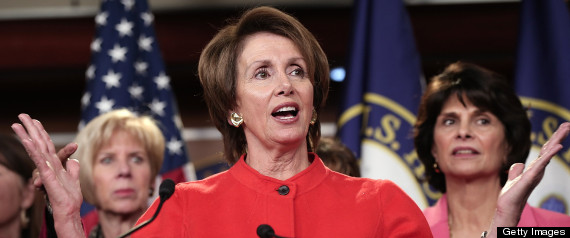
 House Minority Leader Nancy Pelosi (D-Calif.) speaks at a Jan. 2013 press conference on the Violence Against Women Act. (Win McNamee/Getty Images)

http://www.huffingtonpost.com/2013/02/28/violence-against-women-act_n_2781433.html?ncid=edlinkusaolp00000003
 
Source: Huffington Post
 
 WASHINGTON -- The Violence Against Women Act is finally heading to the president's desk this week after a dragged out political fight over expanding protections to Native American, LGBT and immigrant victims of abuse.

The House voted 286 to 138 on Thursday to pass the bipartisan Senate version of VAWA.
The vote came just after the House rejected its own GOP bill, 166 to 257, which drew loud cheers in the chamber. Sixty Republicans voted against the GOP bill.

Throughout the debate, House Republicans maintained that their bill would have covered all women. But the reality is that it didn't go as far as the bipartisan Senate bill. The House bill stripped out protections for LGBT victims of abuse, it didn't give tribal courts new authority in certain domestic violence cases and it added new eligibility restrictions for U Visas for abused immigrant women. The House bill also entirely left out two separate measures attached to the Senate bill: the SAFER Act, which helps law enforcement address a backlog in untested rape kits, and the Trafficking Victims Protection Reauthorization Act, which targets human trafficking.

The House Republican bill appeared doomed before it hit the floor. It had zero support from Democrats, and a growing number of Republicans were saying they couldn't support it. Seventeen House Republicans sent a letter to House Speaker John Boehner (R-Ohio) and House Majority Leader Eric Cantor (R-Va.) last month urging passage of a bipartisan bill. Ahead of Thursday's vote, Rep. Shelley Moore Capito (R-W. Va.) said she planned to vote for the Senate bill, as did Rep. Tom Cole (R-Okla.), a leading voice on tribal issues.
The GOP bill "does not adequately recognize sovereignty" and fails to give tribal courts "the tools they need to combat violence against women," Cole said in a statement, read aloud on the floor by a Democratic colleague.
 Act: House Passes Broader Senate Bill, Sends To Obama To Become Law
Enhanced by Zemanta

Sunday, February 17, 2013

Renew the Violence Against Women Act - NYTimes.com

3/02/16/opinion/renew-the-violence-against-women-act.html?nl=todaysheadlines&emc=edit_th_20130216&_r=0 

Source: NYTimes.com

Published: February 15, 2013

This week’s 78-to-22 vote in the Senate to reauthorize the Violence Against Women Act provided a refreshing demonstration of bipartisanship that the House would do well to emulate. Last year, the Republican-led House blocked the act’s renewal over objections to new protections for gay, immigrant and American Indian victims of domestic violence and sexual assault. It falls to Speaker John Boehner to see that this does not happen again.

The Senate bill would provide services, like shelters and legal help, for abuse victims regardless of their sexual orientation or immigration status. To ease passage in the House, the measure’s lead sponsors, Patrick Leahy, a Vermont Democrat, and Michael Crapo, an Idaho Republican, dropped a provision that would have increased the number of visas available for battered women who were undocumented immigrants. Mr. Leahy has said he will push for the increase in future immigration reform efforts.

Other sticking points remain, chiefly the new powers the Senate bill would grant tribal courts, which currently cannot pursue non-Indians who attack Indian women on tribal land. Domestic and sexual violence has been soaring in tribal communities, and the law needs updating to address this prosecutorial gap. The Senate bill requires that criminal defendants in tribal courts be accorded normal constitutional protections. Negotiators are working on possible changes to alleviate Republican concerns about ensuring fair treatment of non-Indian defendants.
In one important change from last year’s bill, the Senate agreed to tack on a renewal of another stalled measure, the Trafficking Victims Protection Act. This would toughen penalties for sex traffickers and impose stronger protections for trafficking victims. What should be an uncontroversial bill has been held up by Republicans over the Obama administration’s proper insistence that contractors under the act afford victims access to a full range of reproductive health services.
Seventeen Republican members have written to Mr. Boehner urging action on a Violence Against Women Act renewal that reaches “all victims and perpetrators of domestic violence.” This is a sign that the G.O.P.’s rejection by female voters in November is causing some rethinking. Mr. Boehner should allow a vote on the Senate bill.

Other sticking points remain, chiefly the new powers the Senate bill would grant tribal courts, which currently cannot pursue non-Indians who attack Indian women on tribal land. Domestic and sexual violence has been soaring in tribal communities, and the law needs updating to address this prosecutorial gap. The Senate bill requires that criminal defendants in tribal courts be accorded normal constitutional protections. Negotiators are working on possible changes to alleviate Republican concerns about ensuring fair treatment of non-Indian defendants.

In one important change from last year’s bill, the Senate agreed to tack on a renewal of another stalled measure, the Trafficking Victims Protection Act. This would toughen penalties for sex traffickers and impose stronger protections for trafficking victims. What should be an uncontroversial bill has been held up by Republicans over the Obama administration’s proper insistence that contractors under the act afford victims access to a full range of reproductive health services.
Seventeen Republican members have written to Mr. Boehner urging action on a Violence Against Women Act renewal that reaches “all victims and perpetrators of domestic violence.” This is a sign that the G.O.P.’s rejection by female voters in November is causing some rethinking. Mr. Boehner should allow a vote on the Senate bill.
Enhanced by Zemanta

Wednesday, May 16, 2012

Protect immigrant women from violence - CNN.com

  http://www.cnn.com/2012/05/16/opinion/anderson-hybels-vawa/index.html

  Source: CNN.com


By Leith Anderson and Lynne Hybels, Special to CNN
updated 8:08 AM EDT, Wed May 16, 2012


STORY HIGHLIGHTS
  • Leith Anderson, Lynn Hybels: House mulling new version of Violence Against Women Act
  • They say new version changes protections for immigrant women trafficked and abused
  • Plan makes U visa, which protects women victims who come forward, temporary
  • Writers: Abusers are empowered in new version of act; House should reject it
Leith Anderson and Lynne Hybels say a new bill could undermine protections for immigrant victims of sex trafficking
Leith Anderson and Lynne Hybels say a new bill could undermine protections for immigrant victims
of sex trafficking
 

Tuesday, April 17, 2012

Native Women and Sex Trafficking: An Overlooked Crisis - Working In These Times

http://inthesetimes.com/working/entry/13002/native_women_and_sex_trafficking/

Source: In These Times

TUESDAY APR 17, 2012 11:38 AM

BY R. M. ARRIETA


"Sundance in Red" is part of the Traded Moons exhibit at San Francisco's Galeria de la Raza. (Artwork by Geri Montano)
Many people have read or heard reports of the global crisis of sex trafficking and prostitution. But few are aware of how disproportionately Native American women and girls are impacted.
In San Francisco, native artist Geri Montano examines this critical overlooked issue in her exhibit, “Traded Moons,” which runs from April 14 to May 12 at the Galeria de la Raza gallery.
Montano told In These Times, “I acknowledge sex trafficking is a crisis overseas and in many cultures around the globe. It’s reached crisis proportions. But being of Native descent and rarely hearing about the sex trafficking which affects Native American women here in the U.S. and First Nations people..., I was moved to bring this to public attention.”
Montano addresses this ongoing crisis in her mixed medium work, which includes collages, sketches, drawings and images of indigenous women and girls, surrounded by symbols of native culture.
In “Sundance in Red,” a young girl with long black braids wears a red fur-lined dress and oversized red high heels, a pair of handcuffs dangle from one wrist. Paper doll cutouts surround the image. Another work, “7th Moon,” shows a young girl wearing her hair in traditional Hopi buns and necklace, in a garter belt, black stockings and red shoes. There are moon images around her. She stares out at the viewer.
Says Montano, “The forced removal of native children and the trauma of relocation and abuse correlates strongly to sex trafficking. There is a socio-political link. Traffickers target women and girls who are living in vulnerable conditions due to poverty, previous abuse, or during times of political upheaval.”
A bill introduced in October by U.S. Senate Indian Affairs Committee Chairman Daniel K. Akaka (D-Hawaii)—S.B. 1763, or the Stand Against Violence and Empower Native Women (SAVE Native Women) Act—would provide Indian Country with jurisdiction over non-Indians who commit crimes on Indian lands, improve the Native programs under the Violence Against Women Act (VAWA), and improve data gathering programs to better understand and respond to sex trafficking of Native women. It would also require the National Institute of Justice to include women in Alaska Native Villages and sex trafficking in its study of violence against Indian women.
Nicole Matthews, executive director of the Minnesota Indian Women’s Sexual Assault Coalition (MIWSAC) told Indian Country Today, “Native women are at exceptionally high risk for poverty and sexual violence, which are both elements in the trafficking of women.” Matthews co-authored "Garden of Truth," an October 2011 report on prostitution and trafficking of native women in Minnesota. Conducted by MIWSAC and the San Francisco-based Prostitution Research & Education, the study is based on interviews with more than 100 Native women.
("Garden of Truth" follows a 2009 report by MIWSAC, “Shattered Hearts” (PDF), which documented the commercial exploitation of native women and girls in Minnesota and was sparked by various reports from tribal advocates in South Dakota and Minnesota of indigenous females being trafficked over state lines and into Mexico as well as police rescuing native girls who had been lured off reservations and taken onto ships in port.)
A United Nations report released this month, “Global Report on Trafficking in Persons,” says 2.4 million people around the world are traded into slavery each year. Eighty percent, or 1.9 million, are victims of sex trafficking.
Yuri Fedotov, the head of the U.N. Office on Drugs and Crime, told a day-long General Assembly meeting on trafficking that 17 percent are trafficked to perform forced labor, including in homes and sweatshops. He said $32 billion is being earned annually by those who run human trafficking networks, and that two-thirds of victims are women. “At any one time, 2.4 million people suffer the misery of this humiliating and degrading crime,” Fedotov told the assembly.
Some of the traffickers pull women and girls from Native American reservations. In its "Shattered Hearts" report, MIWSAC says the historic experiences of native women in the United States make them “uniquely vulnerable to commercial sexual exploitation, and unique in the ways that such exploitation impacts their well-being.”
Melissa Farley, founder of Prostitution Research and Education, who co-authored the "Garden of Truth" report, and who spoke April 14 at a panel on Montano’s exhibit, told Indian Country Today, “It has rarely been included in discussions of sexual violence against Native women. The...women in this study did not choose prostitution. Instead, prostitution chose them, through a combination of harms perpetrated against them and a lack of escape options.”

Montano added, “Global sex trafficking has reached crisis proportions. ... Sex trafficking of Native American women ... is widespread.”
Related articles
Enhanced by Zemanta