Showing posts with label UN Women. Show all posts

Tuesday, July 9, 2013

$80k for war on human trafficking

Source: asiaone news

http://news.asiaone.com/News/AsiaOne%2BNews/Crime/Story/A1Story20130705-434896.html

Public seminars on sex trafficking, a forum to educate businesses on how to fight the scourge, and even a photo exhibition.
These are among the initiatives that the Singapore Inter-Agency Taskforce on Trafficking-in-Persons (TIP) will be funding this year at a cost of $80,000.
TIP's Public Awareness Grant programme was launched in January to help those who want to assist in combating trafficking "put their ideas into concrete action", said task force co-chairman Ng Yeow Boon.
The money will go to anti-trafficking volunteer organisation EmancipAsia; an initiative by the National University of Singapore (NUS) and Singapore Management University (SMU); and the Humanitarian Organisation for Migration Economics (Home) and UN Women, which made a joint submission.
TIP did not elaborate on how the grant will be distributed but said it would go only to these three efforts this year.
SMU and NUS will use the grant to hold two public seminars on labour and sex trafficking.
EmancipAsia founder Sylvia Lee said her organisation plans to use part of the funding to hold a roving photography exhibit of award-winning US photographer Kay Chernush's work on trafficking and to collect much-needed data on trafficking here.
"Data is lacking partly because a lot of cases are not reported as people don't want to talk about the subject," she said.
"Any information we collect will help shed light on the issue and on the ways in which we can better address it."
Home and UN Women will hold several events, starting with a forum in November to educate and involve the commercial sector in combating trafficking.
"Businesses may be ignorant of the fact that some of their employees may have been trafficked or exploited by traffickers," said Home founder and chief executive Bridget Tan.
She cited the example of migrant workers in hotels, which are "popular destinations for trafficked women to provide services to customers".
As "more traffickers are also using budget airlines to transport their victims", airlines and hotels could hand out pamphlets on trafficking and highlight the helplines available so that victims will know how to get in touch with the authorities, she said.
Local human rights advocates say trafficking is a worrying issue for the region, with the illegal industry worth nearly US$10 billion (S$12.7 billion) in Asia.
Said Ms Tan: "I'm glad that our Government has decided to give funds for this.
"There's so much ignorance about human trafficking here, and corporate social responsibility can be crucial in addressing this problem."
hpeishan@sph.com.sg
Enhanced by Zemanta

Saturday, December 8, 2012

International Development - Fighting human trafficking: 5 lessons from the field

http://www.devex.com/en/news/fighting-human-trafficking-5-lessons-from-the/79899?source=ArticleHomepage_MostPopularNews_4&goback=%2Egde_4165508_member_193690185

Source: DEVEX,COM

Women-Trafficking.jpg
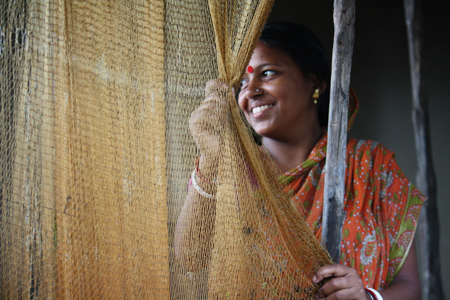
A woman from a fishing village in West Bengal in India. Her village is known for high levels 
of trafficking of women and girls. Photo by: Anindit Roy-Chowdhury / UN Women / CC BY-NC-ND


By Carol Michaels O'Laughlin on 05 December 2012

In the coming days, an important worldwide campaign against gender-based violence will come to an end. These “16 Days Against Gender Violence” began on Nov. 25, the International Day for the Elimination of Violence Against Women, and they will end Dec. 10 on Human Rights Day.

This campaign comes two months after U.S. President Barack Obama, in an address to Clinton Global Initiative, outlined new measures to tackle modern slavery in the United States and abroad. He called on the international community to step up efforts in assisting an estimated 20 million victims trafficked worldwide.

The attention to the issue and the new steps to eradicate human trafficking are timely and critical, as is the discussion on the lessons already learned about addressing the problem.

Trafficking in persons is a global phenomenon that is an affront to basic human rights across countries and cultures. Many forms of inequality are woven into what creates an enabling environment for trafficking, including income disparities, ethnicity, age, sexual orientation, and gender discrimination. Men, women and children are trafficked for forced labor, sexual exploitation, their organs, and petty crimes.

As a result, they suffer profound trauma that spreads to their families and communities. The situation of women and girls is often worsened by prevalent gender stereotypes and discrimination that makes them more vulnerable and prevents effective recovery.

For the past two decades, public and private organizations around the world have been fighting human trafficking. Their work has yielded important results and lessons for consideration by the international community.

1. Message mishaps

Some messages used around the world to counter human trafficking have failed to lower women’s vulnerabilities and may have worsened their situations. In Asia and Europe, past campaigns scared, rather than informed, women of the risks of trafficking. Posters that depicted traffickers kidnapping and beating women, and messages such as “Let’s protect our women” and “Do not trust anyone offering a job to a woman – he is a trafficker,” perpetuated the stereotype that women cannot migrate safely or find legitimate work, which results in higher seclusion of women looking for a way out.

Conversely, the following messages have shown to be effective in reducing stigma and engaging communities in dialogue and joint action: “Safe migration can lead you to a better future; check all the necessary papers yourself,” “What do you understand of the suffering of a survivor of human trafficking?” and “People who have survived trafficking are now fighting against it; are you with them?”

2. Focus on livelihoods

Economic instability is an important root cause of trafficking and many anti-trafficking initiatives have failed to address it, partly due to limited resources. Experience has shown that prevention or reintegration is not complete until a survivor or at-risk woman is economically self-sufficient. Skills training, educational support and business start-up assistance have empowered women to restore their self-confidence and pave the way to a better future for themselves and their families.

3. Alternatives to full-time shelters

Security and full-time care are critical for survivors’ recovery, but severe restrictions on the freedom of shelter residents can lead to increased feelings of isolation and despair. Various organizations have taken steps to offer different models of care suited to the circumstances of individual survivors, including drop-in centers offering psycho-social support, job skills training and legal aid. Transit centers, where survivors can stay for a few days, are currently being piloted in Asia to reduce dependence on home shelters and promote reintegration of survivors in communities of their choice.

4. Importance of family counseling

While reintegration standards have been improving over the past decades, one important aspect often remains unaddressed. It is common for families in certain regions to be complicit in the exploitation of their children. Despite this reality, it is not uncommon to see trafficking survivors being returned to the same vulnerable situation that led them to being trafficked in the first place – in many cases to an even more unstable situation, since family culpability and community rejection can be high for a survivor of trafficking. Initiatives to integrate family and community counseling into survivor case management are necessary to ensure that survivors return to supportive environments.

5. Qualified personnel

Another persistent challenge in assisting trafficking survivors in developing countries is the low qualification and competency of psychologists and social workers who frequently harbor biases against the women and girls in their care. In some cases, social workers have urged women to forget their experience and hide their past, leaving victims with unresolved feelings of shame and the fear that their past might be uncovered. Some organizations in South Asia have proposed marriage as a strategy for reintegration and spread the idea that to marry a victim of trafficking is an act of piety, condemning these women to live with men who do not respect them. Recognition of the problem and intensive training with all staff who work with survivors is needed to develop a decent, respectful and needs-based support system.

During these 16 Days Against Gender Violence, we thank the thousands of volunteers and professionals who are empowering communities to respect and protect the rights of every citizen and who are making a difference for generations to come.

This article is based on the paper Addressing inter-linkages between gender-based violence & trafficking in persons to prevent reinforcement of inequalities, published as part of Global Thematic Consultation on Addressing Inequalities.

Enhanced by Zemanta