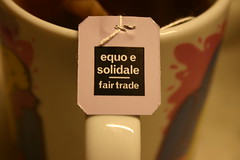
Showing posts with label Fairtrade certification. Show all posts

Saturday, April 23, 2011

The kids making our kids’ Easter Eggs — SOS Children

Easter eggs // OstereierImage via Wikipedia
Apr 21, 2011 09:29 AM
 
When British children tuck into their Easter eggs on Sunday, few will know their chocolate treats have been made by African children working as modern day slaves.

Sixty per cent of the chocolate in UK shops is produced using cocoa beans from Ghana and the Ivory Coast.
Last year, posing as cocoa dealers, a BBC team found a significant chunk of the chocolate sold in the UK is produced by children as young as eight forced to work seven hours a day.
A new report released by World Vision is asking people to slow down on their chocolate eggs and think of exploited children this Easter.

We’re eating cheap chocolate because of trafficked children, child slavery and hazardous labour,” said the charity’s Tim Costello.

About 97 per cent of the world’s supply of chocolate does not have the ethics certificate showing that they were made without using forced and child labour, the report said.

It also revealed that as well as child labour, human trafficking is playing a huge part in making chocolates.
World Vision is suggesting a few simple strategies to wipe out child labour in chocolate production. It is calling for a certificate scheme to prove no child labour was used in making each product. Child labour is often used to make up for the lower prices, it says.

The BBC’s Panorama: Chocolate, the Bitter Truth a made a big impact raising awareness and promoting the fact that people need to take more responsibility for the food they eat and where it comes from.

Reporter Paul Kenyon investigated the supply chain that delivers most of the chocolate sold in the UK,  more than half a million tonnes a year. He found evidence of human trafficking and child slave labour. The programme also found that there is no guarantee, despite safeguards, even with chocolate marketed as FairTrade, that child labour has not been used at least somewhere along the supply chain. By the time it hits the High Street, cocoa is very hard to trace.

In a village in Ghana, Kenyon met 12-year-old Ouare Fatao Kwakou, who was sold to traffickers by his uncle and taken from neighbouring Burkina Faso to work as a cocoa picker. More than a year later, he had not been paid a penny for his work - the profits of his labour went instead to his new cocoa masters and to the uncle who sold him.

Hayley attribution
The kids making our kids’ Easter Eggs — SOS Children
Source:  soschildrensvillages.org.uk
Enhanced by Zemanta

Tuesday, April 5, 2011

Trade as One - Blog - Fair Trade as a Response to Slavery

Fair TradeImage by flydown via Flickr

March 08, 2011 @ 08:37 AM

I remember sitting in a small room in Mumbai, India, listening to a woman who led a business close to the red light district that employed women who had come out of commercial sex work. She spoke of how hard it was to change the course of the lives of women with which she worked. Some had come voluntarily out of the brothel to find a different life, to be trained in a skill in making products that were sold internationally. She spoke with an obvious sense of deep sadness of how difficult it was to pour months of care and training into a woman that she took in to the business only to see them for different reasons slip back into the life from which they came. Her focus was on creating enough work to keep the women fully employed. As she shared her greatest need – that of ensuring enough orders to sustain the momentum of their business and keep the women fully employed – this good woman could not mask her personal sense of guilt of not being able to provide for her women the opportunity they needed to keep them away from the grip of their old life.

Her husband worked with law enforcement to expose the trafficking of young girls into brothels and spoke of the very palpable sense of evil and danger that he confronted daily. The whole experience for me was an epiphany, although I did not recognize it as such at the time. The good that this couple were attempting to do in an atmosphere of bondage and abuse was a challenge to my sense of significance in life. Not just whether my life had enough meaning when compared to what they were doing, but I had to ask myself if I had the courage to do something as brave as them and risk looking back on years of labor to ask how much I had really achieved? I did not know it at the time, but those two days I spent with them would alter the course of my future.

I find myself seven years later running a business that exists to create enough work for businesses like that one I visited. Here is how I see Trade as One‘s mission is an important part of a response to slavery:

1. After all the hard and dangerous work of releasing someone from the grips of slavery, if they do not have a dignified source of income that pays a living wage, they can be just as vulnerable as they ever were.


2. The reason why people are trafficked and enslaved in the first place is because they are poor. This poverty deprives them of financial stability and of the protection of the rule of law. It is a noble act to rescue people from drowning in a river. After seeing so many – 27 million slaves alive today – one has to ask the question of why they are falling into the river further upstream. Providing dignified work to the poor allows them to stay well away from its dangerous banks. It stops them from running out of options and migrating or being sold to the urban slums or brothels.

3. Fair Trade is using the market, not charity, to include the marginalized. As awareness and participation in it grows, it becomes an increasingly powerful message to larger corporations that there are a lot of people who are stating with their wallets that the way in which people are treated when they are making the products we buy is a very important issue. This could be the most influential role Fair Trade has in the long term. By proving that a large and viable market exists for ethically sourced products we will be able to change the way the rest of business is done.

4. We need practical, every day actions that we can engage in. Writing a check to a charity that works in this area is great and we need to do more of it. Phoning your senator, yes but once you have taken three minutes and done that, then what? Hosting a film that raises awareness, for sure. We need lots of ways to respond. Fair Trade is a way to decide, on a daily basis if you want, to take small actions that create paths out of slavery. Eating white rice from the Surin co-operative in Thailand in one of the poorest regions of that country keeps communities together and stops them from having to abandon their rural homes and migrate to the city. If everyone made small purchases the collective effect on the ability of organizations like the one I spent time with in Mumbai would be very large indeed.

Trade as One - Blog - Fair Trade as a Response to Slavery

Source: radeasone.com
Enhanced by Zemanta

Wednesday, December 22, 2010

Will Londoners Make 2012 The First Fair Trade Olympics? | End Human Trafficking | Change.org

by Amanda Kloer December 17, 2010 06:42 AM (PT)
December 17, 2010 06:42 AM (PT) 
After London won the 2012 Olympics, the London Organising Committee of the Olympic Games (LOCOG) made a commitment never-before made by an Olympic committee: the London games would use Fair Trade certified products in catering whenever possible. Now that the time has come to award catering contracts, a group of Londoners from Fairtrade London are holding them to that promise. Will the 2012 Olympics be the first ever Fair Trade games?

Fair Trade activists in the U.K. have secured verbal commitments from LOCOG that all tea, coffee, sugar, bananas and chocolate snacks used in official Olympic catering will be sourced from Fair Trade certified sources. Those are generally considered to  the most widely-available Fair Trade products, and in the case of the cocoa and sugar industries, areas where Fair Trade is most needed to prevent human trafficking. Any Fair
Trade commitment from such as massive food purchaser (think of all those athletes' appetites) is a huge victory, but Fairtrade London thinks LOCOG can do more.

So they've launched a campaign to ensure LOGOC formalizes their commitment to Fair Trade in the catering contracts they'll be issuing in the coming weeks. But they're not stopping there. They're also asking LOCOG to ensure sugar used in baked goods, not just for coffee and tea, is Fair Trade; expand their list of Fair Trade products to include other products like rice, soap, and alcohol, and promote their use of Fair Trade certified products, as well as other benchmarks. You can read the whole list here.

A truly Fair Trade 2012 Olympics would not only bump up demand for Fair Trade certified products around the world, it would shine a spotlight on how Fair Trade can reduce child, forced, and slave labor around the world. A Fair Trade Olympics would also help encourage companies like Cadbury, who have been leaders in Fair Trade cocoa sourcing and are the exclusive confectionery provider of the 2012 games, maintain and even increase their Fair Trade commitment. And of course, if LOGOC actually promotes their Fair Trade sourcing, it could introduce new consumers to Fair Trade as a means to reduce labor exploitation around the world.

You can support Fairtrade London by signing their petition here. If you're not from the U.K., just add your country into the "Borough" line. After all, the eyes of the world will be on London in 2012, so LOCOG should know the world is watching now. And we're looking out for the first ever Fair Trade Olympics.

Photo credit: **Maurice**
Amanda Kloer is a Change.org Editor and has been a full-time abolitionist in several capacities for seven years. Follow her on Twitter @endhumantraffic
 
 Source: End Human Trafficking
 Will Londoners Make 2012 The First Fair Trade Olympics? | End Human Trafficking | Change.org
Enhanced by Zemanta

Monday, December 20, 2010

Catholic Church Fights Child Labor on Indian Tea Plantations | End Human Trafficking | Change.org

by Amanda Kloer December 03, 2010 02:10 PM (PT) Topics: Child Labor, Fair Trade, Workers' Rights
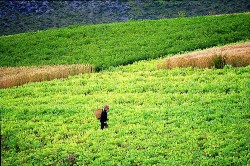
Child labor is common in the tea plantations of West Bengal, where children are kept out of school and forced to work long hours harvesting tea in often treacherous conditions.

Many of these children come from the Dalit caste, and their families may have been indentured servants in the tea industry for generations. But the Catholic Church in India has launched an effort to reduce child labor and indentured servitude in the tea industry. You can help them by supporting Fair Trade certified plantations.

In the tea plantations of West Bengal, a region of India that produces massive quantities of tea for international export, over two thousand children work alongside their families harvesting and processing the crop. These children are prevented from attending school and work long hours, often in hot conditions with little clean water and less-than-adequate sanitation. They earn pennies a day for their work, when they are paid at all.

For many families, life on the tea plantation and the poverty-wages, mistreatment, and indentured servitude that comes with it has existed for generations. But social stigma against their caste makes it difficult for adults to find higher-paying work, so whole families labor with no end in sight.

Fortunately, the Diocese of Jalpaiguri -- part of the Roman Catholic church -- has taken up the cause of child labor in the West Bengal tea industry. They've developed an economic empowerment and educational program specifically for Dalit children working in tea plantations. Social workers have been teaching Dalit families about the importance of education, paying school fees for children, and providing transportation to local schools. Since the program began in 2004, they've moved over 500 children from the tea plantation into school, almost a quarter of the total child laborers in the area.

But despite the effectiveness of the church's programs, child labor remains a significant part of the tea industry.

In part that's due to the oppression of certain groups in India, like the Dalits, who remain in indentured servitude for generations. In part it's because of a complete lack of oversight of working conditions in India, where child labor is technically illegal. And in part it's due to a desire to keep costs down (child labor is cheaper than adult labor) to maximize profit and compete in an international market. The Diocese of Jalpaiguri is only able to solve a third of the problem with education. The other two thirds can be solved by Fair Trade.

Fair Trade certified tea means that no child, forced, or slave labor was used to produce the tea, and that workers were paid a living wage. When consumer demand for Fair Trade tea goes up, more companies will buy Fair Trade certified tea and more plantations will become Fair Trade certified to meet the market demand. For example, Honest Tea recently announced they were going 100% Fair Trade, hugely expanding the demand for Fair Trade tea. Snapple, however, buys 0% of it's tea from Fair Trade certified sources. If they switched just 10% of tea purchases to Fair Trade, they'd make a big difference in the lives of Dalit children in West Bengal.

Tell Snapple it's time to live up to their motto and actually use the best stuff on earth to make their product: Fair Trade certified tea. By signing the petition, you'll help further the existing efforts to reduce child labor in the tea industry for all children.
Photo credit: preetamrai
Amanda Kloer is a Change.org Editor and has been a full-time abolitionist in several capacities for seven years. Follow her on Twitter @endhumantraffic
Source: END HUMAN TRAFFICKING

Catholic Church Fights Child Labor on Indian Tea Plantations | End Human Trafficking | Change.org
Enhanced by Zemanta

Thursday, March 25, 2010

Tracing the bitter truth of chocolate and child labour

Page last updated at 12:09 GMT, Wednesday, 24 March 2010

Reporter Paul Kenyon with cocoa beans in Ghana
Paul Kenyon posed as a cocoa dealer to find child labourers
This Easter, Britons will eat their way through 80m chocolate eggs without the slightest taste of how the essential ingredient in our favourite treat is harvested.

The truth, as BBC Panorama reporter Paul Kenyon discovered when he posed as a cocoa dealer in West Africa, leaves a bitter taste.

In an investigation into the supply chain that delivers much of the chocolate sold in the UK - more than half a million tonnes a year - the BBC found evidence of human trafficking and child slave labour.

Panorama also found that even chocolate marketed as Fairtrade cannot rule out that that, despite having standards and auditing in place, there may still be a possibility of child labour - as defined by the International Labour Organisation (ILO) in the supply chain.

Dangerous tools
By the time it hits the High Street, cocoa becomes increasingly hard to trace.
As it passes from farmer to buyer to wholesalers, exporters, importers and manufacturers on the journey from cocoa pod to dried bean to chocolate bunny, it becomes more and more likely that the source of the bean will be lost.

Together, the two countries produce 60% of the world's cocoa and more than 10m people survive off the industry.

In a village in Ghana, Kenyon met 12-year-old Ouare Fatao Kwakou, who was sold to traffickers by his uncle and taken from neighbouring and impoverished Burkina Faso to work as a cocoa picker.
Ouare Fatao
Ouare Fatao was taken from Burkina Faso and sold as a cocoa picker
More than a year later, he had not been paid a penny for his work - the profits of his labour going instead to his new cocoa masters and to the uncle who sold him.

In the port city of San Pedro in Ivory Coast, Kenyon posed as a trader and sold on cocoa beans which had been produced by the worst forms of child labour.

It is at this point where the traceability of the cocoa ends and it can be sold on to major chocolate makers worldwide who cannot say how it was sourced.

The end buyer of Kenyon's child labour beans was one of the world's biggest exporters who in turn sell it on to several well known high street names.

Fairtrade
Panorama has seen documents which show that in September 2009, the Fairtrade cocoa co-operative in Ghana which supplies Cadbury and Divine suspended seven out of 33 of their cocoa farming communities in one of the major growing regions after they were found to be using the worst forms of child labour.

The co-operative, Kuapa Kokoo, is supplied by 1,200 different cocoa communities that are made up of more than 45,000 farmers.

Following remedial action by Kuapa Kokoo, the Fairtrade suspension was lifted in early January. The co-operative said it is the only time that it has failed an audit of its farmers' practices with respect to child labour in 15 years as a Fairtrade supplier.

Harriet Lamb, executive director of the Fairtrade Foundation in the UK, said the suspensions of farming communities that are suspected of using child labour is evidence that the Fairtrade system is working.
It means that unlike other chocolate products, Fairtrade cocoa is traceable to the source farm and action can be taken when bad practices are uncovered, as happened in the case of Kuapa Kokoo.
cocoa beans drying in the sun
Cocoa beans are dried in the hot sun before being sold on to wholesalers

"We make sure in that case that absolutely we're not selling any cocoa on Fairtrade terms while we put in place the systems and structures to stop it happening again," she said of the recent seven suspensions.

In a statement to Panorama, Cadbury said it had not been supplied with any cocoa beans from any of the seven communities in question either before or during the suspension.

It said: "The fact that child labour issues were identified…is evidence the Fairtrade certification process is working."

No schooling
In Ivory Coast, Panorama met a farmer who relies on his 8-year-old brother and 11-year-old son to help harvest the cocoa that goes to the co-operative supplying Nestle as part of its recent Fairtrade initiative. In January, the company began selling Fairtrade four-finger Kit Kats in the UK.
In cocoa-growing West Africa, subsistence farmers who cannot afford to pay wages have for generations seen children as free labour.

Neither of the young boys goes to school and figures compiled by the US State Department show that they are among an estimated 100,000 Ivorian children who are child labourers in the cocoa industry.
Although Nestle does buy from the cooperative that the farmer sells his crop to, the company said in a statement: "Panorama has been unable to provide us with any evidence whatsoever of child labour being used to produce cocoa beans purchased by Nestlé."

'Complete failure'
In America - the world's largest consumer of chocolate - US Congressman Eliot Engel proposed legislation nine years ago that would have required all chocolate sold in America to state on the label that it is slave labour free or child slave labour free.

But in 2001, he agreed instead to an industry regulated six-point plan to put an end to child labour in the chocolate trade, with the threat of legislation looming should they fail to act.
Burkina Faso village
Impoverished villages in Burkina Faso are a source of child labour
"I didn't trust them at first, but once they came around I trusted them and you know the proof is in the pudding so to speak. If they became hostile or were dragging their feet, we could always resort to the legislation," he said of the United States' chocolate giants.

But lawyer Terry Collingsworth, who has acted against the chocolate industry, said the plan is a "complete failure" and it is time to enact the law that Mr Engel first floated nine years ago.

"Let's dust off that law, and if you mean what you say and you want to stop the use of child slaves producing products like cocoa, let's pass that law, and then we'll have something to work with so that we can successfully stop this crime."

A result of the partnership - a collaboration between Mr Engel, his colleague Senator Tom Harkin, and the US chocolate industry - was to establish a foundation to help end the worst forms of child labour in West Africa, known as the International Cocoa Initiative (ICI).

Executive director Peter McAllister said the chocolate companies recognise that there is a problem and are doing their best to find a solution to the practice of using child labour, adding that human rights issues are "complex and challenging" for the companies involved.

"If there wasn't a problem we wouldn't be here so we acknowledge the problem," he said of the widespread practice of using children - a sensitive issue on the ground in West Africa - both politically and economically for the families that need the income from their children working.

Mr McAllister said that is why the ICI is working in 243 communities in West Africa and has already made sure that 16,000 children are in school.

Panorama - Chocolate: The Bitter Truth, BBC One, Wednesday, 24 March at 2100GMT and then, for UK audiences only, on the BBC iPlayer

http://news.bbc.co.uk/panorama/hi/front_page/newsid_8583000/8583499.stm
Reblog this post [with Zemanta]