Showing posts with label Anti-Slavery International. Show all posts

Thursday, June 18, 2015

Asia needs better data, more funding to stamp out modern day slavery - Business Insider

"Nick Grono, head of the Freedom Fund, said the anti-slavery private donor fund would spend $5 million on an initiative to encourage global retailers and producers to tackle forced labor by developing tools to boost supply chain transparency."

(Reporting By Astrid Zweynert; Editing by Katie Nguyen; Please credit the Thomson Reuters Foundation, the charitable arm of Thomson Reuters, that covers humanitarian news, women's rights, trafficking, corruption and climate change. Visit www.trust.org)

Read MORE 

Asia needs better data, more funding to stamp out modern day slavery - Business Insider:


Thursday, August 8, 2013

Malians Call for Criminalization of Slavery

http://www.voanews.com/content/malians-call-for-criminalization-of-slavery/1725960.html

Voice of America
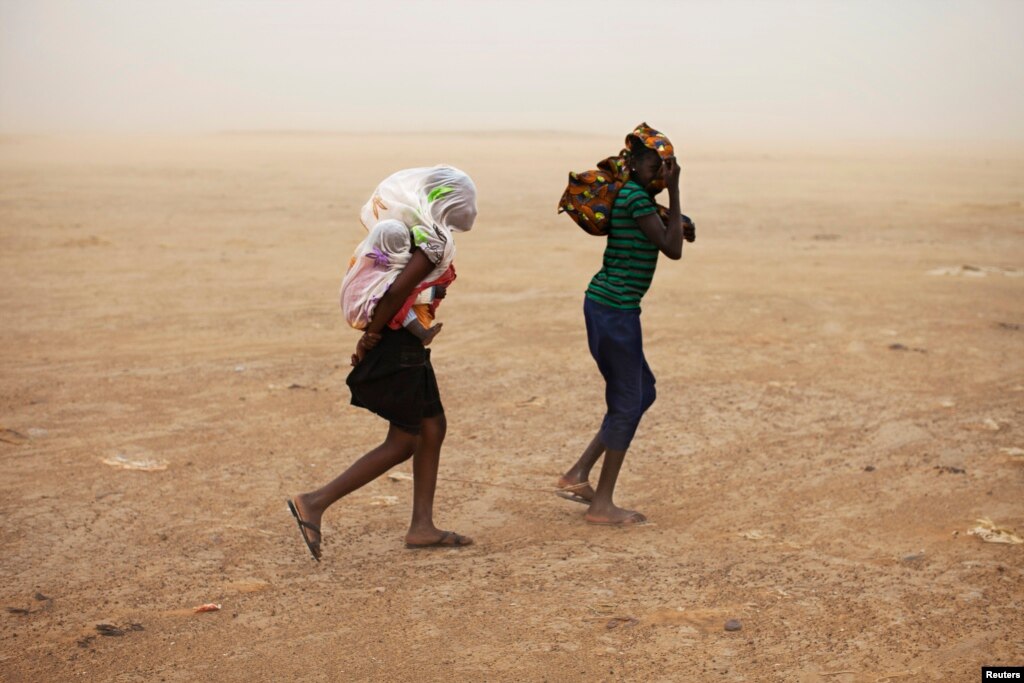
Women wrapped in shawls walk through a sandstorm in Timbuktu, July 29, 2013.

Ivan Broadhead
 “We are trying to prioritize the eradication of a tradition that we call descent-based slavery,” said Oyahit. “What this means is that across northern Mali and the Sahel, a child born to a woman who is a member of the slave caste, living in a family that has traditionally kept slaves, is itself condemned to being a slave. There is no law criminalizing this practice.”

Pursuing freedom, redress

Jim Wormington is a senior legal analyst with the American Bar Association's Rule of Law Initiative. He described how, in 2012, the ABA opened a legal clinic in the northern city of Gao providing advocacy support to subjugated Malians seeking freedom and redress.

“Certainly they described themselves as ‘slaves.’ They will say they have a 'master' whom they work for, often without pay, whether watching cattle or performing household tasks," he said. "People also described the violations they suffered... like, being beaten if they made a mistake. We’ve heard a number accounts of women who are raped, by their ‘masters’".

The clinic prepared cases against 18 slaveholders for crimes including assault and sexual offenses. Wormington said that while the coup occurred before the first case went to trial, the ABA continues to document slavery among internally displaced Malians.

“We’ve actually supported Temedt’s effort to draft that law for slavery itself to be clearly criminalized at the beginning of 2012. Advocating for the adoption of that law would be most appropriate after Mali’s elections, when there is again a government we can advocate to,” said Wormington.

Mali’s recent turmoil has concentrated the will of activists to eradicate slavery. Oyahit said Temedt has been lobbying the country's presidential candidates. “We wrote to all the candidates about our draft law,” he explained. “They know our 45,000 members are prepared to vote for any presidential candidate who will back our proposal.”

Exposing problem

Sarah Mathewson, Africa program coordinator for Anti-Slavery International, believes 250,000 Malians may be living in slavery. She said persuading national leaders about the extent of the problem has always been a challenge.

“Even if it were a few thousand people, even if it were one person, it should be an urgent priority to emancipate people. How can Mali move forward to re-establish democratic systems, with all its citizens equal, engaged and participating in the progress of society if a significant number remain enslaved to others? I think that’s critical to address,” said Mathewson.

The fight is unlikely to end, however, even if a law is passed. Niger criminalized slavery in 2003 and Mauritania in 2007. In Mauritania, only one slave owner has since been prosecuted. Mathewson said the process is complicated by other factors too.

“There are strong economic interests in the slavery system, and strong interests in not upsetting the slave-owning classes who are often quite privileged elites with connections to government,” she said.

In Mauritania, the anti-slavery group, IRA Mauritanie, formed its own political party ahead of legislative elections expected in October. Temedt members look forward to achieving the same political acceptance. Mali’s recent conflict set their cause back years, they say, and now is the time to redouble the effort to end slavery, not just in Mali, but across the Sahel.
Enhanced by Zemanta

Monday, April 15, 2013

Slavery: the case for compensation | Global Development Professionals Network | Guardian Professional


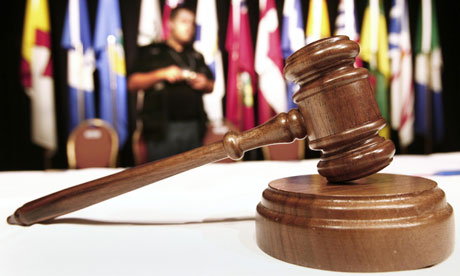
Gavel to be used during meeting between Native groups and First Ministers sits on table in Kelowna
Most European countries provide the right to compensation for trafficking victims from perpetrators and the state, but few receive any. Photograph: Andy Clark/Reuters
The Council of Europe's 2005 anti-trafficking convention gives people who have suffered the ultimate indignity of being sold and exploited as commodities the chance to stand up and demand justice for the unspeakable wrongs they have suffered.
TO CONTINUE, GO TO:

Enhanced by Zemanta

Monday, April 8, 2013

Modern-day slavery: an explainer | Global development | guardian.co.uk

http://www.guardian.co.uk/global-development/2013/apr/03/modern-day-slavery-explainer

Source: guardian.co.uk
 
Slavery was abolished by most countries 150 years ago, but bonded and forced labour, trafficking and exploitation persist
 

guardian.co.uk,


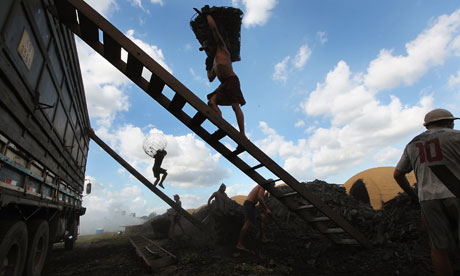
MDG : Slavery : slave workers found in illegal charcoal camps in Amazon, Brazil
A worker carries a bag of charcoal on to a truck in Rondon do Para. Brazil was the last country to withdraw from the transatlantic slave trade. Photograph: Mario Tama/Getty

What is modern-day slavery?

About 150 years after most countries banned slavery – Brazil was the last to abolish its participation in the transatlantic slave trade, in 1888 – millions of men, women and children are still enslaved. Contemporary slavery takes many forms, from women forced into prostitution, to child slavery in agriculture supply chains or whole families working for nothing to pay off generational debts. Slavery thrives on every continent and in almost every country. Forced labour, people trafficking, debt bondage and child marriage are all forms of modern-day slavery that affect the world's most vulnerable people.

How is slavery defined?

Slavery is prohibited under the 1948 Universal Declaration of Human Rights, which states: "No one shall be held in slavery or servitude: slavery and the slave trade shall be prohibited in all their forms."
Definitions of modern-day slavery are mainly taken from the 1956 UN supplementary convention, which says: "debt bondage, serfdom, forced marriage and the delivery of a child for the exploitation of that child are all slavery-like practices and require criminalisation and abolishment". The 1930 Forced Labour Convention defines forced labour as "all work or service which is exacted from any person under the menace of any penalty and for which the said person has not offered himself voluntarily".
As contemporary systems of slavery have evolved, new definitions, including trafficking and distinguishing child slavery from child labour, have developed.

Some of the forms of slavery are:

Bonded labour: people become bonded labourers after falling into debt and being forced to work for free in an attempt to repay it. Many will never pay off their loans, and debt can be passed down through the generations.

Forced labour: where people are forced to work, usually with no payment, through violence or intimidation. Many find themselves trapped, often in a foreign country with no papers, and unable to leave.

Descent-based slavery: where people are born into slavery because their families belong to a class of "slaves" within a society. The status of "slave" passes from mother to child.

Trafficking: the transport or trade of people from one area to another and into conditions of slavery.

Child slavery: children are in slavery as domestic workers, forced labour – in, for example, the cocoa, cotton and fisheries industries – trafficked for labour and sexual exploitation, and used as child soldiers.

Early and forced marriage: women continue to be married without consent, often while still girls, and forced into sexual and domestic servitude.

How many people are enslaved across the world?

Due to its illegality, data on modern-day slavery is difficult to collate. The UN's International Labour Organisation (ILO) estimates that about 21 million people are in forced labour at any point in time. The ILO says this estimate includes trafficking and other forms of modern slavery. The only exceptions are trafficking for organ removal, forced marriage and adoption, unless the last two practices result in forced labour.

The ILO calculates that 90% of the 21 million are exploited by individuals or companies, while 10% are forced to work by the state, rebel military groups, or in prisons under conditions that violate ILO standards. Sexual exploitation accounts for 22% of slaves.

On trafficking – that is, people trapped in forced labour as a result of internal or cross-border migration – the ILO calculates that 29% end up in forced labour after crossing international borders, the majority through trafficking for sexual exploitation. About 56% of the 21 million are exploited where they live.

Where does slavery exist?

Slavery exists in one form or another in every country. Asia accounts for more than half of the ILO's 21 million estimate. In terms of percentage of population, central and south-east Europe has the highest prevalence of forced labour, followed by Africa, the Middle East, Asia Pacific, Latin America and the Caribbean.

Who is affected?

Although modern-day slavery affects a cross-section of the population, some groups are more vulnerable. Unsurprisingly, women and girls are more at risk than men and boys. Women make up the majority of those being exploited – 55% are women and girls, and account for the vast majority of sexually exploited people.
Children make up a quarter of all those in slavery.

Slaves usually come from the most vulnerable, minority or socially excluded groups. For instance, forced and bonded labour is often interlinked with the caste system in south Asia. Caste-based slavery is carried down through the generations, embedded in traditional beliefs and customs, and underpinned by cultural discrimination. Anti-Slavery International estimates that 80-98% of bonded labourers in the region are from dalit (formerly "untouchable") or indigenous communities. Migrant workers are also highly vulnerable.

Who is profiting?

In 2005, the ILO estimated that illegal profits from forced labour amounted to more than $44bn. The UN's global initiative to fight trafficking says people trafficking is the third-largest global criminal industry (pdf) behind drugs and arms trafficking.

The ILO estimates that people in forced labour lose at least $21bn each year in unpaid wages and recruitment fees. Given that remittances to developing countries account for more than three times the global aid budget, there is an impetus for governments to ensure that migration for work is not manipulated by traffickers.

Slavery also exists within global supply chains, generating huge profits for those who control this industry in free labour. Recent economic research has shown that forced labour has broader social and economic costs, in terms of impeding economic development and increasing or perpetuating poverty.
 
Enhanced by Zemanta

Wednesday, October 10, 2012

Business must do more to protect the world's most vulnerable workers | Guardian Sustainable Business | Guardian Professional

Business must do more to protect the world's most vulnerable workers | Guardian Sustainable Business | Guardian Professional


Governments and businesses need to take further action to prevent trafficking, forced labour and staff exploitation

John Morrison and Neill Wilkins
Guardian Professional, Friday 5 October 2012 09.23 EDT
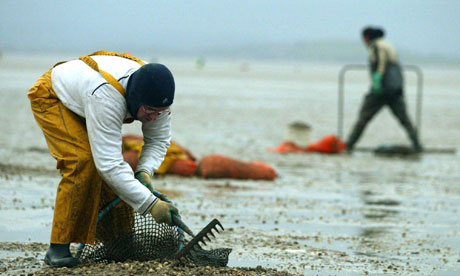
Cocklers on the sands of  Morecambe Bay, where 17 men and two women died while harvesting cockles.
Cocklers on the sands of Morecambe Bay, where 17 men and two women died while harvesting cockles. Photograph: Phil Noble/PA


At this week's Labour Party Conference in Manchester, Ed Miliband, the UK opposition leader, said the time had come to tackle abuses of worker rights. He pledged to "crack down on employers who don't pay the minimum wage" and to "end the shady practices, in the construction industry and elsewhere, of gangmasters" if he came to power.

These are welcome commitments and should be seen as non-partisan issues. Foreign minister William Hague has taken important steps to make the broader business and human rights agenda a permanent commitment of the UK Government. Yet these critical issues still don't receive the attention they deserve on the national agenda.

It is now over eight years since 23 Chinese workers drowned in Morecambe Bay while picking cockles, prompting many to look again at the underside of employment practices in the UK. The UK Gangmasters Licensing Authority (GLA), founded shortly after the Morecambe Bay incident, mobilises a range of political, business, trade union and civil society interests. Together, they seek to protect some of the UK's most vulnerable workers, migrant and non-migrant, in horticulture, agriculture, shellfish gathering and forestry. Any employment agency, labour provider or gangmaster providing workers for these sectors in the UK needs a licence. The GLA, formed under the previous government, has been maintained by the current coalition government. However, there is still no equivalent for the construction sector – or for other sectors where workers remain highly vulnerable to exploitation.

There are issues, for example, in the hotel and catering sector – a point picked up by BBC Newsnight last week in two reports revealing the exploitation of agency staff at top London hotels. The Institute for Human Rights and Business (IHRB), together with the Anti-Slavery International, has called for greater protection for workers in this sector through the Staff Wanted Initiative and for hotels to undertake greater due diligence of all third parties through which they subcontract.

Before the London Olympics, the IHRB distributed leaflets to all 1,500 hotels in the Greater London Area providing practical advice for ensuring ethical and legal standards were maintained in the recruitment and employment of staff, including those supplied by agencies. Some action is being undertaken, such as that by the International Tourism Partnership and some major hotel chains, but the industry needs to take far more responsibility for the business model it operates, which leaves its reputation at risk and its workforce vulnerable to exploitation.

The Metropolitan Police, who are increasingly finding a crossover between labour exploitation and other forms of criminality, have endorsed the Staff Wanted Initiative. It now appears on the Police Knowledge Database used by all police forces in the UK. Early day motion 276 of the 2012/13 session of the UK parliament, which explicitly references the initiative, has so far attracted cross-party support, and there is interest from key government departments in the steps that can be taken to combat trafficking and forced labour.

In December 2012, the European Commission will launch its draft guidance to employment and recruitment agencies operating worldwide, and two other business sectors, on how best to implement the United Nations Guiding Principles on Business and Human Rights. It is important that all those who support the recruitment and employment industry, but also want to see better standards for ensuring that bottom feeders do not exploit workers, engage in this process. For example, they can comment on the draft guidance, the result of a multistakeholder process involving industry actors, civil society, UN agencies and other experts.

The UK is not immune to even the worst forms of human rights abuse, such as forced labour and trafficking. But often the greatest risks will lie elsewhere in the world, possibly in the supply chains of many companies or even within a government's own purchasing practices. Last week, President Obama announced a new US executive order strengthening protections in US public procurement in order to fight human trafficking worldwide – specifically related to cross-border recruitment activities. We must hope that we will soon see similar approaches in the UK: ensuring the way government uses its own purchasing power aligns fully with international human rights standards.

These are small steps, but perhaps encouraging signs. We also look forward to the UK government's implementation plan for the UN guiding principles on business and human rights as another sign that government, industry, trade unions and civil society will continue to work closely on ending exploitation and protecting the rights of all those engaged in helping to revive the UK economy. We also look forward to increasing attention to the global supply chains of both UK-based companies and the British government itself.

Michael Connarty MP's private members bill – Transparency in Company Supply Chains (Eradication of Slavery) will have its second reading in the house of commons on Friday 19 October, during Anti-Slavery Week. This is a UK version of the California Transparency Act, requiring all companies over a certain size to report on their efforts to ensure a slavery-free supply chain. Significantly, unlike the American act, the British bill will include not just companies producing tangible goods but also those offering services such as hospitality. A commitment from the British government to find time for this legislation would be a welcome sign of their commitment to help root out exploitation and forced labour wherever it occurs. Or, as President Obama called it last week, this "debasement of our common humanity – the injustice, the outrage of human trafficking which must be called by its true name modern-day slavery".

John Morrison is executive director and Neill Wilkins is programme manager at the Institute for Business and Human Rights
Enhanced by Zemanta

Wednesday, September 5, 2012

People smugglers target their victims as organ donors and house slaves

https://apps.facebook.com/theguardian/law/2012/aug/26/people-smugglers-organ-donors

SOURCE: The Guardian on Facebook

Sexual and labour exploitation are the commonest reasons for human trafficking, but organ donors are also in demand. Photograph: Lakruwan Wanniarachchi/AFP/Getty ImagesSexual and labour exploitation are the commonest reasons for human trafficking, but organ donors are also in demand. Photograph: Lakruwan Wanniarachchi/AFP/Getty Images

Sunday 26 August 2012

First official study breaks down reasons for trafficking in UK

Th e first official assessment of human trafficking in the UK reveals the increasingly diverse reasons people are being smuggled into the country, including domestic servitude, sexual and criminal exploitation, and organ harvesting.
The United Kingdom Human Trafficking Centre's 2011 baseline assessment concludes that 11% of victims were trafficked for the purposes of domestic servitude; 1% for organ harvesting; 5% for multiple exploitation; 17% for criminal exploitation; 22% for labour exploitation; and 31% for sexual exploitation. The remaining 13% were trafficked for reasons unknown.
The report, which is compiled from information submitted by police forces, the Gangmasters Licensing Authority, the UK Border Agency and other organisations, suggests that last year some 2,077 potential victims of human trafficking were identified in the UK.
The picture that emerges contrasts strongly with the popular perception that trafficking is predominantly for the purposes of prostitution.
The assessment revealed that, "for the first time, two potential victims reported that they had been trafficked specifically for organ harvesting," and noted a third person was also suspected to have been trafficked for such a purpose.
According to the UKHTC, "the illegal trade is dominated by kidneys, which are in the greatest demand and are the only major organs that can be wholly transplanted with relatively few risks to the life of the donor".
Klara Skrivankova, Anti-Slavery International's trafficking programme co-ordinator, said: "The UKHTC 2011's assessment shows that more than 50% of trafficking in the UK happens for purposes other than sexual exploitation.
"The prevalence of trafficking for forced labour in industries like agriculture, construction or food processing is a problem we have been pointing to for a number of years. It is important that the law enforcement authorities now increase efforts to arrest those who profit from forced labour and ensure that all victims of trafficking see their exploiters brought to justice."
The five most common countries of origin for victims of trafficking were Romania, the Czech Republic, Slovakia, Poland and Nigeria.
The assessment reported evidence that 99 UK citizens were trafficked within the UK last year, of whom 52 were trafficked for sexual exploitation, with more than 80% identified as female children. However, an Observer analysis of trafficking figures recorded by the Serious and Organised Crime Agency's National Referral Mechanism database provides an alternative snapshot.
Between 1 April 2009, when the database started recording trafficked incidents, until March 2012, the latest set of figures available, some 2,445 people were suspected, or were found, to have been trafficked into the UK.
The figures reveal 1,566 were female, 596 were male and the remainder were children. Some 431 people were believed to have been trafficked from Nigeria, compared with 255 from Vietnam, the second most active trafficker of people to the UK. China was the third largest trafficker, responsible for bringing a suspected 224 people to the UK.
Europol, the international police agency, has identified Nigerian organised crime as one of the largest law enforcement challenges to European governments. In many cases, Nigerian victims are trafficked after a friend or family member offers a child a chance for a better life abroad.
On accepting the offer, the victim will have a "juju" ceremony performed by a witchdoctor to ensure success in their new life. Victims fear they will be magically harmed should they report their plight to the authorities, meaning the true scale of the abuse remains hidden.
A 2010 report by the Child Exploitation and Online Protection Centre identified the trafficking of Vietnamese children into the UK as another key trend. The majority were forced to work in cannabis farms, with others being exploited in brothels and nail bars, or pressed into committing street crimes such as selling illegally copied DVDs or breaking and entering.
The UKHTC assessment found many trafficked victims were told that they owed debts of up to €70,000 (£55,400) for their travel costs. It notes: "They are then subjected to labour exploitation, sexual exploitation or criminal exploitation until they are perceived to have repaid their debt. In some cases, the debt increases through a combination of high costs for food and accommodation and low wages, and the victim is unable to reduce or repay the money owed."
Enhanced by Zemanta

Friday, August 31, 2012

Slavery in the UK: how it happens today: Voice of Russia

http://english.ruvr.ru/2012/02/06/65448888.html

Source: Voice of Russia


Feb 6, 2012 

© Flickr.com/Richard Scoop/cc-by-nc
Download
© Flickr.com/Richard Scoop/cc-by-nc

Interview with Aidan McQuade, the director of Anti-Slavery International.

How big of a problem is the slavery and who are the most vulnerable people?
In the world today the International Liberal Organization estimates that there is a minimum of 12.3 million of people in slavery for forced labour. Generally speaking it has been thought that people coming from some of the more developed countries would be relatively safe from this. But the investigation undertaken by the BBC has demonstrated that the British people vulnerable socially and economically are also vulnerable to slavery. So, the point that has been made is that this is not just about nationality\race necessity but also about vulnerability. So, anybody one could imagine could fall into this trap if they make the wrong choice in terms of trying to get a job to provide for themselves or their families.

Who do this? Who makes these people slaves?
They are certainly people from all different blocks of life are involved in this and in the UK at the moment you see some very well free people in a diplomatic community as well as free British people who keep an essentially forced labour – the domestic workers. The particular case which the BBC uncovered suggested that it was Irish people who have been responsible for the enslavement of these vulnerable British people. But right across the world you see all sorts of different groups of people enslaving others and the critical factors are that they are vulnerable and that there is some degree of prejudice against them. And on top of that are the government policies and practices which are inadequate to protect them.

Is there any respond from the Government and what can be done to prevent this?
The Government seems, in its initial reaction to this report, to feel that they are doing enough. I would feel that they are not doing enough. They seem to be responding to the issues of slavery as if it is an immigration question which is something which only affects foreigners and which has to do with them breaking emigration law. The trick of the matter is that this is a problem of vulnerability and exploitation, it affects everybody and the Government’s response should be making sure that everybody on this island, on the island of Britain, whether they are of British nation or people from the other parts of the world are properly protected.

At the moment British policy is inadequate in this regard. Despite the fact that at least in some other law enforcement agencies are taking these issues seriously, the broader policy environment is poor and in that regard they have much in common – the British Government has much in common with many other governments in the world in a way that their responses are poor and uncoordinated. So, there is a need for better coordination at an international level and greater sensitivity to the needs of victims on a national level.

What can de advised to those vulnerable people, for instance not to work abroad or what else?
I think they need to be aware as they can be of the risks that may be involved in something. Many people, I concluded have worked abroad, have worked as migrant workers and part of the way that we have progressed in our careers is because we have taken this work. So, one must understand – people who are getting into these situations are often the best type of people, they wanted better for themselves and for their families. But it is important for them to be aware of the risks that they may fall into, be aware as far as they can of their rights and have some plan about how they may seek help if they find they are getting into a dangerous situation. I think those are the three things which are very important for individuals to be responsible for. But more generally governments need to be serious about this issue and put in place more international systems particularly in the European Union but wider Europe as well that will ensure that people are properly protected.

Enhanced by Zemanta

Monday, June 4, 2012

AUDIO: The price of cheap clothes?

AUDIO: The price of cheap clothes?: In a report published today the organisation, Anti-Slavery International allege that Indian textile firms, which supply some of Britain's biggest high street retailers, are operating near slave labour conditions. Mike Thomson has travelled to Tamil Nadu in Southern India to investigate.
Enhanced by Zemanta

Monday, April 16, 2012

Slavery is far from over | | Independent Editor's choice Blogs

http://blogs.independent.co.uk/2012/04/10/slavery-is-far-from-over/

Source: The Independent Blogs

Manuel Barcia


Last December multinational internet and software corporation Google donated 11.5 million dollars to several groups fighting modern-day slavery. This timely gesture constituted a new reminder of the fact that various types of human bondage continue to exist and proliferate in different parts of our planet, sometimes much closer to us than we imagine.
Among the organisations chosen by Google were International Justice Mission, a human rights agency working in 13 countries of Asia, Africa and Latin America; Polaris Project, one of the largest anti-slavery organisations in the United States and Japan; and Slavery Footprint, another US-based body focusing on the supply lines of 400 consumer products with the aim of identifying whether slave labour is used in the production of any of them.
Google’s donation not only will endow the above mentioned groups with much needed financial support, but will also help raise awareness for the need for new legislation in order to stop all types of slavery across the world.
Although slavery is often referred to as a past evil consigned to history books, nothing could be farther from the truth. Slavery persists today in both the developing and developed worlds, and in spite of the efforts of organisations like International Justice Mission or the London-based Anti-Slavery International, the malady seems to be getting worse by the day.
In this respect New York Times reporter Nicholas D. Kristof, recently noted that “at least 10 times as many girls are now trafficked into brothels annually as African slaves were transported to the New World in the peak years of the trans-Atlantic slave trade”.
Sadly, Kristof is not exaggerating.
The CNN Freedom Project has also recently revealed the extent to which slavery-associated violence is still prevalent in parts of the world by conducting interviews, often undercover, in places like Mauritania, where chattel slavery survives very much as it did back in the nineteenth century.
Other corporations, organisations and media outlets have joined forces to denounce modern-day forms of slavery worldwide. From the predicaments of Nepali migrants in the Middle East to child labour in Uzbekistan’s cotton industry, more and more information is made freely available, and those responsible are named and shamed.
The challenge, however, is daunting. Professor Joel Quirk from Witwatersrand University in South Africa explains “There is no longer one readily identifiable solution, but many overlapping strategies, which tend to be geared towards harm minimization, regulation and alleviation.”
Finding an actual solution is indeed quite difficult, to a large extent because the roots of modern-day forms of slavery are to be found in social problems like poverty and hunger, especially in the developing world. The lack of opportunities to improve basic conditions of existence leave people with no alternative but to fall into slavery in their homeland, or to migrate to the developed world in search for a better future.
It is there that they become easy prey for a range of people willing to profit from their misfortunes. Networks of prostitution and sex trafficking are a lucrative business from Amsterdam to New York. An example of how entrenched and well-disguised modern forms of slavery are in the developed world was recently highlighted by Goldman Sachs’ decision to sell its stake in the company which owns the backpage.com website, after the site was accused in 2010 of aiding and abetting forced prostitution and the exploitation of children and child pornography by carrying ‘adult’ classified advertising.
Beyond backstreet brothels, apparently innocuous websites, and fancy escort services, there are other ways of reinstating forced bondage. For a new, creative, and legal way of exploiting migrant labour we only need to look at the US state of Alabama and their new draconian anti-immigration law (HB 56). As reported by Axel Caballero in The Guardian, new illegal migrants who arrive in the state are now being detained and turned into a source of forced agricultural labour for the region and profit for the two major corporations that house the inmates and run the US private prison system, CCA (Corrections Corporation of America) and the GEO group.
The convenient silence of those with the resources to tackle the problem should not be tolerated any longer, because as Bishop Desmond Tutu put it, “If you are neutral in situations of injustice, you have chosen the side of the oppressor. If an elephant has its foot on the tail of a mouse and you say that you are neutral, the mouse will not appreciate your neutrality.”
Enhanced by Zemanta

Monday, March 12, 2012

Slavery Close to Home - Fight Sex Trafficking

Source: HopeForTheSold

by MICHELLE BROCK on MARCH 9TH, 2012
Enhanced by Zemanta

Sunday, March 4, 2012

World's first sex trafficking opera to premiere in UK - News - Classical - The Independent

http://www.independent.co.uk/arts-entertainment/classical/news/worlds-first-sex-trafficking-opera-to-premiere-in-uk-7534762.html

Source: The Independent


Groundbreaking production about women forced into prostitution opens in Liverpool this week

EMILY DUGAN Author Biography

SUNDAY 04 MARCH 2012

As an art form, opera is more traditionally associated with overblown tales of romance, but this week the world's first opera about human trafficking will premiere in Britain.

Anya17 will open at the Liverpool Philharmonic Hall on Wednesday. It tells the story of a woman brought from Eastern Europe to work in the UK's sex industry. The show's official supporters include the United Nations, Anti-Slavery International and the Salvation Army. Special performances are already being mooted for the House of Lords and the Council of Europe in Strasbourg.

The drama is set in a brothel in an unnamed UK city and in an unspecified Eastern European country. The protagonist, Anya, is trafficked into Britain and forced into prostitution by a man pretending to be her boyfriend. The number 17 in the title comes from the practice of numbering girls on a "menu" in brothels. It is estimated that 800,000 women are trafficked into the EU every year. Nine out of 10 of these are forced to be sex workers in brothels.

The opera's librettist, Ben Kaye, who came up with the concept, said: "We're so used to hearing shocking news bulletins about subjects like this that we can become immune to it. Sometimes you need a different approach to engage people. I did a lot of research to make it accurate – going through stories and talking to case workers who worked with women who had gone through this."

The opera director Sir Jonathan Miller said the project showed no subject should be off-limits. "I think you can do whatever you like in opera. The Death of Klinghoffer was not something you'd expect in an opera, but it works. It's in the nature of any art form that it accommodates novelty. Genres that are thought to be closed turn out to be open-ended."

The cast, taken from the Royal Northern College of Music, went to meet survivors of sex trafficking at sheltered housing in London as part of their research. Andrea Tweedale, who plays Anya, said: "Most of the characters I play are in romantic stories about love, whereas this is very different. As an opera singer you never normally get the chance to raise awareness about serious issues. There are lines I never thought I'd sing: words like 'rump' and 'sodomised'."

The production is directed by the award-winning Caroline Clegg, with music by Adam Gorb.

Iqtadar Hasnain, a spokesman for Anti-Slavery International, said: "As far as we're aware, there has never been an opera on this subject. We hope that people will see it and realise that this is a form of slavery that is happening on their doorstep today."

Enhanced by Zemanta