Showing posts with label Vienna. Show all posts
Showing posts with label Vienna. Show all posts
Tuesday, November 25, 2014
U.N. Report Shows an Increase in Child Trafficking - NYTimes.com
One in three human trafficking victims is a child, most victims are female, and traffickers operate with wide impunity, the United Nations said Monday in a report on modern-day slavery.
The 2014 Global Report on Trafficking in Persons, produced by the United Nations Office on Drugs and Crime, also found that the proportion of children among victims appeared to be rising. Its first report, in 2012, said the proportion had been closer to one in four.Read more
U.N. Report Shows an Increase in Child Trafficking - NYTimes.com:


Monday, October 8, 2012
Awareness Of Human Trafficking Is Increasing, But 'So Is The Problem'
http://www.rferl.org/content/interview-giammarinaro-osce-human-trafficking/24709444.html#hash=relatedInfoContainer
Source: Radio Free Europe/Radio Liberty
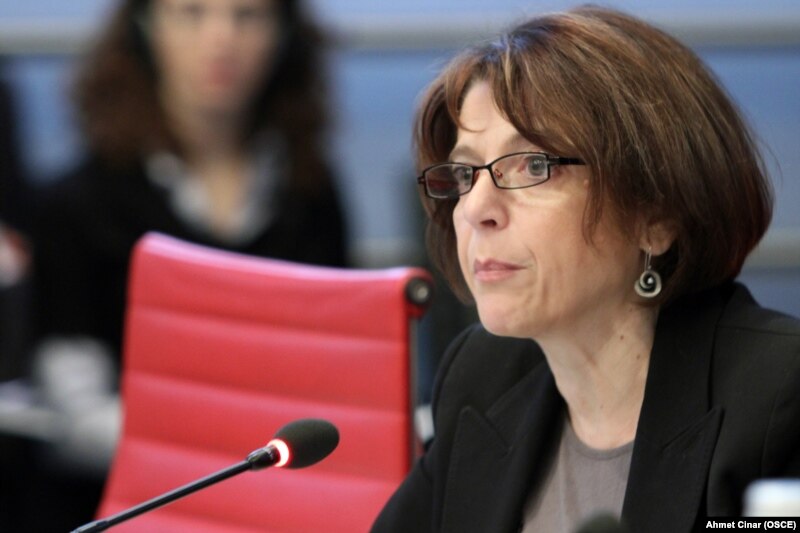
 Maria Grazia Giammarinaro, the OSCE special representative and coordinator for combating trafficking in human beings, presenting her annual report to the OSCE Permanent Council in Vienna in December.September 15, 2012
Every day, men, women, and children around the world are stripped of their basic rights and trafficked as sex workers, forced laborers, involuntary servants, or for their organs. The International Labor Organization estimates that human trafficking -- fed by poverty and corruption and facilitated by organized crime -- victimizes more than 20 million people globally.
On the sidelines of the Organization for Security and Cooperation in Europe's (OSCE) Economic and Environmental Forum in Prague, RFE/RL correspondent Richard Solash spoke with Maria Grazia Giammarinaro, the OSCE special representative for combating trafficking in human beings, on the latest trends in the battle against the epidemic.
RFE/RL: Give us a sense of the overall trajectory of this problem in the OSCE region. Is it getting better? Is it getting worse? Why?
Maria Grazia Giammarinaro: On one hand, I must say that the political will [to fight human trafficking] and the awareness [of it] has increased a lot over the past years, so from this point of view, there is an improvement -- a clear improvement. Countries have legislation, action plans, and schemes for victim assistance. On the other hand, the phenomenon -- the criminal phenomenon -- is really rampant and there's no indication of a decrease. On the contrary, the last estimates issued by [the International Labor Organization] indicate that the phenomenon is increasing, and of course, the response is still not commensurate with the magnitude of the phenomenon.
The phenomenon is not any longer an emergency, as we could think in the 1990s or early 2000s, [when] the idea was that it was an emergency linked mainly with sexual exploitation. Now we are confronted with the fact that there is major labor exploitation, other forms of trafficking, for example organized begging, trafficking for the removal of organs, or to force people to commit crimes. Some women have been used as mules to carry drugs, for example. There are multiple forms now. There is also a continuous demand for cheap labor and a continuous supply of people desperate for money, and this whole situation has been exacerbated from the economic crisis, of course. From this point of view, I would say that the situation is much worse now than a few years ago.
RFE/RL: Do you see a strong enough realization on the part of countries that they not only need to tackle human trafficking, but that they need to tackle what it is a symptom of -- that is, the underlying social issues?
Giammarinaro: Not yet; or not completely. Of course there is awareness that there are root causes contributing to trafficking. Of course, poverty is the first root cause, but I have to say that not always are the poorest of the poor the people targeted by traffickers. For example, young people have dreams and aspirations and [if] they don't find opportunities to pursue their aspirations at home, they are sometimes ready to leave, even in unsafe conditions. There are also other problems -- lack of job opportunities for women; discrimination; marginalization of communities such as the Roma community. There is a very complex array of factors.
What I am trying to promote in [the entire] region, as a special representative of the OSCE, is awareness that if you want to tackle trafficking, you have to tackle all the related policy areas and to deal with the underlying factors, which are, as you said, social issues, mainly.
RFE/RL: What are the notable improvements that have been made by OSCE countries in recent years in the fight against human trafficking? What are the most pressing impediments?
Giammarinaro: As I said, all OSCE countries have in place something like a toolbox. The toolbox now is there. We couldn't say this even five years ago. But now the real challenge is to make full use of these tools and make them work on a large scale, because the massive scale of trafficking is what is new and what we have to deal with now. Impediments -- of course there are many. One of these impediments is that organized crime running the trafficking schemes has become more and more, I would say, sophisticated. These are transnational networks, but composed of small groups that are loosely connected and very specialized. So if there is a successful operation, you catch some of the nodes of the chain, but you don't dismantle the whole chain. Another impediment is definitely corruption. Trafficking couldn't take place on such a scale if there were not corrupt officials and practices at every stage of the trafficking process -- not only at the borders for example, but even in countries of destination.
RFE/RL: How difficult is it for the OSCE to work on this issue in countries with generally closed societies, such as Belarus, Turkmenistan, and Uzbekistan?
Giammarinaro: We work in all the OSCE countries. We work with governments and the civil society. This is an important, essential part of our work. There's no possibility to work effectively on trafficking without the cooperation of civil society. If civil society is not vibrant or there are restrictions, of course antitrafficking action lacks one of the crucial actors.
RFE/RL: You visited Moldova earlier this week. What is the human trafficking trend there, in Europe's poorest country?
Giammarinaro: In this country, in which anti-trafficking action started, I could say, 10 years ago, now there is a sort of -- and I'm trying to promote it -- a sort of second wave of anti-trafficking action. At a certain moment it seemed that the attention was going down. Sexual exploitation was not the emergency it was in the past -- although it is still there -- but it was not such an emergency as in the 90s. Now there is a new wave, based on the awareness that trafficking is such a systemic phenomenon. A component, unfortunately, of certain migration flows, the labor market, and certain sectors of the economy [in Moldova]. We have a huge -- unfortunately, a huge -- phenomenon of children left behind by parents migrating abroad and the vast majority of them end up in orphanages or residential schools. Of course, when they are close to adulthood, they don't have sufficient life skills and they are under economic pressure, so they are easy targets. But now Moldova has established new and effective administrative positions in order to make antitrafficking action more effective. This is a very interesting development.
RFE/RL: One area that has long been known as a trafficking hotspot is the Balkans. How has the trafficking situation changed since the wars of the 1990s and is it still as acute?
Giammarinaro: In the Balkans we observe a shift from the perception of trafficking as something linked with the post-war situation -- and, of course, in the Balkans there was the big problem of trafficking somehow fostered by the presence of internationals. That's something that has been tackled at the UN level. Now, step by step, there is more awareness that the phenomenon is actually different. There are now people recruited in the countries of the Balkan region and going abroad to work and severely exploited, so it is a completely different picture. We know -- of course it is from anecdotal evidence [because] nobody has precise figures -- but we know that the recruitment of workers ready to migrate abroad is really flourishing.

Source: Radio Free Europe/Radio Liberty
Every day, men, women, and children around the world are stripped of their basic rights and trafficked as sex workers, forced laborers, involuntary servants, or for their organs. The International Labor Organization estimates that human trafficking -- fed by poverty and corruption and facilitated by organized crime -- victimizes more than 20 million people globally.
On the sidelines of the Organization for Security and Cooperation in Europe's (OSCE) Economic and Environmental Forum in Prague, RFE/RL correspondent Richard Solash spoke with Maria Grazia Giammarinaro, the OSCE special representative for combating trafficking in human beings, on the latest trends in the battle against the epidemic.
RFE/RL: Give us a sense of the overall trajectory of this problem in the OSCE region. Is it getting better? Is it getting worse? Why?
Maria Grazia Giammarinaro: On one hand, I must say that the political will [to fight human trafficking] and the awareness [of it] has increased a lot over the past years, so from this point of view, there is an improvement -- a clear improvement. Countries have legislation, action plans, and schemes for victim assistance. On the other hand, the phenomenon -- the criminal phenomenon -- is really rampant and there's no indication of a decrease. On the contrary, the last estimates issued by [the International Labor Organization] indicate that the phenomenon is increasing, and of course, the response is still not commensurate with the magnitude of the phenomenon.
The phenomenon is not any longer an emergency, as we could think in the 1990s or early 2000s, [when] the idea was that it was an emergency linked mainly with sexual exploitation. Now we are confronted with the fact that there is major labor exploitation, other forms of trafficking, for example organized begging, trafficking for the removal of organs, or to force people to commit crimes. Some women have been used as mules to carry drugs, for example. There are multiple forms now. There is also a continuous demand for cheap labor and a continuous supply of people desperate for money, and this whole situation has been exacerbated from the economic crisis, of course. From this point of view, I would say that the situation is much worse now than a few years ago.
RFE/RL: Do you see a strong enough realization on the part of countries that they not only need to tackle human trafficking, but that they need to tackle what it is a symptom of -- that is, the underlying social issues?
Giammarinaro: Not yet; or not completely. Of course there is awareness that there are root causes contributing to trafficking. Of course, poverty is the first root cause, but I have to say that not always are the poorest of the poor the people targeted by traffickers. For example, young people have dreams and aspirations and [if] they don't find opportunities to pursue their aspirations at home, they are sometimes ready to leave, even in unsafe conditions. There are also other problems -- lack of job opportunities for women; discrimination; marginalization of communities such as the Roma community. There is a very complex array of factors.
What I am trying to promote in [the entire] region, as a special representative of the OSCE, is awareness that if you want to tackle trafficking, you have to tackle all the related policy areas and to deal with the underlying factors, which are, as you said, social issues, mainly.
RFE/RL: What are the notable improvements that have been made by OSCE countries in recent years in the fight against human trafficking? What are the most pressing impediments?
Giammarinaro: As I said, all OSCE countries have in place something like a toolbox. The toolbox now is there. We couldn't say this even five years ago. But now the real challenge is to make full use of these tools and make them work on a large scale, because the massive scale of trafficking is what is new and what we have to deal with now. Impediments -- of course there are many. One of these impediments is that organized crime running the trafficking schemes has become more and more, I would say, sophisticated. These are transnational networks, but composed of small groups that are loosely connected and very specialized. So if there is a successful operation, you catch some of the nodes of the chain, but you don't dismantle the whole chain. Another impediment is definitely corruption. Trafficking couldn't take place on such a scale if there were not corrupt officials and practices at every stage of the trafficking process -- not only at the borders for example, but even in countries of destination.
RFE/RL: How difficult is it for the OSCE to work on this issue in countries with generally closed societies, such as Belarus, Turkmenistan, and Uzbekistan?
Giammarinaro: We work in all the OSCE countries. We work with governments and the civil society. This is an important, essential part of our work. There's no possibility to work effectively on trafficking without the cooperation of civil society. If civil society is not vibrant or there are restrictions, of course antitrafficking action lacks one of the crucial actors.
RFE/RL: You visited Moldova earlier this week. What is the human trafficking trend there, in Europe's poorest country?
Giammarinaro: In this country, in which anti-trafficking action started, I could say, 10 years ago, now there is a sort of -- and I'm trying to promote it -- a sort of second wave of anti-trafficking action. At a certain moment it seemed that the attention was going down. Sexual exploitation was not the emergency it was in the past -- although it is still there -- but it was not such an emergency as in the 90s. Now there is a new wave, based on the awareness that trafficking is such a systemic phenomenon. A component, unfortunately, of certain migration flows, the labor market, and certain sectors of the economy [in Moldova]. We have a huge -- unfortunately, a huge -- phenomenon of children left behind by parents migrating abroad and the vast majority of them end up in orphanages or residential schools. Of course, when they are close to adulthood, they don't have sufficient life skills and they are under economic pressure, so they are easy targets. But now Moldova has established new and effective administrative positions in order to make antitrafficking action more effective. This is a very interesting development.
RFE/RL: One area that has long been known as a trafficking hotspot is the Balkans. How has the trafficking situation changed since the wars of the 1990s and is it still as acute?
Giammarinaro: In the Balkans we observe a shift from the perception of trafficking as something linked with the post-war situation -- and, of course, in the Balkans there was the big problem of trafficking somehow fostered by the presence of internationals. That's something that has been tackled at the UN level. Now, step by step, there is more awareness that the phenomenon is actually different. There are now people recruited in the countries of the Balkan region and going abroad to work and severely exploited, so it is a completely different picture. We know -- of course it is from anecdotal evidence [because] nobody has precise figures -- but we know that the recruitment of workers ready to migrate abroad is really flourishing.
Monday, December 26, 2011
OSCE Special Representative presents annual report, agenda for preventing trafficking for labour exploitation
http://www.osce.org/cthb/86276
Maria Grazia Giammarinaro, the OSCE Special Representative and Co-ordinator for Combating Trafficking in Human Beings, presenting her annual report to the OSCE Permanent Council, Vienna, 15 December 2011. (OSCE/Ahmet Cinar)
Maria Grazia Giammarinaro, the OSCE Special Representative and Co-ordinator for Combating Trafficking in Human Beings, called on states to tackle the structural factors that increase the vulnerability of people to trafficking such as discrimination, violence, and lack of education and job opportunities, in her annual report to the Permanent Council on 15 December 2011.
“Addressing trafficking in human beings as a human rights violation implies not only a negative obligation of any state to abstain from direct violations of human rights, but also a positive obligation to put in place protective measures for potential, presumed and actual victims. Prevention also means long-term measures aimed at the economic and legal empowerment of people at risk,” said Giammarinaro.
She presented An Agenda for Prevention: Trafficking for Labour Exploitation - three expert papers that build on the outcomes of the Alliance against Trafficking in Persons Conference on Decent Work and Social Justice.
Giammarinaro also highlighted the importance of the Declaration on Combating all Forms of Human Trafficking agreed by the OSCE foreign ministers at the recent Ministerial Conference in Vilnius.
“The Vilnius declaration is an important achievement for the OSCE as a whole, as it reconfirms the political commitment to fight trafficking as an integral part of OSCE efforts towards common and comprehensive security, which includes full respect of human rights,” she said.
She told the ambassadors of OSCE participating States the declaration could underpin efforts to “achieve more effective results in the fight against all forms of trafficking, including the least addressed, such as trafficking for the removal of organs, for forced begging and forced criminality, while continuing to develop innovative approaches to the prevention of and fight against trafficking for sexual exploitation, trafficking for labour exploitation including domestic servitude, and child trafficking".
The annual report for 2011 highlights work with the participating States, OSCE structures, Institutions and field operations, as well as with international and non-governmental organizations to make the anti-trafficking framework more effective.
Thursday, March 3, 2011
OSCE Special Representative calls for more effective action to tackle trafficking for domestic servitude - Secretariat - Office of the Special Representative and Co-ordinator for Combating Trafficking in Human Beings

The OSCE Special Representative and Co-ordinator for Combating Trafficking in Human Beings, Maria Grazia Giammarinaro (OSCE/Susanna Lööf)
VIENNA, 28 February 2011 – The OSCE Special Representative and Co-ordinator for Combating Trafficking in Human Beings, Maria Grazia Giammarinaro called for greater awareness of trafficking for the purpose of domestic servitude and more effective action to tackle the crime, during the launch of a new publication focusing on domestic servitude today.
The publication, entitled Unprotected Work, Invisible Exploitation: Trafficking for the Purpose of Domestic Servitude, is the fourth in a series of Occasional Papers focusing on trafficking for labour exploitation.
“Domestic workers are part of our daily life and often the primary providers of care to our loved ones,” said Giammarinaro. “Most of these courageous and hard working people – mainly women and girls – migrate to support their families and find a decent job. But those workers who fall prey to unscrupulous people – people who subjugate them to take advantage of their unpaid work – must be protected.”
Domestic servitude is a particularly invisible form of trafficking for labour exploitation, which is difficult to detect due to the hidden nature of the work provided, she said. Given that it takes place out of sight in private households, it poses special challenges for investigation and prosecution, as well as for providing assistance to victims and ensuring their access to justice. Furthermore, the problem of domestic servitude in diplomatic households should be effectively tackled.
Giammarinaro also drew attention to social norms and gender roles affecting the understanding of what constitutes decent domestic work.
“We have to challenge discrimination, the perception of domestic workers as low-status workers, and the undervalued nature of domestic work as such, which is often not considered as real work,” said Giammarinaro. “All these social and cultural patterns contribute to increasing the vulnerability of workers to domestic servitude.”
The publication, entitled Unprotected Work, Invisible Exploitation: Trafficking for the Purpose of Domestic Servitude, is the fourth in a series of Occasional Papers focusing on trafficking for labour exploitation.
“Domestic workers are part of our daily life and often the primary providers of care to our loved ones,” said Giammarinaro. “Most of these courageous and hard working people – mainly women and girls – migrate to support their families and find a decent job. But those workers who fall prey to unscrupulous people – people who subjugate them to take advantage of their unpaid work – must be protected.”
Domestic servitude is a particularly invisible form of trafficking for labour exploitation, which is difficult to detect due to the hidden nature of the work provided, she said. Given that it takes place out of sight in private households, it poses special challenges for investigation and prosecution, as well as for providing assistance to victims and ensuring their access to justice. Furthermore, the problem of domestic servitude in diplomatic households should be effectively tackled.
Giammarinaro also drew attention to social norms and gender roles affecting the understanding of what constitutes decent domestic work.
“We have to challenge discrimination, the perception of domestic workers as low-status workers, and the undervalued nature of domestic work as such, which is often not considered as real work,” said Giammarinaro. “All these social and cultural patterns contribute to increasing the vulnerability of workers to domestic servitude.”
Source: OSCE
OSCE Special Representative calls for more effective action to tackle trafficking for domestic servitude - Secretariat - Office of the Special Representative and Co-ordinator for Combating Trafficking in Human Beings

Monday, February 21, 2011
OSCE calls for enhanced social justice to better prevent and combat trafficking in human beings
 Image via Wikipedia
| 2011-02-20 17:39:02 VIENNA, 20 February 2011 -- The OSCE Special Representative and Co-ordinator for Combating Trafficking in Human Beings, Maria Grazia Giammarinaro, on the occasion of the World Day for Social Justice, emphasized that working towards social justice includes promoting the social inclusion of the most vulnerable people, those who are deprived of any rights and social protection. This is also essential to preventing and fighting trafficking in human beings. Source: OSCE Press release |

Friday, February 18, 2011
Syndicate of silence
 Image via Wikipedia
by Fatal Promises on Thursday, February 17, 2011 at 12:46pm
Politicians, men working for relevant organizations, managers, lawyers as clients of prostitutes: In interviews for “Fatal Promises” activists Emma Thompson and Gloria Steinem both identified those men’s involvement in the sex industry as one of the reasons why progress in the fight against human trafficking is hard to come by.
This point was driven home rather forcefully in Austria recently when media reaction to a TV-report about victims of human trafficking in Vienna’s most prominent club “Babylon” was non-existent. None of the mainstream media followed up on the report by the ORF. For years “Babylon” has been and still is a high-end and – in the Viennese context – a high society club in a prime location of the city. A huge advertisement of the club at the Vienna airport has just recently been removed after years of blatantly greeting visitors during their first minutes in Austria.
The report established beyond any doubt the connection between a model agency in Romania and girls forced to work as prostitutes in that club. One under age girl, 17 years old and finally rescued by one of the clients, told her story in no uncertain terms: Upon arrival in Vienna she was immediately taken to “Babylon”, her passport taken away. For three years she had to work in various locations around Austria as, in her words, “Babylon” wanted fresh supply of women constantly. Not to forget, all of this is happening within the European Union, involving two member states – not any third world country.
The report covered a court case against traffickers in the town of Slobozia in Romania, where two more reasons for the frustrated fight against this crime came to light. First: Asked about human trafficking, a Romanian journalist said: “There are bigger problems than human trafficking. It involves politicians…” Can there be a bigger problem than buying and selling human beings – regardless of who the clients are?
Second: The founder of the rescue organization “Reaching Out” in Romania was quoted: “ There is no political will. Many politicians are clients. And there is a lot of money to be made.” Society and governments, she said, are not really fighting the crime and the traffickers can do what they want. In her opinion stiff prison sentences are necessary and all the assets of the traffickers need to be confiscated as so may victims and activists have been saying for so many years – to little avail. As the founder of “Reaching Out” sums it up in the report: “There has not been any change in 12 years”. Of the ten women in her safe house seven are under-age.
In this special case the model agency “Star Company” was running into financial problems and was finally “rescued” by a politician of the opposition in Romania. According to reports this is when the trafficking to Austria as well as to Italy, another EU member state, started on a bigger scale. The politician has been called to court only as witness and not as a defendant. The principal defendant is free on bail.
As revealing as the report itself was, especially about the level of tolerance for this crime within the EU, the truly shocking aspect was the dead silence in the Austrian media and public after its airing.
None of the relevant questions came up for discussion: How can it be that not even well-educated clients are suspicious about certain girls since the club has been involved in a trafficking case before?
How can it be that they are proud to be filmed at the club during society events? How can it be that a very well-known and prominent lawyer associates himself with that club – totally unashamed of what might be going on?
As one man who runs a safe house in Vienna said in an interview, referring to the dirty business of trafficking: “Everything is connected with violence. There is no nice prostitution. It is just being whitewashed."
Source: www.facebook.com/notes/fatal-promisesSyndicate of silence

Sunday, January 9, 2011
Customers involved in the trafficking of persons will be penalized | Momento 24

Argentina, January 8, 2011
Julio Alak, Minister of Justice of the Nation, presented a new proposal regarding trafficking of people. Thus it seeks to penalize the customer involved with the network to have sex. The initiative already has the support of the Organization of American States (OAS).
Through a statement, Alak recalled that “The Organization of the United Nations gave in Vienna last May another key international support to progress in the review of laws and to establish the penalty to clients involved with the exploitation of people”.
The OAS had already incorporated the issue to its Work Plan for 2010-2012.
On the other hand, a report released by the Department of State of the United States noted that Argentina is in the grade two in the fight against trafficking of persons and assisting victims, thanks to improvements in governmental mechanisms involved in performing those tasks.
Thus, the Argentine government promoted among with the UN, OAS and Brazil’s penalties to customers or users of the exploitation of persons, whether for sexual purposes or not.
Customers involved in the trafficking of persons will be penalized | Momento 24
Thursday, December 9, 2010
Human trafficking is slavery, OSCE says - UPI.com
Image via WikipediaVIENNA, Dec. 9 (UPI) -- Trafficking in human beings is a chronic threat that must be viewed as modern day slavery, a special representative at the OSCE said from Vienna.Maria Grazia Giammarinaro, the special representative on human trafficking at the Organization for Security and Co-operation in Europe, described the practice as a new form of slavery.
"Trafficking in human beings must be seen at the same time as a human rights violation and a transnational threat to security as it is mostly a business of organized crime which fuels corruption and money laundering, and therefore hampers economic and democratic development," she told OSCE delegates from Vienna.
In her report, Giammarinaro called on member states to change attitudes on human trafficking, accusing states of viewing it as a marginal phenomenon.
She said traffickers are changing modes of operation from physical violence to more subtle approaches, which meant the problem was infiltrating societies and cultures.
Trafficking, she said, was an assault on human dignity that required a sea change in the way member states view security.
"We should do a better job of helping trafficked persons to take their life in their hands, and have access to justice and remedies including compensation and labor law remedies," she said.
Source: UPI
Human trafficking is slavery, OSCE says - UPI.com

Sunday, December 5, 2010
Interview: UN official sheds light on shadows of human trafficking - People's Daily Online
16:50, December 04, 2010





The UN observed the International Day for the Abolition of Slavery on Thursday, marking the end of the trans-Atlantic slave trade in the 19th century. Today the practice of slavery remains prevalent throughout the world, yet it has taken on a new form under the guise of "human trafficking."
"Human trafficking is a highly complex issue, which cuts across a number of areas such as criminal justice, human rights, and economic and social development," an official of the Vienna-based UN Global Initiative to Fight Human Trafficking (UN.GIFT) told Xinhua in a recent interview via email.
Sandra Kozeschnik, focal point on civil society partnerships and victim support for UN.GIFT, said more needs to be done to improve and expand upon support structures for the people who have fallen victim to this form of modern day slavery.
According to the U.S. Department of State Trafficking in Persons Report 2010 (TIP report), 12.3 million adults and children are trafficked around the world. However, the estimates vary as millions of people are enslaved and exploited with no way to report their circumstance.
Whether it is the boy kidnapped to serve as a child soldier in the armed groups of the eastern Democratic Republic of Congo or the migrant Cambodian woman sold into sex slavery in Thailand, the numbers remain in the shadows, as do the victims of the crime.
"Other forms of exploitation such as forced or bonded labor, domestic servitude, forced marriage, organ removal as well as the exploitation of children for begging, warfare and petty crime are seriously under-reported," said Kozeschnik.
"The lack of comprehensive, long-term data as well as a rise in irregular migration flows and insufficient resources for the fight against trafficking aggravate the situation," she added.
BILLIONS IN REVENUE, NOTHING IN JUSTICE
Ten years after the UN adopted the Protocol to Prevent, Suppress, and Punish Trafficking in Persons Especially Women and Children, known as the Palermo Protocol, human trafficking is a growing multi-billion U.S. dollar industry.
"Trafficking is further fueled by the rising demand for commercial sex and cheap construction, manufacturing, agricultural and domestic labor," noted Kozeschnik.
The UN International Labor Organization (ILO), estimates the total market value of illicit human trafficking at 32 billion U.S. dollars a year -- approximately half that amount is made in industrialized countries.
"To date, women and children who are trafficked for the purpose of sexual exploitation have been the group of victims who have been most commonly identified," said Kozeschnik. The sexual exploitation of women and children is estimated to earn 28 billion U.S. dollars per year.
"Vulnerable groups are often those affected by gender inequality, the absence of equal opportunity, social exclusion, economic disparities, corruption, and the failure of states to protect and provide for their citizens," she added.
Migrant populations are particularly vulnerable to human trafficking, as illegal debts on laborers in the source country become reinforced in the destination country and result in a form of slavery known as "debt bondage."
Meanwhile, out of the millions of trafficking victims across the globe only around 49,000 were rescued last year and many face no alternative to being deported back to their home countries.
Out of the 150 countries that adopted the UN Palermo Protocol, 104 have no laws, policies, or regulations to prevent victims' deportation.
"While the criminal networks operate successfully internationally, the criminal justice response and victim support structures are often fragmented and constrained to national territories," said Kozeschnik.
Listening to the survivors of trafficking themselves is not only crucial to combating the crime, but also to raising awareness on the issue, she noted.
"We need to consolidate the lessons of the 10 years since the inception of the protocol and create a new stepping-off point for the future," in order to "ensure that we learn from the past," said Kozeschnik.
Source: Xinhua
"Human trafficking is a highly complex issue, which cuts across a number of areas such as criminal justice, human rights, and economic and social development," an official of the Vienna-based UN Global Initiative to Fight Human Trafficking (UN.GIFT) told Xinhua in a recent interview via email.
Sandra Kozeschnik, focal point on civil society partnerships and victim support for UN.GIFT, said more needs to be done to improve and expand upon support structures for the people who have fallen victim to this form of modern day slavery.
According to the U.S. Department of State Trafficking in Persons Report 2010 (TIP report), 12.3 million adults and children are trafficked around the world. However, the estimates vary as millions of people are enslaved and exploited with no way to report their circumstance.
Whether it is the boy kidnapped to serve as a child soldier in the armed groups of the eastern Democratic Republic of Congo or the migrant Cambodian woman sold into sex slavery in Thailand, the numbers remain in the shadows, as do the victims of the crime.
"Other forms of exploitation such as forced or bonded labor, domestic servitude, forced marriage, organ removal as well as the exploitation of children for begging, warfare and petty crime are seriously under-reported," said Kozeschnik.
"The lack of comprehensive, long-term data as well as a rise in irregular migration flows and insufficient resources for the fight against trafficking aggravate the situation," she added.
BILLIONS IN REVENUE, NOTHING IN JUSTICE
Ten years after the UN adopted the Protocol to Prevent, Suppress, and Punish Trafficking in Persons Especially Women and Children, known as the Palermo Protocol, human trafficking is a growing multi-billion U.S. dollar industry.
"Trafficking is further fueled by the rising demand for commercial sex and cheap construction, manufacturing, agricultural and domestic labor," noted Kozeschnik.
The UN International Labor Organization (ILO), estimates the total market value of illicit human trafficking at 32 billion U.S. dollars a year -- approximately half that amount is made in industrialized countries.
"To date, women and children who are trafficked for the purpose of sexual exploitation have been the group of victims who have been most commonly identified," said Kozeschnik. The sexual exploitation of women and children is estimated to earn 28 billion U.S. dollars per year.
"Vulnerable groups are often those affected by gender inequality, the absence of equal opportunity, social exclusion, economic disparities, corruption, and the failure of states to protect and provide for their citizens," she added.
Migrant populations are particularly vulnerable to human trafficking, as illegal debts on laborers in the source country become reinforced in the destination country and result in a form of slavery known as "debt bondage."
Meanwhile, out of the millions of trafficking victims across the globe only around 49,000 were rescued last year and many face no alternative to being deported back to their home countries.
Out of the 150 countries that adopted the UN Palermo Protocol, 104 have no laws, policies, or regulations to prevent victims' deportation.
"While the criminal networks operate successfully internationally, the criminal justice response and victim support structures are often fragmented and constrained to national territories," said Kozeschnik.
Listening to the survivors of trafficking themselves is not only crucial to combating the crime, but also to raising awareness on the issue, she noted.
"We need to consolidate the lessons of the 10 years since the inception of the protocol and create a new stepping-off point for the future," in order to "ensure that we learn from the past," said Kozeschnik.
Source: Xinhua
Interview: UN official sheds light on shadows of human trafficking - People's Daily Online

Subscribe to:
Posts (Atom)
