Tuesday, March 25, 2014
Where does human trafficking happen? Right in front of you
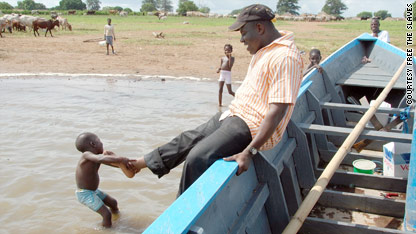
Human trafficking has many faces and forms. There’s the pimp enslaving and exploiting young girls in cities across the United States – where an estimated 100,000 girls are trafficked at present. There are the men who buy young boys in Ghana, forcing them into lives of servitude and hard labour, spending long days in flimsy boats in the Lake Volta region, hunched over their fishing lines under a scorching sun.
Continue here:
http://www.trust.org/item/20140321194210-2mur5/?source=hpeditorial
Wednesday, August 28, 2013
Trafficked into labour, a young girl tries to regain what she's lost
"Blessing's story is short, and it has many holes, because she simply doesn't remember much of her life - at least the part before she came to Lagos, West Africa's biggest metropolis.
CONTINUE READING:
http://www.ungift.org/knowledgehub/stories/August2013/trafficked-into-labour-a-young-girl-tries-to-regain-what-shes-lost.html
Monday, March 4, 2013
Ghanaian Child Advocate Wins U.S. Award | IIP Digital
Source: IIP Digital
01 March 2013
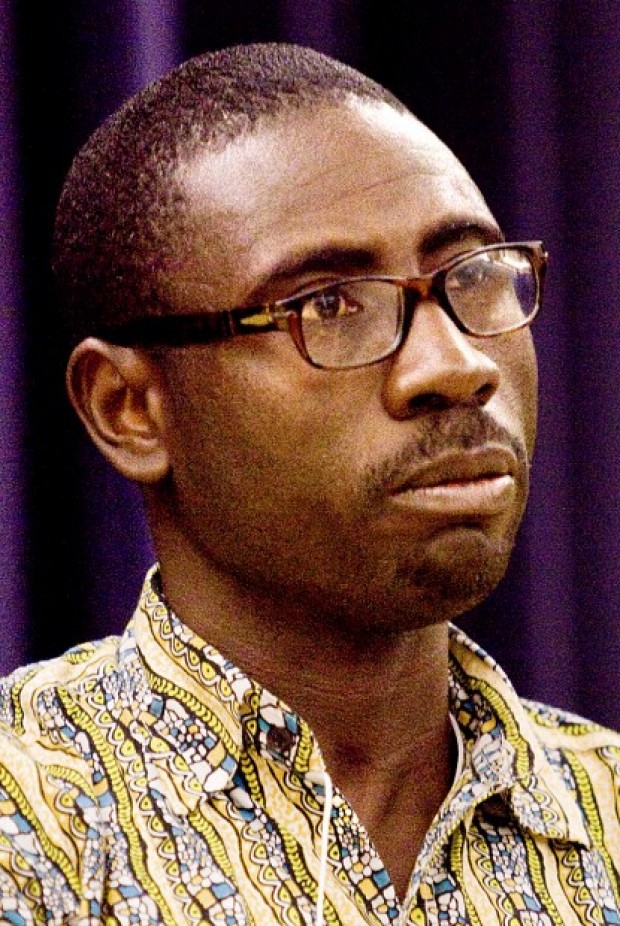
George Achibra has won the U.S. Department of Labor’s 2012 Iqbal Masih Award for the Elimination of Child Labor, Acting Deputy Under Secretary of Labor for International Affairs Carol Pier announced in a February 28 Labor Department press release.
Achibra received the award from U.S. Ambassador to Ghana Gene A. Cretz at a ceremony in Accra.
Achibra was selected for his work in rescuing hundreds of children from child labor and child trafficking in impoverished fishing communities in Ghana. A former schoolteacher, Achibra founded the Partnership for Community Development to provide services to trafficked children and raise awareness about child labor and human trafficking laws.
The 2010 Iqbal Masih Award also went to an African recipient, the Firestone Agricultural Workers Union of Liberia (FAWUL). FAWUL persevered in the face of adversity, organized workers on the Firestone Rubber Plantation and gained international support for their mission to protect workers and their children on the rubber plantation. The organization succeeded in negotiating two collective bargaining agreements that banned child labor and improved conditions for adult workers on the plantation.
For more information about the Labor Department’s work and the Iqbal Masih Award, visit the Bureau of International Labor Affairs’ website.
Related articles
Monday, November 5, 2012
Slavery Still Exists - Lisa Kristine - The Atlantic
Source: The Atlantic
SEP 26 2012, 1:10 PM ET
LISA KRISTINE - Lisa Kristine is a California-based photographer. Her personal website is LisaKristine.com.
Lisa KristineAround the world human traffickers trick many people into slavery by false promises of good jobs or good education, only to find themselves forced to work without pay, under the threat of violence. Trapped by phony debt, these slaves are hunted by local police and private security guards if they try to escape.
Sometimes slaves don't even understand that they're enslaved, despite people working 16 or 17 hours a day with no pay. They're simply used to it as something they've been doing their whole lives. Their bodies grow weak and vulnerable to disease, but they have nothing to compare their experience to.
For the last 28 years I have documented people in more than 100 countries on six continents. In 2009, at the Vancouver Peace Summit, I met a supporter of Free the Slaves, an NGO dedicated to eradicating modern-day slavery; weeks later, I flew down to Los Angeles and met with the director of Free the Slaves; thus began my journey into exploring modern-day slavery.
Oddly, I'd been to most of the locations where I started photographing slavery many times before. I even considered some of them homes-away-from-home. But there can be dark corners in familiar places.
Accra, Ghana: These gold miners have just come out of the shaft, their pants soaked from their own sweat. Most had spent all their money coming from the north hoping to strike it rich in legal mines. But legal operations require certifications. When they can't get a job, the men take high-interest loans or join groups of slaves in mines abandoned by legitimate operations.
Accra, Ghana: 200 feet underground, a man labors in an illegal gold mine. He and others enslaved like him are underground for as long as 72 hours at a time.
Accra, Ghana: Many of those enslaved had children with them while panning for gold, wading in waters poisoned by mercury that is used in the extraction process.
Kathmandu, Nepal: For this photo, I was escorted by women who had previously been enslaved themselves. They brought me down a narrow set of stairs leading to a green fluorescent-lit basement. This wasn't a brothel as such; it was a "cabin restaurants," as they are known in the trade -- venues for forced prostitution. Each has a small private room where slaves, some as young as seven, entertain and serve the clients, encouraging them to buy alcohol and food. These cubicles are small, dark, and dingy, each identified with a number painted on the wall, and partitioned by plywood and a curtain. The workers here often endure sexual abuse at the hands of the customers. Standing in the near darkness, I realized there was only one way out -- the stairs where I came in: no back doors, no windows large enough to climb through, no escape at all.
Kathmandu, Nepal: A worker blends in with the bricks at a Nepalese kiln. Workers mechanically stack 18 bricks at a time, each weighing four pounds, and carry them to nearby trucks for 18 hours a day without any payment or compensation.
Lake Volta, Ghana: Fhanaian NGOs estimate that between 4,000 and 10,000 trafficked children are enslaved on Lake Volta, the largest man-made lake in the world. At first glance this image appears to be a family fishing in the lake, two older brothers and some kids. I was alarmed to learn that they were actually enslaved, working in plain sight. These children have been lost to their parents and are forced to work endless hours in boats on the lake, though they're unable to swim.
Lake Volta, Ghana: Child workers usually work from 1 a.m. to 5 a.m. on cold, windy nights to reel in nets weighing as much as 1,000 pounds when they are full of fish. Skeletal tree limbs submerged in Lake Volta frequently entangle the fishing nets, and and slave masters will throw weary, frightened children into the water to free the trapped lines, sometimes drowning them. I didn't meet one child who didn't know another who had drowned.
Lake Volta, Ghana: There are triumphs, too. Meet Kofi, a young boy who was rescued from slavery in a fishing village. I met Khofi at a shelter where Free the Slaves rehabilitate victims of slavery. He was bathing at the well, pouring big buckets of water over his head. Thanks to the efforts of organizations like Free the Slaves, today Kofi has been reunited with his parents, who were provided tools to make a living and to keep their children safe from human traffickers.
In the Himalayas I found children hauling stone for miles down steep mountain terrain to trucks waiting at the road below. These huge sheets of slate were heavier than the children themselves. The kids hoisted them with their heads using handmade harnesses made from sticks, rope, and torn cloth.
Uttar Pradesh, India: In India I visited a village where whole families were enslaved in the silk industry. This is a family portrait. The father (hands in black) and his sons (hands in red and blue) are held captive in a "silk dyeing house." The dye they work with is toxic. It's common for entire families to be enslaved for generations. My translator told me their story. "We have no freedom," they said. "But we hope, some day, we will be able to leave this house and make dyes in a place where we actually get paid for it."
Uttar Pradesh, India: Slaveholders burned down these people's villages after they declared their freedom. Many of the neighbors wanted to give up, they were so frightened -- but the woman in the center encouraged them to persevere. Abolitionists helped them get a quarry lease of their own. Now they do the same backbreaking work, but they at least get paid for it, and they do it in freedom.Wednesday, October 17, 2012
Former child slave: 'There is hope' : The Lincoln Journal Star Online
Source: The Lincoln Journal Star Online

Related articles
Monday, May 21, 2012
County residents join the fight against human trafficking - Augusta, KS - Augusta Gazette
Source: Augusta Gazette
By Kent Bush
That was the case for one Andover woman. But she didn’t give up when no avenue existed to help. She paved her own road.
White said she has had one high school graduate and two girls receive GEDs. One of the girls is trying to get into nursing school and another begins junior college this summer.
Tuesday, February 7, 2012
BBC News - Northern Ireland sex industry 'fastest growing in UK'
Police carry out a raid in relation to human traffickingRelated Stories
An organisation that campaigns for ethnic minorities has said Northern Ireland has the fastest growing sex industry in any part of the UK.
The claim was made as the justice minister announced plans for two new laws to combat human trafficking.
Speaking in the assembly on Tuesday afternoon, David Ford said the PSNI had identified 26 potential victims in Northern Ireland since April 2011.
The countries they come from include Ghana, Zimbabwe, China and Slovakia.
Last week, a man was convicted for trafficking in a Northern Ireland court for the first time.
Four other cases are currently going through the justice system.
Helena McCormick from the Northern Ireland Council for Ethnic Minorities said: "We know from police statistics that we have the fastest growing sex industry in the UK at the moment.
"Part of that could be a displaced problem from the south of Ireland. We know from talking to other NGOs in the south that as their legislative processes move on that it could displace the problem to Northern Ireland."
Mr Ford said he intended to introduce measures to meet the requirements of an EU Directive on Human Trafficking.
The move would strengthen legislation by extending powers to prosecute UK nationals who commit human trafficking offences anywhere in the world and create a specific offence to deal with those who traffick United Kingdom citizens within the United Kingdom.
"As I highlighted when I launched the Organised Crime Taskforce Strategy last week, I am committed to doing all I can to tackle this wicked crime," he said.
"As part of that I am planning to bring forward new offences to strengthen legislation in this area.
"The new offences reflect the fact that human trafficking is a global problem."
'Not Pretty Woman'During the debate, Alliance's Anna Lo said human trafficking was "a modern day slavery that generates profits from human suffering and represents a vulgar abuse of the fundamental human right of freedom.
"I welcome the recent news of the first conviction for human trafficking in Northern Ireland and commend all those involved in the process which brought about this conviction."
Jennifer McCann of Sinn Fein said: "We need to put these people away, we need to give them long prison sentences and we need to make sure that a strong message is sent out that it is totally unacceptable, it's a vile crime and it is against a person's human rights."
The DUP's David McIlveen said: "This is not Pretty Woman. This is not the glamorous happy hooker as appears in a number of the Sunday newspapers.
"This is rape for profit. This is a high-yield, low-risk crime."
Related articles
- BBC News - Human trafficking in NI is 'a hidden crime' (trafficking-monitor.blogspot.com)
- Listen - Human trafficking, modern-day slavery | Michigan Radio (trafficking-monitor.blogspot.com)
Tuesday, October 11, 2011
GHANA: Efforts to reduce child labour on cocoa plantations beginning to pay off
Source: IRIN News
ACCRA, 23 September 2011 (IRIN) - Tens of thousands of children work on Ghana's cocoa plantations - often doing hazardous tasks when they should be at school - but change is coming.
Andrew Tagoe of the Ghana Agricultural Workers Union, speaking at a workshop organized by the International Labour Organization (ILO) earlier this year, said 186,000 children worked on Ghana's cocoa farms. Apart from heavy lifting, they work with potentially dangerous chemicals or tools, are often unsupervised and are not given protective clothing.
But the government says it is making progress and "rescued" 6,100 children from cocoa farms in the past year and supported them to return to school.
Efforts to curb child labour on cocoa farms began in 2001 with the Harkin-Engel Protocol - an agreement, signed by cocoa and chocolate companies, to source cocoa grown and processed according to ILO child labour standards. While progress was initially criticized as too slow, the government and NGOs say tangible success can now be seen in Ghana.
A national programme for the elimination of the worst forms of child labour in cocoa production was launched in 2006, with results now apparent, according to Sam Atoquaye Quaye, Ghana's child labour monitoring system coordinator with the programme. He said under this programme 12,000 children have been taken off cocoa farms, enrolled in school and provided with school supplies - over half of them in the last year. "Ghana is still not child labour free… But we have come far."
The programme also educates parents and communities about appropriate tasks for children and the importance of schooling. "Community child protection committees" - teams of people who travel to cocoa-producing areas - are employed to spread the message, Quaye said. As 84 percent of children working on cocoa farms in Ghana live with their parents and another 14 percent with relatives, working with families is necessary.
Pressure exerted through international cocoa buyers appears to have been a factor in encouraging the government to take action. "Ghana's cocoa is exported and so it is important to establish that cocoa produced from Ghana is not from child labour," Quaye said, adding there were still permissible activities children could undertake on farms outside of school hours and that a framework had been established to distinguish between these activities and dangerous work which is not allowed.
Tony Lass, executive director of the non-profit International Cocoa Initiative (ICI), pointed to the successes in Ghana as a result of NGOs, cocoa and chocolate companies, and government working together. He said that while figures were hard to pin down it was estimated that "collective efforts have helped over one million children in Ghana and Côte d'Ivoire". Ghana is the world's second largest cocoa producer, after Côte d'Ivoire.
Qualified success
The government's community education programme has certainly reached some farmers. "I have attended many workshops on child labour," said G. C. K. Boa, a cocoa farmer in Twifo Praso, central Ghana. "I don't even want to send a child to buy cigarettes for me," he said, adding that all his children were in school.
However, Vincent Frimpong Manu, Ghana's cocoa programme manager for the fair trade organization West Africa Fair Fruit, said that while gains have been made, he was cautious about claims of success. Just because a child is enrolled in school does not necessarily mean they are not working on a cocoa farm, he said. Although there was now a high level of awareness about the importance of sending children to school, if the parents still depended on their child for labour "there may be situations where the child is enrolled in school but attendance is quite low," he added.
Lass agreed that while there was a high level of awareness about stopping hazardous forms of child labour - and some communities had even passed their own by-laws banning it - he said that awareness did not always solve the problem on its own.
Marisa Yoneyama from the World Cocoa Foundation, an NGO made up of companies involved in cocoa and chocolate industries, pointed out that root causes of child labour needed to be addressed as well. "Child labour is usually a symptom of wider problems, including poverty," she said.
Infrastructure helps
Although many of the same organizations operate in Ghana and Côte d'Ivoire and the Harkin-Engel Protocol applies to both, Lass said unrest in Côte d'Ivoire over the years had slowed progress, making it difficult for NGOs to operate.
The relatively well-developed infrastructure in Ghana also aids efforts to improve life on cocoa farms. Yoneyama pointed to CocoaLink - a text message service which sends information to help farmers increase yields and lift safety standards via SMS - as an example of a programme that could only work in a nation with a well-functioning mobile phone infrastructure.
Another difference is Ghana's centralized marketing system which is good for business, making it easier for farmers to sell their produce and for buyers to be assured of high quality cocoa beans, according to Lass.
Despite the difficulties in Côte d'Ivoire, Lass emphasized that gains have still been made, and continue to be made, in both countries.
- Child labour: the tobacco industry's smoking gun | Global development | guardian.co.uk (trafficking-monitor.blogspot.com)
- 'Child labour ban seems to remain on paper' (trafficking-monitor.blogspot.com)
- Guinea-Mauritania: Worst forms of child labour still widespread (yubanet.com)
- Abuses in Ghana's fishing industry highlighted on anti-slavery day - The Irish Times - Tue, Aug 23, 2011 (trafficking-monitor.blogspot.com)
Saturday, October 1, 2011
Letter: Human trafficking | CJOnline.com
September 25, 2011 - 8:47pm
Few films have stunned me as much as “Not My Life,” a documentary about human trafficking shown recently by Washburn University and the Topeka Center for Peace and Justice.
The film explores the myriad ways criminals exploit other people, primarily children, for their own profit.
The scope and brutality of human trafficking, as well as ways in which I have unwittingly contributed to it, made me squirm more than once.
I was awake well into the night, trying to think of ways I could play some small part in combating it — such as learning more and writing letters to the editor, for starters.
The film spotlights some of the victims of human trafficking, including the fishing boys of Ghana, street beggars of Senegal and girls and women trapped in the brothels of Mumbai, India, and Phnom Penh, Cambodia.The film even includes a segment on a Wichita teenager who was tricked and coerced into prostitution at truck stops in Oklahoma and Kansas.
Among the things I learned:
■Human trafficking is the world’s third largest crime industry, behind only drugs and guns, and it is the fastest growing criminal activity.
■About 80 percent of human trafficking is sex trafficking, the rest is labor.
■In some instances there is a direct relationship to the low price I pay for many of my favorite items and human trafficking.
After the film, Christine Ladner, a Kansas assistant attorney general, talked about some steps the state is taking to combat human trafficking, including recent legislation.
The program was one in a series sponsored by the Topeka Center for Peace and Justice and WU that focuses on the problem of human trafficking.
The next program will include the film, “The Dark Side of Chocolate,” a documentary that investigates the use of child labor in the cocoa fields of West Africa.
The film will be shown in mid October, when many of us will be purchasing chocolate to hand out to our neighborhood children for Halloween.
DUANE JOHNSON, TOPEKA
Related articles
- Clinton Global Initiative: The Key Players Fighting Human Trafficking (trafficking-monitor.blogspot.com)
- South Florida a "Perfect Storm" For Human Trafficking | NBC Miami (trafficking-monitor.blogspot.com)
- Community can help halt modern slavery, panelists in Auburn say | Sun Journal (trafficking-monitor.blogspot.com)
Wednesday, September 7, 2011
Despite death threats, activists continue mission to bring kids better life – The CNN Freedom Project: Ending Modern-Day Slavery - CNN.com Blogs
[TRAFFICKING MONITOR: Click on headline to go to a video report]
September 6th, 2011
Emmanuel Otoo is a man with a simple message: Poverty is not a reason to sell children into slavery.
For many people, that's a pretty obvious sentiment. But if you come from Otoo's background, it's easy to see why he would say that. He's the Ghana Director for the non-profit group Free the Slaves, and it's his mission to make parents understand that selling their children isn't going to bring anyone a better life.
Otoo has a lot to be thankful for, and he mostly credits his mother for not making the choice that so many families around him in Ghana made when he was a child.
"We observe a lot of situations currently where out of poverty, out of need, out of desire to give their children the basic necessities, parents tend to traffic their children - give them out or sell them out," he told CNN. "So I compare this to our relationship with our mother that in spite of the difficult times, in spite of the lack, the need, and the want, she did not give us out. She could've done that, but she did not."
Otoo's mother kept the family together, and he went on to college, majoring in sociology and earning a master's degree in business administration. But instead of taking his education and moving away, Otoo stayed where he felt he was needed most - in the heart of some of the worst areas for trafficking in his country. One of the sites is Lake Volta, where he documents child slavery in the fishing industry.
"Children are put on canoes, they work long hours. And to help you understand long hours - long hours is over 12 hours. Some work 16 hours," he said. "And they perform various forms of activities, from casting nets to dragging nets, emptying water in the boat, and diving deep into the water to disentangle nets. Children dive into the water and some of them do not return again. That is the last time some of them are seen."

Ghana Director Emmanuel Otoo at work on Lake Volta
It is dangerous work to fight a practice that can be very profitable for the traffickers. But the peril means nothing to Otoo, who is driven in part by his two young children.
“The danger is there, we receive death threats, people who don't like what we're doing. Others come up to you and actually warn you to stop doing what you're doing," he said. "But my motivation is the fact that I would've ended up as one of the people who was enslaved so if I am lucky to escape, I believe that I have a huge responsibility to contribute all that I can within me to make sure that this unacceptable practice ends.”
Otoo is one of several directors working in seven countries for Free the Slaves. The directors conduct research, provide education and bring together community groups from other non-profits, churches and schools. They're not just trying to free slaves - though that is their obvious goal - but they say making sure the community can make a change is the foundation for ending slavery.
"You meet families who are not rich families, don't have cars to drive in or other things, but they have their families back," said Otoo. "They have their children back, and they sit happily, chat, eat and give the children opportunity to play. And that is a success story for me."
Free the Slaves has headquarters just outside of Los Angeles and in Washington. They are one of hundreds of non-profit groups fighting human trafficking, and they bring these groups together every year for what co-founder Peggy Callahan calls "the largest anti-slavery gathering in the world." Their annual Freedom Awards honor people working to free slaves, handing out awards ranging from $10,000 to $50,000 for the recipient's organization
The group also documents anti-slavery work done around the world, to show others that the fight can be won.
| | Post by: CNN's Misty Showalter |
Source: The CNN Freedom Project - CNN.com Blogs
Related articles
- Abuses in Ghana's fishing industry highlighted on anti-slavery day - The Irish Times - Tue, Aug 23, 2011 (trafficking-monitor.blogspot.com)
- Brentwood teen, African child rescuer share message of hope - Inside Bay Area (trafficking-monitor.blogspot.com)
- Joshua Kors: Q&A With Lisa Kristine, Photographer of Slaves (huffingtonpost.com)
- Labour trafficking, not sex trafficking needs more attention - The Drum Opinion (Australian Broadcasting Corporation) (trafficking-monitor.blogspot.com)
- Human trafficking victims could be pouring through Wales' ports - Need to Read - News - WalesOnline (trafficking-monitor.blogspot.com)
- ATEST/CNN Forum on Human Trafficking on Vimeo (trafficking-monitor.blogspot.com)
Wednesday, August 31, 2011
Brentwood teen, African child rescuer share message of hope - Inside Bay Area
Contra Costa Times
It might take an outboard motor, a bucket of fish fingerlings or even 50-pound sack of salt.
It could take a day, several months or even years to convince a fisherman to release an enslaved child in Ghana, but 14-year-old Tyler Page of Brentwood is determined to do whatever it takes to make that happen.
The Heritage High freshman first learned of the Ghanaian children's plight four years ago while watching "The Oprah Winfrey Show." He went on, at 10 years old, to form a nonprofit to raise money to help end the human trafficking and exploitation, which continues despite Ghanaian legislation that has made it illegal.
Now, with the help of his mother, Laura, and a visiting African social worker, Eric Peasah, who first inspired him with his story on a TV talk show, Tyler is speaking to groups to raise awareness and making plans so he and a small entourage of friends can learn firsthand about the Ghanaian children's struggles.
"I thought it would be just one car wash and we would raise $50 and we would be done, but it just kept going," Tyler said of his first fundraiser to help the trafficked children. "It's the greatest job in the world to empower kids to try to impact someone's life, to try to do their best to help someone in the community."
The Pages and Peasah this week launched The Five Campaign, an effort to get as many as 1 million people to donate $5 monthly to help rescue and help sustain the untold number of children toiling away in the murky waters of the largest man-made lake in the world.
Laura Page called the donation "a small number with a big impact," noting it takes $4,300 to rescue, rehabilitate and reintegrate an enslaved child but only $240 a year to sustain a rescued child with enough for school tuition, supplies and medical care.
Peasah to date has rescued 651 Ghanaian children, some as young as 4, who were sold for as little as $20 to work as slaves in the fishing industry there. Some are sold because their parents cannot afford to feed them; others to pay for simple necessities such as a parent's coffin.
With small, nimble fingers ideal for untangling nets below the water, the children have been forced to work 12 to 16 hours a day, living in fear of an attack by crocodiles or electric eels, drowning in the chilly waters or being beaten by their masters.
Though others have rallied to raise money to free the enslaved children of Lake Volta, Peasah said he chose to visit Tyler, whom he has befriended, because his Kids Helping Kids nonprofit is unique. No one as young as Tyler has ever done what he's done to help the enslaved children, not to mention other disadvantaged children in his community and beyond, Peasah said.
"I'm really touched; he touched my heart," Peasah said of Tyler and his philanthropic efforts. "He's really reaching out to others and making his world a better place ... You want to come to give (Kids Helping Kids) new energy, to motivate them to go on."
The African social worker, who was wrapping up his fifth trip to Contra Costa County this week, spoke about the plight of the lake children at eight gatherings in 10 days from Brentwood to Walnut Creek, and to a group of doctors in Oakland, whom he hoped to convince to visit Ghana.
Tyler was only able to accompany him on one of those recent talks because of school and sports obligations. Heritage freshman football coach Doug Sanders, however, let him leave practice early last week to speak at an event with Peasah, because, he said, in his 17 years of coaching, he has never known a child who started his own nonprofit.
Although Tyler's mother, Laura, admits it is much harder now that her son is in high school, she said he still finds time to speak at public functions -- several engagements are lined up this fall in Washington, Los Angeles and Georgia -- and to help with Kids Helping Kids' fundraisers.
"It's definitely time-consuming but worth it in the end," Tyler said. "The fact that they only get one meal a day and are often beaten by their masters but keep on going and never lose hope -- if they can go that long without comfort, I can do something to raise money to help them."
Through carwashes, lemonade and root beer float stands, cookie sales and more, Kids Helping Kids has sent $50,000 to an intergovernmental organization that rescues child slaves in Ghana and raised another $100,000 for other children in need in the community.
Kids Helping Kids now sends its Ghana donations to Peasah's newly formed Right to Be Free nonprofit, which he says he formed to help all children in need, not just those who are enslaved.
"I want to reach out to more children who aren't being trafficked but still need help, like the son of the fisherman who was left behind but still works like a slave," he said.
Kids Helping Kids once sent more than 6,000 bags of candy to soldiers in Iraq and Afghanistan; has raised money for sick children and a local shelter; and founded a leadership academy that meets twice a month at REI in Brentwood.
"I never imagined it would grow so much," Laura Page said. "You just take one thing every day to make it move forward, and it seems to go."
Peasah called Tyler and his nonprofit a great example. "By the age of 10, Tyler can make a difference in someone's life ... My message to everyone is it's great to help the people of Ghana but also look into your own neighborhood for someone in need. If all of us make an attempt to reach out to others, it'll be a better world."
The Pages' next big challenge will be to raise money and collect enough donations for a planned two-week rescue mission to Ghana's Lake Volta during Tyler's spring break. While there, they will help negotiate the release of child workers, build a new playground, and bring soccer balls, toys and clothes to the children who eventually will be reunited with family members.
Though a rescue mission could be considered dangerous -- Peasah has been met with machetes before -- the African humanitarian says foreigners are welcomed with open arms.
He also says his organization does extensive research and outreach before venturing on a rescue, often meeting with members of a village for several months to identify the enslaved workers and masters and decide upon the correct approach.
To convince a fisherman, Peasah might offer an outboard motor to several men to share so they don't need the small children's help, or sacks of salt to preserve their catch or buckets of tilapia fingerlings as seeds for a fishery. After gaining their trust and having them sign a "social contract" not to enslave children, the nonprofit will continue to educate them about alternative livelihoods.
"My philosophy is to not just give them something but to teach them principles, how to manage their finances, business skills," he said.
For Tyler, who has long dreamed of visiting Ghana, the reasons to go on a mission are more simple.
"We're going to build a center of hope and do this fun stuff for the kids who are rescued so they know someone is watching over them," Tyler said. "My mom decided it was time to go. We need to expand our minds, see with our own eyes and love on the kids."
Reach Judith Prieve at 925-779-7178.
What: Kids Helping Kids, a Brentwood-based global fundraising nonprofit
Info: 925-759-4806 or www.kidzhelpingkids.com
SOURCE: www.insidebayarea.com
Related articles
- Abuses in Ghana's fishing industry highlighted on anti-slavery day - The Irish Times - Tue, Aug 23, 2011 (trafficking-monitor.blogspot.com)
- Joshua Kors: Q&A With Lisa Kristine, Photographer of Slaves (trafficking-monitor.blogspot.com)